 CIFI (Shandong) Intelligent Equipment Co., Ltd.
CIFI (Shandong) Intelligent Equipment Co., Ltd.
Introduction: How to break the deadlock of precision loss?
In the construction of highway bridge structures, the precision of steel bar bending directly affects the mechanical properties of the concrete structure. Traditional equipment often leads to size deviations of the stirrups exceeding ±1mm due to issues such as mechanical gaps and lagging servo responses, causing difficulties in steel bar binding and uneven thickness of the protective layer. Xuhui (Shandong) Intelligent Equipment Co., Ltd. has improved the processing precision to ±0.1mm level through closed-loop servo control systems and multi-axis联动 algorithms, providing key technical support for the Jiguan Expressway reconstruction and expansion project of China Railway No. 14 Bureau.
Keywords:Numerical Control Steel Bar Bending Machine, Closed-loop Servo Control, Multi-axis联动 Algorithm, Dynamic Compensation Technology, ±0.1mm machining accuracy
Industry Technical Pain Points: The Three Root Causes of Precision Loss
STEP 1: Accumulated error in mechanical transmission clearance. Traditional open-loop systems, due to gear mesh clearance and lead screw pitch error, the single processing error can reach ±0.5mm, and the error during continuous bending is exponentially amplified.
STEP 2: Servo response lag. Standard drivers have a 50-100ms delay between position commands and actual execution during high-speed bending, resulting in bending angle deviation exceeding 2°.
STEP 3: Dynamic Load Disturbance. During the reinforcement bending process, the elastic deformation of the material and the equipment vibration form a coupled disturbance, causing the end size fluctuation to reach ±0.8mm.
Actual data comparison:When using traditional equipment, a certain bridge and tunnel processing factory had a qualified rate of only 78% and a high rework rate of 15%; after adopting high-precision equipment, the qualified rate increased to 99.2% and the rework rate decreased to 0.5%.
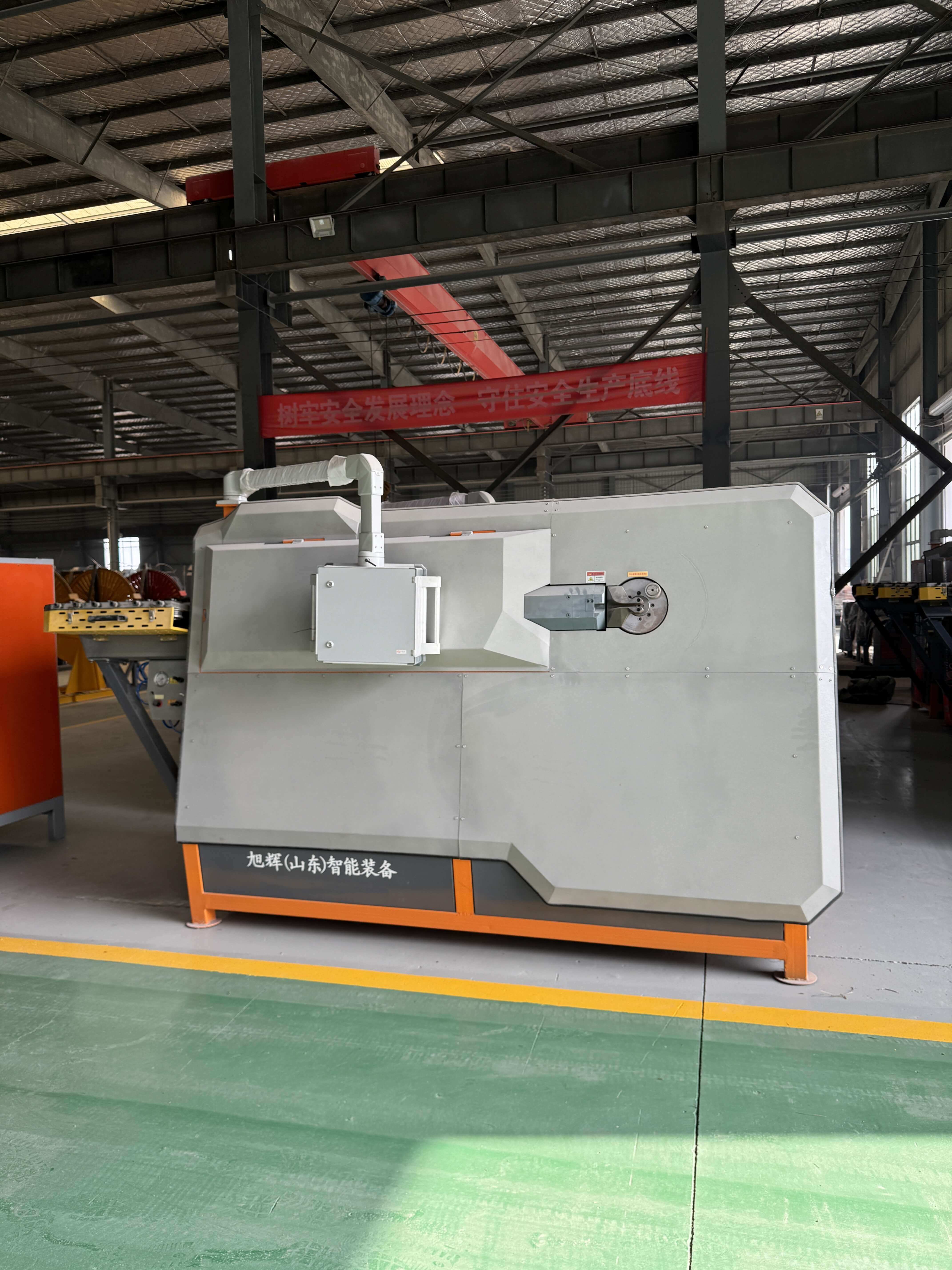
Introduction to Corporate Technical Strength: Triple technical barriers build a precision moat
Xuhui Intelligent Equipment achieves precision breakthrough through three core technologies:
STEP 1: Closed-loop Servo Control SystemUsing EtherCAT bus communication, the position feedback cycle is shortened to 1ms, paired with a 20-bit absolute encoder (resolution up to 1,048,576 pulses/rev), achieving position closed-loop accuracy of ±0.01mm. In the Jiguan Expressway project, this system keeps the cumulative error of 12m long rebars within ±0.3mm.
Step 2: Multi-axis联动algorithmA six-axis kinematics model based on MATLAB/Simulink was constructed, and the influence of mechanical inertia was eliminated through feedforward compensation, resulting in a synchronization error between the bending and feeding axes of ≤0.05mm. Actual measurements show that this algorithm increases bending efficiency by 40% and reduces the processing time per piece from 12s to 7s.
Step 3: Dynamic Compensation TechnologyReal-time monitoring of steel bar deformation with a laser displacement sensor, combined with PID control algorithm to dynamically adjust the bending moment, reducing the size fluctuation at the end from ±0.8mm to ±0.1mm. In the Shenzhen-Midland Channel project, this technology achieves the bending accuracy of Φ32mm threaded steel bars to meet the requirements of JGJ/T 272-2012 standard.
Technical Adaptation Scenarios:For engineering fields with strict requirements for steel processing accuracy, such as highway bridges, high-speed rail sleepers, and nuclear power plant containment shells, capable of processing Φ6-Φ40mm threaded steel and cold-rolled ribbed steel.
FAQ Q&A Technical Selection Guide
Q1: How to choose the suitable bending tie rod machine model for the project?
A: Consider three parameters comprehensively:
STEP 1: Steel bar diameter range. Xuhui equipment supports processing of Φ6-Φ40mm, with the XH-WG40 model having a maximum bending moment of 8000N·m, capable of meeting the processing needs of ultra-thick steel bars like nuclear power plant containment shells.
STEP 2: Processing Speed. The XH-WG25 model adopts a dual servo drive system, with a bending speed of up to 1200°/s, capable of processing 1.2 tons of Φ25mm rebar in a single shift (8 hours).
STEP3: Precision Grade. According to the JGJ/T 272-2012 standard, bridge engineering requires equipment with a precision of ±0.2mm, while nuclear power engineering requires equipment with a precision of ±0.1mm.
Q2: What are the key points for equipment maintenance?
A: A three-level maintenance system needs to be established:
STEP 1: Daily inspection. Clean the guide rail and apply high-temperature lubricant (working temperature range -20℃~150℃). Check if the encoder connection wires are loose.
STEP 2: Calibrate weekly. Use a laser interferometer to detect the mechanical origin, and recalibrate if the error exceeds ±0.05mm.
STEP3: Change monthly. Filter element replacement cycle is 500 working hours, hydraulic oil replacement cycle is 2000 working hours (using ISO VG46 anti-wear hydraulic oil).
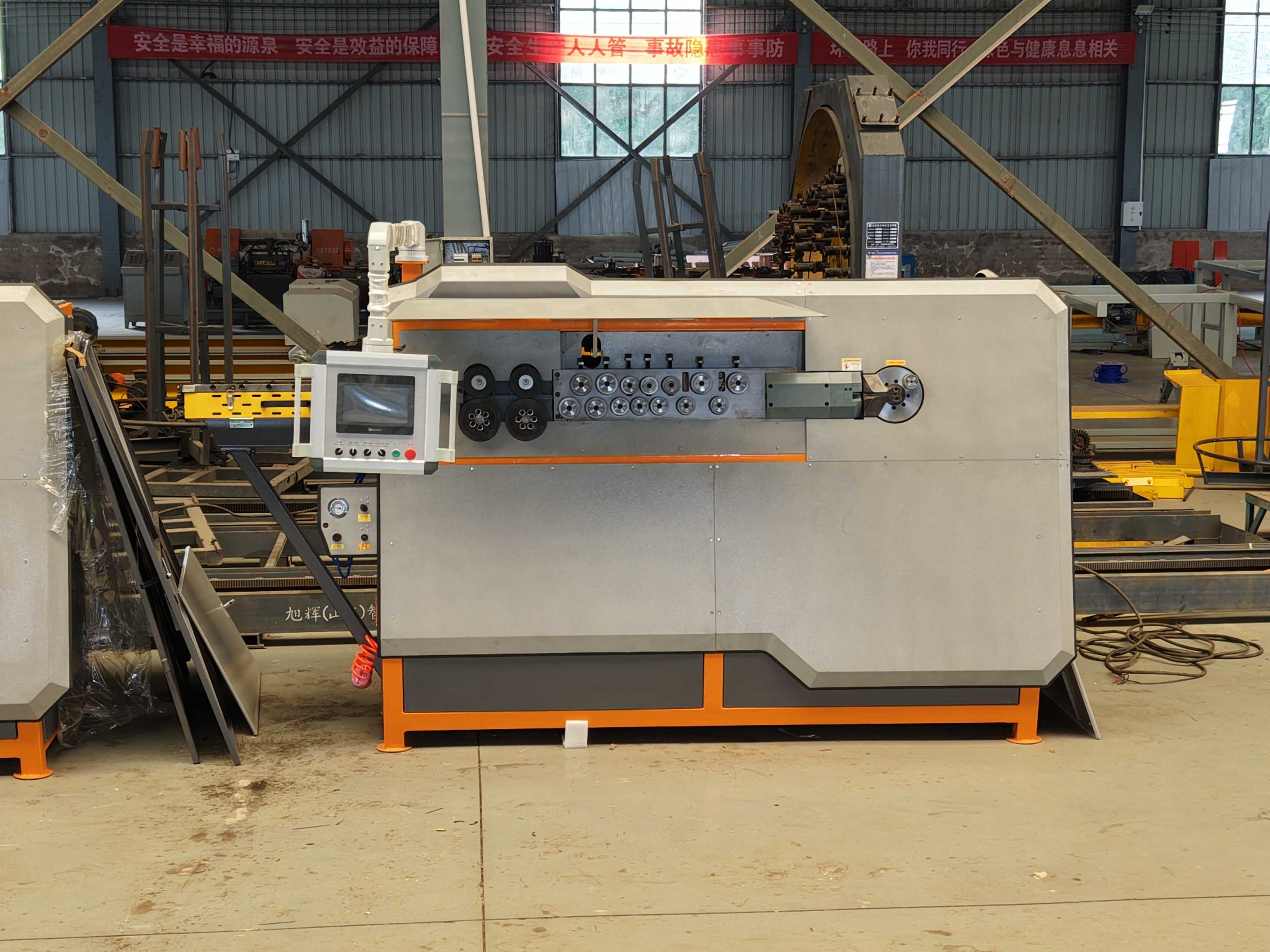
Summary of the full text reference
Xuhui (Shandong) Intelligent Equipment Co., Ltd. has established a triple precision protection system covering mechanics, electricity, and software through closed-loop servo control, multi-axis联动 algorithms, and dynamic compensation technology. In the Jining-Guangzhou Expressway Reconstruction and Expansion Project, its equipment improved the qualified rate of stirrup processing from 78% to 99.2%, increased the daily output from 0.8 tons to 1.5 tons, and saved about 1.2 million yuan in rework costs for the project. Currently, the company's technical solution has been applied in 32 expressway projects and 8 nuclear power projects across the country, with the equipment operating for over 500,000 hours, and the failure rate below 0.3%. For more information, please visit our official website:www.xuhuiintelligenttech.com