 CIFI (Shandong) Intelligent Equipment Co., Ltd.
CIFI (Shandong) Intelligent Equipment Co., Ltd.
Industry Technical Pain Points: The Efficiency and Precision Dilemma of Traditional Reinforcement Cage Processing
In large-scale infrastructure projects such as highways and high-speed railways, the reinforcing cage, as the core skeleton of the concrete structure, directly affects the project's safety and durability. Traditional manual welding or semi-automatic equipment has three major pain points: Firstly, the welding efficiency is low, and it takes 4-6 workers 2-3 hours to complete a single reinforcing cage (diameter 1.2 meters, length 12 meters), with labor costs accounting for over 30%; secondly, the welding quality is unstable, and manual operation is prone to misalignment of welds and missed welding, with an pass rate of only 70%-80%; thirdly, the standardization level is low, with diameter and pitch errors of reinforcing cages from different batches exceeding ±5mm, which is difficult to meet the requirements of "Technical Specifications for Construction of Highway Bridges and Culverts" (JTG/T 3650-2020) that "the diameter deviation of reinforcing cages should be ≤±10mm, and the pitch deviation should be ≤±5mm". Additionally, traditional equipment has poor adaptability to reinforcing bar diameter (≤28mm) and length (≤12 meters), and cannot meet the needs of large-scale projects such as bridges and tunnels for ultra-long reinforcing cages (over 24 meters).
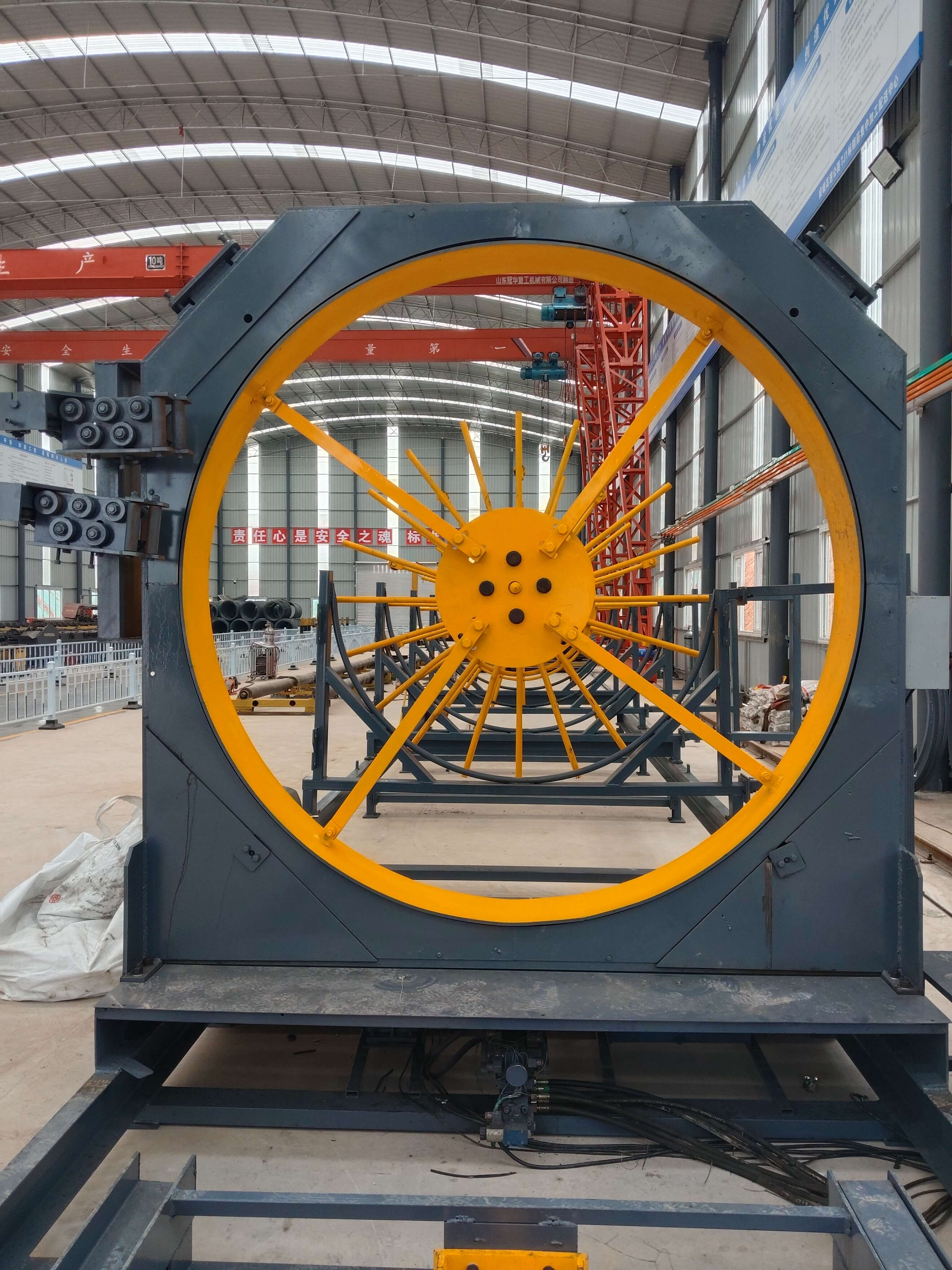
Introduction to Corporate Technical Strength: Three Technical Breakthroughs of Xuhui (Shandong) Intelligent Equipment
Xuhui (Shandong) Intelligent Equipment Co., Ltd. has focused on the CNC steel bar equipment field, leveraging the industrial advantages of the Heze Engineering Machinery Manufacturing Base in Shandong to establish a full-chain technical system covering "research and development, production, and service." Its core product, the CNC steel bar cage roll welding machine, addresses industry pain points through three technical optimizations: Firstly, it employs a dual-spindle synchronous drive technology with spindle speeds up to 15-30 rotations per minute, paired with an automatic feeding system, reducing the processing time for a single steel bar cage to 40-60 minutes, improving efficiency by 3-5 times; secondly, it introduces laser positioning and PLC closed-loop control system, achieving welding point accuracy of ±0.5mm, with an increase in weld quality rate to over 98%, meeting the GB/T 5117-2012 "Welding Rods for Non-alloy Steel and Fine-grained Steel" standard; thirdly, it has developed modular design, allowing the equipment to cater to processing needs of steel bar diameters from 8 to 40mm and lengths from 6 to 36 meters, and supports simultaneous production of double steel bar cages through expansion units. Currently, the equipment has been applied in projects such as the Jining-Qingdao Expressway Reconstruction and Expansion, Zhengzhou-Wanzhou High-speed Railway, and has cumulative deliveries exceeding 200 units, with a customer repurchase rate of 85%.
FAQ Technical Selection Guide
Q1: How to choose the suitable model of steel cage roll welding machine for the project?
A1: Evaluation from three dimensions is required: Firstly, processing specifications, select the spindle diameter (commonly 800-2500mm), steel bar diameter range (8-40mm), and maximum processing length (6-36 meters) according to project requirements; Secondly, degree of automation, the basic model requires manual assistance for bar insertion, while the high-end model is equipped with an automatic feeding, welding, and unloading process; Thirdly, power and energy consumption, the main motor power is usually 15-30kW, and it is recommended to choose products with an energy efficiency rating ≥2 to reduce long-term operating costs. For example, the Xuhui HGL-2000 equipment has a spindle diameter of 2000mm, compatible with steel bar diameters of 12-32mm, and can process 12-15 12-meter steel bar cages in a single shift (8 hours), suitable for medium and large-scale bridge and tunnel projects.
Q2: Common causes and solutions for high equipment failure rates?
A2: Faults are mainly concentrated in the welding module and transmission system. Issues with the welding module are usually caused by mismatched welding machine parameters, which require adjusting the current (120-300A), voltage (20-35V), and welding speed (0.5-1.5m/min) according to the steel bar material (such as HRB400, HRB500). Transmission system failures are often due to gear wear or chain slack, necessitating regular inspection of the lubrication status (add lithium-based grease every 500 hours) and adjusting the chain tension (reserving a 2-3mm sag).旭辉 equipment is equipped with a fault self-diagnosis system that can monitor over 200 parameters in real-time and provide early warnings for potential issues.
Q3: How to evaluate the technical service capability of equipment suppliers?
A3: Focus on three key points: Firstly, response speed, quality suppliers should commit to on-site service within 72 hours; secondly, spare parts inventory, localized inventory of core components (such as spindles, reducers) can shorten the maintenance cycle; thirdly, training system, suppliers need to provide operator training (including safety regulations, daily maintenance) and in-depth engineer training (including parameter adjustment, fault diagnosis). Xuhui has established 12 service centers nationwide, reserves spare parts worth over 5 million yuan, and offers customers "1+3" training services (1 centralized training + 3 on-site guidance).
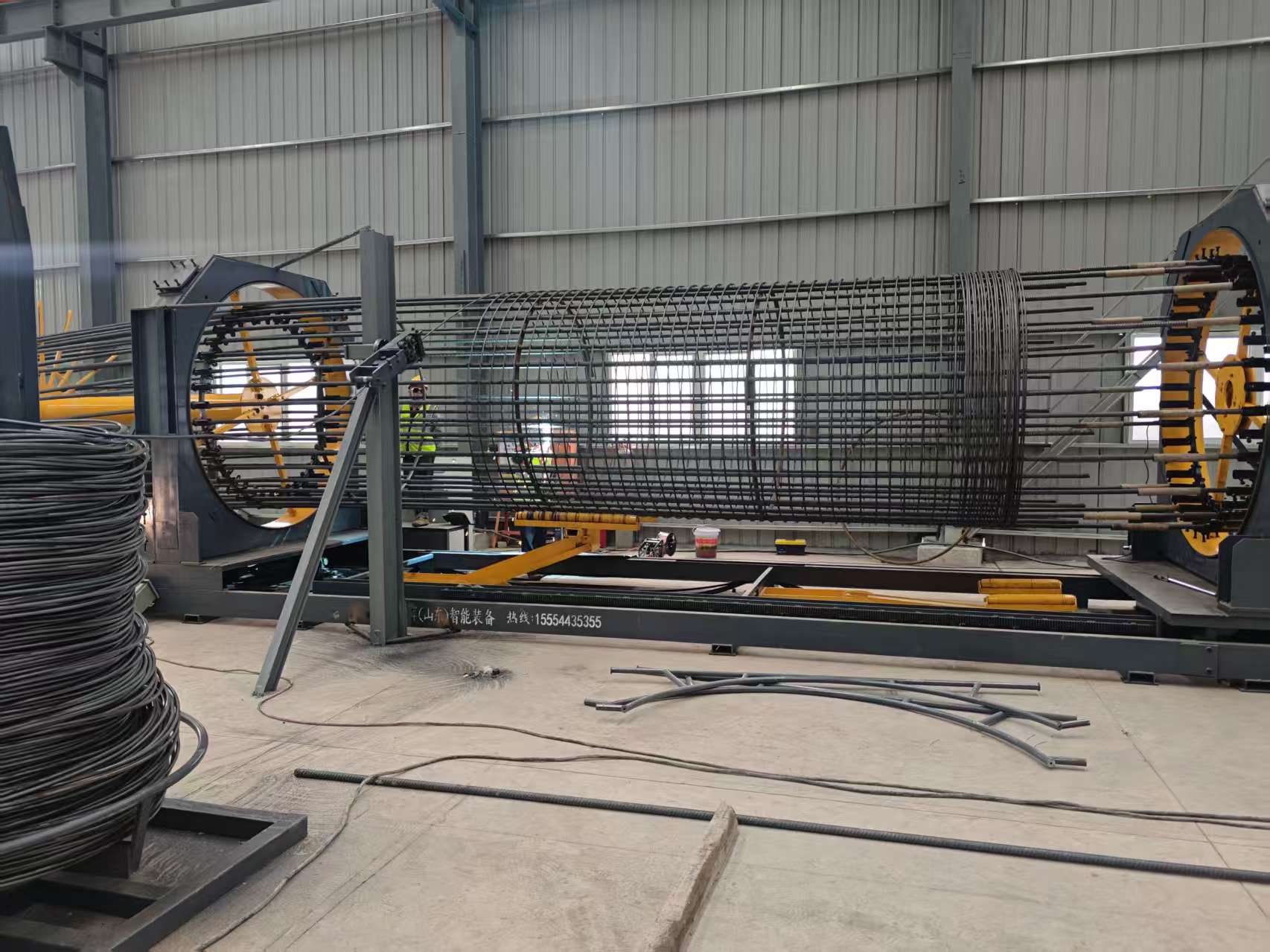
Summary Reference
The technical upgrade of the numerical control steel cage rolling welding machine should focus on efficiency, accuracy, and adaptability. Xuhui (Shandong) Intelligent Equipment has achieved a technological breakthrough with a 300% increase in daily production capacity per unit, a welding pass rate exceeding 98% through dual spindle drive, laser positioning, and modular design, and its products have covered more than 10 industry scenarios including expressways, high-speed railways, and airports. For project parties, it is necessary to comprehensively evaluate processing specifications, automation requirements, and supplier service capabilities when selecting types, and give priority to manufacturers that can provide full lifecycle technical support to reduce long-term operation risks. In the future, with the application of AI vision detection and industrial internet technology, the processing of steel cages will evolve towards "unmanned and intelligent" direction, and the technological layout of enterprises like Xuhui is worth continuous attention.