
In modern tunnel construction projects, the efficiency and precision of small duct processing directly impact overall project quality and progress. As a professional manufacturer of tunnel construction equipment, Xuhui (Shandong) Intelligent Equipment Co., Ltd. specializes in providing complete solutions for small duct punching and tapering production lines. This comprehensive guide will help you understand how to select the most suitable production line for your specific needs.
Understanding Small Duct Punching and Tapering Production Lines
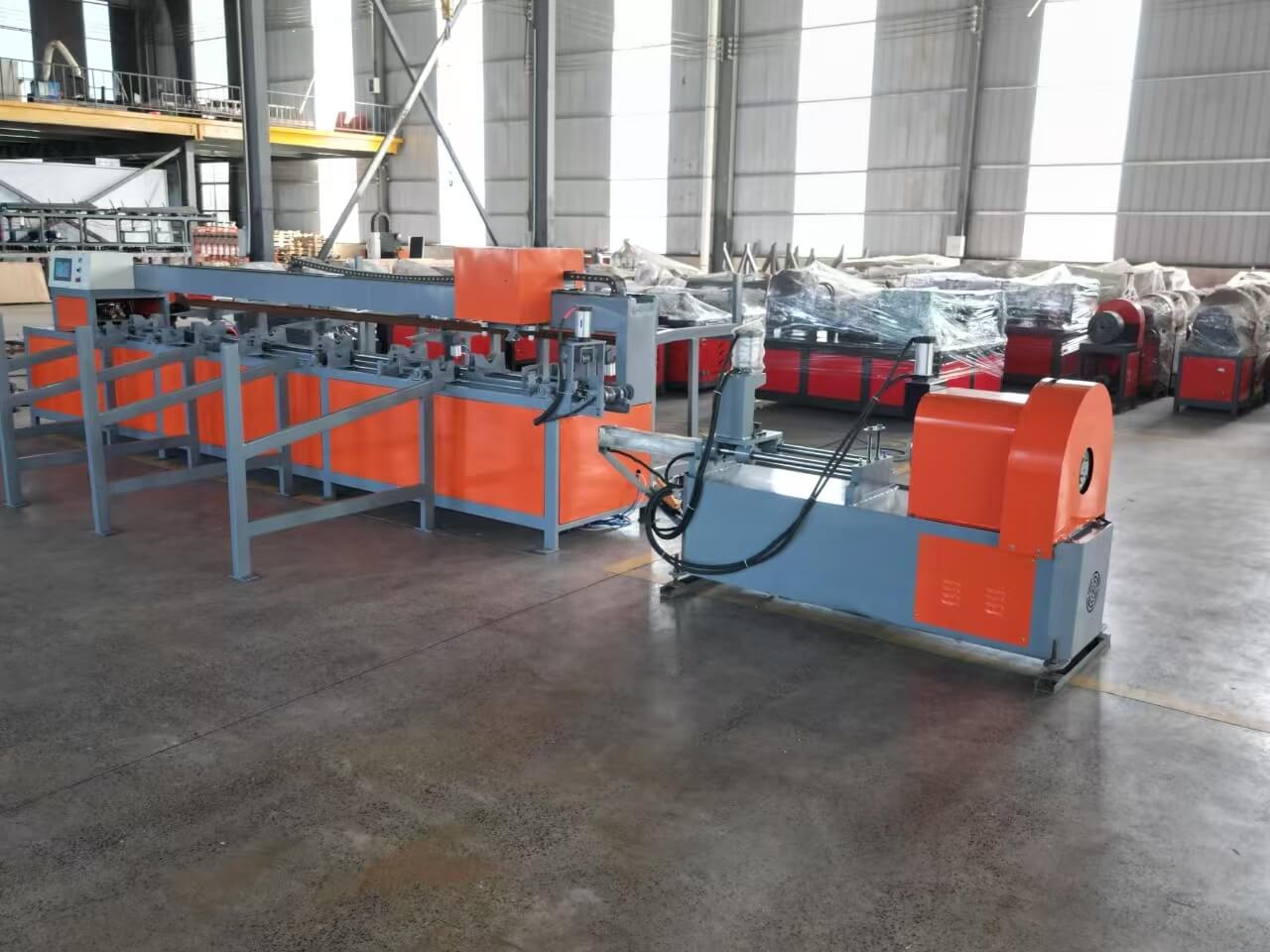
A small duct punching and tapering production line is an integrated system designed specifically for tunnel construction applications. It combines multiple processing functions including cutting, punching, and tapering in one continuous operation. This equipment is essential for producing the small ducts used in tunnel support systems, which require precise dimensions and consistent quality to ensure structural stability.
The production line typically consists of several key components: automatic feeding system, precision punching unit, tapering module, cutting device, and control system. Each component works in coordination to transform raw steel pipes into finished small ducts with the required holes and tapered ends. The integration of these processes eliminates the need for multiple machines and manual handling between operations, significantly improving production efficiency and product consistency.
Key Selection Criteria for Production Lines
When evaluating different small duct punching and tapering production lines, several critical factors should be considered to ensure you select the most suitable equipment for your tunnel construction projects:
1. Processing Precision and Consistency
The primary requirement for tunnel support ducts is precise dimensional accuracy. Look for production lines that offer high-precision positioning systems (typically with ±0.1mm accuracy) and stable processing capabilities. The equipment should maintain consistent quality throughout long production runs, with minimal deviation between the first and last piece produced.
Advanced production lines incorporate servo motor drives and CNC control systems to ensure precise movement of all processing components. These systems allow for fine adjustments to punching positions, hole sizes, and tapering angles, enabling customization for different tunnel design requirements.
2. Production Capacity and Efficiency
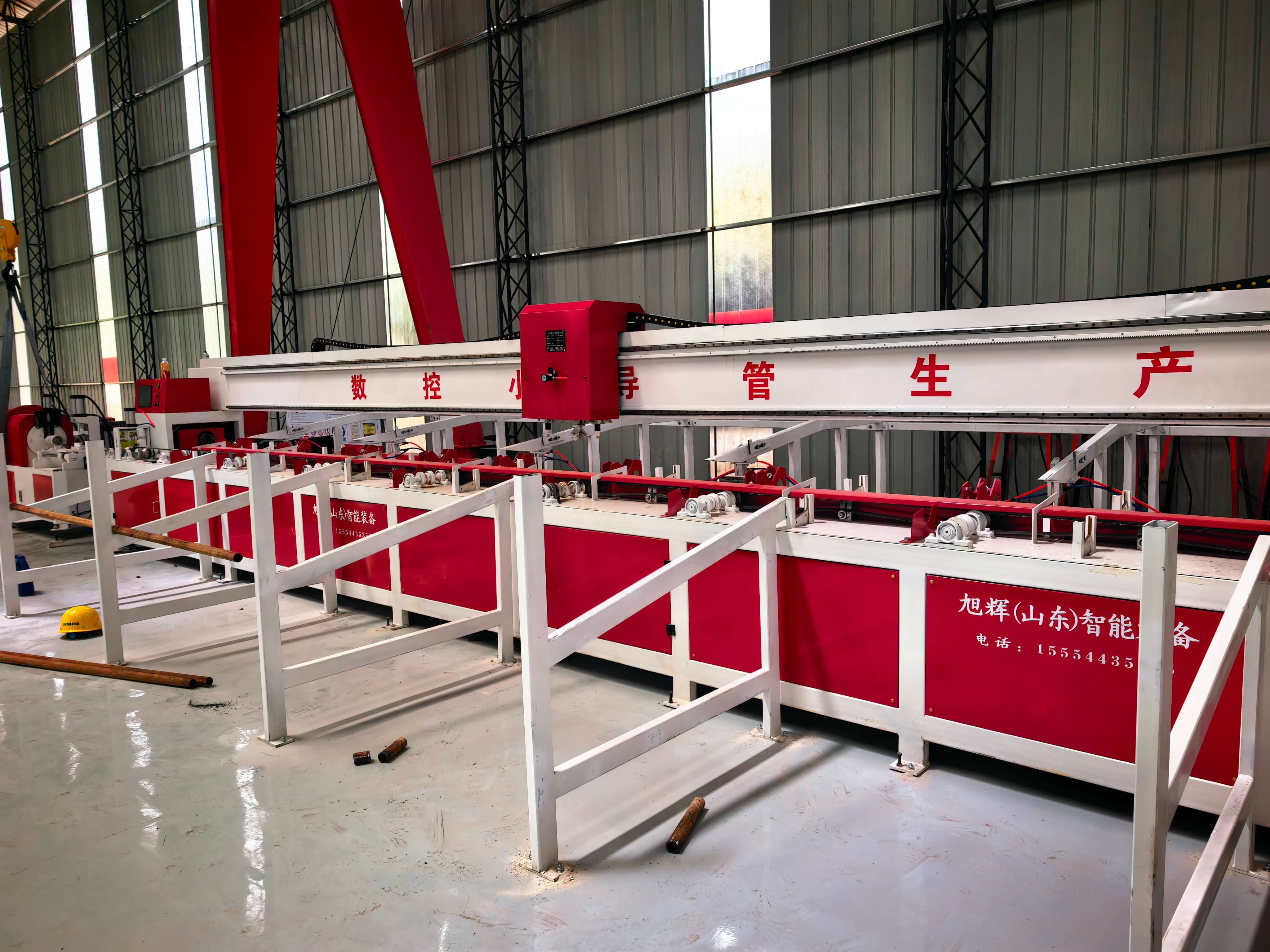
Evaluate the production line’s processing speed and cycle time. Modern automated systems can typically process 1-2 ducts per minute, depending on the complexity of the required operations. Consider your project’s volume requirements and select equipment that can meet your production targets without excessive overtime operation.
The degree of automation is another important factor. Fully automatic production lines with robotic handling systems can operate continuously with minimal human intervention, while semi-automatic systems may require more operator involvement for loading/unloading and quality checks. Automated systems generally offer higher efficiency and lower labor costs over time.
3. Flexibility and Customization Options
Tunnel projects often have specific requirements for duct dimensions, hole patterns, and tapering angles. Choose a production line that offers sufficient flexibility to accommodate different specifications. Look for equipment with programmable control systems that allow for quick changeovers between different product types without extensive mechanical adjustments.
Some advanced systems can store multiple processing programs, enabling operators to switch between different duct designs with minimal setup time. This flexibility is particularly valuable for contractors working on multiple projects with varying requirements or for equipment rental companies serving diverse clients.
4. Equipment Durability and Reliability
Tunnel construction environments can be demanding, with dust, vibrations, and continuous operation. Select production lines built with robust construction using high-quality materials. Key components like the machine frame, punching dies, and cutting tools should be designed for long-term durability under heavy-duty conditions.
Inquire about the manufacturer’s quality control processes and component sourcing. Reputable manufacturers like Xuhui (Shandong) Intelligent Equipment Co., Ltd. use premium-grade components and implement rigorous testing procedures to ensure their equipment can withstand the rigors of tunnel construction sites.
5. Safety Features and Compliance
Worker safety is paramount in any industrial setting. Evaluate the production line’s safety features, including protective enclosures, emergency stop systems, and safety interlocks. The equipment should comply with international safety standards such as CE certification, which demonstrates adherence to European safety, health, and environmental protection requirements.
Additional safety features to look for include automatic tool monitoring systems that detect wear or damage, and dust collection systems that maintain clean working conditions. These features not only protect operators but also contribute to longer equipment life by preventing premature wear.
Technical Specifications Comparison
When comparing different production line models, a detailed technical specification sheet can help you make an informed decision. Here’s a sample comparison table highlighting key parameters:
| Parameter | Xuhui XH-SDP2000 | Competitor Model A | Competitor Model B |
|---|---|---|---|
| Max Pipe Diameter | φ42-φ219mm | φ32-φ168mm | φ50-φ200mm |
| Max Wall Thickness | 10mm | 8mm | 9mm |
| Punching Force | 1000kN | 800kN | 900kN |
| Tapering Angle Range | 0-30° | 0-25° | 0-28° |
| Power Supply | 380V/50Hz/3Phase | 415V/50Hz/3Phase | 380V/60Hz/3Phase |
| Total Power | 45kW | 38kW | 42kW |
| Machine Dimensions | 12000×2500×2200mm | 10500×2300×2000mm | 11500×2400×2100mm |
| Machine Weight | 12000kg | 9500kg | 11000kg |
| Certification | CE, ISO9001 | ISO9001 | CE |
Customized Solutions for Special Requirements
While standard production line models can meet most tunnel construction needs, some projects may have unique requirements that demand customized solutions. As a manufacturer with extensive R&D capabilities, Xuhui (Shandong) Intelligent Equipment Co., Ltd. offers tailored production line designs to address specific challenges:
For example, when working on a major highway tunnel project in Southeast Asia, our engineering team designed a customized production line with extended punching stations to accommodate unusually long duct sections required by the project’s geological conditions. The solution incorporated a special material handling system to ensure stable processing of the extended ducts without deformation.
In another case for a metro construction project in the Middle East, we developed a production line with enhanced dust collection and cooling systems to operate effectively in the region’s high-temperature desert environment. The customized solution maintained optimal processing conditions and extended equipment service life despite the challenging climate.
After-Sales Support and Service
The selection process shouldn’t end with the equipment purchase. Comprehensive after-sales support is crucial for maintaining production line performance and minimizing downtime. Look for manufacturers that offer:
- Global service network with local technical support
- Spare parts availability with short delivery times
- Operator training programs (both on-site and remote)
- Preventive maintenance schedules
- 24/7 technical hotline support
- Equipment upgrade and modernization services
Xuhui (Shandong) Intelligent Equipment Co., Ltd. has established a global service network covering major construction markets, ensuring prompt support wherever your projects are located. Our service packages include regular maintenance visits, operator retraining, and performance optimization services to help you maximize your production line’s value over its entire lifecycle.
FAQ
What factors determine the production capacity of a small duct punching and tapering production line?
The production capacity depends on several factors including the machine’s processing speed (typically measured in cycles per minute), the complexity of the required operations (number of holes, tapering angle, etc.), and the degree of automation. Fully automatic lines with robotic handling can achieve higher capacities (up to 120 ducts per 8-hour shift) compared to semi-automatic systems that may require more manual intervention.
How often do punching dies need to be replaced?
The lifespan of punching dies depends on the material being processed and the production volume. For standard carbon steel ducts, dies can typically process 50,000 to 100,000 ducts before needing replacement. High-quality dies made from premium alloy steel and proper maintenance can extend this lifespan significantly. Regular inspection and rotation of dies can help maximize their service life.
Can the production line process different duct diameters without mechanical adjustments?
Modern CNC-controlled production lines can switch between different duct diameters through program changes without extensive mechanical adjustments. However, some models may require changing certain tooling components like chucks or guides when processing significantly different diameters. Fully automated systems with quick-change tooling can minimize setup times between different product types.
What safety features are essential for small duct production lines?
Key safety features include protective enclosures around moving parts, emergency stop systems, safety interlocks that prevent operation when guards are open, and automatic tool monitoring that stops the machine if tools break or wear excessively. Additional features may include light curtains, two-hand control buttons for hazardous operations, and dust extraction systems to maintain clean working conditions.
How does the production line ensure consistent hole positioning accuracy?
Consistent hole positioning is achieved through a combination of high-precision mechanical components and advanced CNC control systems. The production line uses servo motor drives for precise movement of the punching head, and the control system calculates exact hole positions based on the duct dimensions and design requirements. Some systems also incorporate laser measurement or vision systems for real-time position verification.
Summary
Selecting the right small duct punching and tapering production line requires careful evaluation of your specific project requirements, processing needs, and long-term operational considerations. By focusing on key factors like processing precision, production capacity, flexibility, equipment durability, and after-sales support, you can identify the most suitable solution for your tunnel construction projects.
Xuhui (Shandong) Intelligent Equipment Co., Ltd. offers a comprehensive range of small duct processing solutions, from standard models to fully customized production lines. Our equipment combines advanced technology with robust construction to deliver reliable performance in demanding tunnel construction environments. With global service support and a commitment to continuous improvement, we help our customers achieve optimal efficiency and product quality in their tunnel support systems production.