
In the rapidly evolving construction industry, precision and efficiency are paramount. One of the most critical components in modern infrastructure projects is the steel cage, which forms the structural backbone of bridges, tunnels, and high-rise buildings. Traditional manual welding methods for steel cages are time-consuming, labor-intensive, and prone to inconsistencies. This is where advanced CNC (Computer Numerical Control) steel cage welding stations come into play, revolutionizing the way steel cages are manufactured.
The Evolution of Steel Cage Manufacturing
The construction industry has witnessed significant technological advancements over the past few decades. While manual welding techniques were once the standard, they presented several challenges:
- Inconsistent quality due to human error
- Long production times leading to project delays
- High labor costs and workforce dependency
- Safety risks associated with manual welding operations
To address these challenges, Xuhui (Shandong) Intelligent Equipment Co., Ltd., located in Heze—a major engineering machinery manufacturing base in Shandong Province—developed an innovative solution: the CNC steel cage welding station. This automated system combines cutting-edge technology with precision engineering to deliver superior results consistently.
Understanding CNC Steel Cage Welding Stations
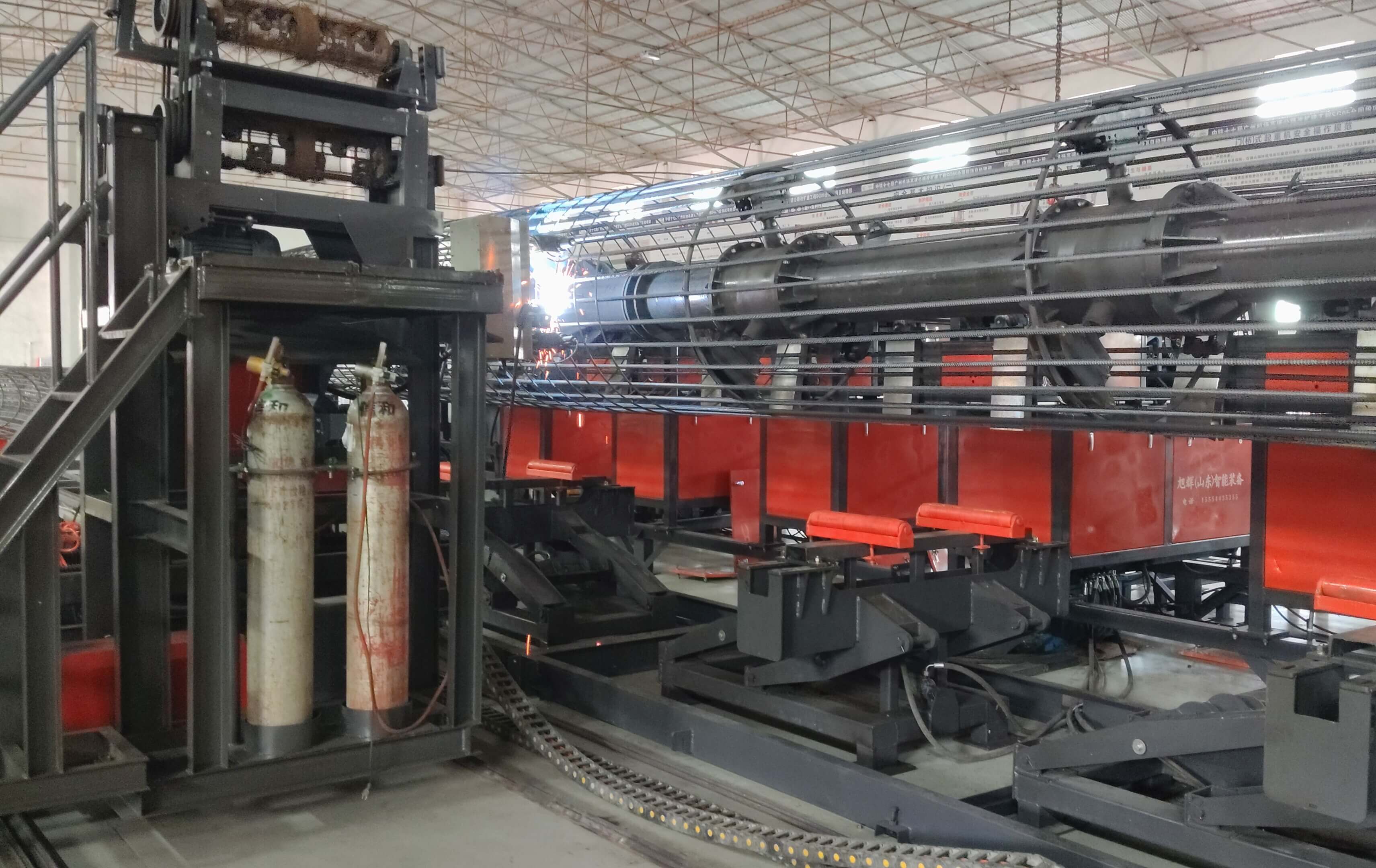
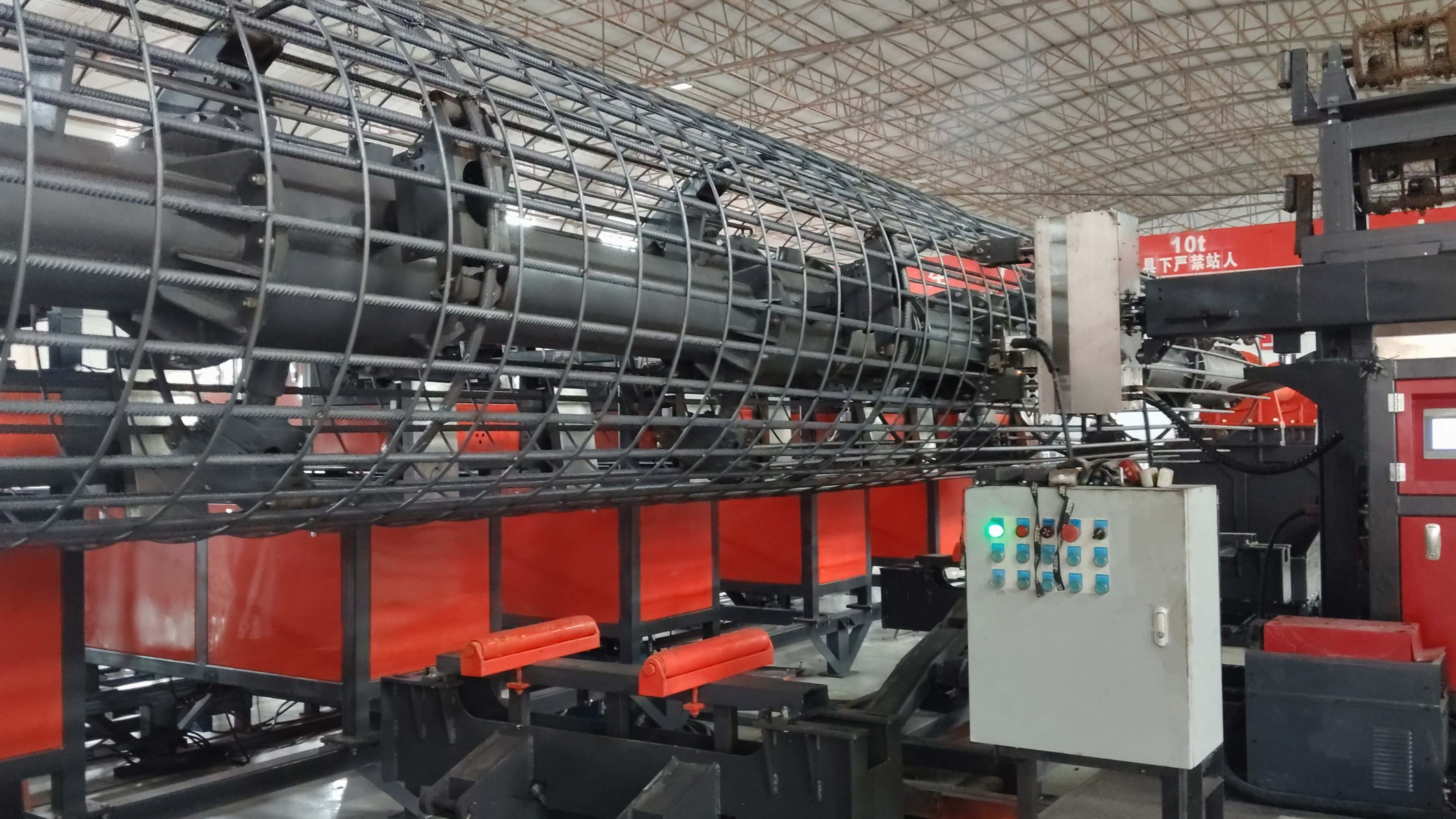
A CNC steel cage welding station is a fully automated system designed to fabricate steel cages with minimal human intervention. The process involves feeding steel bars into the machine, which then automatically bends, positions, and welds them according to predefined specifications. Key components of a typical CNC steel cage welding station include:
- Robotic welding arms for precise positioning and welding
- CNC control system for programming and monitoring operations
- Material handling system for feeding steel bars
- Quality inspection sensors for ensuring compliance with standards
The integration of these components ensures that each steel cage produced meets exact dimensional requirements while maintaining structural integrity. This level of precision is particularly crucial for large-scale infrastructure projects where safety and durability are non-negotiable.
Key Features of Xuhui’s CNC Steel Cage Welding Stations
As a leading manufacturer and supplier of CNC steel cage welding stations, Xuhui (Shandong) Intelligent Equipment Co., Ltd. incorporates several advanced features into its products:
- High Precision: The CNC control system ensures that every weld is placed accurately, resulting in consistent quality across all steel cages.
- Increased Productivity: Automated operations significantly reduce production time compared to manual methods, allowing for faster project completion.
- Versatility: The machines can be programmed to produce steel cages of various sizes and shapes, catering to diverse project requirements.
- Safety: By minimizing human involvement in the welding process, the risk of accidents and injuries is greatly reduced.
- Cost-Effectiveness: While the initial investment may be higher, the long-term savings in labor costs and reduced rework make CNC steel cage welding stations a cost-effective solution.
Applications of CNC Steel Cage Welding Stations
The versatility and precision of CNC steel cage welding stations make them indispensable in various industries and applications:
- Bridge Construction: Steel cages form the core reinforcement for bridge piers and abutments, ensuring structural stability under heavy loads.
- Tunnel Engineering: In tunnel construction, steel cages are used to reinforce the tunnel lining, preventing collapses and ensuring safety.
- High-Rise Buildings: The foundations of tall buildings rely on steel cages to distribute loads evenly and resist seismic forces.
- Subway Systems: Steel cages are critical components in subway station construction, providing reinforcement for walls and ceilings.
- Pile Foundations: For deep foundation projects, steel cages are inserted into drilled holes and filled with concrete to create strong, load-bearing piles.
By serving these diverse applications, CNC steel cage welding stations contribute to the development of safer, more durable infrastructure worldwide.
Customization Options for Specific Project Needs
One of the standout features of Xuhui’s CNC steel cage welding stations is their customizability. Recognizing that each project has unique requirements, the company offers tailored solutions to meet specific needs:
| Customization Option | Description |
|---|---|
| Size Adjustments | Machines can be configured to produce steel cages of varying diameters and lengths. |
| Welding Patterns | Custom welding patterns can be programmed to match design specifications. |
| Material Compatibility | Machines can be adapted to work with different types of steel bars and alloys. |
| Automation Level | Clients can choose between fully automated or semi-automated systems based on their needs. |
This level of customization ensures that clients receive a CNC steel cage welding station that perfectly aligns with their project requirements, optimizing efficiency and productivity.
Global Reach and Certifications
Xuhui (Shandong) Intelligent Equipment Co., Ltd. is committed to serving clients worldwide. All its CNC steel cage welding stations are CE-certified, meeting stringent European safety and quality standards. This certification not only enhances the credibility of the products but also facilitates their export to international markets. The company’s global reach includes:
- Exporting to countries across Europe, Asia, and the Americas
- Providing installation guidance and operator training in multiple languages
- Offering 24/7 technical support and maintenance services
By maintaining a strong international presence, Xuhui ensures that clients from different regions can access its high-quality CNC steel cage welding stations and related services.
FAQ
What is the typical lead time for a customized CNC steel cage welding station?
The lead time depends on the complexity of the customization required. On average, it takes between 4 to 8 weeks from order confirmation to delivery. Our team works closely with clients to provide accurate timelines and keep them informed throughout the process.
Can the CNC steel cage welding station handle different types of steel bars?
Yes, our machines are designed to be compatible with various types of steel bars, including carbon steel, stainless steel, and alloy steel. We can also adjust the machine settings to accommodate different bar diameters and lengths.
What kind of training is provided for operating the CNC steel cage welding station?
We offer comprehensive training programs for operators, covering machine operation, maintenance, troubleshooting, and safety procedures. Training can be conducted on-site or remotely, depending on the client’s preference and location.
How does the CNC control system ensure precision in welding?
The CNC control system uses advanced algorithms to calculate the exact positions for each weld based on the programmed design. It continuously monitors the welding process, making real-time adjustments to maintain consistency and accuracy. This level of control is impossible to achieve with manual welding methods.
What maintenance is required for a CNC steel cage welding station?
Regular maintenance is crucial for ensuring the longevity and optimal performance of the machine. We provide a detailed maintenance schedule and guide clients on routine checks, lubrication, and part replacements. Our technical support team is also available to assist with any maintenance-related queries.
Summary
In conclusion, CNC steel cage welding stations represent a significant advancement in construction technology, offering unparalleled precision, efficiency, and safety. As a leading manufacturer and supplier, Xuhui (Shandong) Intelligent Equipment Co., Ltd. is dedicated to providing high-quality, customizable solutions that meet the diverse needs of clients worldwide. With its commitment to innovation, quality, and customer service, Xuhui continues to drive the adoption of automated welding technologies in the construction industry, contributing to the development of safer and more durable infrastructure globally.