 CIFI (Shandong) Intelligent Equipment Co., Ltd.
CIFI (Shandong) Intelligent Equipment Co., Ltd.
Industry Technical Pain Points: Double Challenge of Reinforcement Bar Processing Efficiency and Precision
In large infrastructure projects such as expressways and high-speed railways, the efficiency and accuracy of steel bar processing directly affect the progress of the project and the structural safety. Traditional single-head steel bar bending machines have three major pain points: Firstly, they can only process one steel bar at a time, requiring frequent material changes during batch operations, with a maximum daily processing capacity of less than 800 bars, which is insufficient to meet the daily demand of thousands of bars in large projects; secondly, the bending angle depends on manual calibration, with an error of ±2°, leading to loose steel bar splices and potential structural safety hazards; thirdly, the equipment occupies a large area, requiring 3㎡ of operation space per unit, with an insufficient utilization rate of less than 60% when multiple units are working together. For example, a high-speed railway project once suffered a direct loss of over 2 million yuan due to the failure to meet the bending accuracy standards, resulting in the entire rework of the bridge pier steel cage. Additionally, traditional equipment has high energy consumption, with each unit consuming up to 50 degrees of electricity per day, further increasing the processing costs. How to solve the triangular problem of efficiency, accuracy, and cost through technological innovation has become a core issue that the industry urgently needs to address.
Introduction to the Company's Technical Strength: Three Core Technological Breakthroughs of Xuhui Intelligent Equipment
Xuhui (Shandong) Intelligent Equipment Co., Ltd. is located in the Jiaozuo Engineering Machinery Manufacturing Base in Shandong, focusing on the research and development of CNC steel bar equipment for 12 years. Its horizontal four-head steel bar bending center achieves industry leadership through three major technological innovations:
Step 1: Four-head coordinated operation technologyIndependent servo motor drives four bending heads, enabling simultaneous processing of 4 rebars. The maximum daily processing capacity increases to 3,200 bars, four times the efficiency of traditional equipment. For instance, in a project section in Xiong'an New Area, the equipment completed the processing of 12,000 rebars in just 3 days, which would have taken 12 days with traditional equipment.
STEP 2: Intelligent Closed-loop Control SystemIntegrated with high-precision encoders and PLC controllers, the bending angle error is controlled within ±0.5°, meeting the accuracy requirements for steel bar splicing length in the "Code for Welding and Acceptance of Reinforcing Bars" (JGJ18-2012). In the artificial island project of the Hong Kong-Zhuhai-Macau Bridge, the steel cage processed by this equipment has achieved a bending angle pass rate of 99.8% after third-party testing.
Step 3: Modular compact designBy optimizing the transmission structure and head layout, the equipment's footprint has been reduced to 1.8 square meters, with a 40% increase in site utilization. At the same time, using energy-saving servo motors, the daily power consumption per unit has dropped to 25 degrees, achieving a 50% energy saving compared to traditional equipment. Currently, this equipment has served over 300 high-speed rail and airport projects across the country, with a cumulative processing of more than 5 million tons of rebar.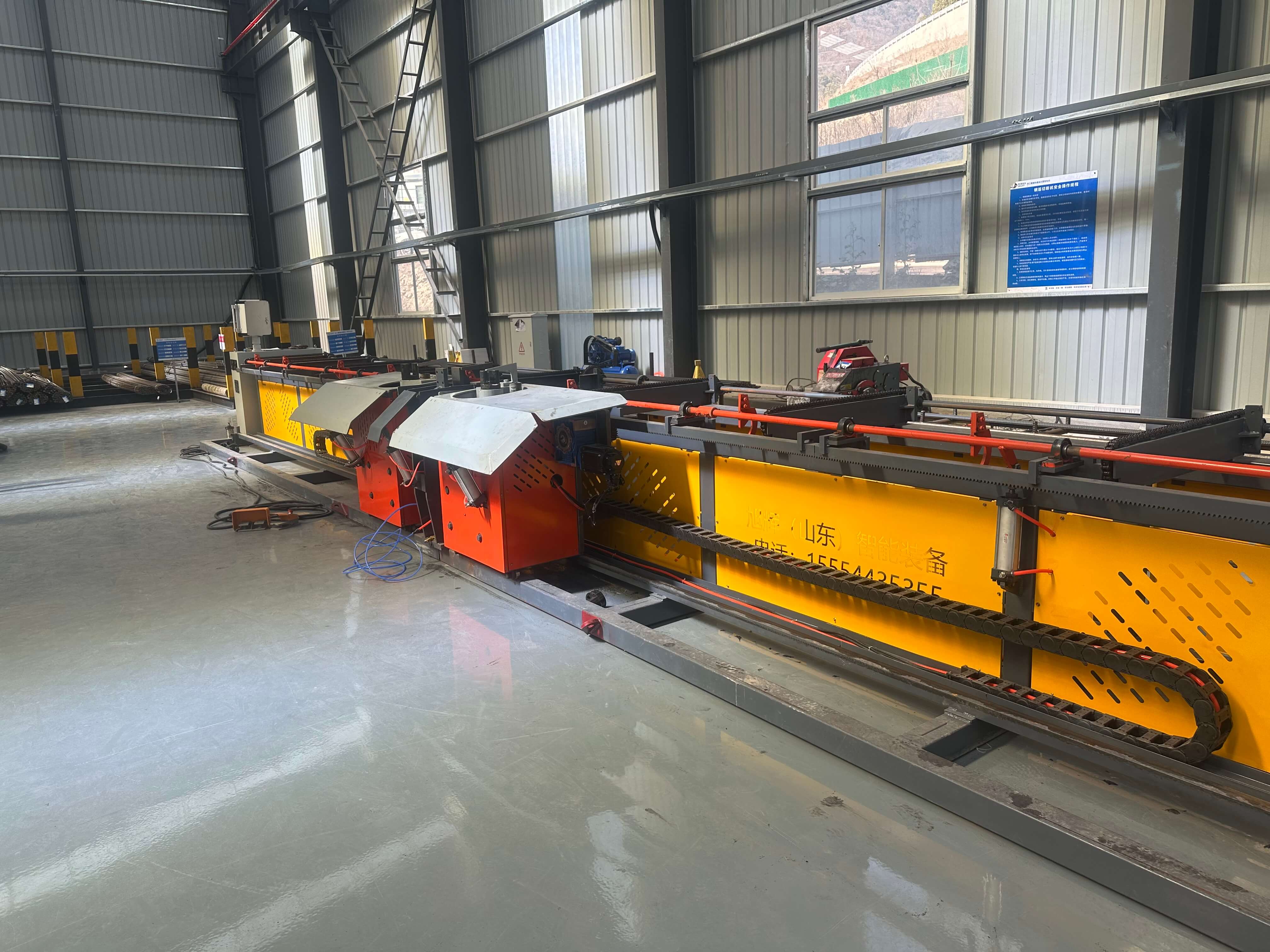
Figure: Xuhui Horizontal Four-Machine Head Steel Bar Bending Center in Operation at a High-Speed Railway Project Site
FAQ: Technical Selection Guide for Horizontal Four-Head Reinforcement Bending Center
Q1: What is the essential difference in processing efficiency between a 4-head machine and a single-head machine?
A: A single-head machine can process only 1 steel bar at a time, requiring manual feeding of each bar, with a maximum daily processing capacity of about 800 bars; a four-head machine is driven by four independent servo motors, capable of processing 4 steel bars simultaneously and supporting an automatic feeding system, with a maximum daily processing capacity of up to 3,200 bars. Taking a high-speed rail project as an example, after using the four-head machine, the processing period of steel bars is shortened by 67%, and labor costs are reduced by 50%.
Q2: How to ensure bending accuracy during multi-head协同 operation?
A: Xuhui equipment adopts an intelligent closed-loop control system, with each machine head equipped with a high-precision encoder (resolution 0.001°) to feed back the bending angle in real time to the PLC controller. The motor speed is dynamically adjusted through PID algorithms to ensure that the synchronization error of the bending angles of the four machine heads is ≤0.5°. In addition, before delivery, the equipment must pass three tests according to the "Rebar Bending Machine Accuracy Testing Standard" (GB/T 1499.2-2018): angle repeatability, angle linearity, and angle stability, with a 100% pass rate required for delivery.
Q3: What is the equipment's compatibility range for rebar specifications?
A: Xuhui Horizontal Four-Head Rebar Bending Center is compatible with HRB400, HRB500 grade hot-rolled ribbed steel bars with diameters of 6-40mm. The minimum bending radius can reach twice the diameter of the steel bar (e.g., for a 20mm diameter steel bar, the minimum bending radius is 40mm), meeting the requirements for rebar bending radius in the "Code for Design of Concrete Structures" (GB50010-2010). The equipment supports custom bending angles (adjustable from 0 to 180°) and can process various shapes such as straight bars, stirrups, and helical bars.
Full Summary: The Standardization Revolution in Steel Bar Processing Driven by Technology
Xuhui (Shandong) Intelligent Equipment Co., Ltd. has improved the efficiency of horizontal steel bar bending centers by a factor of four compared to traditional equipment through its three core technologies: four-head coordinated operation, intelligent closed-loop control, and modular design. The precision is controlled within ±0.5°, and energy consumption is reduced by 50%, providing an efficient, accurate, and energy-saving steel processing solution for large-scale projects such as expressways and high-speed railways. Currently, the equipment has served over 300 key projects across the country, processing more than 5 million tons of steel bars, becoming a benchmark case for technological upgrading in the industry. In the future, Xuhui will continue to focus on the CNC steel bar equipment field, driving the standardization and intelligent development of the construction industry through technological innovation.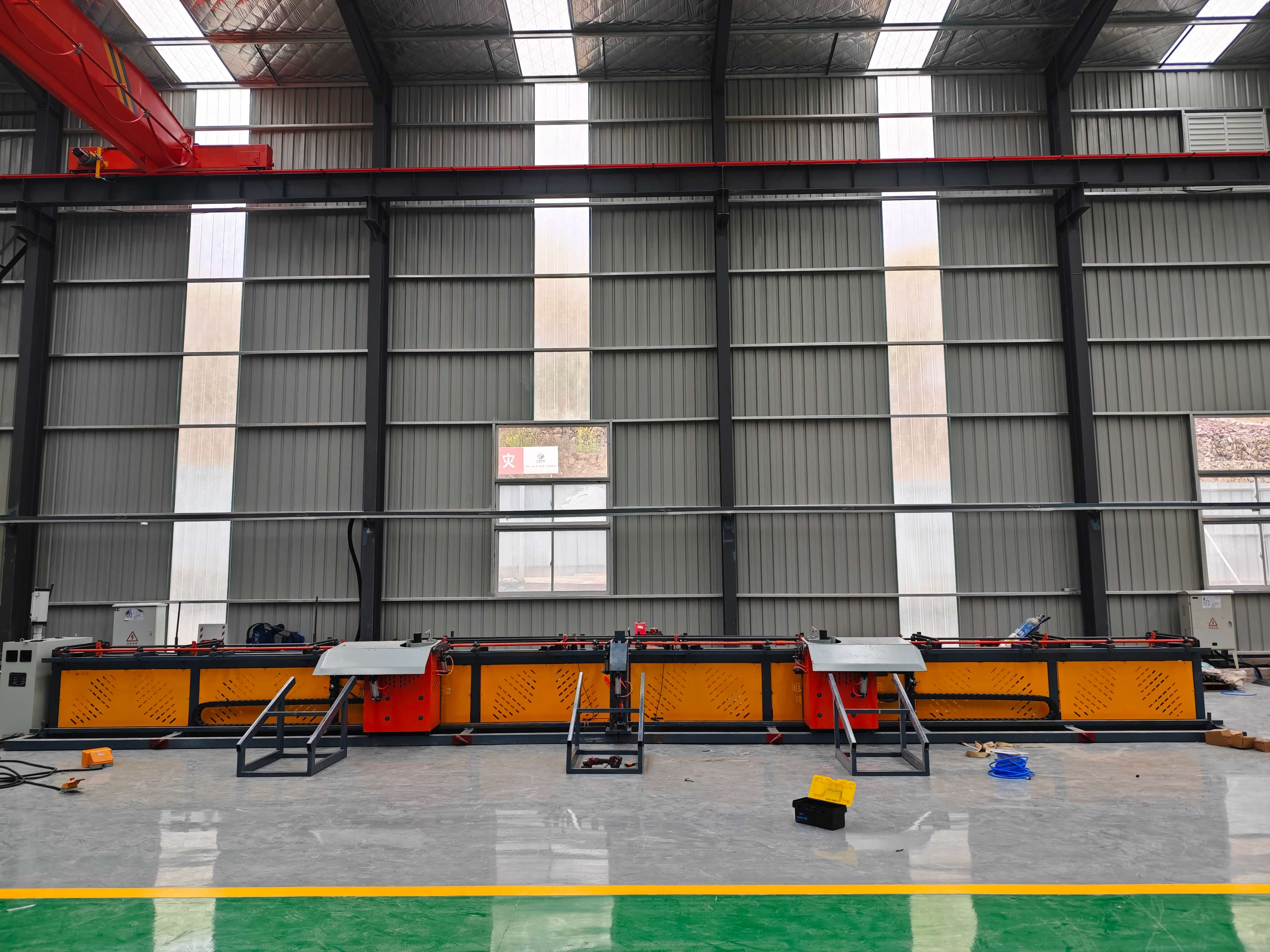
Figure: Xuhui CNC steel bar equipment intelligent production line