 CIFI (Shandong) Intelligent Equipment Co., Ltd.
CIFI (Shandong) Intelligent Equipment Co., Ltd.
Industry Technical Pain Points: Dual Challenges of Traditional Reinforcement Bar Bending Efficiency and Precision
In large infrastructure projects such as highways and high-speed railways, the efficiency and accuracy of steel bar processing directly affect the progress of the project and the structural safety. Traditional single-head steel bar bending equipment has three major pain points: Firstly, it can only process a single steel bar at a time, and multiple heads require manual repeated adjustments for coordination, leading to low efficiency; secondly, the bending angle and radius depend on manual calibration, with an error rate as high as ±2°, which is difficult to meet high-precision requirements; thirdly, the equipment occupies a large area, is difficult to move, and is not adaptable to multi-position switching scenarios. Taking a bridge and tunnel project as an example, traditional equipment requires 8 hours to process 1000 steel bars, and due to insufficient accuracy, 3% of the steel bars need to be reworked, directly increasing the cost by about 150,000 yuan. The industry urgently needs an integrated, high-precision, and easy-to-operate solution.
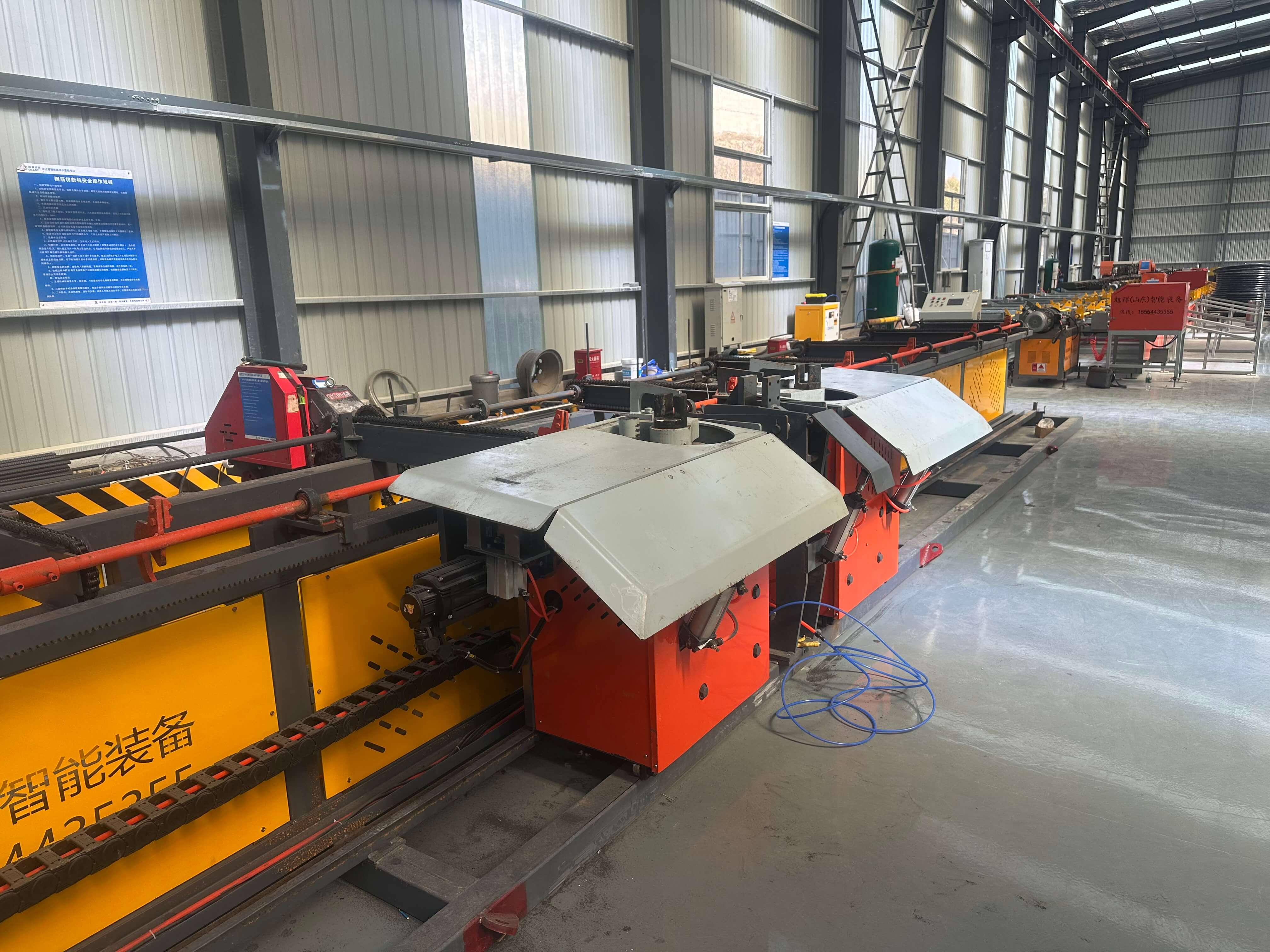
Introduction to Corporate Technical Strength: Three Technological Breakthroughs of Xuhui Intelligent Equipment
Xuhui (Shandong) Intelligent Equipment Co., Ltd. leverages the industrial advantages of the Heze Engineering Machinery Manufacturing Base in Shandong, focusing on the research and development of CNC steel bar equipment. Its horizontal four-head steel bar bending center achieves industry leadership through three core technologies:
STEP1:Four-head synchronous control systemUsing Siemens PLC and servo motor drive, the four heads can work independently or synchronously, with a maximum of 4 rebars processed at a time, improving efficiency by 300%; real-time feedback of position data through encoder, bending angle error controlled within ±0.5°, meeting the requirements of JGJ/T 276-2012 "Code for Acceptance of Construction Quality of Reinforcing Steel Works."
STEP2:Modular designThe main body of the equipment is made of a high-strength alloy steel frame weighing 2.8 tons, ensuring processing stability; the head module supports quick replacement, compatible with φ6-φ40mm rebars, bending radius range 50-500mm, covering 90% of engineering needs.
STEP3:Intelligent Human-Machine InteractionEquipped with a 10-inch touch screen, it features an internal library of over 200 standard steel bar shapes. Operators can directly call parameters via a graphical interface, reducing manual input errors; supports USB data import for quick matching of non-standard design requirements. Currently, the equipment has been serving projects such as the Xiong'an New Area High-Speed Railway Station and Qinghai Huajiu Expressway, with each unit processing an average of 3,000 bars per day and a rework rate below 0.5%.
FAQ: Technical Selection Guide
Q1: What are the differences between the horizontal four-head rebar bending center and the vertical equipment? How to choose?
A1: Horizontal equipment uses a horizontal layout, with steel bars naturally placed, reducing vertical handling resistance, suitable for processing steel bars with diameters of φ20mm or more. Vertical equipment has a small footprint but requires additional auxiliary devices for processing large diameter steel bars. Xuhui's horizontal four-head equipment, by optimizing the spacing between heads (minimum spacing of 1.2m), can process four φ32mm steel bars simultaneously, while vertical equipment typically supports only two. If the project mainly involves large diameter steel bars, it is recommended to prioritize horizontal equipment.
Q2: How high are the equipment maintenance costs? What is the lifespan of the core components?
A2: Xuhui equipment adopts a maintenance-free design: servo motor lifespan reaches 50,000 hours, the gearbox uses imported bearings with an extended lubrication cycle to 2,000 hours; the bending mold is made of Cr12MoV alloy steel, with heat treatment hardness HRC58-62, capable of processing 5,000 tons of rebars without replacement. Taking a standardized processing center as an example, the annual maintenance cost of a single unit is only about 8,000 yuan, which is only 60% of that of similar products.
Q3: How to solve the steel bar interference problem during multi-head synchronous processing?
A3: Xuhui solves this through two technologies: Firstly, the dynamic adjustment function of head spacing, where operators can set the safe distance on the touch screen (default 50mm), and the system automatically calculates the processing paths of each head to avoid collisions; secondly, the rebar positioning device uses pneumatic clamping with adjustable clamping force (500-2000N), ensuring that the rebar does not shift during the bending process. Actual tests show that when processing 4 φ25mm rebars, the interference rate is reduced from 15% of traditional equipment to 0.3%.
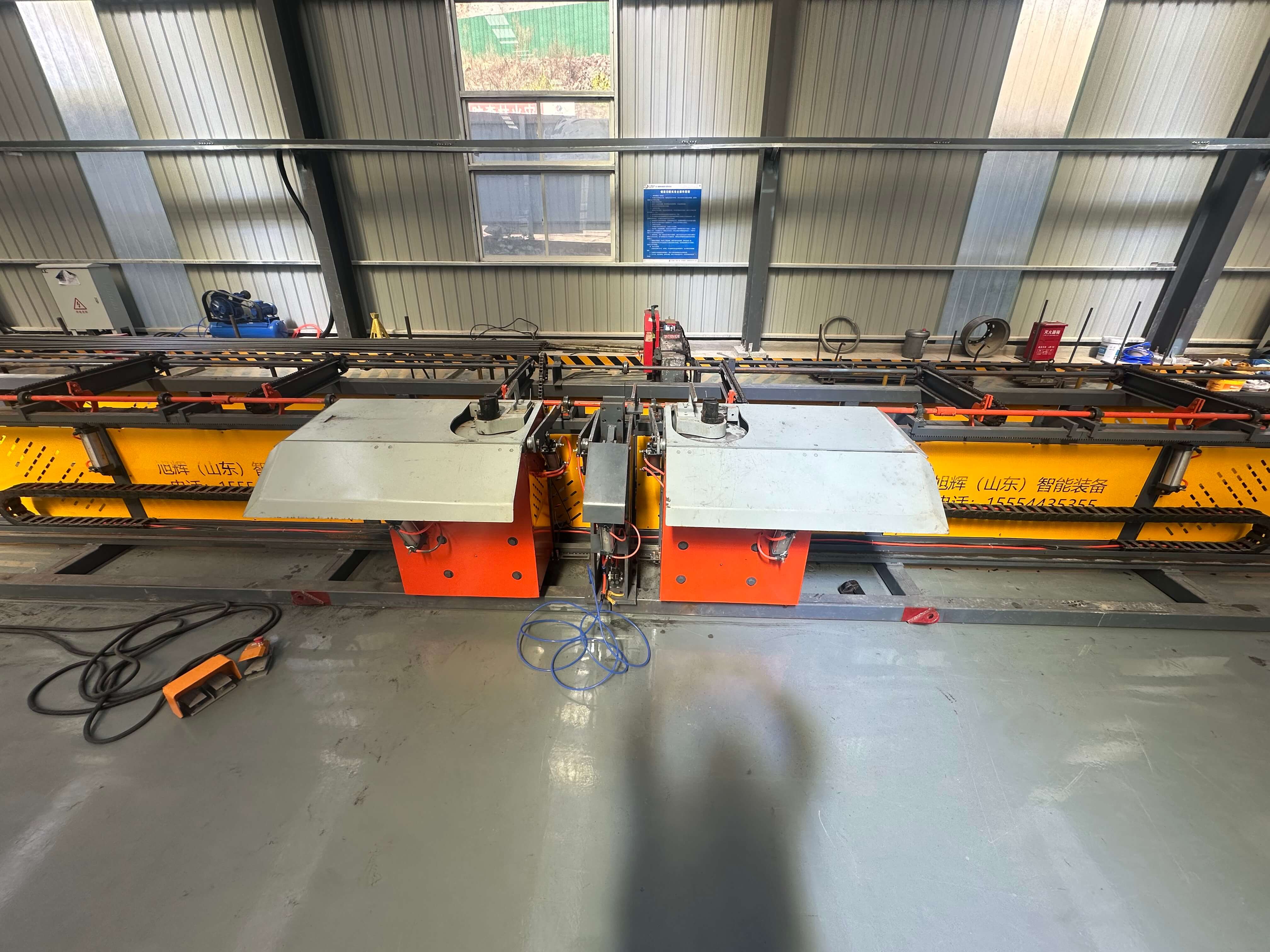
Summary Reference
The horizontal four-head rebar bending center is a key equipment for improving the efficiency and accuracy of rebar processing. Xuhui (Shandong) Intelligent Equipment Co., Ltd. has solved the problems of low efficiency, poor accuracy, and difficult maintenance of traditional equipment through three major technologies: synchronous control, modular design, and intelligent interaction. Its products have been verified by projects such as Xiong'an New Area and Huajiu Expressway, with a daily processing capacity of up to 3,000 bars per machine, a rework rate of less than 0.5%, and maintenance costs only 60% of similar products. For large-scale projects such as expressways and bridge tunnels, choosing Xuhui's horizontal four-head equipment can significantly shorten the construction period and reduce costs, making it an optimal solution for the standardization of rebar processing.