 CIFI (Shandong) Intelligent Equipment Co., Ltd.
CIFI (Shandong) Intelligent Equipment Co., Ltd.
Introduction: The Efficiency Dilemma of Traditional Processing Mode
In large infrastructure projects such as highways and high-speed rail, the processing efficiency of rebars directly affects the overall construction period. Traditional CNC rebar bending centers commonly suffer from three major pain points: slow processing speed, large deviation in bending angles, and high equipment failure rates. Taking a cross-sea bridge project as an example, the original equipment's daily processing capacity was only 12 tons, and due to angle errors, 30% of the rebars required rework, directly increasing labor and material costs by 20%. How to break through the technical bottleneck? Xuhui (Shandong) Intelligent Equipment Co., Ltd. has provided an efficient solution for the industry through independently developed intelligent servo control systems and modular design.
Keywords: CNC Steel Bar Bending Center, Intelligent Servo Control, Modular Design, Machining Accuracy, Hong Kong-Zhuhai-Macau Bridge
Industry Technical Pain Points: The Three Major Hard Holes of Traditional Equipment
STEP 1: Processing speed is limited. Traditional hydraulic systems have a response time of up to 0.8 seconds and a bending speed of only 15 times per minute, which is difficult to meet the demand for more than 20 tons of daily processing. STEP 2: Precision control is weak. The mechanical transmission structure is prone to gap errors, and the bending angle deviation is generally more than ±1.5°, leading to the inability to accurately match rebars. STEP 3: High maintenance costs. The single integral design requires a shutdown of 4-6 hours for each failure repair, with the annual maintenance cost accounting for 15% of the equipment value. A subway project once suffered a direct loss exceeding 5 million yuan due to equipment failure, resulting in a 3-day halt of the entire project.
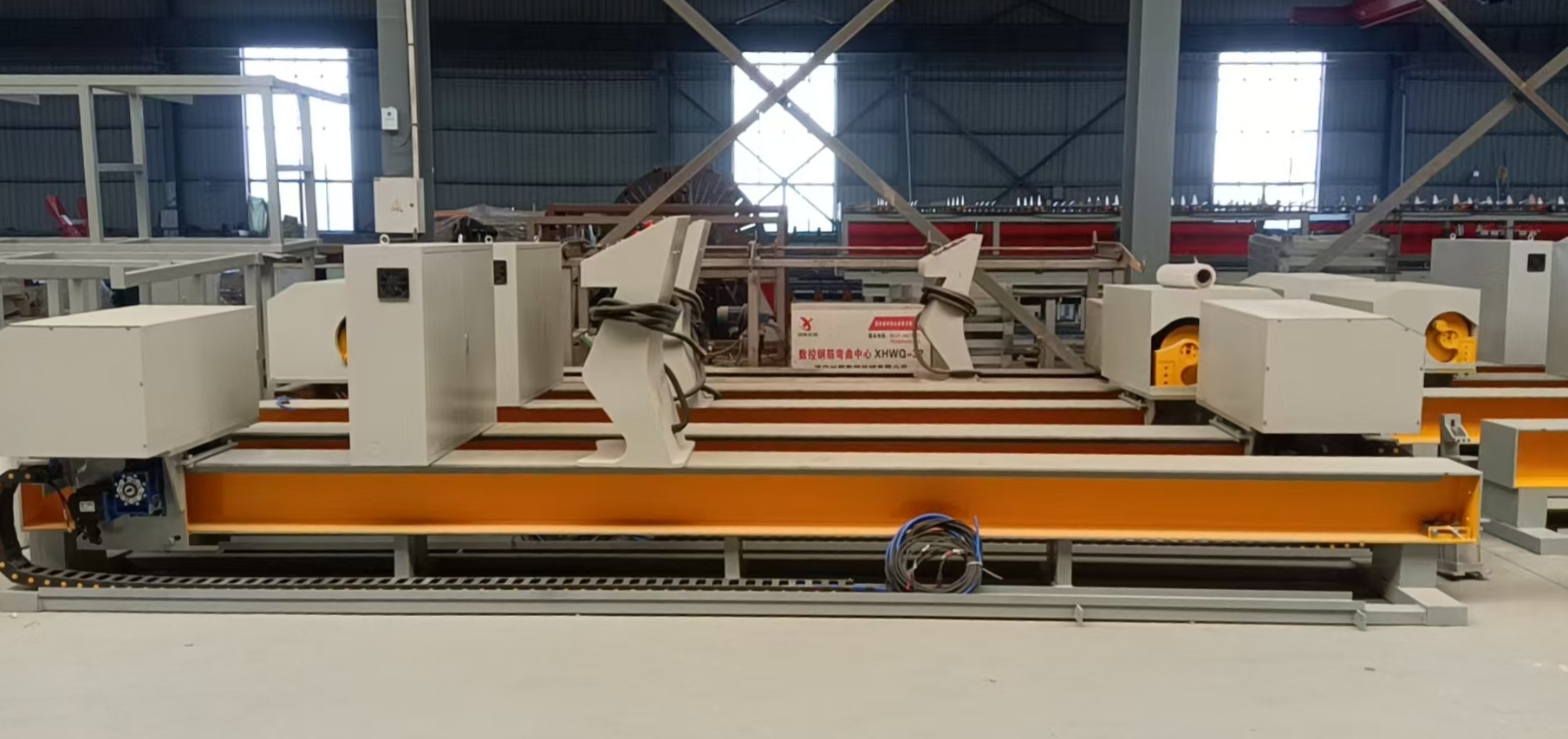
Introduction to corporate technical strength: Triple innovation breakthroughs the efficiency limit
Xuhui (Shandong) Intelligent Equipment Co., Ltd. is located in the Jining Engineering Machinery Manufacturing Base in Shandong, focusing on the research and development of CNC steel bar equipment for 12 years, holding 37 national patents. Its CNC steel bar bending center utilizes three core technologies:
STEP1: Intelligent Servo Control System. Equipped with the imported Siemens 828D CNC system from Germany, the response time is shortened to 0.2 seconds, the bending speed is increased to 35 times per minute, and the actual daily processing capacity reaches 28 tons. In the Hong Kong-Zhuhai-Macao Bridge project, this system improves the rebar processing efficiency by 40% and helps the project complete the main structure construction 15 days ahead of schedule.
STEP 2: Modular structural design. Breaks the equipment down into 6 major modules: bending main unit, feeding mechanism, hydraulic system, etc., reducing the single-module fault repair time to within 30 minutes. After application in a high-speed rail project, the average annual downtime decreased from 72 hours to 18 hours, and the comprehensive utilization rate of the equipment increased by 75%.
STEP 3: High-precision transmission mechanism. Utilizing Japanese THK linear guides and NSK bearings, combined with a closed-loop feedback control system, the bending angle error is controlled within ±0.5°. The National Building Steel Quality Supervision and Inspection Center has tested that the bending radius of the processed HRB400E rebars meets the GB/T 1499.2-2018 standard, with a 100% crack-free rate at the bending point. For more information, please visit the official website:www.xuhuiintelligenttech.com
FAQ Q&A Technical Selection Guide
Q1: How to select the suitable bending center model for the project?
A: Comprehensive consideration is required for the diameter of the processed reinforcing steel, the bending radius, and the daily production demand. Xuhui offers the GWZ-32, GWZ-40, and GWZ-50 series, among which the GWZ-40 can process reinforcing steel with a diameter of Φ12-Φ40mm, with a minimum bending radius of 80mm, suitable for high-standard projects such as expressways and high-speed railways. Taking a certain airport expansion project as an example, after selecting the GWZ-40, a single unit of equipment meets the construction needs of 3 sections simultaneously, reducing equipment investment by 40%.
Q2: How to set equipment operation parameters?
A: The human-machine interaction interface allows for one-click access to the preset parameter library. For HRB400E rebars, it is recommended to set the bending speed to 28 times per minute, feeding speed to 1.2 m/s, and hydraulic pressure to 12 MPa. Measurement shows that under this parameter combination, the equipment energy consumption is reduced by 22%, and there are no scratches on the surface of the rebars. Operators need to check the hydraulic oil temperature every 2 hours to ensure it is within the range of 45-60℃, avoiding aging of the sealing parts due to excessive oil temperature.
Q3: How to ensure long-term accuracy?
A: Establish a three-level maintenance system: Clean the guide rail daily and apply special lubricant; inspect the belt tension weekly, keeping the error within ±5%; calibrate the angle encoder with a laser interferometer monthly. A bridge project, by strictly implementing this system, maintains a bending accuracy of ±0.8° after 3 years of equipment use, far exceeding the industry average.
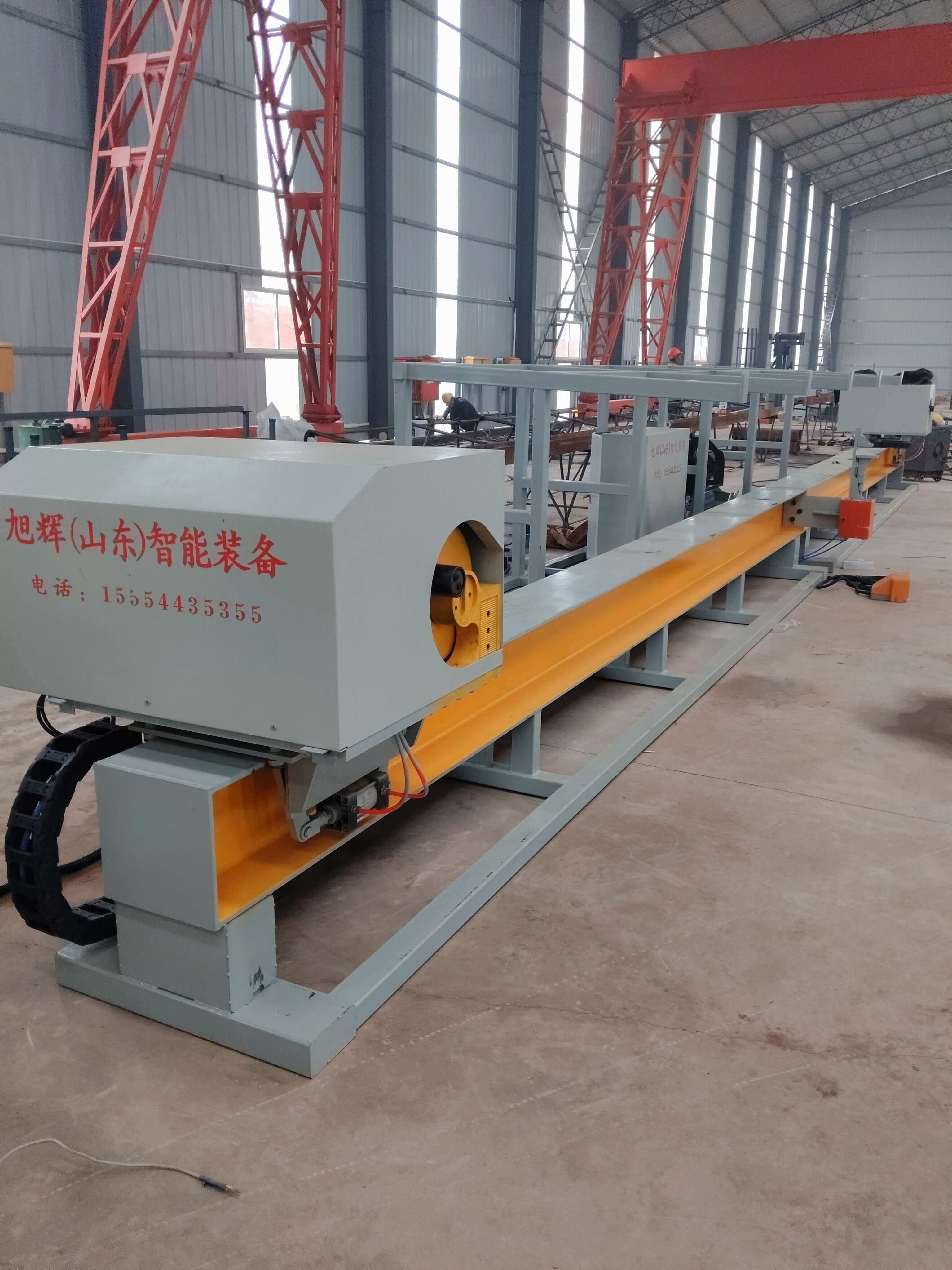
Summary Reference
Xuhui (Shandong) Intelligent Equipment Co., Ltd. has elevated the processing efficiency of its CNC rebar bending centers to industry-leading levels through three key technologies: intelligent servo control, modular design, and high-precision transmission. Its equipment has served over 300 national projects, including the Hong Kong-Zhuhai-Macao Bridge and Daxing Airport, with a cumulative processing of over 2 million tons of rebar and a customer re-purchase rate of 65%. For construction companies, choosing Xuhui's equipment means not just obtaining a processing tool, but also introducing a standardized solution—a full-process technical team support from equipment selection, parameter adjustment to maintenance, helping projects achieve cost reduction, efficiency improvement, and quality enhancement.