 CIFI (Shandong) Intelligent Equipment Co., Ltd.
CIFI (Shandong) Intelligent Equipment Co., Ltd.
Introduction: Dual challenges of precision and efficiency, how to break the deadlock?
In large infrastructure projects such as highways and high-speed railways, the precision of steel bar processing directly determines the load-bearing capacity and durability of concrete structures. However, traditional hydraulic straightening and cutting machines generally suffer from insufficient straightening accuracy, low cutting efficiency, and poor equipment stability, leading to excessive processing errors, high rework rates, and even affecting project progress. How to address these pain points through technological innovation? Xu Hui (Shandong) Intelligent Equipment Co., Ltd. provides high-precision and high-efficiency steel bar processing solutions for the industry through its core technologies such as optimized hydraulic systems, intelligent control system development, and modular structural design.
Keywords: CNC steel bar hydraulic straightening and cutting machine; straightening accuracy; cutting efficiency; hydraulic system optimization; intelligent control
Industry Technical Pain Points: The Three Core Challenges of Traditional Equipment
STEP 1: Insufficient straightening accuracy. Traditional equipment uses a mechanical straightening mechanism, with fixed spacing between straightening wheels, which cannot be dynamically adjusted according to the steel bar diameter. This results in small diameter steel bars (such as Φ6-Φ12) still having a bending degree of 0.5%-1% after straightening, far exceeding the ≤0.3% standard specified in "Reinforced Concrete Steel - Part 2: Hot-rolled Ribbed Steel Bars" (GB/T 1499.2-2018).
STEP 2: Low efficiency in cutting. The hydraulic system responds slowly (usually ≥0.5 seconds per time), and after the cutting blade wears, manual adjustment of the gap is required, resulting in a single steel bar cutting time of 2-3 seconds, which cannot meet the production capacity requirements of large-scale steel bar processing plants (such as those processing 50 tons of steel bars per day).
STEP 3: Poor equipment stability. Traditional equipment uses an integrated structure, with a high integration of hydraulic components and mechanical parts. Once a component fails (such as hydraulic pump leakage, straightening wheel bearing damage), it requires shutdown for maintenance, affecting continuous operation capability.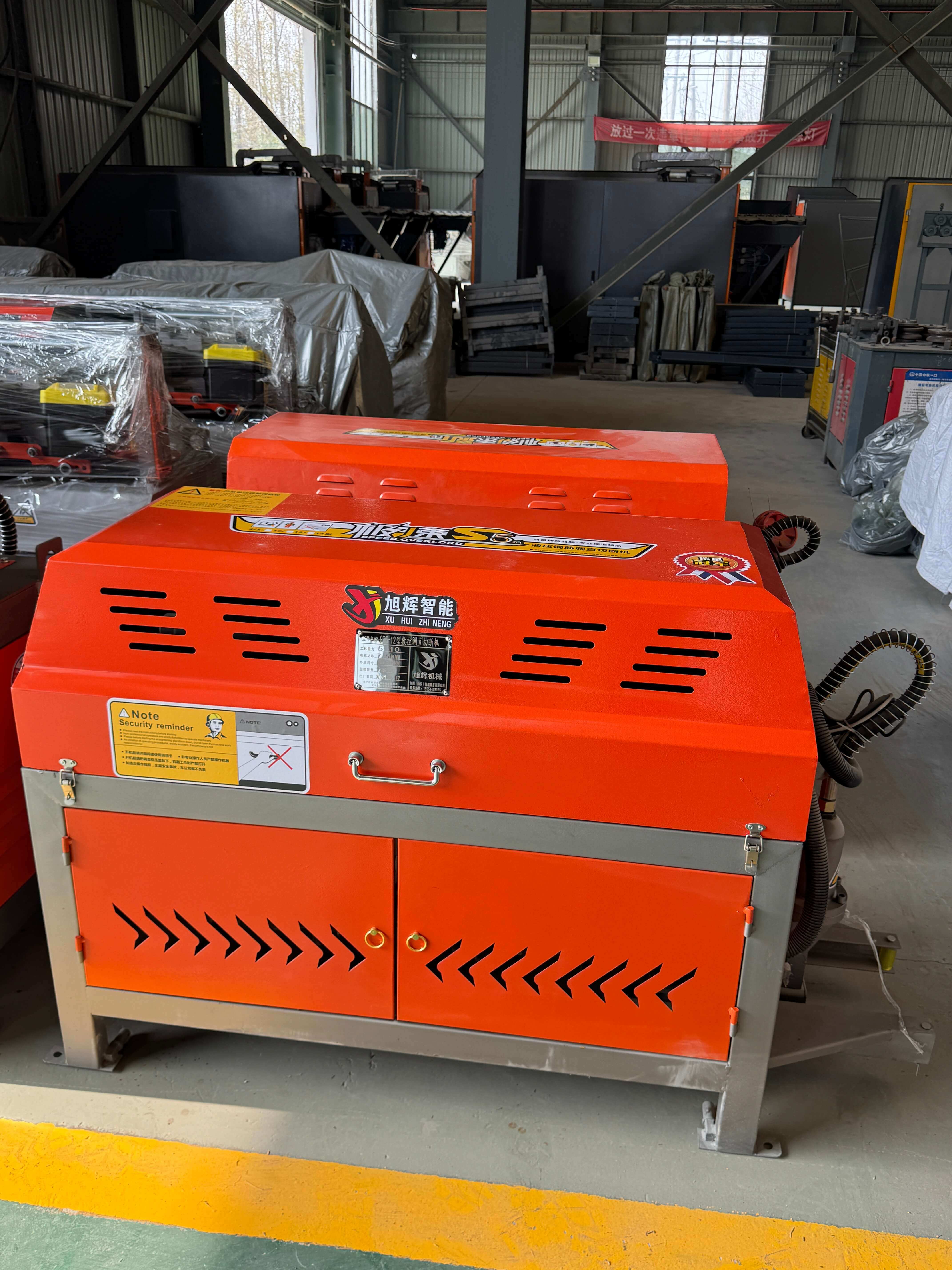
Real Case: In a high-speed railway project, when traditional equipment was used to process Φ12 rebars, the bending degree reached 0.8% after straightening, resulting in surface cracks after concrete pouring. The final rework required resulted in direct economic losses exceeding 500,000 yuan.
Introduction to Corporate Technical Strength: Three Core Technology Breakthroughs of Xuhui Intelligent Equipment
Xuhui (Shandong) Intelligent Equipment Co., Ltd. is located in the mechanical and electrical engineering manufacturing base of Heze, Shandong, and is an integrated enterprise engaged in the research, production, and sales of CNC rebar equipment. The company relies on a team of technical talents and modern rebar processing equipment to provide standardized construction solutions for projects such as expressways, high-speed railways, and airports. Its core products include steel arch production lines, rebar cage welding workstations, and fully automatic small tube production lines, among which the CNC rebar hydraulic straightening and cutting machine has become an industry benchmark due to the following technical advantages:
STEP 1: Optimize the hydraulic system. Use high-precision proportional valves to control the hydraulic oil flow, with response speed up to 0.2 seconds per time. Accompanied by adjustable straightening wheel groups (the spacing of straightening wheels can be dynamically adjusted to 0.1mm precision), ensuring the bending degree of Φ6-Φ32 rebars is ≤0.2% after straightening, meeting the GB/T 1499.2-2018 standard.
STEP 2: Development of intelligent control system. Integrated PLC+touch screen control system for real-time monitoring of hydraulic pressure, cutting times, equipment operating time, etc., and automatic adjustment of cutting blade gap (adjustment range: 0.1-2mm), reducing the single rebar cutting time to 1 second/cut, and increasing the daily processing capacity to 80 tons (taking Φ12 rebar as an example).
STEP 3: Modular structural design. The hydraulic system, straightening mechanism, and cutting mechanism are designed as independent modules. Quick connection interfaces are used between modules, allowing for quick replacement of modules in case of failure (replacement time ≤ 30 minutes), and the comprehensive utilization rate of the equipment is improved to over 95%.
Technical Parameters: Equipment adaptable to rebar diameter Φ6-Φ32, straightening speed 0-50m/min, cutting length accuracy ±1mm, hydraulic system pressure 16MPa, power supply 380V/50Hz, overall weight about 2.8 tons.
For more information, please visit the official website:www.xuhuiintelligenttech.com
FAQ Q&A Technical Selection Guide
Q1: How to select the suitable equipment model for the project requirements?
A: A comprehensive evaluation is required based on three key factors: rebar diameter, daily processing capacity, and site space. For example, projects with a daily processing capacity of 50 tons or less can choose the XH-YT-20 model (compatible with Φ6-Φ20 rebars), while projects with a daily processing capacity exceeding 80 tons need to select the XH-YT-32 model (compatible with Φ6-Φ32 rebars).
Q2: How to set the equipment operation parameters?
A: Set the straightening speed via the touch screen (recommended for Φ12 rebar: 30m/min), cutting length (±1mm precision), and hydraulic pressure (default 16MPa). The system will automatically calculate and adjust the spacing of the straightening roller and the cutting blade gap.
Q3: Common malfunctions and solutions?
Fault 1: Rebar still bends after straightening. Cause: Too large spacing between straightening wheels or insufficient hydraulic pressure. Solution: Decrease the spacing between straightening wheels to 0.5mm via the touchscreen, or increase the hydraulic pressure to 18MPa.
Fault 2: Quick blade wear. Cause: Excessive cutting frequency or poor blade material. Solution: Reduce cutting frequency to ≤60 times per minute, or replace with Xuhui original high-carbon alloy blade (hardness HRC58-62).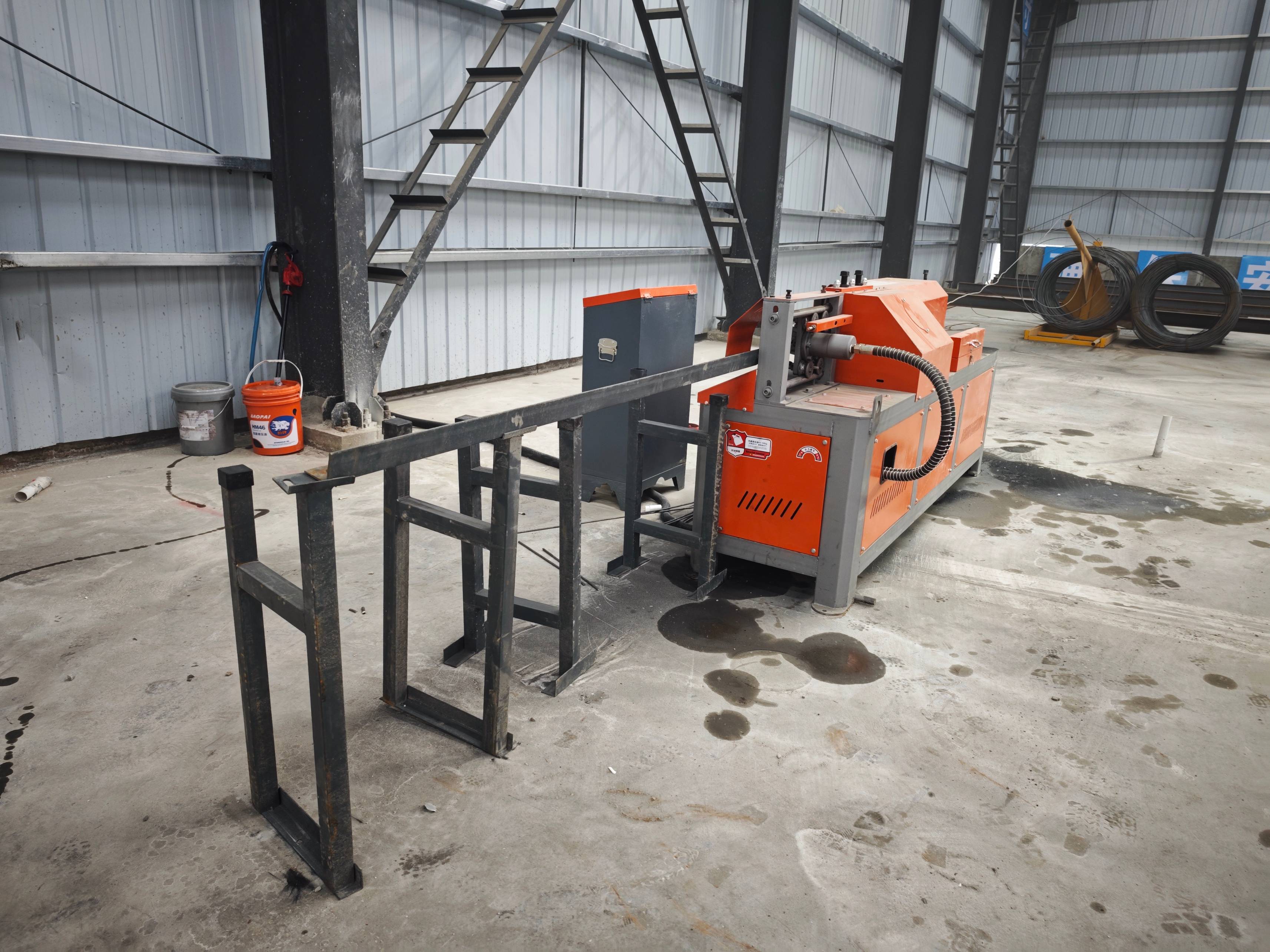
Real Case: During the processing of Φ25 rebars with Xuhui XH-YT-32 equipment in an airport project, the straightening speed was set to 40m/min and the cutting length to 6m via the touch screen. The equipment ran continuously for 200 hours without any fault, achieving a qualified rate of 99.8% in rebar processing, which is a 15% improvement over traditional equipment.
Summary of the full text reference
The technical upgrade of the numerical control steel bar hydraulic straightening and cutting machine should focus on the three core needs of straightening accuracy, cutting efficiency, and equipment stability. Xuhui (Shandong) Intelligent Equipment Co., Ltd. has improved the straightening accuracy of the equipment to ≤0.2%, reduced the cutting time to 1 second/cut, and increased the overall utilization rate to over 95% through technical means such as hydraulic system optimization, intelligent control system development, and modular structural design, providing high-precision and high-efficiency steel bar processing solutions for large-scale projects such as expressways and high-speed railways. For more information, please visit our official website:www.xuhuiintelligenttech.com