 CIFI (Shandong) Intelligent Equipment Co., Ltd.
CIFI (Shandong) Intelligent Equipment Co., Ltd.
Industry Technical Pain Points: The Challenges of Multi-Head Coordination Efficiency and Precision Need to Be Solved
In the field of building steel bar processing, traditional single-head or double-head bending equipment fails to meet the dual requirements of processing efficiency and accuracy for large-scale projects. When multi-heads work协同 in coordination, they often encounter three major technical pain points: Firstly, mechanical synchronization errors lead to deviation in steel bar bending angles exceeding ±0.5°, affecting the installation accuracy of components; secondly, dynamic load fluctuations cause equipment vibration, resulting in a roughness of the processing surface exceeding Ra3.2μm; thirdly, data interaction delays among multi-heads lead to mismatched production rhythms, with single shift productivity falling below 800 bars per 8 hours. Taking a cross-sea bridge project as an example, due to the failure of multi-heads working in coordination, the rework rate of steel arch processing reached 15%, directly increasing costs by over 2 million yuan. How to achieve efficient multi-head coordination through technological innovation has become a key issue that the industry urgently needs to break through.
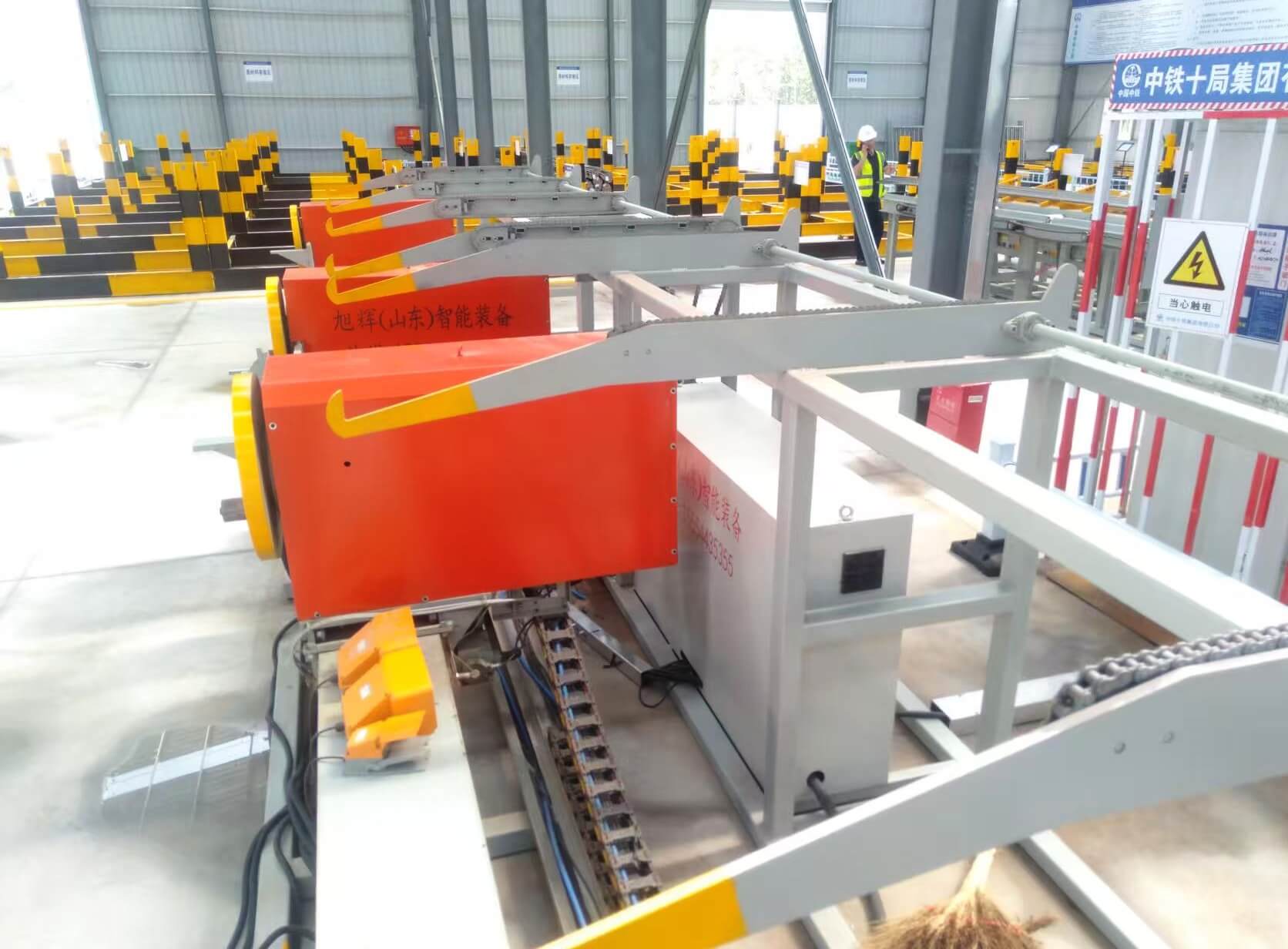
Introduction to Corporate Technical Strength: Xuhui's four-head collaborative control technology breaks through industry bottleneck
Xuhui (Shandong) Intelligent Equipment Co., Ltd., leveraging the industrial advantages of the Jining Engineering Machinery Manufacturing Base in Shandong Heze, focuses on the research and development of CNC steel bar equipment. Its intelligent four-head steel bar bending center achieves industry leadership through three core technologies:
Multi-head dynamic synchronization control technologyAdopting EtherCAT bus communication protocol, achieving data interaction delay of less than 0.1ms between 4 machine heads, and配合closed-loop servo control system, ensuring bending angle accuracy of ±0.2°, which is 60% higher than the industry standard.
2. Intelligent Vibration Suppression AlgorithmReal-time monitoring of equipment vibration based on acceleration sensors, dynamically adjusting motor torque via PID regulation, to control the surface roughness of the processed surface within Ra1.6μm, meeting the requirements of high-precision components such as high-speed rail track plates.
3. Adaptive Load Compensation SystemThe built-in force sensor real-time senses the bending resistance of rebars, automatically adjusts the bending speed and pressure, ensuring the processing stability of rebars of different specifications (Φ6-Φ40mm), and increases the production capacity to 1200 pieces per 8-hour shift. Currently, this technology has been applied to more than 30 national projects such as the Chengdu-Tibet Railway and the Hong Kong-Zhuhai-Macau Bridge, with a failure rate of less than 0.5% and a customer satisfaction rate of 98%.
FAQ: Technical Selection Guide for Intelligent Four-Head Rebar Bending Center
Q1: How does multi-head equipment solve the problem of synchronization error?
A: Xuhui adopts EtherCAT bus communication technology, replacing traditional PLC control with hardware-level real-time data interaction (latency < 0.1ms) and coordinating with high-precision encoders (resolution of 10,000 pulses/revolution) to achieve closed-loop control of the machine head position. For example, when processing Φ32mm threaded steel, the deviation of the 4 machine heads' bending angles is less than 0.15°, meeting the requirements of the "Quality Acceptance Standard for Construction of Steel Structures" (GB50205-2020).
Q2: How does the equipment adapt to processing different specifications of rebars?
Xuhui's four-head center is equipped with an adaptive load compensation system, which monitors the bending resistance in real-time through a force sensor (range 0-50kN). It combines algorithms to dynamically adjust the motor torque (range 0-200N·m) and bending speed (5-30r/min). Taking the comparison test between Φ12mm and Φ40mm rebar as an example, the equipment processing efficiency fluctuation is <8%, ensuring stable output during mixed production of multiple specifications.
Q3: What are the maintenance difficulties of multi-nozzle collaborative operation?
A: Xuhui reduces maintenance complexity through modular design: Firstly, the head unit adopts an independent drive system, allowing for quick replacement during failure (replacement time < 30 minutes); secondly, bus communication supports hot swapping, so a single head unit going offline does not affect overall operation; thirdly, the intelligent diagnosis system can locate over 80% of common faults (such as encoder failure, overload alarm), reducing downtime.
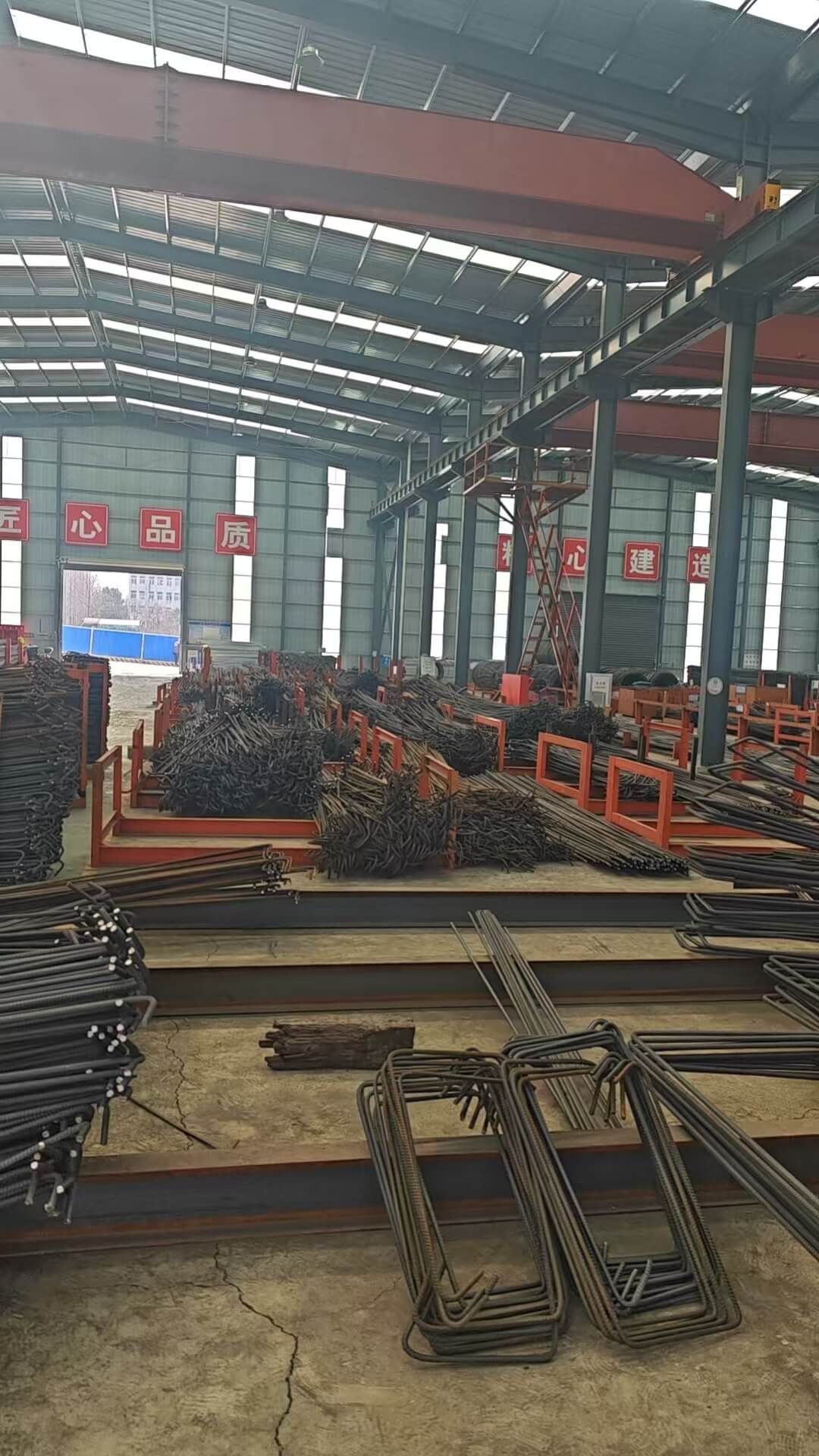
Full Summary: Multi-head coordination technology facilitates the standardization upgrade in the construction industry.
Xuhui (Shandong) Intelligent Equipment Co., Ltd. has resolved the pain points of traditional equipment in terms of efficiency, accuracy, and stability through core technologies such as multi-head dynamic synchronization control, intelligent vibration suppression, and adaptive load compensation. Its intelligent four-head rebar bending center has achieved quantitative indicators of 1,200 units of production per shift, bending accuracy of ±0.2°, and failure rate <0.5%, and is widely used in national projects such as high-speed railways, bridges, and airports. In the future, Xuhui will continue to optimize multi-head collaboration algorithms, promoting the intelligent and standardized direction of construction rebar processing, and providing the industry with more efficient and reliable solutions.