 CIFI (Shandong) Intelligent Equipment Co., Ltd.
CIFI (Shandong) Intelligent Equipment Co., Ltd.
Industry Technical Pain Points: The Efficiency and Precision Dilemma of Traditional Reinforcement Bar Bending and Processing
In large infrastructure projects such as expressways and high-speed railways, the efficiency and accuracy of rebar processing directly affect the progress of the project and the structural safety. Traditional single-head or double-head rebar bending equipment has three main pain points: Firstly, each processing can only complete 1-2 rebar bending, facing daily processing needs of thousands of rebars, frequent manual material changes lead to low efficiency; secondly, the precision of the mechanical transmission structure is affected by wear, and after long-term use, the bending angle deviation can reach ±2°, which is difficult to meet the strict ±0.5° requirements for scenarios such as high-speed rail track slabs; thirdly, the equipment function is single, requiring the coordination of multiple devices such as cutting and threading, occupying a large amount of space and taking time in process connection. Taking a high-speed rail project as an example, the traditional equipment needs 12 hours to process 5,000 rebars, and 3% of the rebars require rework due to angle deviation, directly increasing the cost by over 50,000 yuan.
Introduction to Corporate Technical Strength: Technological Breakthrough of Xuhui Intelligent Four-Head Reinforcement Bending Center
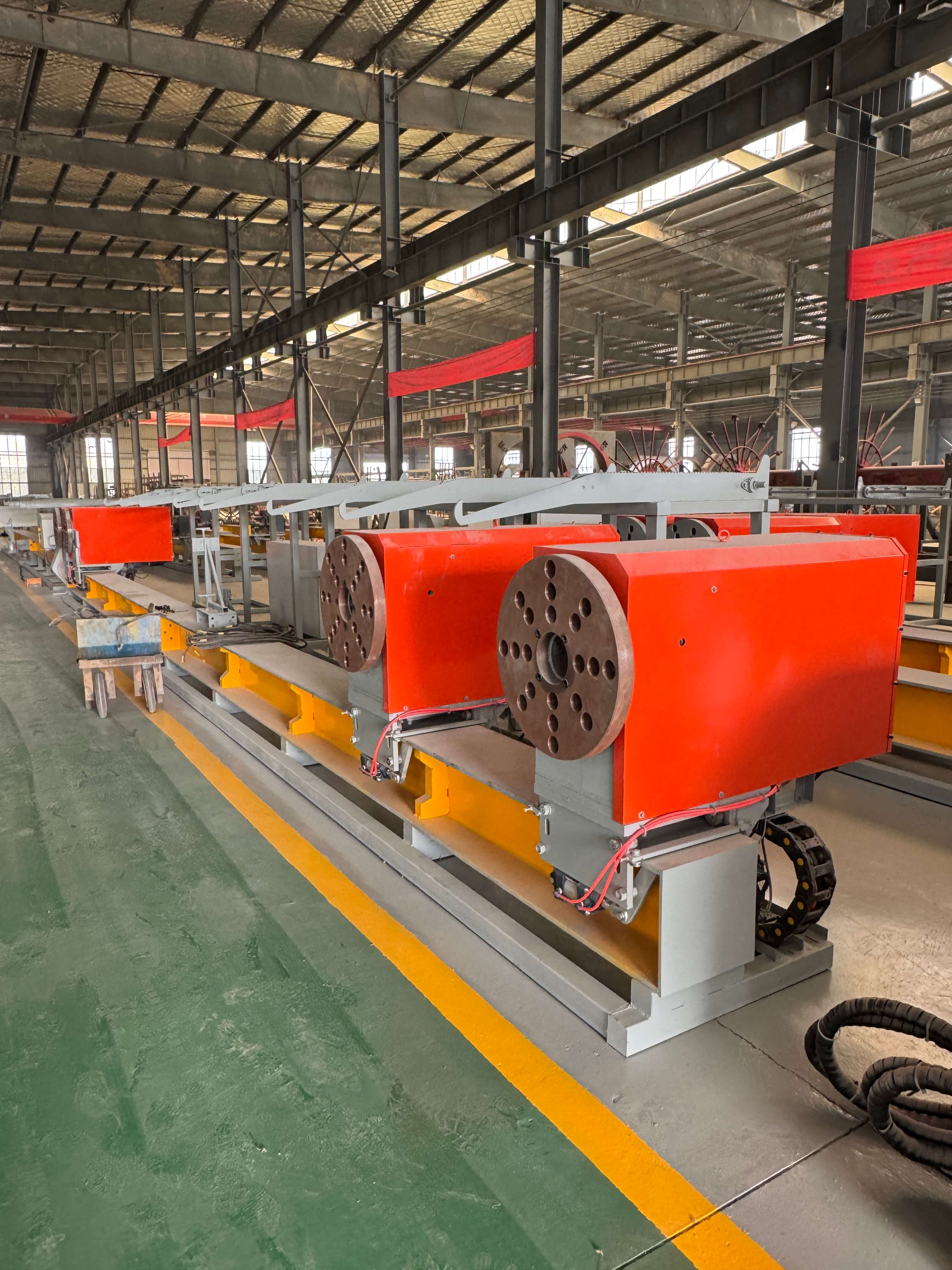
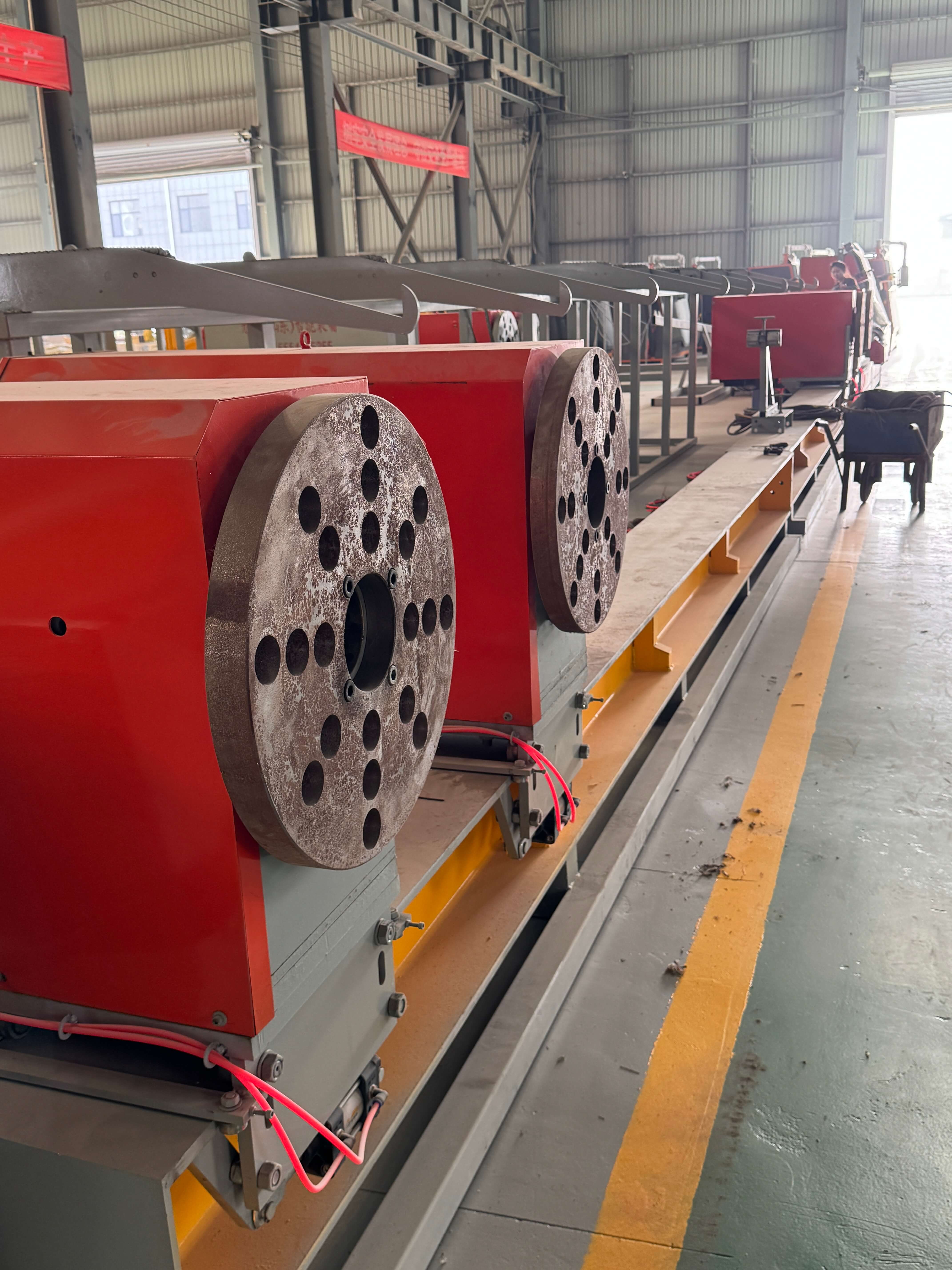
Xuhui (Shandong) Intelligent Equipment Co., Ltd. has developed the intelligent four-head rebar bending center (model XH-QJW4-2000) to address the above pain points, achieving breakthroughs through three core technologies:
Modular four-head independent control technologyFour independent servo motors drive the bending shafts, with each head capable of individually setting the bending angle (0°-180°), speed (5-30r/min), and radius (50-2000mm). It supports simultaneous processing of 4 different specifications of rebars, increasing the production volume to 8000 pieces per shift (8 hours), a 300% efficiency improvement over traditional equipment.
2. Multi-axis联动Closed-loop Control SystemReal-time feedback of the bending shaft position through the encoder, combined with dynamic adjustment of motor torque by PID algorithm, controls the angle deviation within ±0.3°, meeting the requirements of the "Technical Conditions for Expansion and Contraction Devices of Concrete Bridges for High-Speed Railways" (TB/T 3320-2013) for the precision of steel bar bending.
3. Intelligent Material Change and Fault Self-Diagnosis SystemEquipped with an automatic feeding bin with a capacity of 2000kg, supporting automatic picking and positioning of steel bars with Φ12-Φ40mm diameter, the material change time is shortened from 3 minutes per time to 15 seconds per time; internally equipped with a database of 12 types of fault codes, capable of real-time monitoring parameters such as motor temperature and hydraulic pressure, automatically stops the machine and pushes alarm information to the maintenance terminal upon anomalies.
The equipment has been applied in projects such as the Zhengwan High-Speed Railway and Qingdao Jiaodong Airport. According to actual measurements, processing 5,000 steel rebars takes only 3.5 hours, with zero rework, saving the customer over 120,000 yuan in costs.
 FAQ: Technical Selection Guide for Intelligent Four-Head Rebar Bending Center
Q1: How to select the appropriate number of rebar bending center heads for the project requirements?
A: The number of machine heads should be evaluated comprehensively based on the processing volume and rebar specifications. For projects with a daily processing volume of less than 3000 bars and a single specification, dual-head equipment can be chosen; if multiple specifications (such as Φ16, Φ25, Φ32mm) need to be processed simultaneously or the daily processing volume exceeds 5000 bars, it is recommended to select a four-head machine. For example, a bridge-tunnel project requires bending both Φ20mm (bending radius 800mm) and Φ32mm (bending radius 1200mm) rebars simultaneously. A four-head machine can allocate 2 heads for processing Φ20mm and 2 heads for processing Φ32mm, thus avoiding frequent mold changes and resulting efficiency losses.
Q2: What factors affect the bending accuracy of the equipment? How can long-term stability be ensured?
A: The bending accuracy is mainly affected by mechanical transmission clearance, servo control algorithms, and environmental temperature.旭辉equipment adopts a zero-clearance gear transmission structure, combined with a German imported servo motor (resolution 0.001°), to minimize mechanical transmission errors; the closed-loop control system samples angle data every 50ms, dynamically correcting the motor output; the operating temperature range of the equipment supports -10℃ to 50℃, and it can still maintain ±0.3° accuracy in the severe cold of Northeast China or the high temperature of Xinjiang. It is recommended to replace the reducer lubricating oil every 2000 operating hours and to calibrate the equipment regularly with a laser angle gauge.
Q3: What are the requirements of the intelligent feeding system for steel bar specifications? How to avoid material jamming failures?
A: Xuhui equipment supports automatic feeding of round steel Φ12-Φ40mm and ribbed steel, but the following conditions must be met: steel bar straightness error ≤5mm/m (can be pre-processed by straightening machine); no burrs or bends at the ends of the steel bars (otherwise, they are prone to jam in the hopper guide rail); single bundle weight of steel bars ≤500kg (to avoid overloading the feeding motor). The equipment is equipped with a pressure sensor, which will automatically stop feeding and alarm when the accumulated pressure of steel bars in the hopper exceeds the set value (default 200kg), preventing equipment shutdown due to material jamming.
 Full Summary: Technical Value and Application Prospects of the Intelligent Four-Head Reinforcement Bending Center
Xuhui (Shandong) Intelligent Equipment Co., Ltd.'s intelligent four-head rebar bending center effectively addresses the core pain points of traditional equipment, such as low efficiency, poor accuracy, and single functionality, through modular design, multi-axis联动 control, and intelligent feeding technology. With a bending accuracy of ±0.3°, processing capacity of 8,000 pieces per day, and fault self-diagnosis function, it can meet the stringent requirements of rebar processing for projects like high-speed railways and airports. When selecting technology, attention should be paid to the number of machine heads, servo control algorithms, and feeding system compatibility, and it is recommended to comprehensively evaluate based on project scale, rebar specifications, and site conditions. With the enhancement of infrastructure projects' requirements for construction standardization, the intelligent four-head rebar bending center will become a core equipment in the rebar processing field, helping the industry upgrade towards high efficiency, accuracy, and intelligence.