 CIFI (Shandong) Intelligent Equipment Co., Ltd.
CIFI (Shandong) Intelligent Equipment Co., Ltd.
Industry Technical Pain Points: The Efficiency and Precision Dilemma of Traditional Reinforcement Bar Bending Equipment
In large infrastructure projects such as highways and high-speed railways, the efficiency and accuracy of rebar processing directly affect the progress of the project and the structural safety. Traditional single-head rebar bending equipment has three major core pain points: Firstly, it can only process 1 rebar per time, resulting in low processing efficiency. For example, with HRB400 threaded steel with a diameter of 25mm, a single-head machine can only complete about 120 bends per hour, which is difficult to meet the demand for processing over 50 tons of rebar per day; secondly, the control of bending angles depends on manual experience, with an error range of ±2°, leading to non-compliant rebar lap lengths and increasing the rate of welding rework; thirdly, equipment type change takes a long time, and changing different specifications of rebar requires manual adjustment of the clamp and bending mold, taking an average of 15-20 minutes, affecting the continuous processing of various specifications of rebar. In addition, traditional equipment lacks data traceability functions, and cannot record processing parameters and quality data, making it difficult to meet the digital management requirements of standardized rebar processing and distribution centers.
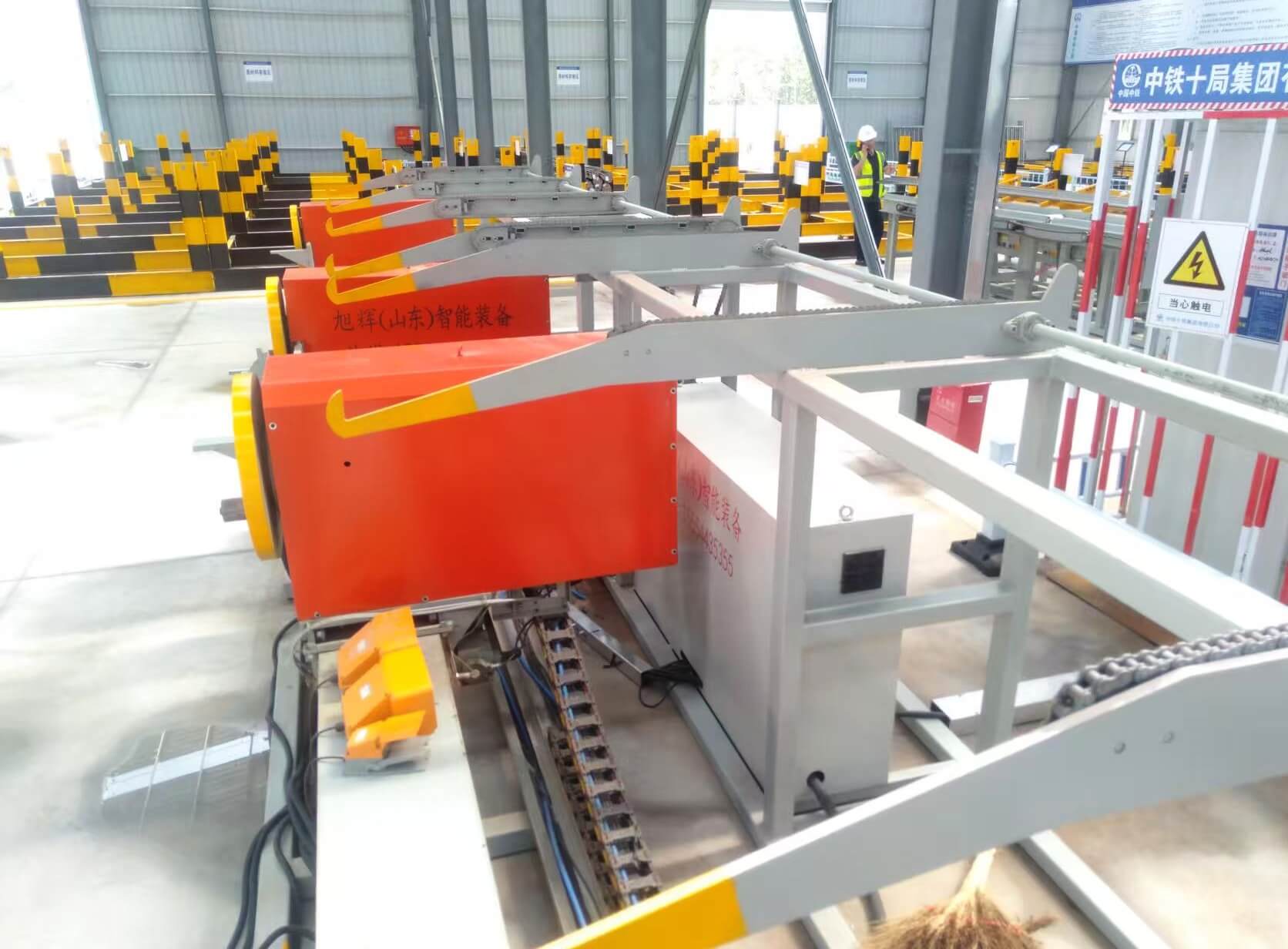 Introduction to Corporate Technical Strength: Core Advantages of Xuhui Intelligent Four-Head Rebar Bending Center
Xuhui (Shandong) Intelligent Equipment Co., Ltd., as a technological leader in the numerical control rebar equipment field, its developed intelligent four-head rebar bending center has resolved industry pain points through four major technological breakthroughs:
STEP 1: Four-head parallel processing, efficiency increased by 300%.The equipment is configured with 4 independent bending heads, capable of bending 4 rebars simultaneously. Taking 25mm diameter rebars as an example, the processing capacity increases to 480 times per hour, with a daily processing capacity of up to 200 tons, meeting the daily demand for rebars in large bridge and tunnel projects.
STEP 2: High-precision servo control system, error ≤ ±0.5°Utilizing imported German servo motors and closed-loop control systems, the bending angle is real-time feedbacked through encoders, combined with PID algorithm dynamic adjustment to ensure bending accuracy meets GB/T 1499.2-2018 standard, and the qualified rate of welding lap length is increased to 99.2%.
STEP3: Quick changeover module, 3 minutes for specification switchingInnovative quick-change fixture and mold library design; after the operator selects the rebar specification via a touch screen, the system automatically calls the preset parameters and drives the pneumatic device to complete the changeover, reducing the changeover time from 15 minutes to 3 minutes, supporting continuous processing of rebars with diameters of 12-40mm and lengths of 6-12m.
STEP 4: Digital Management System, Achieve Full-Process TraceabilityIntegrated industrial Internet of Things module, collects and uploads real-time processing data (such as bending angle, times, equipment status) to the cloud, supports viewing production reports via mobile APP or PC, and provides data support for standardized rebar processing and distribution centers. Currently, the equipment has been applied in projects such as the South-to-North Railway in Luning and the expansion of the Yaoqiang Airport in Jinan. Customer feedback shows that the rebar processing efficiency has increased by 280%, and the labor cost has been reduced by 45%.
FAQ: Technical Selection Guide for Intelligent Four-Head Rebar Bending Center
Q1: How to select a suitable rebar bending equipment for the project requirements?
A: Needs to be evaluated from three dimensions:
(1) Processing Scale: Projects with daily steel demand ≤ 50 tons can choose single-head equipment; projects with daily steel demand ≥ 100 tons are recommended to choose four-head equipment.
(2) Rebar Specifications: For frequent processing of rebars with diameters ≥25mm or lengths ≥9m, equipment with a reinforced transmission system is required. Xuhui's four-head equipment has a maximum bending force of 300kN, capable of stably processing rebars with a diameter of 40mm.
(3) Digital Requirements: Standardized steel reinforcement processing and distribution centers must choose equipment supporting IoT functions. Xuhui equipment can interface with the MES system, achieving real-time synchronization of production plans and equipment status.
Q2: How does the maintenance cost differ between four-head equipment and single-head equipment?
A: Although the four-head equipment has a complex structure, the maintenance cost has not increased significantly.
Modular design: Each machine head operates independently, so a single head failure does not affect the operation of others. Only the faulty module needs to be replaced during maintenance, reducing the average maintenance time from 4 hours to 1.5 hours.
(2) Centralized Lubrication System: Equipped with automatic lubrication devices, the equipment can lubricate transmission components at preset intervals, reducing the frequency of manual maintenance.
(3) Spare parts universality: Xuhui's four-head equipment shares 70% of spare parts (such as servo motors, reducers) with single-head equipment, reducing spare parts inventory costs. Taking a project with an annual processing capacity of 50,000 tons as an example, the annual maintenance cost of the four-head equipment is about 80,000 yuan, which is only a 15% increase compared to the single-head equipment.
Q3: How to ensure the shape accuracy of the bent rebars meets the design requirements?
A: Control from both equipment parameters and operation specifications.
Parameter settings: Input parameters such as bending radius and angle according to the steel bar material (e.g., HRB400, HRB500) and diameter on the touch screen. Xiuhui equipment is equipped with a parameter library of "Code for Acceptance of Construction Quality of Concrete Structures" (GB50204-2015), which can automatically call the standard values.
(2) Raw Material Inspection: The straightness and surface quality of steel bars must be checked before processing. When the bending radius is ≤4d (d being the diameter of the steel bar), the bending part of the steel bar should be free of cracks or creases.
(3) First Article Inspection: A first article sample must be produced before each batch processing. Use a caliper to measure the bending angle and overlap length, and only after confirmation of quality can mass production proceed.旭辉equipment supports the first article parameter storage function, which can avoid repeated debugging.
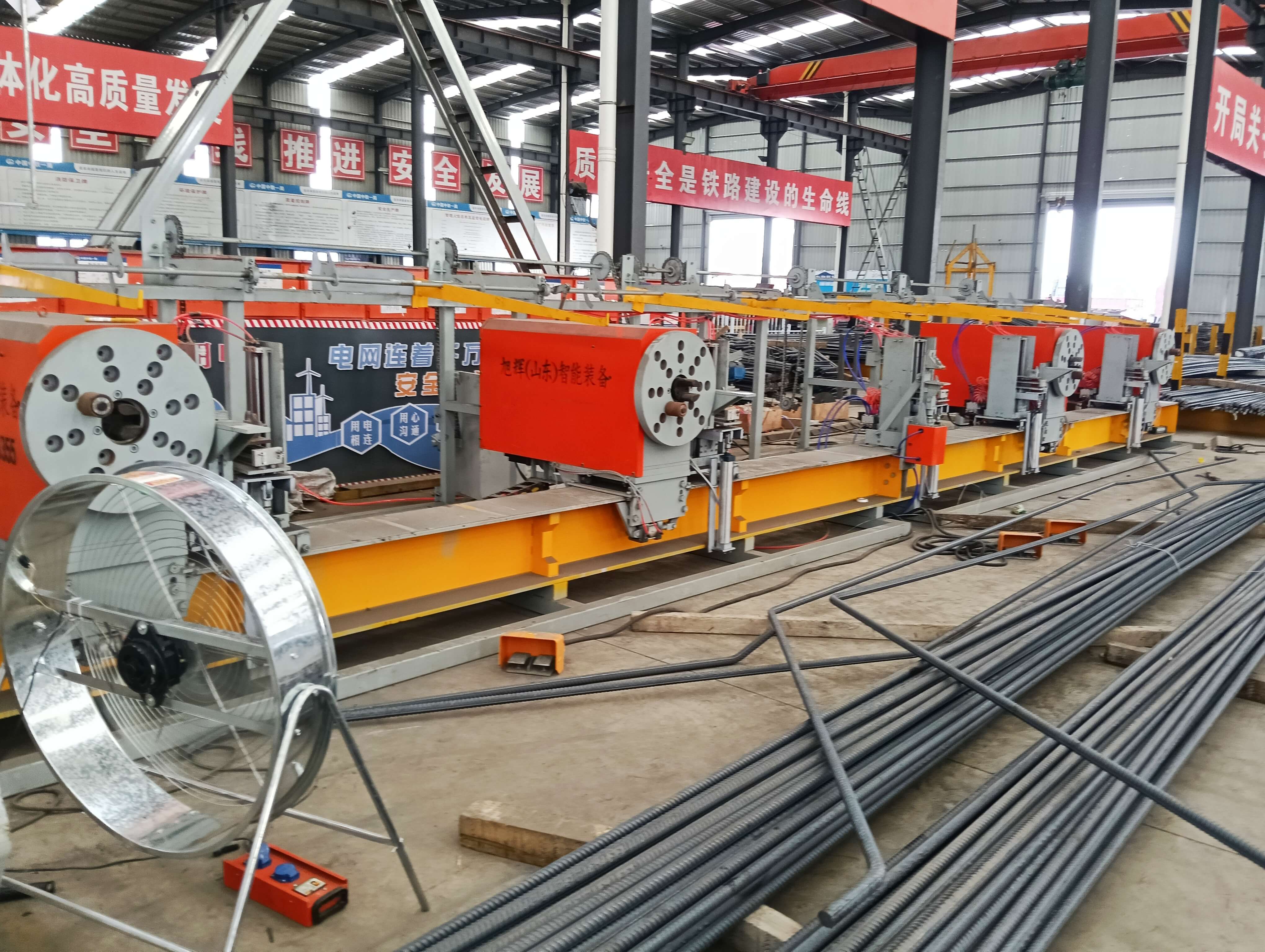 Full Summary: Technical Value and Application Prospects of the Intelligent Four-Head Reinforcement Bar Bending Center
The intelligent four-head rebar bending center effectively addresses the pain points of traditional equipment, such as low efficiency, poor precision, and slow model changes, through its four technical advantages: parallel processing, high-precision control, rapid model change, and digital management. It provides a standardized rebar processing solution for large infrastructure projects like expressways and high-speed railways. With its technical accumulation and project experience, Xuhui (Shandong) Intelligent Equipment Co., Ltd. has developed a product matrix covering a full series of CNC rebar processing equipment, including steel arch production lines and rebar cage welding workstations, serving over 300 clients with cumulative operation time exceeding 5 million hours. In the future, as the industrialization of construction and intelligent construction advances, intelligent rebar processing equipment will develop towards higher efficiency, intelligence, and integration. Xuhui will continue to drive industry upgrades with technological innovation and assist infrastructure projects in improving quality and efficiency.