 CIFI (Shandong) Intelligent Equipment Co., Ltd.
CIFI (Shandong) Intelligent Equipment Co., Ltd.
Industry Technology Pain Points: Bottlenecks in Traditional Curved Wire Bending Technology Efficiency and Precision
In large infrastructure projects such as expressway, high-speed rail bridges and tunnels, the bending of rebars is a critical construction step. However, traditional manual bending or semi-automatic equipment has significant pain points: Firstly, manual operations rely on experience, resulting in rebar size errors of ±5mm or more, which makes it difficult to assemble the rebar frame and affects structural safety; secondly, the daily production capacity of a single machine is only 300-500 pieces, which is difficult to meet the daily demand of tens of thousands of pieces in large projects; thirdly, the adjustment of bending angles depends on mechanical scales, and complex shapes (such as spiral rebars) require multiple rework, with a material loss rate of up to 8%-10%. Moreover, traditional equipment lacks data traceability functions, and quality control relies on manual inspections, making it difficult to achieve full-process standardization. These issues directly increase project costs. According to statistics, rework costs caused by rebar processing errors account for 3%-5% of the total project budget, becoming a technical bottleneck that the industry urgently needs to break through.
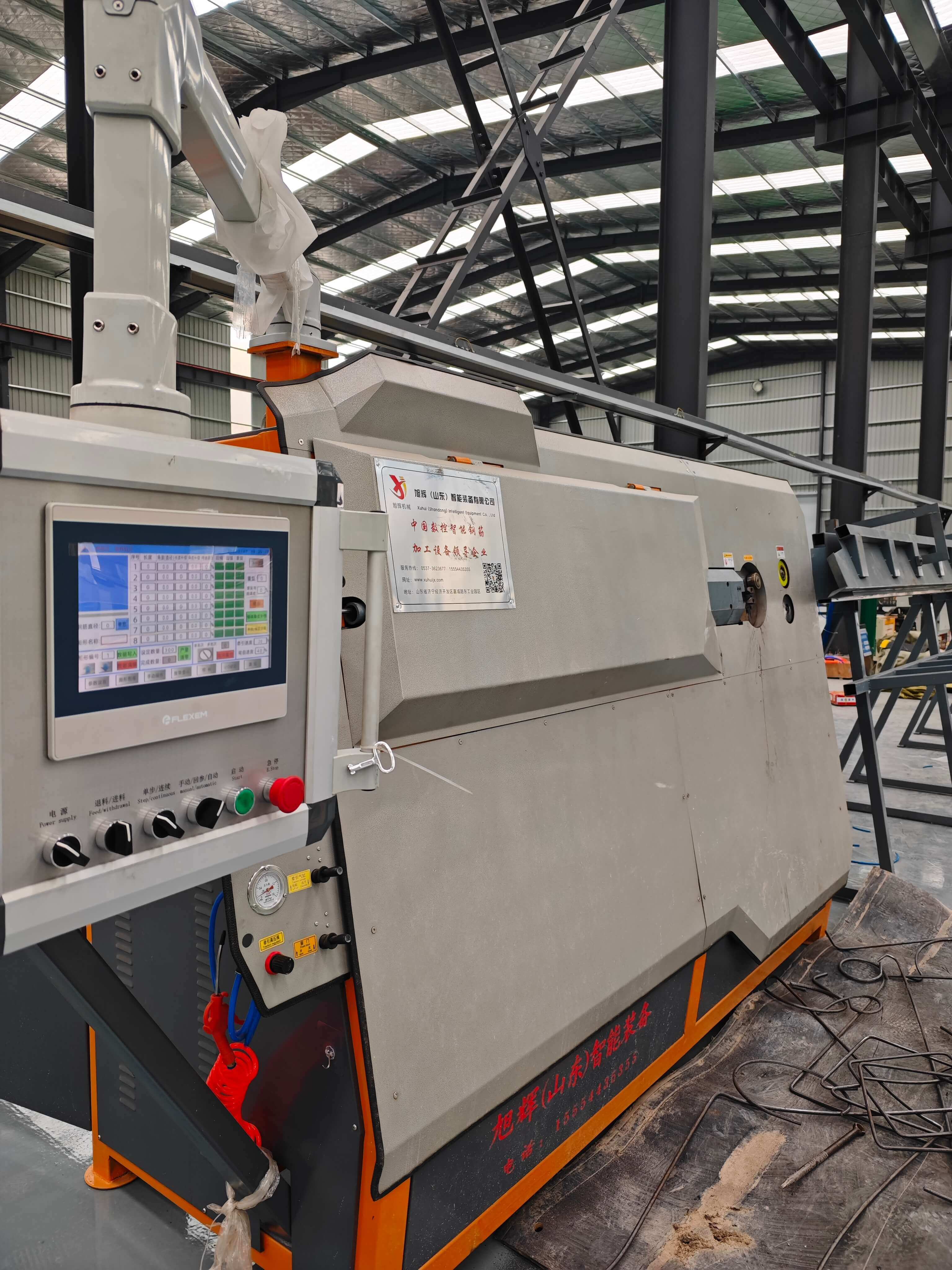
Introduction to Corporate Technical Strength: Xuhui (Shandong) Intelligent Equipment's Full Process Solution
Xuhui (Shandong) Intelligent Equipment Co., Ltd. is based in the Jining Engineering Machinery Manufacturing Base in Shandong Heze, focusing on the research and development of CNC steel bar equipment for 12 years, forming a "hardware + software + service" integrated technical system. Its core product, the CNC steel bar bending machine, uses servo motor drive and closed-loop control system, achieving bending accuracy of ±0.5mm and angle error ≤0.5°, with daily production capacity of 2000-3000 bars per unit, six times the efficiency of traditional equipment; the equipment supports adaptive adjustment of steel bar diameter from 12-40mm, capable of processing over 20 complex shapes such as rectangular, rhombic, and helical, reducing material loss rate to less than 2%. Technically, the company's independently developed "Xuhui Intelligent Control System" integrates the Internet of Things module, enabling real-time collection of equipment operation data (such as bending times, fault codes, energy consumption), generating processing reports through cloud platforms, supporting quality traceability and remote maintenance. Taking the Zhengwan High-Speed Railway project as an example, Xuhui equipment has processed 120,000 tons of steel bars, with a product qualification rate of 99.8%, helping the project save over 4 million yuan in rework costs. Currently, the company's equipment has served more than 300 key projects including the Hong Kong-Zhuhai-Macau Bridge and Daxing Airport, with technical adaptability covering full scenarios such as high-speed railways, bridges and tunnels, and standardized processing centers.
FAQ Q&A Technical Selection Guide
Q1: How to choose a suitable CNC bending machine for bridge-tunnel projects?
A1: The bridge-tunnel project has extremely high requirements for stirrup accuracy, focusing on three aspects: Firstly, the servo motor power needs to be ≥7.5kW to ensure stable power during the bending of 40mm steel bars; secondly, the control system needs to support graphical programming, allowing direct import of BIM models to generate processing paths, reducing manual input errors; thirdly, the equipment needs to be equipped with automatic feeding and cutting devices to achieve full-process automation of "bending-cutter-piling". The Xuhui HGW-40 bending stirrup machine adopts an 11kW servo motor, supports processing of 12-40mm steel bars, and the配套 Xuhui intelligent control system can interface with the BIM platform, and has been widely used in bridge-tunnel projects such as China Railway and China Communications Construction.
Q2: How high are the maintenance costs for the CNC bending machine?
A2: Maintenance costs are closely related to equipment design. Xuhui equipment adopts modular design, with core components (such as servo motors, reducers) selected from brands like Siemens and Schneider, with a lifespan of over 10 years; daily maintenance only requires regular cleaning of tracks and lubricating chains, with a single maintenance time ≤30 minutes. In addition, the equipment is equipped with an in-built self-diagnostic system, which can monitor over 200 operating parameters in real-time, with a fault warning accuracy rate of 95%, avoiding unplanned downtime. According to customer feedback, the annual maintenance cost of Xuhui equipment accounts for only 2%-3% of the equipment value, lower than the industry average.
Q3: Is it suitable for a small-scale processing factory to introduce a CNC bending machine?
A3: Small-scale factories can balance cost and efficiency through equipment selection. The Xuhui HGW-25 bending machine is specially designed for medium and small-scale applications, occupying only 3㎡ of space, supporting 12-25mm steel bar processing, with a single shift production capacity of 800-1200 bars, and a price 40% lower than large-scale equipment. It comes with a mobile operation terminal, eliminating the need for professional programmers, as ordinary workers can be trained in 2 hours and start working. Taking a county-level processing factory as an example, after introducing this equipment, the labor cost is reduced by 60%, and the order delivery cycle is shortened from 3 days to 1 day, with the equipment investment recouped within 3 months.
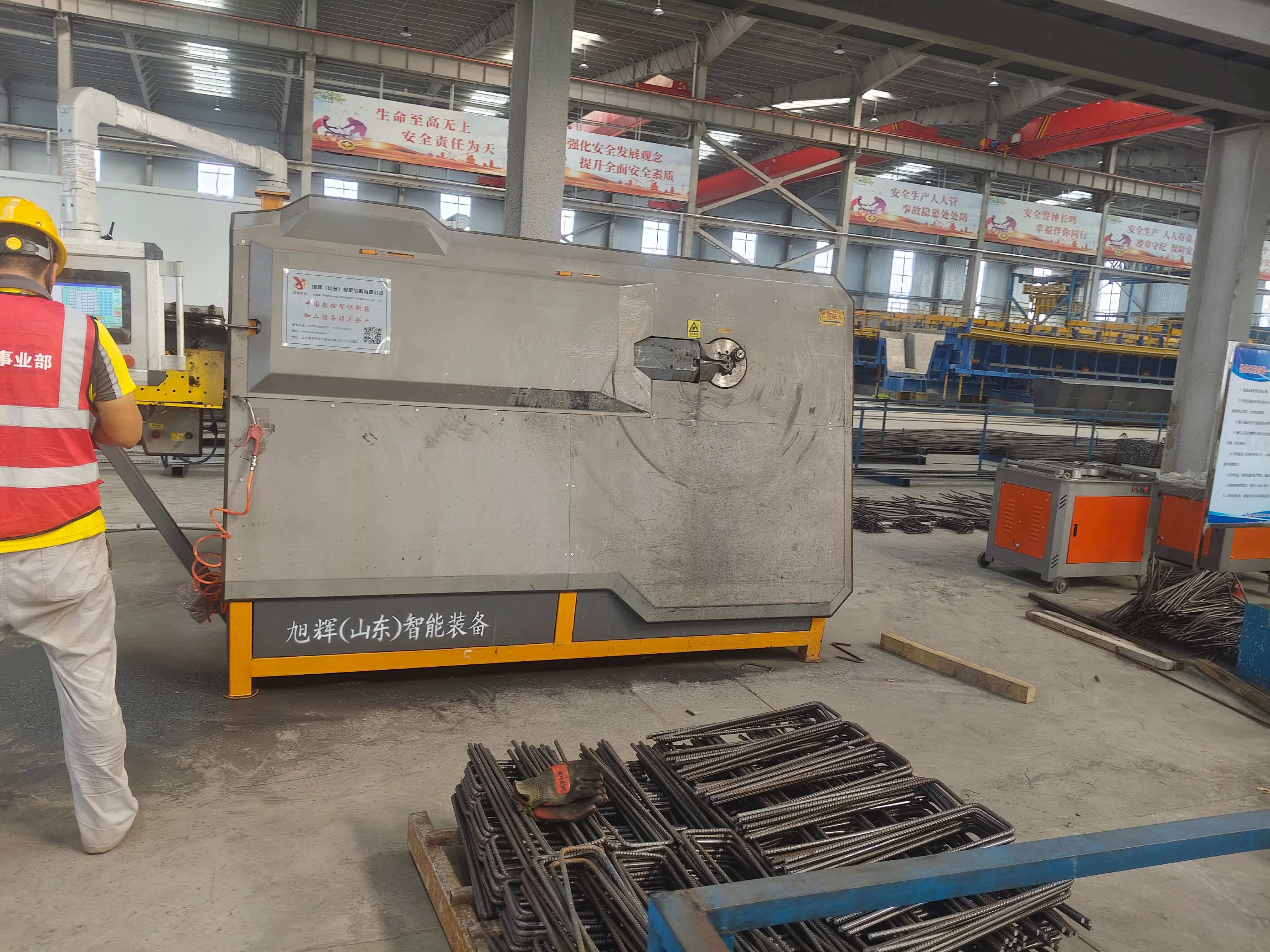
Summary Reference: The Future of Reinforcement Bar Processing Standardization Driven by Technology
The technological innovation of the CNC steel bar bending machine essentially resolves the triangular contradiction of "efficiency-precision-cost." Xuhui (Shandong) Intelligent Equipment achieves this through three major technical paths: servo control, the Internet of Things, and modular design. It raises the equipment precision to 0.5mm level, improves efficiency by 6 times, and reduces maintenance costs by 40%, providing the industry with a replicable standardized solution. From the Zhengwan High-Speed Railway to the Hong Kong-Zhuhai-Macao Bridge, its equipment has been verified for stability under complex working conditions, with technical adaptability covering all scenario demands. For processing plants, when selecting equipment, it is crucial to focus on core parameters such as servo power, control system openness, and the degree of modularity, and to choose the right model based on their own scale and project requirements. In the future, with the deep integration of BIM+IoT technology, CNC bending machines will evolve towards the "intelligent decision-making" stage, and the technological layout of companies like Xuhui is injecting critical momentum into the industry's standardization process.