 CIFI (Shandong) Intelligent Equipment Co., Ltd.
CIFI (Shandong) Intelligent Equipment Co., Ltd.
Industry Technical Pain Points: Bottlenecks in Efficiency and Accuracy of Traditional Reinforcement Bending
In the field of construction rebar processing, traditional bending and binding technology has long been faced with three major technical pain points: Firstly, the reliance on manual operation is high, with bending angle and length errors reaching ±3%, leading to difficulties in rebar frame assembly and a rework rate exceeding 15%; secondly, the daily production capacity of a single machine is only 800-1200 bars, which is difficult to meet the daily demand of tens of thousands of bars for large-scale projects like expressways and high-speed railways; thirdly, the intense friction between rebar and molds during the bending process often results in burrs, necessitating an additional polishing process, increasing the processing cost by 20%. Taking a high-speed railway project as an example, the traditional technology, due to insufficient accuracy, requires on-site correction for 30% of the rebar cages, delaying the construction schedule by up to two weeks. In addition, manual bending is labor-intensive, requiring 3-4 people to collaborate in a single shift, with labor costs accounting for over 40% of the total. These pain points urgently require numerical control and automated solutions.
Introduction to Corporate Technical Strength: Xuhui Intelligent Equipment's Full Process Solution
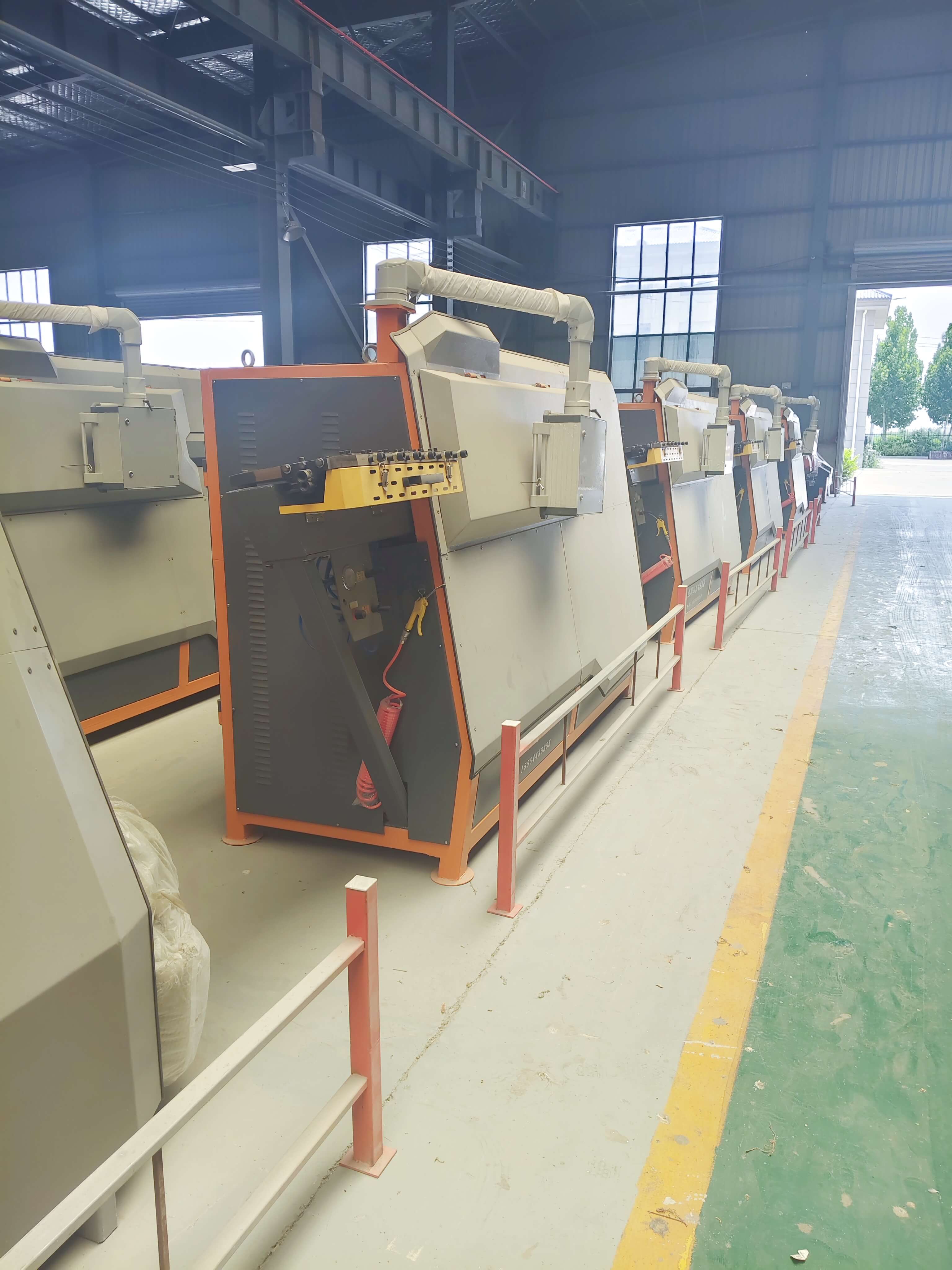
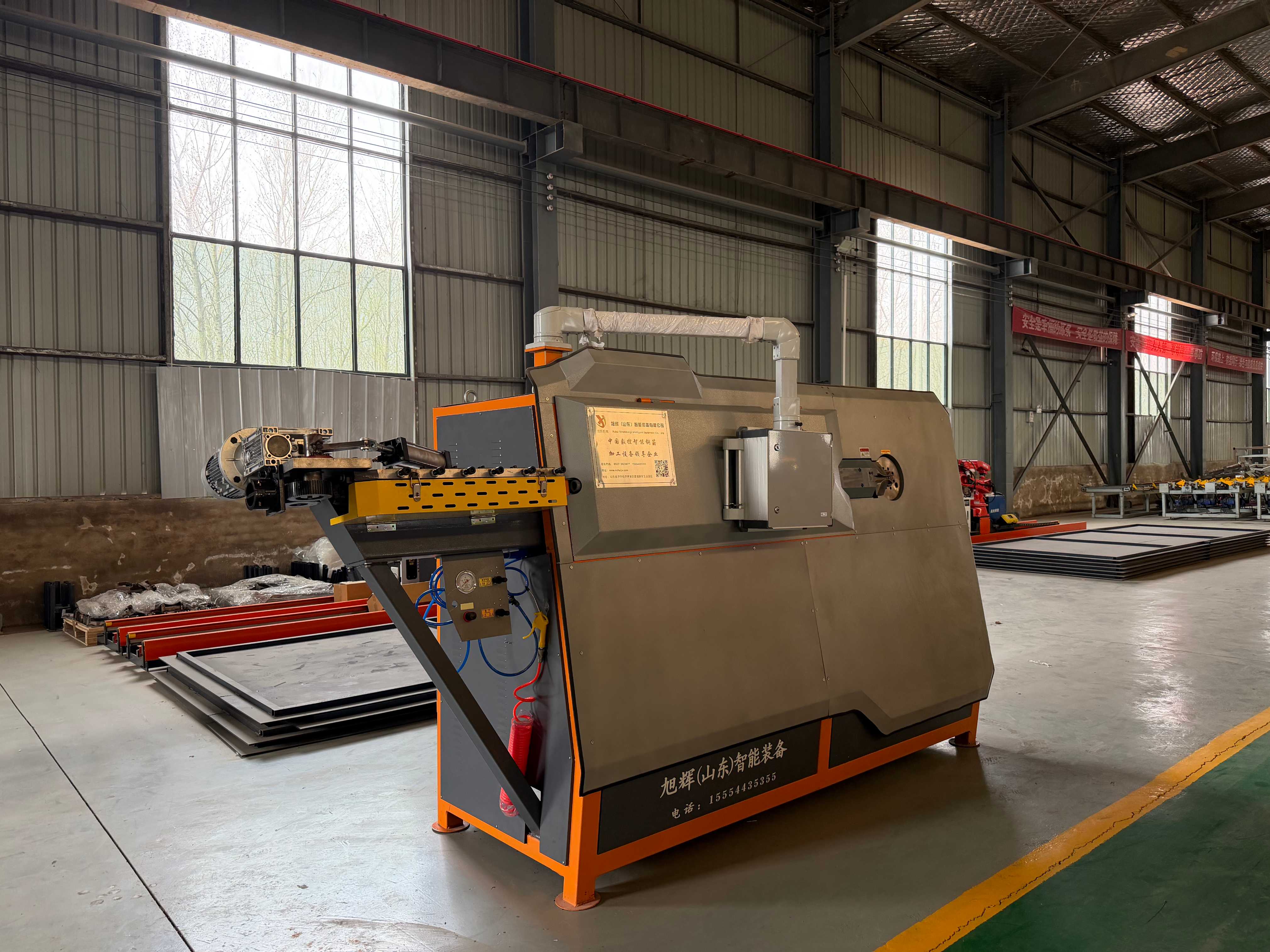
Xuhui (Shandong) Intelligent Equipment Co., Ltd. specializes in the field of CNC steel bar equipment, leveraging the industrial advantages of the Jining Huozhou Engineering Machinery Manufacturing Base in Shandong to establish a full-chain technical system covering research and development, production, sales, and service. The company's core team consists of over 20 senior engineers in the fields of mechanical design and electrical control, with 80% having over 10 years of industry experience. They have led the development of 6 series and over 20 models of equipment, including the steel arch production line and CNC steel bar bending center. Taking the CNC steel bar bending machine as an example, its technical parameters reach the leading level in the industry: bending angle accuracy ±0.5°, bending speed of 18-22 times per minute, and support for automatic processing of Φ6-Φ32mm steel bars. The daily production capacity of a single machine is increased to 3,000-4,000 bars, three times higher than traditional technology. The equipment uses a servo motor-driven system, combined with a high-precision encoder, to achieve closed-loop control of the bending angle; the molds are made of Cr12MoV alloy steel, with a heat treatment hardness of HRC58-62, which improves wear resistance by 50% and extends the service life to over 200,000 times. Currently, Xuhui's equipment has served more than 30 key projects, including the Jining-Qingdao Expressway reconstruction and expansion, and the Zhengzhou-Wuhan High-Speed Railway. Customer feedback shows that the pass rate of steel bar processing has increased from 85% to 98%, and labor costs have been reduced by 60%.
FAQ: Technical Selection Guide for CNC Steel Reinforcement Bending Machine
Q1: How to select the suitable CNC steel bar bending machine model for the project requirements?
A1: Selection requires considering three parameters: Firstly, the steel bar diameter range, if the project mainly uses Φ12-Φ25mm steel bars, Xuhui GW-25 model can be chosen, with a maximum bending diameter of Φ28mm; secondly, production capacity requirements, for daily processing volume below 5000, single-head models can be selected, while over 5000 requires double-head models (such as GW-32D), with double-head simultaneous operation efficiency increased by 80%; thirdly, site conditions, the equipment occupies about 4㎡ of space, and 1.5m of operating space needs to be reserved. Taking an airport expansion project as an example, it selected GW-32D double-head model,配合 automatic feeding system, achieving 24-hour continuous operation and monthly production capacity exceeding 120,000 bars.
Q2: What are the key maintenance points for the CNC steel bar bending machine?
A2: Daily maintenance should focus on three major modules: Firstly, the transmission system, check the servo motor belt tension every 500 hours, and the deviation should be controlled within ±5%; secondly, the lubrication system, add No. 3 lithium-based grease to the mold shaft for each shift, and replace the gear oil for the reducer every 2000 hours; thirdly, the electrical system, regularly clean the control cabinet dust, check the tightness of the terminal blocks, and avoid poor contact leading to malfunctions. A high-speed rail project once suffered mold shaft wear due to insufficient lubrication. After the Xuhui after-sales team replaced high-strength bearings, the equipment resumed stable operation, and maintenance costs were reduced by 40%.
Q3: Can the CNC steel bar bending machine be compatible with processing different shapes of steel bars?
A3: Xuhui equipment supports multi-shape processing, and complex shapes such as rectangles, trapezoids, and polygons can be bent by changing molds. Taking the GW-25 model as an example, its mold library is equipped with 5 standard shape molds, supporting customized non-standard molds, and the changeover time only takes 10 minutes. For a bridge-tunnel project requiring processing of irregular steel cage, the Xuhui technical team developed special molds according to the design drawings, coordinating with the graphic import function of the CNC system, achieving one-click processing, with shape error controlled within ±1mm, meeting the requirements for first-grade steel welding.
Summary Reference: Standardization Process of Reinforcement Steel Processing Driven by Technology
Technological innovation of the numerical control rebar bending machine essentially solves the contradiction of efficiency, accuracy, and cost in traditional processes. XuHong (Shandong) Intelligent Equipment Co., Ltd. has achieved three core breakthroughs: servo control technology, high-strength die materials, and modular design, raising the equipment performance to the forefront of the industry. Its products not only cover large infrastructure scenarios such as expressways and high-speed railways but also meet the needs of special projects like bridges, tunnels, and airports through customized services. In the future, with the deep integration of BIM technology and numerical control equipment, the processing of rebar will move towards the fully digitalized process of "design - processing - installation." XuHong will continue to drive the standardization upgrade of the industry with technological innovation and provide equipment support for the high-quality development of the construction industry.