 CIFI (Shandong) Intelligent Equipment Co., Ltd.
CIFI (Shandong) Intelligent Equipment Co., Ltd.
Introduction: Why has the automation upgrade of CNC steel bar processing equipment become an industry necessity?
In large-scale infrastructure projects such as highways and high-speed railways, the precision and efficiency of steel bar processing directly affect project progress and structural safety. Traditional manual operations suffer from significant processing errors, low efficiency, and high labor costs, whereas CNC steel bar processing equipment, through intelligent control and modular design, enables automated production of processes such as bending, welding, and cutting of steel bars. Taking the technological practices of Xuhui (Shandong) Intelligent Equipment Co., Ltd. as an example, this article analyzes how it has increased processing efficiency by over 30% and reduced the error rate caused by manual intervention to within 0.5% through core equipment such as steel arch frame production lines and steel cage welding workstations.
Keywords: CNC steel bar processing equipment, automated production, Xuhui Intelligent Equipment, steel arch frame production line, steel reinforcement cage welding workstation
Opening on Industry Technical Pain Points: Three Core Challenges in Traditional Steel Bar Processing
STEP 1: Difficulty in precision control. Manual operations rely on workers' experience, and parameters such as rebar bending angles and welding positions are susceptible to factors like fatigue and emotions, resulting in a processing error rate as high as 2%-3%, necessitating subsequent rework for correction.
STEP 2: Efficiency bottlenecks are prominent. Taking the welding of steel reinforcement cages as an example, for a single steel reinforcement cage with a diameter of 25 mm, processes such as main bar positioning, stirrup winding, and welding need to be completed manually, with a daily output of only 3-5 cages, which cannot meet the demand of over 50 cages per day for large-scale projects.
STEP 3: High labor costs. A medium-sized steel bar processing plant requires 10-15 skilled workers, with labor costs accounting for over 40% of the total operating costs. Additionally, there are issues such as difficulties in recruitment and long training cycles.
Case: In a high-speed rail project, structural deviation of piers occurred due to errors in steel bar processing, necessitating a work stoppage and rework, resulting in direct losses exceeding 2 million yuan and a construction delay of three months. This case exposed the fatal flaws of traditional processing models in terms of precision and efficiency.
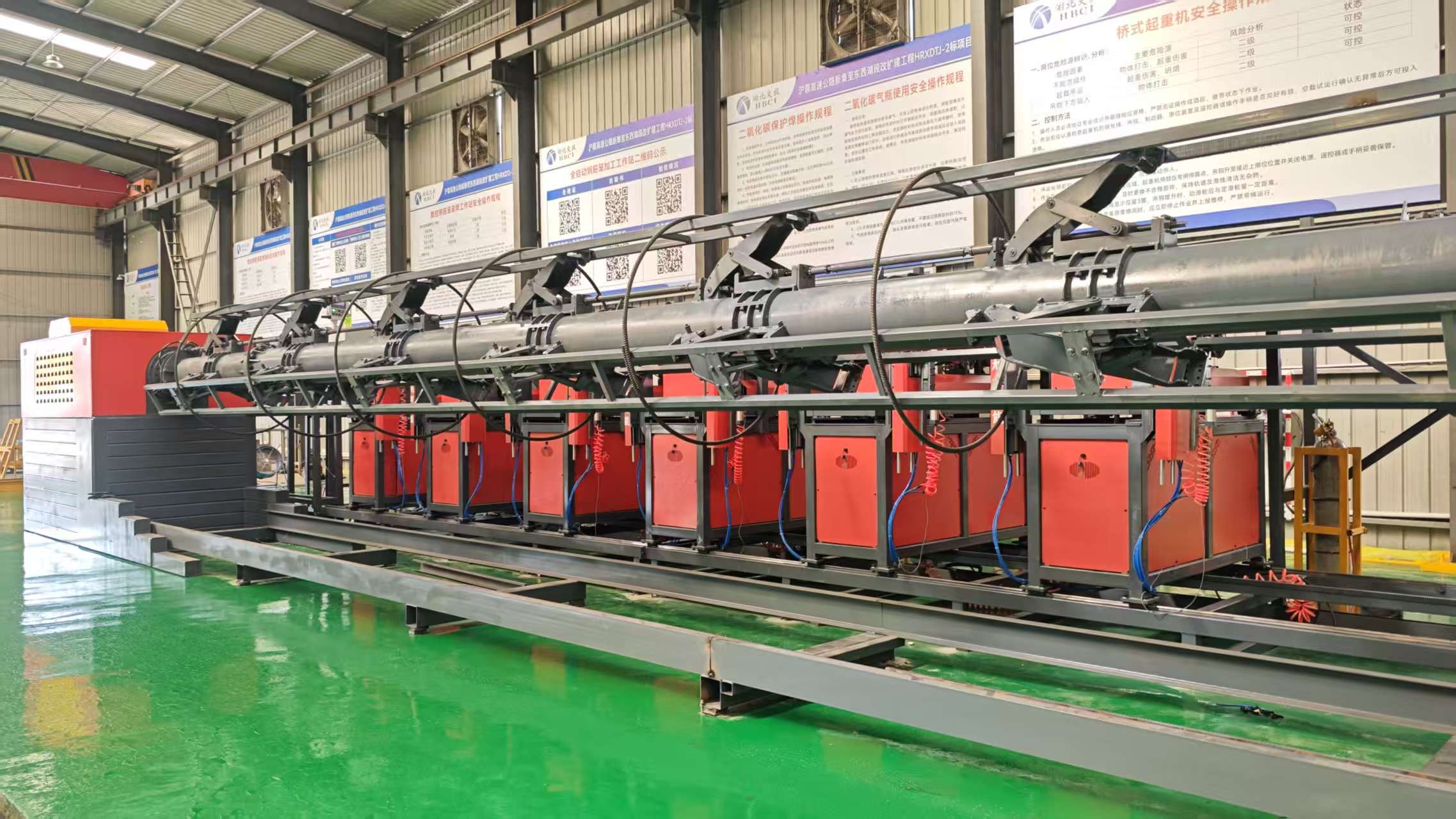
Introduction to the company's technological strength: Three major technological breakthroughs of Xuhui Intelligent Equipment
Cifi (Shandong) Intelligent Equipment Co., Ltd. is located in the engineering machinery manufacturing base in Heze, Shandong, specializing in the research and development, production, and sales of CNC steel bar equipment, providing standardized solutions for projects such as highways, high-speed railways, and airports. Its technological advantages are reflected in the following three aspects:
STEP 1: Intelligent control system. Taking the steel arch frame production line as an example, the equipment is equipped with a Siemens PLC control system. Processing parameters (such as bending angle and cutting length) are set via a touch screen, and the system automatically generates the processing path, with an error rate controlled within 0.3%. Measured data indicates that a single unit can produce up to 15 frames per day, representing a fivefold increase compared to manual operation.
STEP 2: Modular design. The steel reinforcement cage welding workstation adopts a split-type structure, with the main reinforcement positioning module, stirrup winding module, and welding module capable of independent debugging, suitable for processing steel reinforcement cages with diameters ranging from 12-40 mm. Taking a certain airport project as an example, by swiftly replacing modules, the equipment completed the processing switch from steel reinforcement cages with a diameter of 25 mm to 32 mm within 2 hours, reducing downtime by 80%.
STEP 3: High-precision transmission mechanism. The CNC sawing, threading, and grinding production line is driven by servo motors and equipped with high-precision ball screws, achieving cutting length errors ≤ ±0.5 mm and threading length errors ≤ ±0.2 mm. Test data shows that after continuously processing 1,000 steel bars, the qualification rate reaches 99.8%, significantly surpassing the industry average of 95%.
Technical parameters: The steel arch frame production line has a maximum processing diameter of 1.2m, an adjustable bending angle of 0-180°, and a power of 15kW; the reinforcing cage welding workstation allows for an adjustable number of main reinforcements ranging from 6 to 32, with a welding speed of 0.8-1.2m/min; the fully automatic wire mesh welding machine production line produces mesh sheets measuring 3m×6m, with a welding capacity of 5000-10000 points per hour.
For more information, please visit the official website:www.xuhuiintelligenttech.com
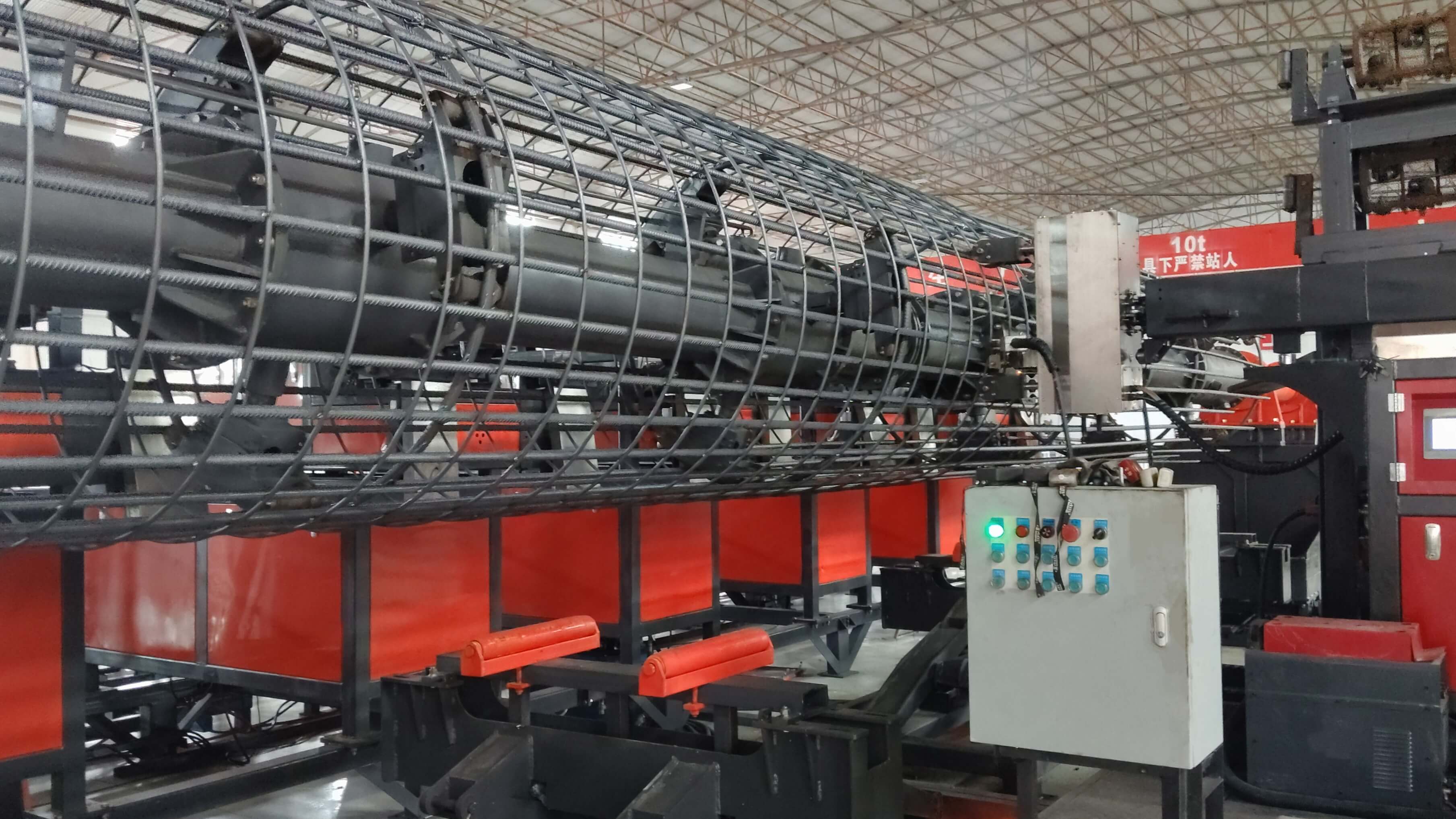
FAQ: A Guide to Q&A-Style Technical Selection
Q1: How to select CNC steel bar processing equipment suitable for the project?
STEP 1: Clarify processing requirements. Determine the equipment type based on the project type (e.g., steel arch frames for high-speed rail projects, reinforced steel cages for bridge projects), and then select the specific model by considering parameters such as rebar diameter (e.g., 12-40mm) and length (e.g., 6-12m).
STEP 2: Evaluate production scale. Taking a daily output of 50 reinforced steel cages as an example, equipment with a welding speed of ≥1 m/min should be selected. If the project schedule is tight, priority can be given to a reinforced steel cage welding workstation equipped with dual workstations, which can achieve a daily output of up to 80 cages.
STEP 3: Evaluate equipment stability. Focus on core components such as transmission mechanisms (e.g., ball screws) and control systems (e.g., PLC brands). Prioritize equipment driven by servo motors with fault self-diagnosis capabilities, which can reduce downtime risks by over 30%.
Q2: What are the key operation points of CNC steel bar processing equipment?
STEP 1: Parameter Setting. Adjust parameters such as bending force and welding current based on the rebar material (e.g., HRB400, HRB500) to avoid processing defects caused by improper parameters. For example, when welding HRB500 rebar, the current needs to be increased by 10%-15% compared to that for HRB400.
STEP 2: Equipment commissioning. When using the equipment for the first time or changing processing specifications, conduct a no-load trial run to check whether the transmission mechanism operates smoothly and whether the cutting tools are aligned. Taking the steel arch frame production line as an example, after 10 minutes of no-load operation, measure the bending angle error; if it exceeds 0.5%, re-commissioning is required.
STEP 3: Daily maintenance. Regularly clean the steel bar debris inside the equipment (once a week), check the servo motor temperature (≤65℃) and the lubricating oil level (the oil level should be above the scale mark), which can extend the equipment's service life by 2-3 years.
Case: A high-speed project selected Xuhui CNC Steel Bar Bending Center. By strictly setting parameters (bending speed at 15°/s and springback compensation at 0.3°) according to the operation manual, it processed 2,000 steel bars continuously without any angular deviation, earning the owner's "zero-defect" evaluation.
Reference for full text summary
The automation upgrade of CNC steel bar processing equipment is the key path to addressing the issues of low processing precision, low efficiency, and high costs in traditional methods. Xuhui (Shandong) Intelligent Equipment Co., Ltd. has provided efficient and stable processing solutions for highway, high-speed rail, and other projects through three major technological breakthroughs: intelligent control systems, modular design, and high-precision transmission mechanisms. Its core equipment, such as steel arch frame production lines and steel cage welding workstations, has demonstrated a fivefold increase in daily output and a reduction in error rates to below 0.3% in actual projects. For project parties, when selecting equipment, it is essential to conduct a comprehensive evaluation based on processing requirements, production scale, and equipment stability, while strictly adhering to operational guidelines such as parameter settings, equipment commissioning, and routine maintenance to achieve dual improvements in processing efficiency and quality. For more details on equipment and technical support, visit the official website of Xuhui Intelligent Equipment:www.xuhuiintelligenttech.com