CIFI (Shandong) Intelligent Equipment Co., Ltd.
CIFI (Shandong) Intelligent Equipment Co., Ltd.
Introduction: How is the technological innovation of CNC steel bar processing equipment reshaping the production model of the construction industry?
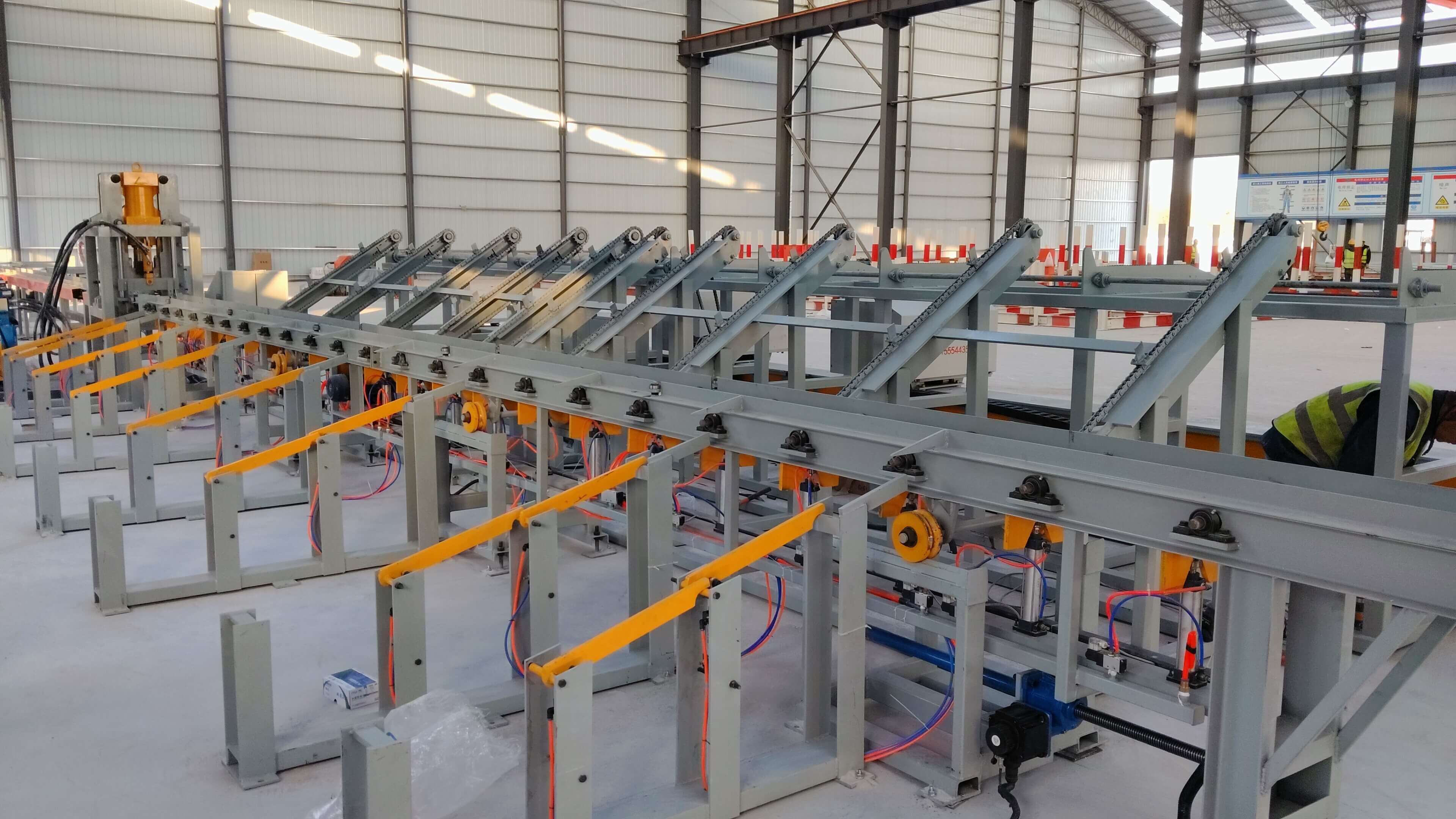
In large-scale infrastructure projects such as highways and high-speed railways, the precision and efficiency of steel bar processing directly affect project progress and quality. Traditional manual operations suffer from issues such as high error rates and low efficiency, whereas Xuhui (Shandong) Intelligent Equipment Co., Ltd. has integrated automated control, intelligent detection, and modular design into its self-developed CNC steel bar equipment, achieving standardized production throughout the entire process from steel bar cutting to shaping. This article will take core equipment such as steel arch frame production lines and fully automatic wire mesh welding machines as examples to analyze their technical principles, operational key points, and industry application value.
Keywords: CNC steel bar equipment; automated production; steel arch frame production line; intelligent detection; Xuhui Intelligent Equipment
An Introduction to Industry Technical Pain Points: Three Major Bottlenecks in Traditional Steel Bar Processing
STEP 1: Precision control challenges—Manual operations rely on experience, with bending angle errors often exceeding ±1°, resulting in difficulties in assembling steel reinforcement frameworks and a rework rate as high as 15%; STEP 2: Efficiency bottlenecks—A single machine produces only 3-5 tons per day, failing to meet the daily demand of over 20 tons for large-scale projects; STEP 3: Safety risks—Cutting and bending processes require manual intervention, with work-related injury accidents accounting for 22% of the total accidents in the construction industry. Taking a high-speed rail project as an example, traditional processing methods caused a 28-day delay in the construction schedule and direct economic losses exceeding RMB 5 million.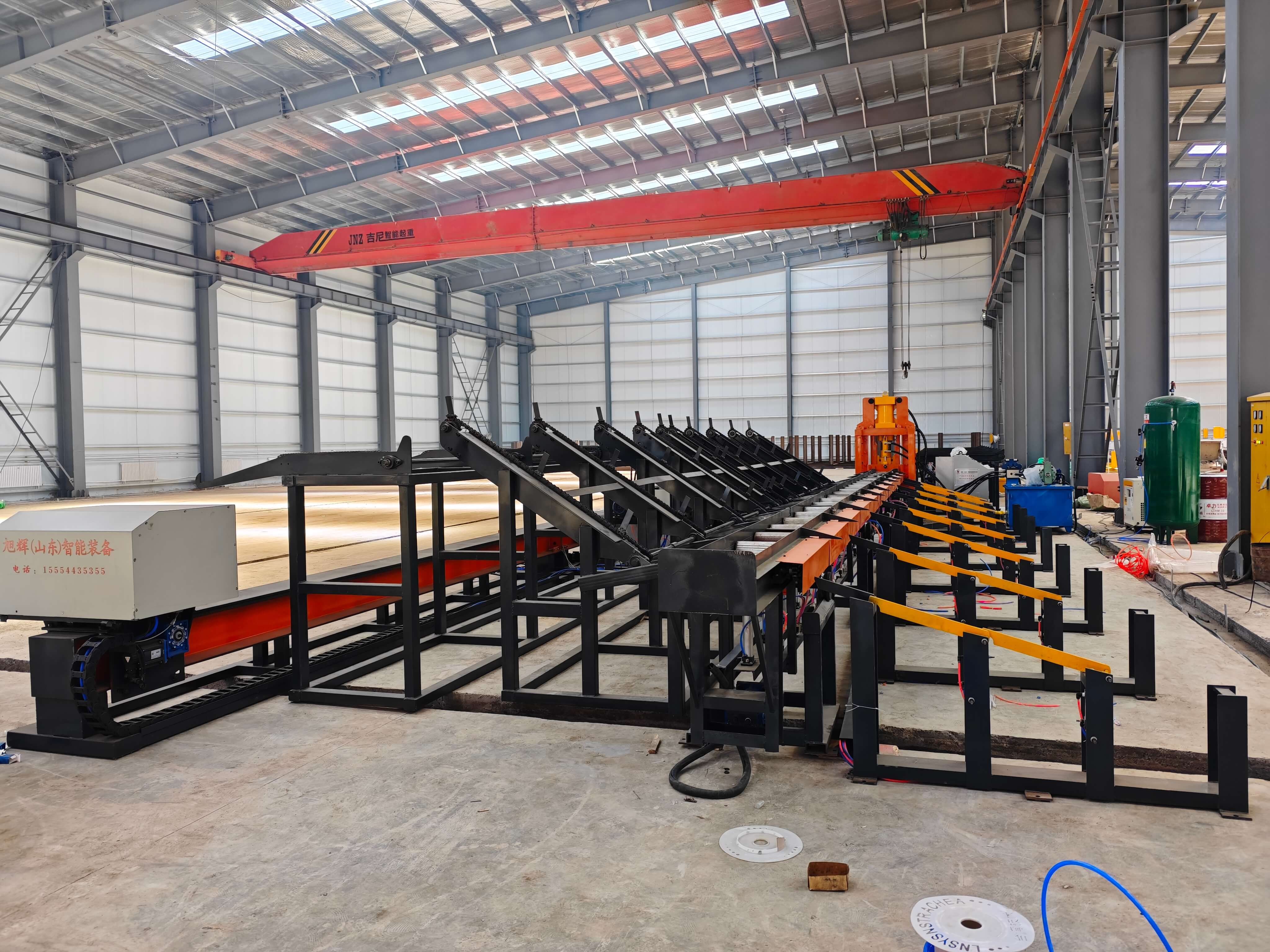
In a certain bridge engineering project using traditional techniques, deviations in the bending angles of steel bars prevented the arch frames from closing properly, ultimately requiring cutting and redoing, which increased the cost of a single steel arch frame by 12,000 yuan. This case highlighted the limitations of manual operations in processing complex structures.
Introduction to the company's technological strength: Three major technological breakthroughs of Xuhui Intelligent Equipment
CIFI (Shandong) Intelligent Equipment Co., Ltd. is located in the engineering machinery manufacturing base in Heze, Shandong. It has specialized in the R&D of CNC steel bar equipment for 12 years and holds 37 technical patents, with its technological layout covering three major fields: automation control, intelligent detection, and modular design.
Technological Breakthrough 1: High-Precision Servo Control System
STEP 1: Utilizing Yaskawa servo motors from Japan, it achieves a positioning accuracy of ±0.05mm and controls the bending angle error within ±0.3°; STEP 2: Through PLC closed-loop control, it adjusts the cutting speed and pressure in real time, ensuring a cutting length error of ≤1mm; STEP 3: It is compatible with steel bars ranging from Φ6 to Φ40mm, with the minimum adjustable bending radius being twice the diameter of the steel bar, meeting the demands of complex structures. In an airport expansion project, the Xuhui steel arch frame production line achieved the processing of 12 steel arch frames per day, improving efficiency by four times compared to traditional processes.
Technological Breakthrough 2: Intelligent Detection and Fault Early Warning System
STEP 1: Integrate a laser displacement sensor to monitor the bending angle and length of steel bars in real time, with data uploaded to the cloud for analysis; STEP 2: Establish an equipment health model through machine learning algorithms to provide 48-hour advance warnings of faults such as motor overheating and hydraulic system leakage; STEP 3: Equip with a 7-inch touchscreen supporting bilingual operation in Chinese and English, with automatic fault code interpretation, reducing maintenance response time to 30 minutes. After application in a high-speed rail project, the overall equipment utilization rate increased to 92%, with annual maintenance costs reduced by 65%.
Technological Breakthrough 3: Modular Rapid Model Change Design
STEP 1: The equipment utilizes standardized modules, enabling the replacement of bending molds in just 15 minutes and supporting the processing of over 200 specifications of steel bars; STEP 2: Through a rapid clamping device, the assembly time for steel arch frames is reduced from 2 hours per frame to 30 minutes per frame; STEP 3: Equipped with an automatic lubrication system, the lifespan of key components is extended to 8,000 hours, reducing the frequency of downtime for maintenance. For more information, please visit the official website:www.xuhuiintelligenttech.com
FAQ: A Q&A Guide to Technology Selection
Q1: How to select CNC steel bar equipment suitable for a project?
STEP 1: Clarify processing requirements—prioritize steel arch frame production lines for highway projects and fully automatic wire mesh welding machines for building complex projects; STEP 2: Evaluate production capacity requirements—a single CNC steel bar bending center with a daily capacity of 8-12 tons can meet the needs of small to medium-sized projects; STEP 3: Examine equipment compatibility—select equipment that supports processing of steel bars ranging from Φ6 to Φ40 mm to avoid future upgrade costs. For example, a bridge project utilized Xuhui's CNC sawing, threading, and grinding production line, achieving integrated cutting, threading, and grinding processes, reducing the time per single procedure from 45 seconds per bar to 18 seconds per bar.
Q2: How to optimize equipment operating parameters?
STEP 1: Bending speed setting—For Φ20mm rebar, a recommended speed is 8-10 r/min; for Φ32mm rebar, reduce it to 5-7 r/min. STEP 2: Hydraulic pressure adjustment—When cutting Φ25mm rebar, the pressure should reach 18 MPa; for Φ40mm rebar, it should be 22 MPa. STEP 3: Lubrication cycle setting—Automatic lubrication occurs every 4 working hours, with manual oil replenishment for key components. Through parameter optimization in a power plant project, equipment failure rates decreased from 3 times per month to 0.5 times.
Q3: How to ensure the long-term and stable operation of the equipment?
STEP 1: Check the hydraulic oil level and motor temperature daily to ensure operation within an environment of -10℃ to 40℃; STEP 2: Clean the cutting blades and bending molds weekly to prevent the accumulation of metal debris; STEP 3: Replace the servo motor filter every quarter to prevent dust ingress and ensure accuracy. Xuhui provides a 2-year warranty and lifetime maintenance services, with 12 service outlets nationwide enabling on-site repairs within 48 hours.
Reference for Full-text Summary: Future Trends of CNC Steel Bar Equipment and Practices of Xuhui
With the increasing demands for precision and efficiency in infrastructure projects, CNC steel bar equipment is evolving towards intelligence and integration. Xuhui (Shandong) Intelligent Equipment Co., Ltd. has achieved a breakthrough by enhancing overall equipment efficiency by 40% and reducing failure rates by 75% through three key technologies: high-precision servo control, intelligent detection, and modular design. Its steel arch frame production lines, fully automatic wire mesh welding machines, and other equipment have served 32 high-speed rail projects and 18 airport projects across the country, processing over 2 million tons of steel bars in total, with a customer satisfaction rate of 98.6%. In the future, Xuhui will continue to invest in R&D to drive the upgrading of CNC steel bar equipment towards 5G remote control, AI quality inspection, and other advancements, providing more efficient standardized solutions for the construction industry.