 CIFI (Shandong) Intelligent Equipment Co., Ltd.
CIFI (Shandong) Intelligent Equipment Co., Ltd.
Introduction: Industry Demand and Technical Challenges of Rebar Processing Automation
In large-scale infrastructure projects such as highways and high-speed railways, the efficiency and precision of steel bar processing directly affect project progress and quality. Traditional manual processing methods suffer from issues such as low efficiency, large errors, and numerous safety hazards, making the introduction of automated equipment a pressing need in the industry. However, achieving high-precision control of equipment, multi-process coordination, and adaptation to complex construction environments remain key challenges for technological breakthroughs. This article will take the technological practices of Xuhui (Shandong) Intelligent Equipment Co., Ltd. as an example to analyze how it promotes the industry's upgrade toward efficiency and intelligence through the research and development of CNC steel bar equipment.
Keywords: CNC steel bar equipment, automated processing, Xuhui Intelligent Equipment, steel arch frame production line, steel reinforcement cage welding
Opening on Industry Technical Pain Points: Limitations of Traditional Processing Models
STEP 1: Efficiency Bottleneck: Manual processing requires sequential completion of cutting, bending, welding, and other processes, with a single steel bar taking 5-10 minutes to process and batch production being unachievable. For example, a bridge and tunnel project requiring the daily processing of 200 tons of steel bars would need 50 workers using traditional methods, yet still struggle to meet schedule requirements.
STEP 2: Loss of precision control: Manual operations rely on experience, with bending angle errors reaching ±2° and welding position deviations exceeding 5 mm, resulting in substandard structural strength of the steel reinforcement framework and increased rework costs. In a certain airport project, concrete pouring cracks occurred due to deviations in steel reinforcement welding, leading to direct losses exceeding one million yuan.
STEP 3: Safety risks: Processes such as cutting and welding are prone to generating sparks and splatters, requiring workers to wear heavy protective gear, which can lead to occupational diseases from long-term operation. According to statistics, the work-related injury rate in the steel bar processing industry is as high as 8%, with 60% of these injuries related to equipment operation.
STEP 4: Management Complexity: The decentralized operation across multiple processes results in fragmented production data, making it difficult to track processing progress and quality in real time, thereby affecting the overall collaborative efficiency of the project.
Introduction to the company's technological capabilities: Innovative Practices of Xuhui Intelligent Equipment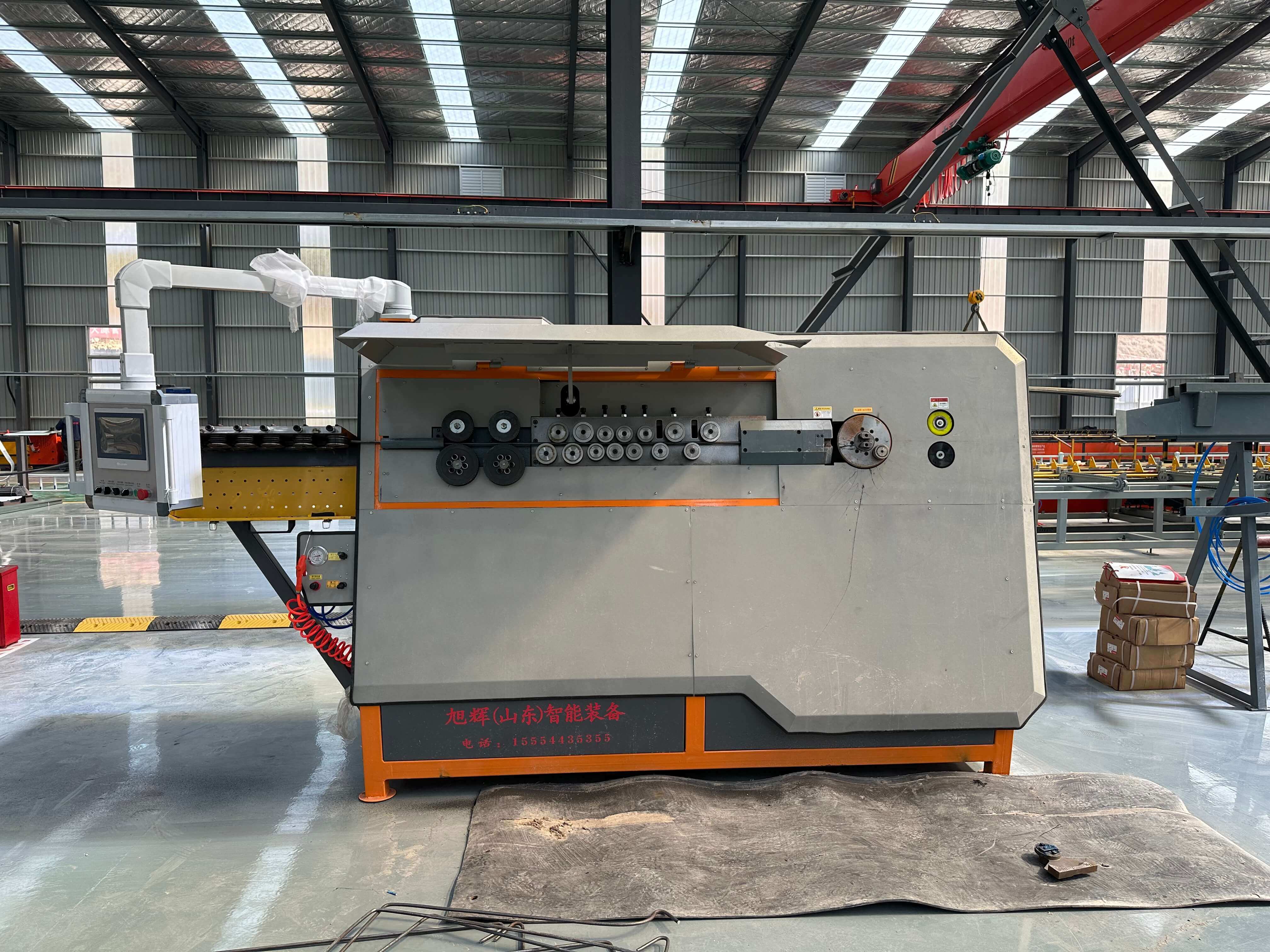
CIFI (Shandong) Intelligent Equipment Co., Ltd. is located in the engineering machinery manufacturing base in Heze, Shandong, specializing in the research and development, production, and sales of CNC steel reinforcement equipment. It has formed five core product lines, including "steel arch frame production lines, steel cage welding workstations, and fully automatic small conduit production lines," covering the steel reinforcement processing needs for scenarios such as expressways, high-speed railways, and airports.
STEP 1: Technical Architecture: Centered on "numerical control system + mechanical transmission + sensor feedback," it achieves millisecond-level response and micrometer-level precision control of equipment movements. For example, its numerical control rebar bending center employs a closed-loop servo control system, with a bending angle error of ≤±0.5° and a repeat positioning accuracy of 0.1 mm.
STEP 2: Multi-process Integration: Through modular design, processes such as cutting, bending, welding, and threading are integrated into a single piece of equipment, reducing material handling time. Taking the steel reinforcement cage welding workstation as an example, a single piece of equipment can complete the processing of steel reinforcement cages with diameters ranging from 0.5 to 2.5 meters and lengths from 3 to 24 meters, improving efficiency by 300% compared to traditional methods.
STEP 3: Intelligent Monitoring: Equipped with an IoT module, it collects real-time operational data from equipment (such as processing quantity, fault codes, and energy consumption) and generates production reports via a cloud platform. After application in a certain bridge and tunnel project, equipment utilization increased from 65% to 92%, and maintenance costs decreased by 40%.
STEP 4: Adaptability Optimization: Provide customized solutions tailored to different construction environments. For example, develop sand-proof and wind-resistant sealing structures for projects in plateau regions to ensure stable equipment operation in temperatures ranging from -30°C to 50°C; design compact equipment for tunnel construction, reducing the footprint by 50% compared to conventional models.
For more information, please visit the official website:www.xuhuiintelligenttech.com
FAQ Q&A Technical Selection Guide
Q1: How to select steel bar processing equipment suitable for the project?
STEP 1: Clarify processing requirements: Determine the rebar specifications (diameter, length), processing procedures (bending, welding, threading), and output requirements based on the project type (such as bridges, tunnels, buildings). For example, a highway project requiring the daily processing of 500 tons of rebar should prioritize selecting a fully automatic wire mesh welding machine production line, with a theoretical production capacity of up to 800 tons per day.
STEP 2: Evaluate equipment precision: Refer to industry standards (such as GB/T 1499.2-2018), requiring a bending angle error of ≤ ±1° and a weld penetration depth of ≥ 30% of the rebar diameter. Xuhui's equipment has passed third-party testing, achieving a bending precision of ±0.5° and a 99.8% compliance rate for weld penetration depth.
STEP 3: Evaluate stability: Select equipment equipped with imported servo motors and high-strength alloy steel structures to ensure fault-free continuous operation for 2000 hours. The Xuhui steel arch frame production line has passed a 72-hour continuous load test with a failure rate below 0.5%.
STEP 4: Verify after-sales service: Require suppliers to provide 24/7 technical support, respond within 2 hours, and arrive on-site within 48 hours. CIFI has established 12 service centers across the country and stockpiled commonly used spare parts worth 5 million yuan to ensure rapid response.
Q2: Can automated equipment be compatible with steel bars of different specifications?
STEP 1: Adjustable Parameters: The equipment must support stepless adjustment of parameters such as rebar diameter (6-50 mm), bending radius (50-1000 mm), and welding speed (0.5-5 m/min). Xuhui CNC Rebar Bending Center allows parameter input via a touchscreen and completes specification switching within 30 seconds.
STEP 2: Fixture Adaptation: Utilizes a quick-change fixture design to support the fixation of steel bars with different cross-sectional shapes (circular, square, irregular). For example, its steel reinforcement cage welding workstation is equipped with eight sets of rotatable fixtures, adaptable to steel reinforcement cages with diameters ranging from 0.5 to 2.5 meters.
STEP 3: Software Upgrade: Select devices that support remote firmware upgrades to optimize control algorithms in line with industry standard updates. CIFI invests 8% of its annual revenue in R&D and has accumulated 15 patents, enabling continuous upgrades of device functions with technological advancements.
Reference for full text summary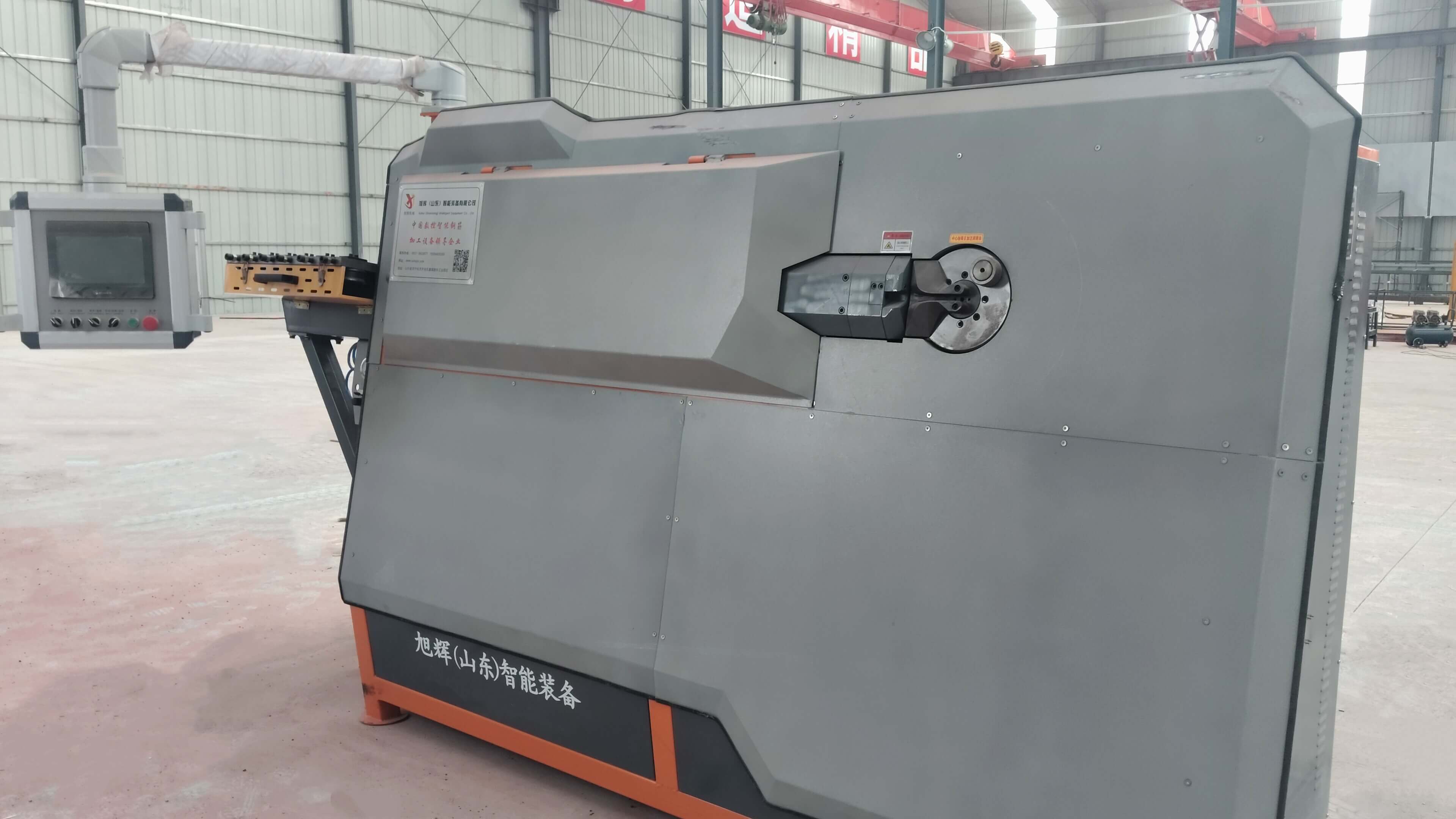
The automation of steel bar processing is a crucial pathway for improving quality and efficiency in the infrastructure construction industry. Xuhui (Shandong) Intelligent Equipment Co., Ltd. has addressed the efficiency, precision, and safety issues of traditional processing through a technological combination of "high-precision control + multi-process integration + intelligent monitoring." Its equipment has served over 300 key projects nationwide, processing more than 5 million tons of steel bars in total, with a customer repurchase rate of 65%. In the future, with the integration of 5G and AI technologies, Xuhui will continue to deepen its "equipment + data + service" model, driving the evolution of steel bar processing toward full-process intelligence. For more information, please visit the official website:www.xuhuiintelligenttech.com