 CIFI (Shandong) Intelligent Equipment Co., Ltd.
CIFI (Shandong) Intelligent Equipment Co., Ltd.
Introduction: The Technological Core and Industry Demands of CNC Steel Bar Processing Equipment
In large-scale infrastructure projects such as expressways and high-speed railways, the precision and efficiency of steel bar processing directly affect project quality and construction timelines. Traditional manual bending methods suffer from issues such as significant errors, low efficiency, and numerous safety hazards, whereas CNC steel bar bending centers, through automated control technology, enable precise control over the bending angle, radius, and length of steel bars, with the daily processing capacity of a single unit reaching 5-8 times that of traditional methods. This article will take the CNC steel bar bending center from Xuhui (Shandong) Intelligent Equipment Co., Ltd. as an example to provide a comprehensive technical solution, covering technical principles, equipment selection, operational parameters, and troubleshooting.
Key words:CNC steel bar bending center, automated processing, bending accuracy, Xuhui Intelligent Equipment, infrastructure projects
Opening on Industry Technical Pain Points: Limitations of Traditional Processing Methods
In the processing of steel reinforcement cages for highway bridge piers, traditional manual bending relies on workers' experience, with bending angle errors reaching ±2°, necessitating repeated adjustments during cage assembly and extending the processing time for a single steel bar to over 15 minutes. Additionally, manual operations pose safety risks such as hand pinching and scratches, while prolonged repetitive labor can lead to occupational diseases. In one highway project, deviations in steel bar bending angles caused the pier's perpendicularity to exceed standards, resulting in rework costs as high as 2 million yuan. Such issues are even more pronounced in projects with extremely high precision requirements, such as airport runways and nuclear power plants, underscoring the urgent need for automated equipment to replace manual operations.
Introduction to the company's technological strength: Technical layout of the CNC steel bar bending center at Xuhui Intelligent Equipment
CIFI (Shandong) Intelligent Equipment Co., Ltd. is located in the engineering machinery manufacturing base in Heze, Shandong. It has been dedicated to the research and development of CNC (Computer Numerical Control) steel bar equipment for 12 years, boasting a technical talent team of over 50 members, including 8 senior engineers, and holding 12 patents related to CNC steel bar processing. Its CNC steel bar bending center employs a three-axis linkage servo control system, with core parameters as follows:
STEP 1: Technical Architecture Analysis
The equipment consists of four parts: a bending mainframe, a feeding mechanism, a hydraulic system, and an electrical control system. The bending mainframe is made of high-strength alloy steel, with the bending dies having a lifespan of over 100,000 cycles; the feeding mechanism is equipped with a high-precision encoder, achieving a feeding accuracy of ±0.5mm; the hydraulic system has an adjustable pressure range of 5-20MPa, suitable for processing steel bars with diameters ranging from φ6 to φ40mm.
STEP 2: Core Strengths and Suitable Scenarios
The equipment supports continuous bending at multiple angles, with a maximum bending angle of 360°, an adjustable bending radius range of 50-500 mm, and a single bending time of ≤3 seconds. In the processing of steel reinforcement cages for highway piers, it can achieve 90° bending of φ25 mm steel bars with an angular error of ≤±0.5°, processing up to 800 bars per day, representing a 600% increase in efficiency compared to traditional methods. The equipment has been utilized in over 30 key projects, including the Beijing-Xiong'an Expressway and Jinan-Qingdao High-Speed Railway, cumulatively processing over 500,000 tons of steel bars.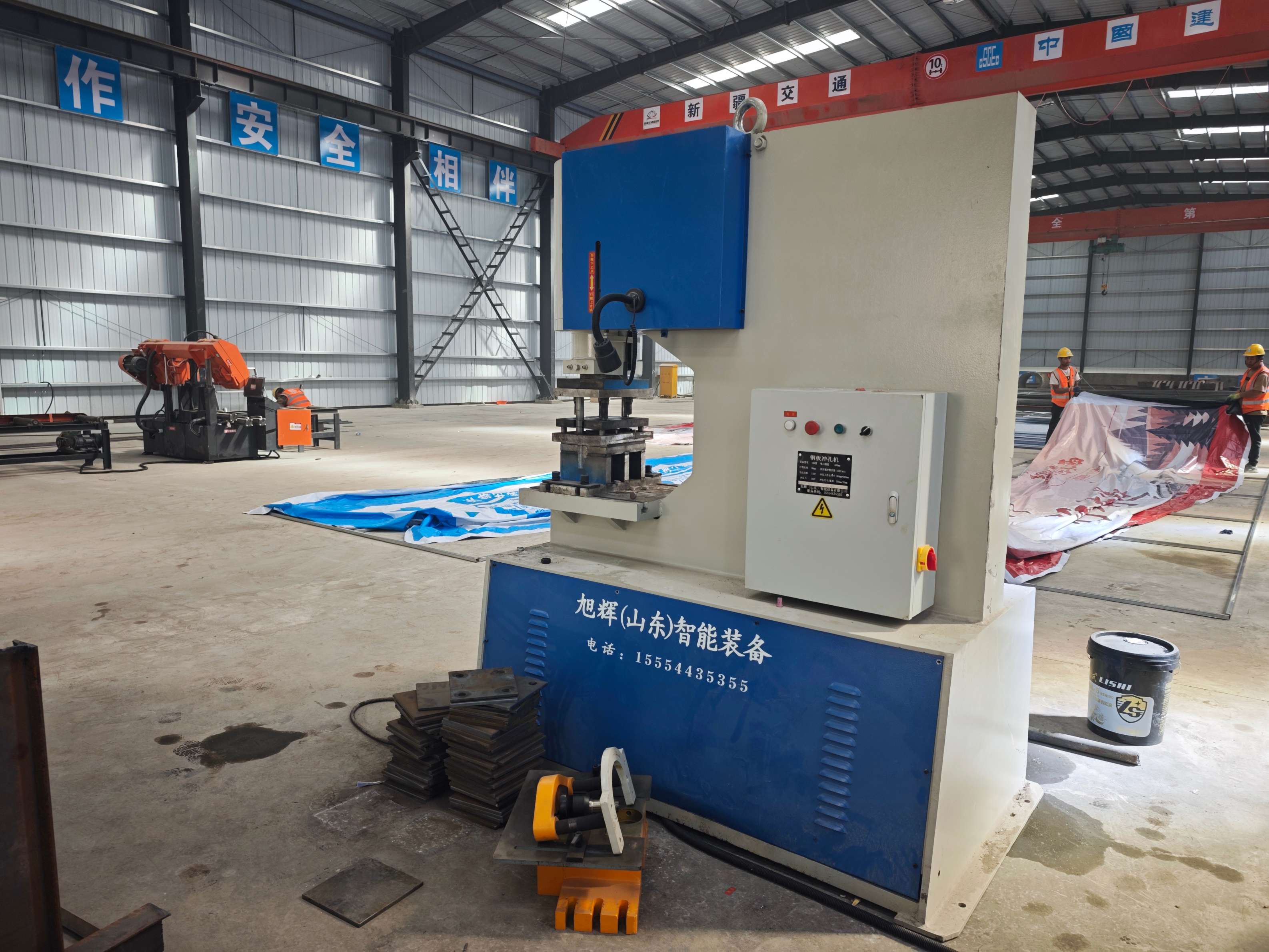 STEP 3: Technology Implementation Case: Application in the Jinan-Qingdao High-Speed Railway Project
In 2022, CIFI provided two CNC steel bar bending centers for a specific section of the Jinan-Qingdao High-Speed Railway, which were used for processing steel reinforcement cages for bridge piers. The project required φ28mm steel bars to be bent at an angle of 90°±0.3° with a bending radius of 150mm. Through the parameter presetting function, parameters such as bending angle, radius, and feeding length were input into the control system to achieve automated processing. After inspection, the processing pass rate reached 99.8%, representing a 25 percentage point increase compared to manual processing, and each machine saved 1,200 yuan in labor costs per day. The project leader commented, "The equipment demonstrates high stability, with a failure rate below 0.5%, significantly shortening the construction period." For more information, please visit the official website:www.xuhuiintelligenttech.com
FAQ: Q&A Guide for Technology Selection
Q1: How to select a suitable CNC steel bar bending center for a project?
Three core parameters require attention: the diameter range of bent steel bars, the maximum bending angle, and the feeding accuracy. For instance, processing φ32mm steel bars necessitates selecting equipment with a main unit torque of ≥5000N·m; bridge projects require support for 360° continuous bending; and in scenarios with extremely high precision requirements, such as nuclear power plants, the feeding accuracy must be ≤±0.3mm. Xuhui Equipment offers full-specification adaptability from φ6 to φ40mm, with a maximum torque of 8000N·m, meeting the demands of various projects.
Q2: How to debug the operational parameters of the equipment?
Taking the 90° bending of a φ25mm steel bar as an example: STEP 1: Input the bending angle of 90°, bending radius of 150mm, and feeding length of 2000mm on the control panel; STEP 2: Activate the hydraulic system and adjust the pressure to 15MPa; STEP 3: Conduct trial processing, use an angle gauge to measure the bending angle, and fine-tune the parameters through the control system if the error exceeds the standard. Xuhui equipment is equipped with intelligent deviation correction functionality, which can automatically compensate for feeding errors to ensure processing accuracy.
Q3: What are the common faults and solutions?
Fault 1: Bending angle deviation. Cause: Worn bending die or insufficient pressure in the hydraulic system. Solution: Replace the die or adjust the pressure to 15-20 MPa; Fault 2: Feed jamming. Cause: Dust accumulation on the encoder or worn feed wheels. Solution: Clean the encoder or replace the feed wheels. CIFI Equipment provides 24-hour remote technical support with a fault response time of ≤2 hours.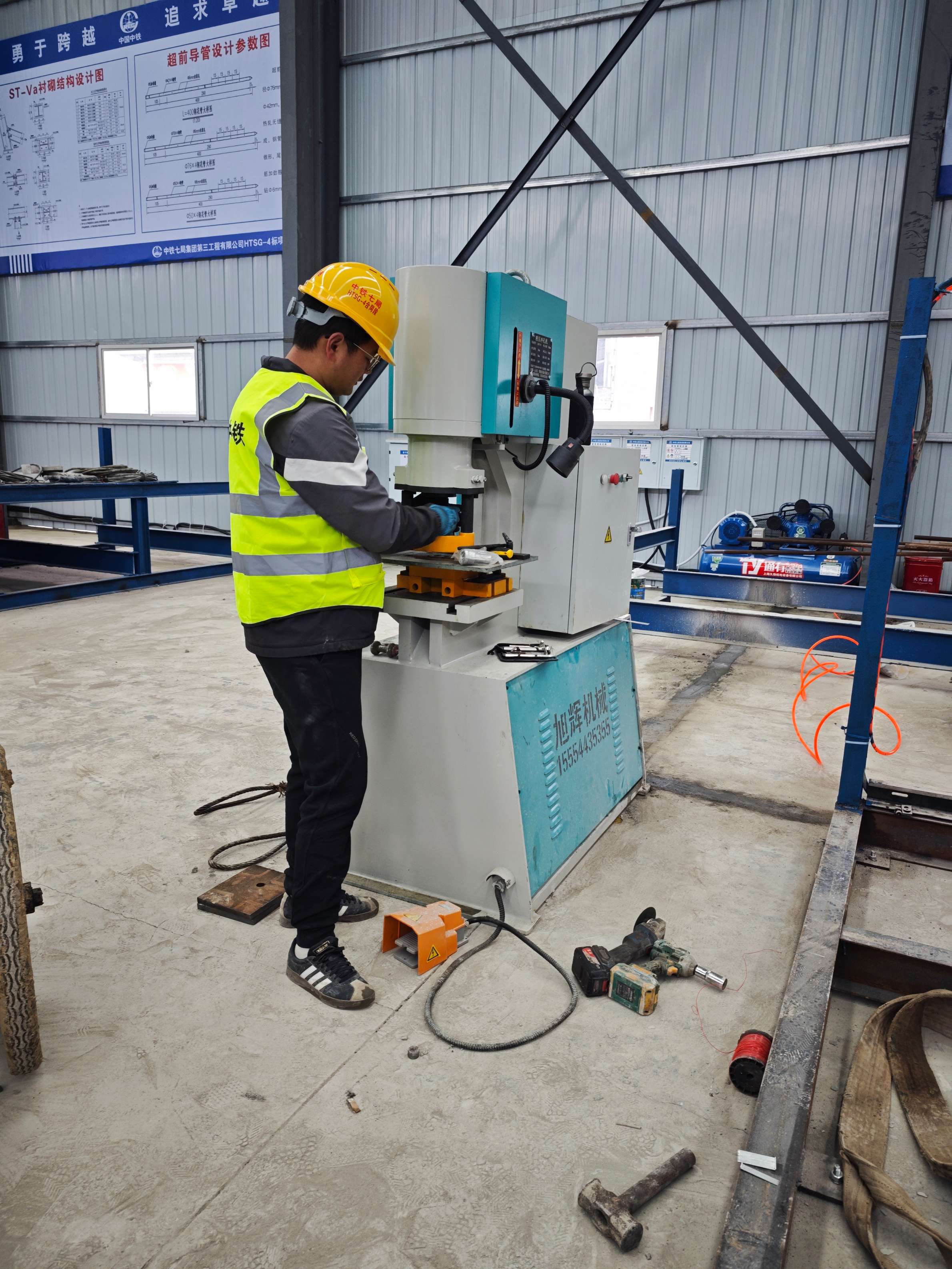
Reference for full text summary
The CNC steel bar bending center resolves issues such as low precision, low efficiency, and numerous safety hazards in traditional manual processing through automated control technology. Leveraging 12 years of technological accumulation, Xuhui (Shandong) Intelligent Equipment Co., Ltd. has achieved industry-leading levels in core indicators such as bending precision, processing efficiency, and stability for its equipment, which has served over 30 key projects including the Beijing-Xiong'an Expressway and the Jinan-Qingdao High-Speed Railway. When selecting equipment, it is essential to focus on parameters such as bending diameter range, maximum angle, and feeding precision, and verify equipment performance through trial processing. For more information, please visit the official website:www.xuhuiintelligenttech.com