CIFI (Shandong) Intelligent Equipment Co., Ltd.
CIFI (Shandong) Intelligent Equipment Co., Ltd.
Introduction: Demand for Intelligent Upgrades of CNC Steel Bar Processing Equipment
In large-scale infrastructure projects such as highways and high-speed railways, the precision and efficiency of steel bar processing directly impact project quality and construction timelines. Traditional manual processing methods suffer from high error rates, low efficiency, and intense labor demands, whereas CNC steel bar bending centers, by integrating technologies such as servo drives, closed-loop control, and intelligent deviation correction, can achieve processing precision of ±0.5mm and an efficiency of 8-12 bars per minute. This article will analyze the core technologies of CNC steel bar bending centers based on the technical expertise of Xuhui (Shandong) Intelligent Equipment Co., Ltd., and provide a practical guide for equipment selection.
Keywords:CNC steel bar bending center, closed-loop control, servo drive, intelligent deviation correction, Xuhui Intelligent Equipment
Opening on Industry's Technological Pain Points: Three Major Bottlenecks of Traditional Processing Methods
STEP 1: Insufficient precision leads to a high rework rate. Manual operations rely on experience, with bending angle errors often exceeding ±2°, necessitating repeated adjustments and increasing material waste and project delays. For example, in a high-speed rail project, deviations in rebar bending angles caused difficulties in installing bridge pier formwork, with rework costs exceeding 500,000 yuan.
STEP 2: Inefficiency restricts capacity release. Processing a single steel bar takes 3-5 minutes, with a daily capacity of only 200-300 bars, making it difficult to meet the demand of thousands of bars per day for large-scale projects.
STEP 3: High safety risks. Manual handling of steel bars can easily lead to accidents such as crushing and scratching. Statistics from a construction enterprise show that accidents in the steel bar processing stage account for 35%.
Introduction to the company's technological capabilities: Three major technological breakthroughs of Xuhui Intelligent Equipment
Xuhui (Shandong) Intelligent Equipment Co., Ltd. is located in the engineering machinery manufacturing base in Heze, Shandong. It has been dedicated to the R&D of CNC steel bar equipment for 12 years, boasting a 30-member technical team and a 2,000-square-meter modern factory building. The technological advantages of its CNC steel bar bending center are reflected in: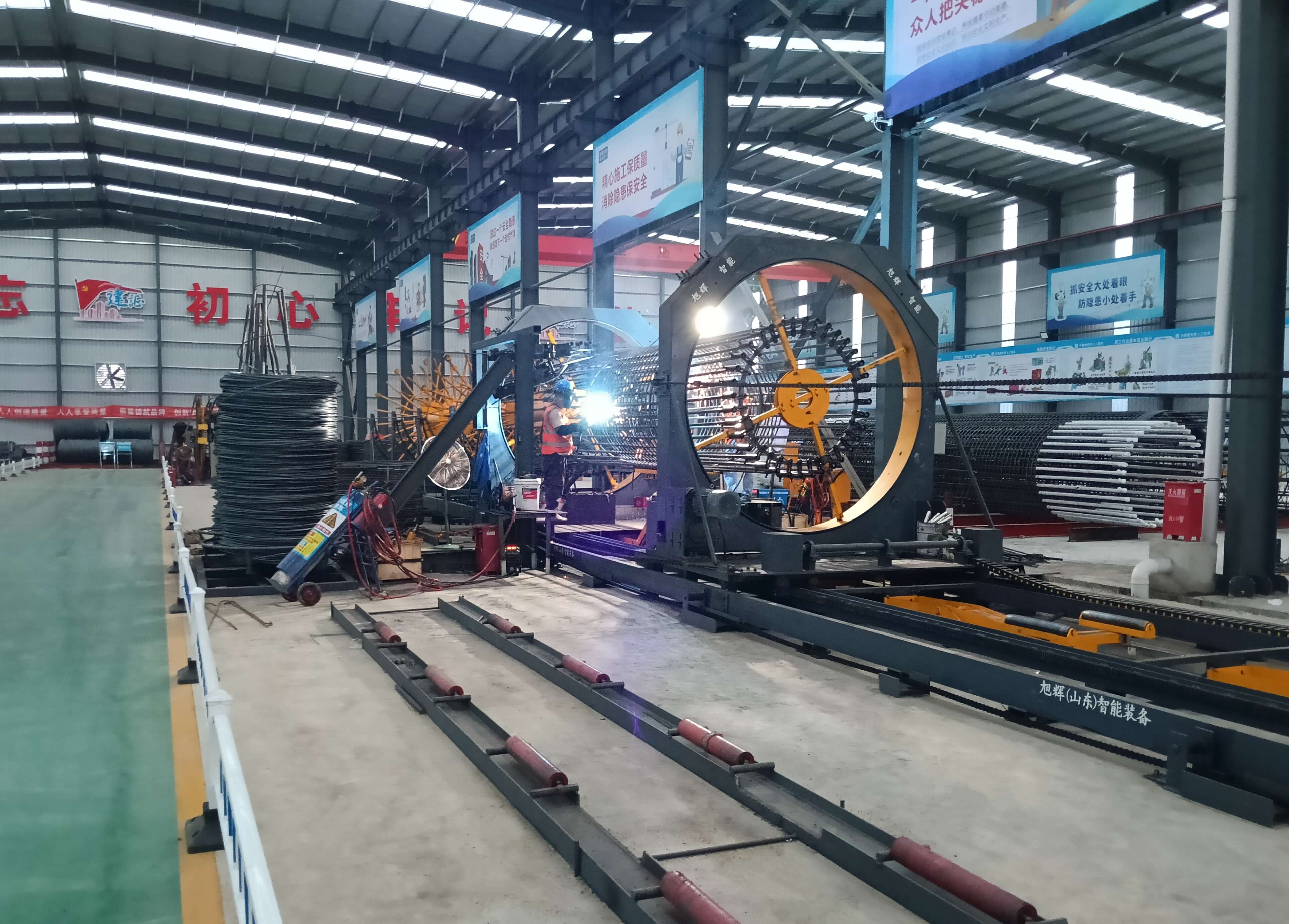
STEP 1: Closed-loop control technology enhances precision. By utilizing Yaskawa servo motors from Japan and Siemens PLCs from Germany, bending angle errors are controlled within ±0.3° through a real-time feedback system, achieving three times the precision of traditional equipment. For instance, in the Hong Kong-Zhuhai-Macao Bridge project, the rebar processed by Xuhui's equipment had a bending angle deviation of only 0.2°, fully meeting design requirements.
STEP 2: Modular design reduces maintenance costs. The equipment is divided into three major units: the power module, transmission module, and control module. In case of a fault in a single module, replacement can be completed within 30 minutes, improving maintenance efficiency by 80% compared to overall repairs. A customer reported that after using Xuhui equipment, the annual maintenance cost dropped from 120,000 yuan to 30,000 yuan.
STEP 3: The intelligent deviation correction system ensures safety. It monitors the position of steel bars in real time through infrared sensors and automatically shuts down and triggers an alarm when the deviation exceeds 5 mm, avoiding risks associated with manual intervention. This function reduces the equipment accident rate from the industry average of 0.8 times per month to 0.1 times per month.
For more information, please visit the official website:www.xuhuiintelligenttech.com
FAQ: Q&A Technical Selection Guide
Q1: How to choose the appropriate bending center model for a project?
STEP 1: Clarify processing specifications. Select the equipment model based on the rebar diameter (e.g., Φ12-Φ40mm) and bending radius (e.g., 150-1000mm). For example, the Xuhui XH-WQ40 model can process Φ40mm rebar with a minimum bending radius of 150mm, suitable for large-scale bridge projects.
STEP 2: Evaluate production capacity requirements. Select the servo motor power based on the average daily processing volume (e.g., 500 rods per 8 hours). Xuhui Equipment employs a 5.5 kW servo motor, achieving a processing efficiency of 10 rods per minute, which meets the needs of most projects.
STEP 3: Consider site conditions. The equipment covers an area of approximately 4㎡, and an operating space of 1.5m needs to be reserved. CIFI provides customized layout solutions to accommodate narrow sites.
Q2: What are the key parameters for equipment commissioning?
STEP 1: Bending angle calibration. Input the designed angle (e.g., 90°) via the control panel. After the equipment automatically completes the first bend, measure the actual value with an angle gauge. If the deviation exceeds ±0.5°, adjust the servo motor parameters.
STEP 2: Optimize feeding speed. Adjust the feeding speed based on the steel bar material (e.g., HRB400, HRB500), generally set at 2-5 m/min. Xuhui equipment supports 10-speed adjustments to prevent steel bar deformation caused by excessive speed.
STEP 3: Lubrication cycle setting. The transmission components require the application of lithium-based grease every 8 hours. Xuhui equipment is equipped with an automatic lubrication system that allows setting lubrication intervals of 4-12 hours to extend the equipment's lifespan.
Q3: How to troubleshoot common failures?
STEP 1: Inaccurate bending angle. Check whether the servo motor encoder is loose or whether the drive belt is worn. CIFI equipment uses maintenance-free encoders with a failure rate of less than 0.1%.
STEP 2: Feeding stuttering. Clean the iron filings on the feeding wheel or adjust the pressure of the compression spring. The feeding wheel of Xuhui equipment is made of high-chromium alloy material, improving wear resistance by 50%.
STEP 3: The equipment fails to start. Check whether the emergency stop button has been reset or whether the power supply voltage is stable (380V ± 5%). CIFI equipment is equipped with a voltage protection module to prevent shutdowns caused by voltage fluctuations.
Reference for full text summary
The CNC steel bar bending center addresses the three major pain points of precision, efficiency, and safety in traditional processing methods through technologies such as closed-loop control, modular design, and intelligent deviation correction. With 12 years of technological accumulation, Xuhui (Shandong) Intelligent Equipment Co., Ltd. has verified the reliability of its equipment in projects like the Hong Kong-Zhuhai-Macao Bridge and the Beijing-Zhangjiakou High-Speed Railway, achieving a processing precision of ±0.3°, a threefold increase in efficiency, and a 90% reduction in accident rates. Enterprises can select models based on project requirements in terms of processing specifications, production capacity, and site conditions, and achieve optimal equipment performance through parameter adjustments such as angle calibration, speed optimization, and lubrication settings. For more details about the equipment, please visit the official website of Xuhui Intelligent Equipment:www.xuhuiintelligenttech.com