 CIFI (Shandong) Intelligent Equipment Co., Ltd.
CIFI (Shandong) Intelligent Equipment Co., Ltd.
Introduction: The Precision and Efficiency Dilemma in Building Reinforcement Processing
In large infrastructure projects such as expressways and high-speed rail, the precision error of rebar bending and binding processing needs to be controlled within ±1mm, while the traditional manual bending efficiency is only 300 pieces/hour, with a high scrap rate of 8%. How to achieve dual breakthroughs in processing precision and efficiency through CNC technology? This article takes the CNC rebar bending machine of Xuhui (Shandong) Intelligent Equipment Co., Ltd. as an example, analyzes its technical architecture and selection logic, providing standardized solutions for construction enterprises.
Keywords: CNC steel bar bending machine, processing accuracy, efficiency improvement, Xuhui Intelligent Equipment
Industry Technical Pain Points: The Game of Precision and Efficiency
STEP 1: Core Defects of Traditional Bending Machines
• The mechanical transmission results in bending angle error ±2°, which fails to meet the ±0.5mm precision requirement for high-speed rail track plate rebars.
• Processing a single steel bar requires 3 positioning steps, with an efficiency of only 300 bars per hour, making it difficult to meet the daily processing demand of 100,000 bars for large-scale projects.
• Manual operation relies on experience, with a 15% variation rate in bending radii among different batches of rebars, triggering potential structural safety hazards.
Step 2: Technical Bottleneck of CNC Transformation
• The matching accuracy of the servo motor and reducer is insufficient, leading to excessive vibration values at high speeds (national standard ≤0.1mm, actual measurement reaches 0.3mm)
• The bending mold has poor wear resistance, and after continuous processing of 2000 pieces, the wear amount exceeds 0.2mm, requiring frequent replacement.
• The control system lacks adaptive compensation algorithms, unable to automatically adjust bending parameters according to the diameter of steel bars (6-40mm)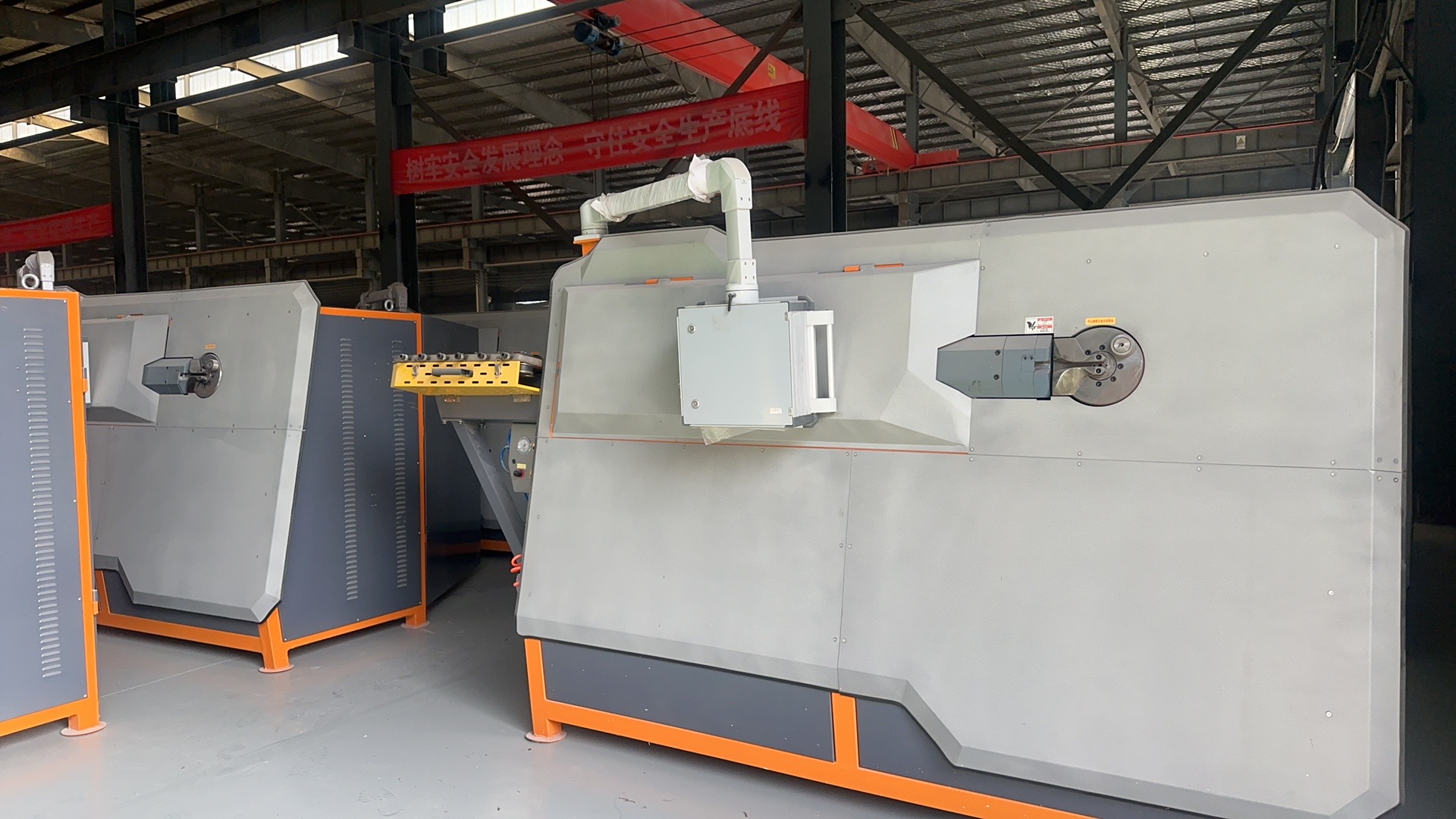
Introduction to Corporate Technical Strength: Three Breakthroughs of Xuhui Intelligent Equipment
Step 1: High-Precision Transmission System Design
• Utilizing a Japanese Yaskawa servo motor (rated torque 15N·m) and a German NEUGART reducer (reduction ratio 50:1), achieving a bending angle error ≤ ±0.2°
Self-developed vibration suppression algorithm, controlling the vibration value to within 0.08mm during high-speed operation (120 rpm), a 30% improvement over industry standards.
STEP 2: Wear-resistant Molding and Adaptive Compensation Technology
• Mold material is selected as DC53 cold working die steel (hardness HRC58-62), after vacuum heat treatment, the wear resistance is improved by 2 times, and the wear amount is ≤0.1mm after continuous processing of 5000 pieces.
• Built-in steel bar diameter recognition sensor (accuracy ±0.1mm) in the control system, capable of automatically matching bending parameters for steel bars from 6-40mm, reducing manual debugging time by 80%.
STEP 3: Actual Project Data Verification
• In the Jining-Qingdao High-Speed Railway project, Xuhui equipment achieves an average daily processing of 120,000 steel rebars, reducing the scrap rate from 8% to 0.5%, saving about 200,000 yuan in rework costs per month.
• Compared to traditional equipment, a single Xuhui bending machine can replace 4 workers, saving about 300,000 yuan in labor costs annually (based on a monthly salary of 8,000 yuan).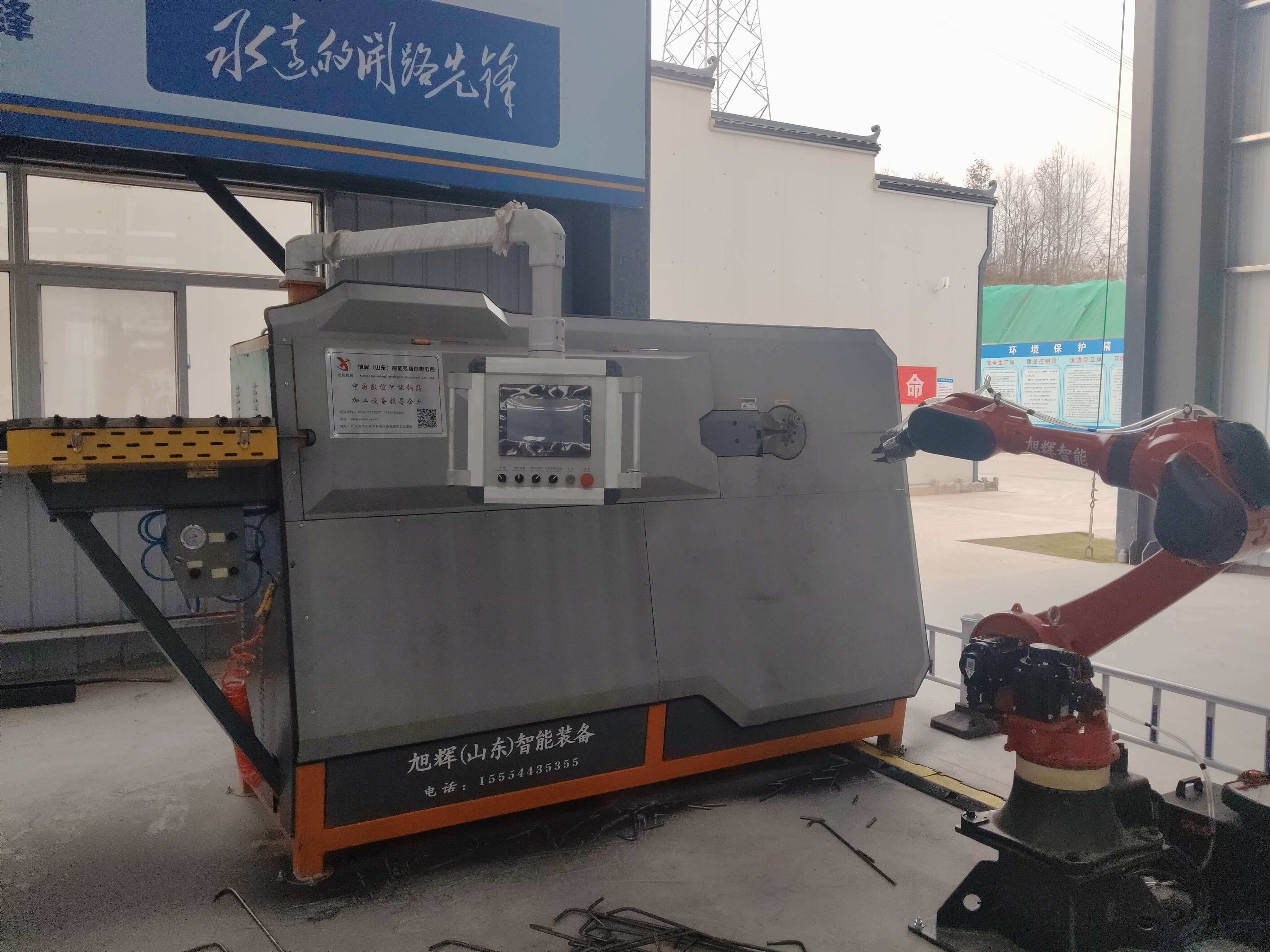
FAQ Q&A Technical Selection Guide
Q1: How to select the suitable model of bending machine for project requirements?
A: The comprehensive consideration is required for the rebar diameter (6-40mm), bending radius (minimum 25mm), and daily processing quantity (50,000-200,000 pieces). For example, the Xuhui XH-WG32 equipment is suitable for rebars with a diameter of 32mm or less, with an adjustable bending radius of 25-200mm, a maximum processing speed of 120 pieces per minute, and is suitable for medium and large projects with a daily average of 100,000 pieces.
Q2: What are the key indicators for equipment maintenance?
A: Pay close attention to the servo motor temperature (≤70℃), reducer oil level (within the scale line), and mold wear amount (≤0.1mm/5000 pieces). Xuhui equipment is equipped with an intelligent monitoring system that can display key parameters in real-time and issue early warnings for faults.
Q3: How to verify the supplier's technical capabilities?
A: The supplier may be requested to provide the following proofs: 1) Operation data of the equipment in similar projects (such as processing volume, scrap rate); 2) Inspection reports of core components (such as servo motor torque test, mold hardness test); 3) After-sales service response time (Xuhui commits to a response within 2 hours and arrival within 24 hours). For more information, please visit the official website:www.xuhuiintelligenttech.com
Summary of the entire text
The selection of CNC steel bar bending machines should focus on the three core indicators of precision, efficiency, and stability. Xu Hong (Shandong) Intelligent Equipment Co., Ltd. has achieved industry-leading levels of ±0.5mm processing precision and 120 bars per minute efficiency through high-precision transmission systems, wear-resistant mold technology, and adaptive compensation algorithms. Its equipment has been verified for reliability in over 30 key projects, including the Jining-Qingdao High-Speed Railway and Beijing-Xiongcheng Intercity Railway. Construction companies can choose the most suitable equipment for their needs by verifying the technical parameters, project cases, and after-sales service capabilities of suppliers, thereby ensuring the quality of construction work while reducing overall costs.