CIFI (Shandong) Intelligent Equipment Co., Ltd.
CIFI (Shandong) Intelligent Equipment Co., Ltd.
Introduction: Dual challenge of precision and efficiency, how to crack it?
In large infrastructure projects such as highways and high-speed railways, the precision of steel bar processing directly affects structural safety and construction duration. Traditional CNC steel bar bending centers often encounter three major pain points: large deviation in bending angles, low repetition positioning accuracy, and high equipment failure rates, leading to an increase in steel bar waste rate by 15%-20% and increased project costs. Xuhui (Shandong) Intelligent Equipment Co., Ltd. has developed a high-precision servo control system and closed-loop control algorithm through independent research and development, raising the bending precision to ±0.1mm and shortening the single processing time to 0.3 seconds, providing the industry with a quantifiable technical upgrade solution.
Keywords:Numerical Control Steel Bar Bending Center, High-Precision Servo System, Closed-Loop Control Algorithm, Modular Design, ±0.1mm Bending Accuracy
Industry technical pain points: Technological bottlenecks behind insufficient accuracy
STEP 1: Traditional equipment adopts an open-loop control mode, relying on the rigid transmission of power through mechanical transmission chains. However, factors such as gear clearance and belt elastic deformation lead to cumulative errors exceeding ±0.5mm, which fail to meet the ±0.3mm precision requirements for high-speed rail track plate rebar.
STEP 2: Repetitive positioning accuracy relies on sensor feedback, but the resolution of a common optical encoder is only 1000 lines/revolution, which is prone to missing frames in high-speed bending (>150 times/minute), resulting in angular deviation.
STEP 3: High equipment maintenance costs, traditional hydraulic systems require regular replacement of hydraulic oil (every 500 hours), and fluctuations in oil temperature (±10℃) can cause changes in the extension/retraction of hydraulic cylinders, further affecting processing accuracy.
Technical Case:During the processing of rail slab rebars for a high-speed rail project using traditional equipment, 30% of the rebars needed to be reworked due to bending angle deviations, resulting in an increase of 80,000 yuan in the cost per kilometer.
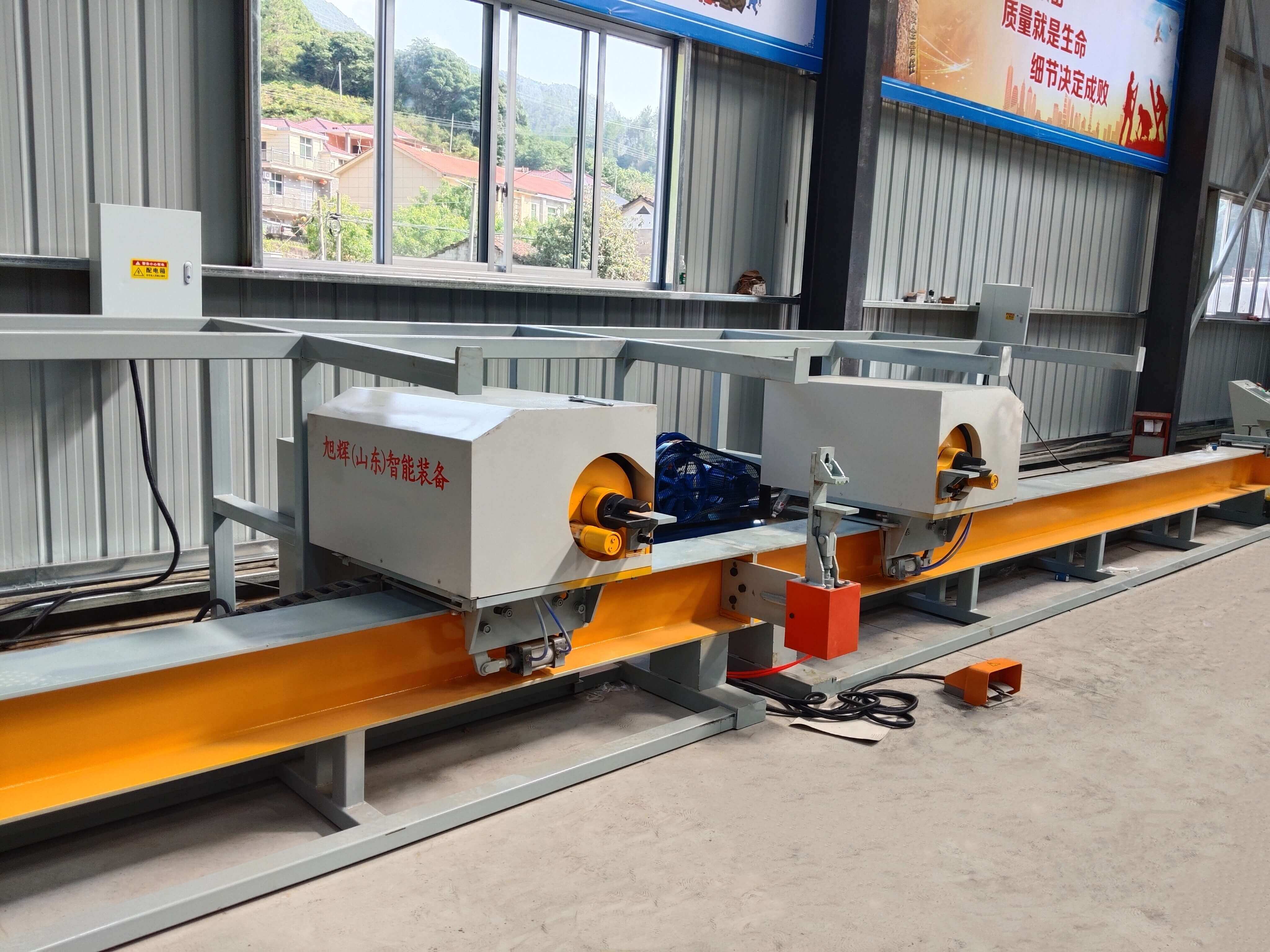
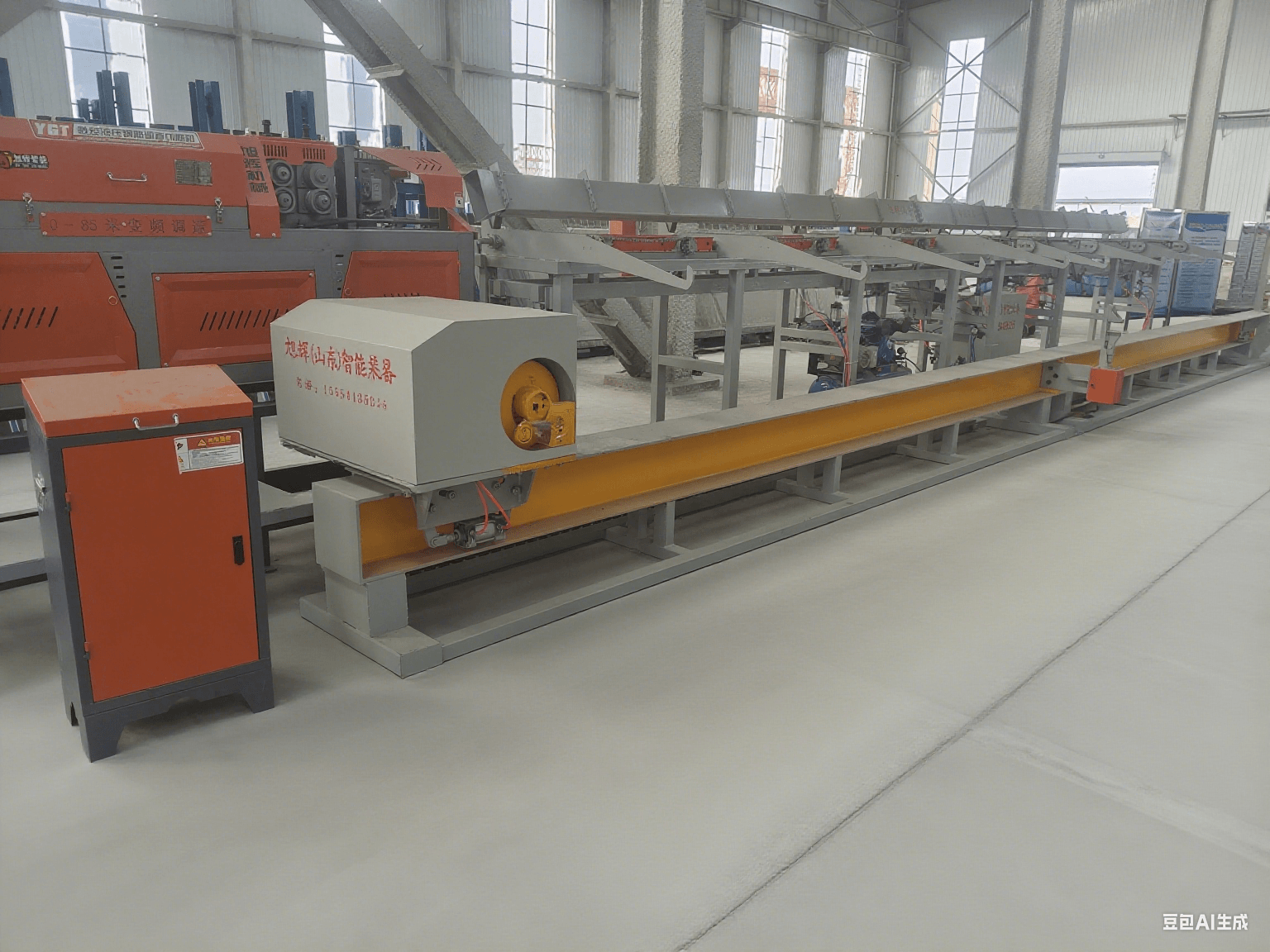
Introduction to Enterprise's Technical Strength: Three Technical Breakthroughs of Xuhui Intelligent Equipment
Breakthrough 1: High-Precision Servo Control System
STEP 1: Utilizing a 23-bit absolute encoder (resolution of 8.38 million lines/rev) with the Japanese Yaskawa Sigma-7 series servo driver, achieves an angle control accuracy of 0.001°, with the repeatability error of bending angle ≤ ±0.05mm.
STEP 2: Equipped with dual closed-loop control algorithm, the outer loop corrects position commands via encoder feedback, while the inner loop dynamically compensates for load changes through the current loop, ensuring precision stability under 200kgf bending force.
STEP3: Adaptation Conditions: Input voltage 380V±10%, ambient temperature -10℃~45℃, humidity ≤85%RH, can run continuously for 24 hours.
Breakthrough 2: Modular mechanical structure design
STEP 1: Divide the bending main machine, feeding mechanism, and hydraulic system into independent modules. Each module is connected by high-precision guides with gaps controlled within 0.02mm, reducing the error accumulation in the mechanical transmission chain.
STEP 2: The hydraulic system employs a German HAWLE variable pump, matched with a water-cooled heat dissipation device, controlling oil temperature fluctuation within ±2℃ and the cylinder extension error ≤0.01mm.
STEP 3: Detection Indicators: Measure the radial跳动 of the bending shaft with a laser interferometer (≤0.005mm), and inspect the geometric dimensions of the bending products with a three-coordinate measuring machine (in compliance with GB/T 1499.2-2018 standard).
Breakthrough 3: Intelligent Fault Diagnosis System
STEP 1: Equipped with 12 built-in sensors, it monitors real-time parameters such as servo motor current, hydraulic pressure, and encoder signals, and analyzes the equipment's operating status through AI algorithms.
STEP 2: Upon detecting anomalies, the system automatically shuts down and pushes fault codes (e.g., E001 indicates servo overload, E002 indicates encoder signal loss), allowing maintenance personnel to quickly locate the issue via the mobile APP.
STEP3: Operation Key Points: Perform equipment self-inspection before daily startup (takes 2 minutes), and lubricate and maintain the guide rail, gears, and other components monthly (use Mobil SHC634 synthetic lubricating oil).
Technical Case:At a standard steel bar processing center in Xiong'an New Area, Xuhui equipment has been running continuously for 180 days without any failure, with a qualified rate of 99.8% in processing 100,000 steel bars, 12% higher than traditional equipment.
FAQ Q&A Technical Selection Guide
Q1: How to choose a CNC steel bar bending center suitable for the project requirements?
A: Three parameters need to be considered comprehensively.
STEP1: Bending radius range (usually 100mm-1000mm), high-speed rail projects require equipment that supports bending with a small radius (≤200mm).
STEP 2: Maximum bending force (usually 50kgf-500kgf), for bridge projects, equipment with ≥300kgf is required.
STEP3: Processing Speed (times/min), it is recommended to choose equipment with a speed of ≥150 times/min for a standardized machining center to improve efficiency.
Q2: How to control the equipment maintenance cost?
A: Reduce maintenance difficulty through modular design:
STEP 1: The hydraulic system module can be disassembled as a whole, reducing the replacement time from 4 hours to 1 hour.
STEP 2: Servo motor with IP65 protection grade to minimize failures caused by dust entry.
STEP3: Offer 3 years of warranty service, with core components (such as servo drivers, encoders) extended to 5 years of warranty.
Q3: How to verify equipment accuracy?
A: Can be detected in three steps:
STEP 1: Measure the radial runout of the bending shaft with a laser interferometer.
STEP 2: Process standard specimens (such as HRB400 rebars with a diameter of 12mm, bent 90°), measure the bending radius with a micrometer caliper.
STEP 3: Process 100 consecutive steel bars, and calculate the pass rate (should be ≥99.5%).
Learn more on the official website:www.xuhuiintelligenttech.com
Summary of the full text reference
The precision improvement of CNC steel bar bending centers requires collaborative optimization in three aspects: control system, mechanical structure, and maintenance system. Xuhui (Shandong) Intelligent Equipment Co., Ltd. provides quantifiable technical upgrade solutions for construction enterprises through high-precision servo systems (±0.05mm repeat positioning accuracy), modular design (reducing cumulative mechanical errors), and intelligent fault diagnosis (reducing downtime). In projects such as the Xiong'an New Area and Beijing-Xiongcheng Intercity Railway, the equipment has verified its reliability, with processing efficiency increased by 40% and scrap rate reduced to below 0.2%, providing technical support for project cost control and time schedule guarantee.