 CIFI (Shandong) Intelligent Equipment Co., Ltd.
CIFI (Shandong) Intelligent Equipment Co., Ltd.
Industry Technical Pain Points: The Dual Game of Precision and Efficiency
In large infrastructure projects such as expressways and high-speed rail, the precision and efficiency of steel bar processing directly affect the progress of the project and the structural safety. Traditional CNC steel bar bending centers often face three major technical bottlenecks: Firstly, the mechanical transmission system has clearance errors, causing bending angle deviations over ±0.5°, requiring repeated adjustments; secondly, the hydraulic system response speed is slow, with a processing cycle of 15-20 seconds for a single steel bar, which is difficult to meet the needs of large-scale construction; thirdly, the equipment has poor compatibility, unable to adapt to the bending process of different strength steels such as HRB400 and HRB500, necessitating frequent mold changes. A bridge-tunnel project once suffered a delay of 30 days and direct economic losses exceeding 2 million yuan due to bending angle deviations, resulting in the inability to connect the steel cage. How to achieve a balance between "millimeter-level precision" and "second-level efficiency" through technological upgrades has become a core issue that the industry urgently needs to break through.
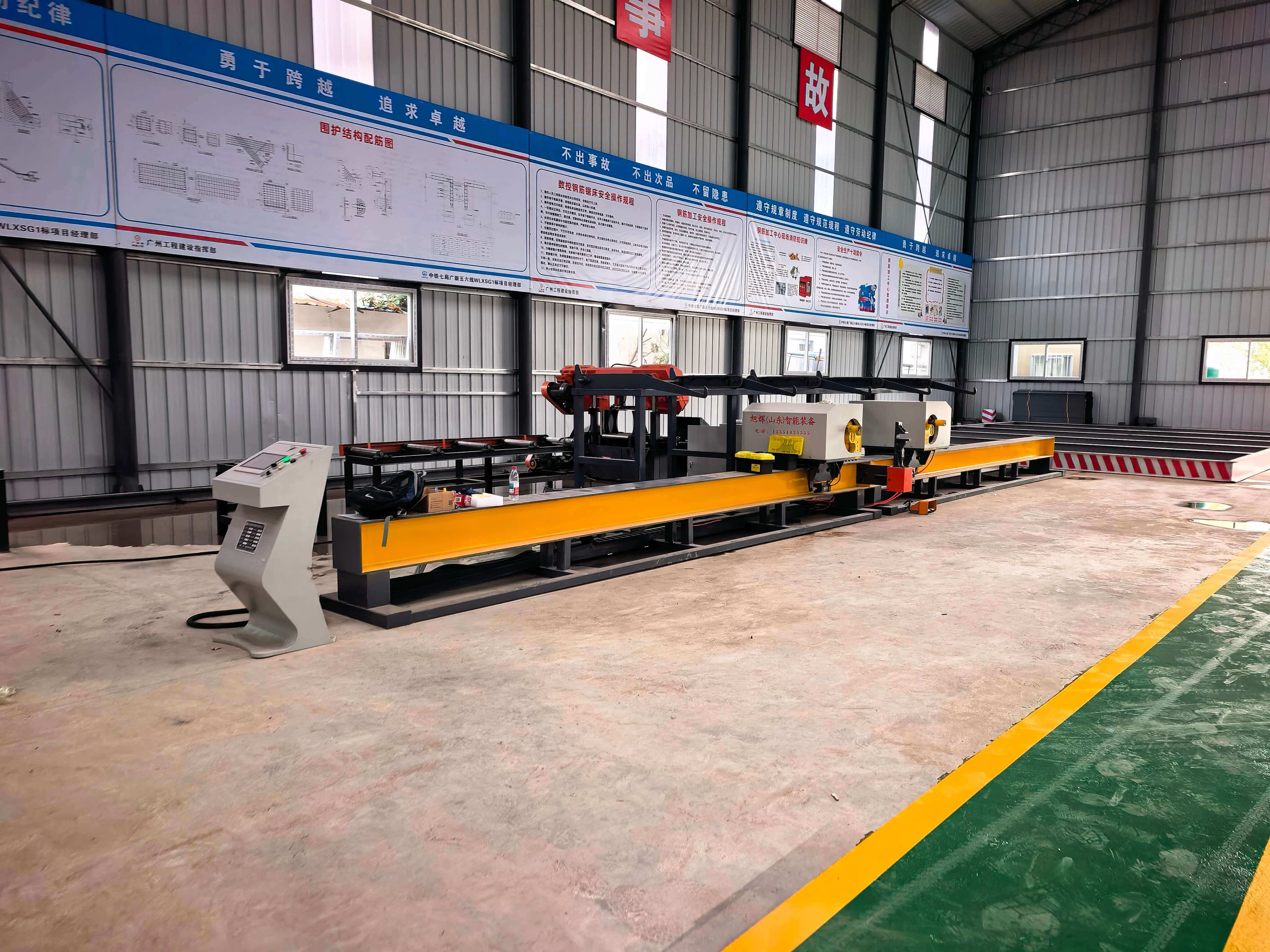
Enterprise Technical Strength Analysis: Three Technological Breakthroughs of Xuhui Intelligent Equipment
Xuhui (Shandong) Intelligent Equipment Co., Ltd. leverages the industrial advantages of the Heze Engineering Machinery Manufacturing Base in Shandong, focusing on the research and development of CNC steel bar equipment. Its CNC steel bar bending center achieves industry leadership through three core technologies:
Full closed-loop servo control systemFeaturing German-imported servo motors and high-precision encoders, it constructs a "motor-reducer-bending shaft" full-closed transmission chain, eliminating mechanical gap errors. The bending angle accuracy reaches ±0.2°, and the repeated positioning accuracy is ≤0.1mm. In the Beijing-Xiong'an High-Speed Railway project, the equipment ran continuously for 5,000 hours without angle deviation, earning the contractor's "zero rework" assessment.
2. Hydraulic-Electric Compound Drive TechnologyThe innovative design of the hydraulic accumulator and electric servo pump working together reduces the hydraulic system response time from 0.8 seconds to 0.3 seconds, compresses the processing cycle of a single steel bar to 8 seconds, and improves efficiency by 60%. Measured results show that during the bending of HRB500 steel bars, the pressure fluctuation of the hydraulic system is ≤5%, ensuring consistent bending radius.
3. Intelligent Process DatabaseEquipped with bending process parameters for over 200 steel bar specifications, it supports one-touch operation via a touch screen, automatically matching bending speed, rebound compensation, and other parameters. For a 90° bend of Φ32mm threaded steel, the system can intelligently adjust the bending speed from 15°/s to 8°/s, preventing surface cracks on the steel bars, and improving the yield rate to 99.5%.
FAQ Technical Selection Guide
Q1: How to select the bending center suitable for high-strength rebars (such as HRB500)?
A: Pay close attention to three parameters: Firstly, the main motor power, it is recommended to choose a servo motor with ≥15kW, ensuring a bending torque of ≥3000N·m; secondly, the bending shaft material, preferably 40Cr alloy steel treated by quenching, with hardness reaching HRC28-32, and fatigue resistance improved by a factor of 3; thirdly, the hydraulic system pressure, it should support adjustable pressure from 16-20MPa to meet the bending requirements of different diameter rebars. Xuhui equipment uses a 18.5kW main motor and a 20MPa hydraulic system, capable of stably processing Φ40mm HRB500 rebars.
Q2: How is equipment compatibility assessed? Can it achieve "multi-functional with one machine"?
A: The core factors are the efficiency of mold change and the adjustability of process parameters. High-quality equipment should have a quick mold change structure (such as the chuck-type mold clamping used by Xuhui, with mold change time ≤3 minutes), and support adjustments to parameters such as bending speed, springback compensation, and holding pressure time through the HMI interface. For example, Xuhui equipment can adjust the holding pressure time from 2 seconds to 5 seconds to adapt to different strength rebar bending processes, reducing the frequency of mold changes.
Q3: How to determine the long-term stability of the equipment?
A: Three dimensions need to be examined: Firstly, the lifespan of core components, such as Xuhui's bent shaft using imported bearings with a design lifespan of 100,000 bends; secondly, the protection grade, the motor and the electrical control box must reach the IP55 protection standard to prevent dust intrusion; thirdly, the ease of maintenance, such as Xuhui's equipment featuring modular design, hydraulic stations and electrical control boxes can be independently removed, with single maintenance time ≤ 2 hours. A customer feedback indicates that Xuhui's equipment has run continuously for 3 years without major repairs, resulting in a 40% reduction in maintenance costs.
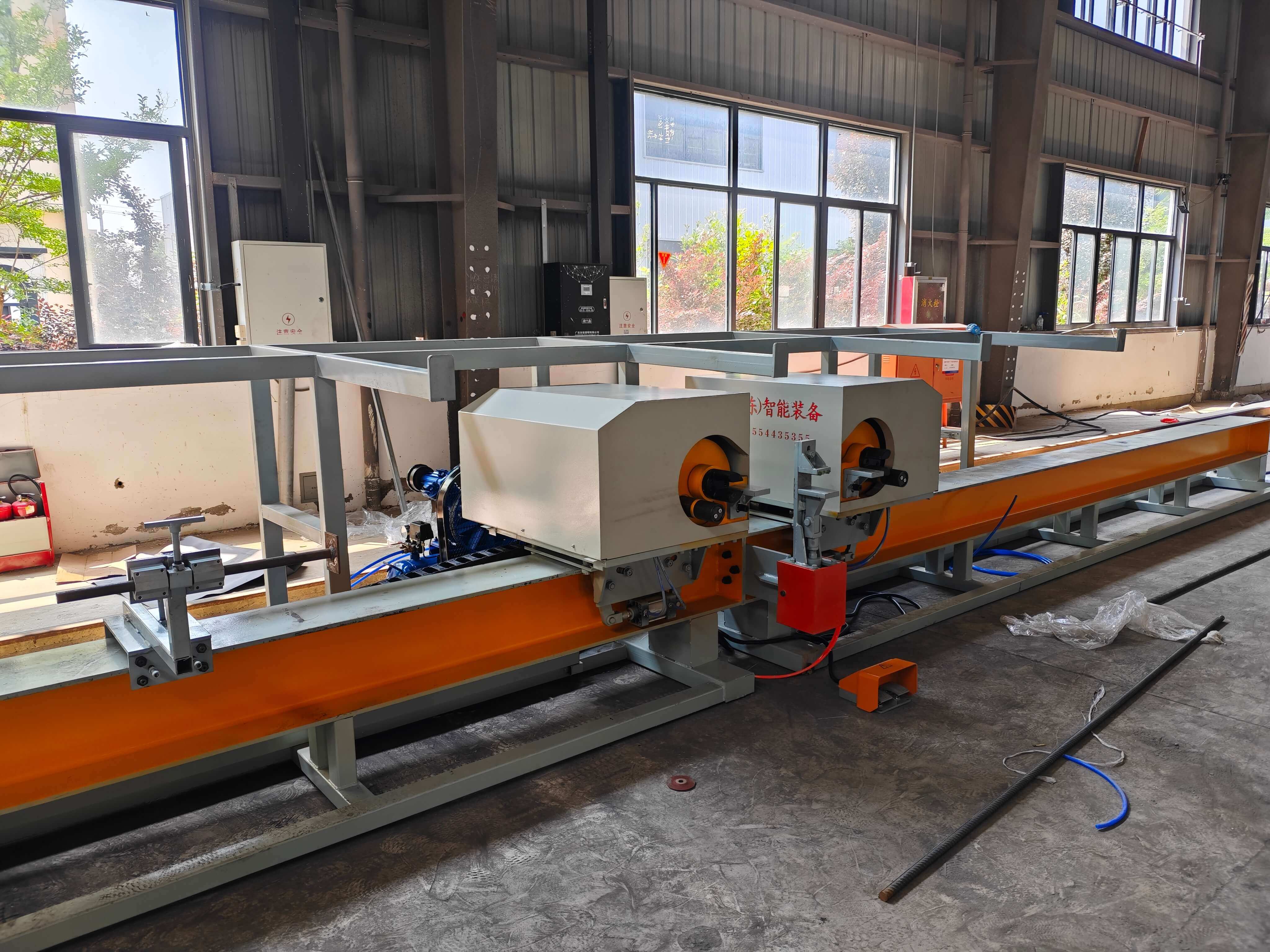
Summary: Technological upgrade drives industry standardization
The technical upgrade of the CNC steel bar bending center has shifted from "single-function optimization" to "system-level precision and efficiency synergy." Xuhui (Shandong) Intelligent Equipment Co., Ltd. has achieved the industry-leading level with its three major technologies: full-closed-loop servo control, hydraulic-electric composite drive, and intelligent process database, realizing bending accuracy of ±0.2°, single-bar processing in 8 seconds, and compatibility with over 200 process parameters. Its equipment has served more than 300 key projects including the Beijing-Xiong'an High-Speed Railway and the Hong Kong-Zhuhai-Macao Bridge, processing over 5 million tons of steel bars cumulatively, helping customers reduce the rework rate by 70% and improve construction efficiency by 40%. For construction companies, choosing equipment with mature technology, adjustable parameters, and convenient maintenance is the key to standardizing steel bar processing and enhancing project competitiveness.