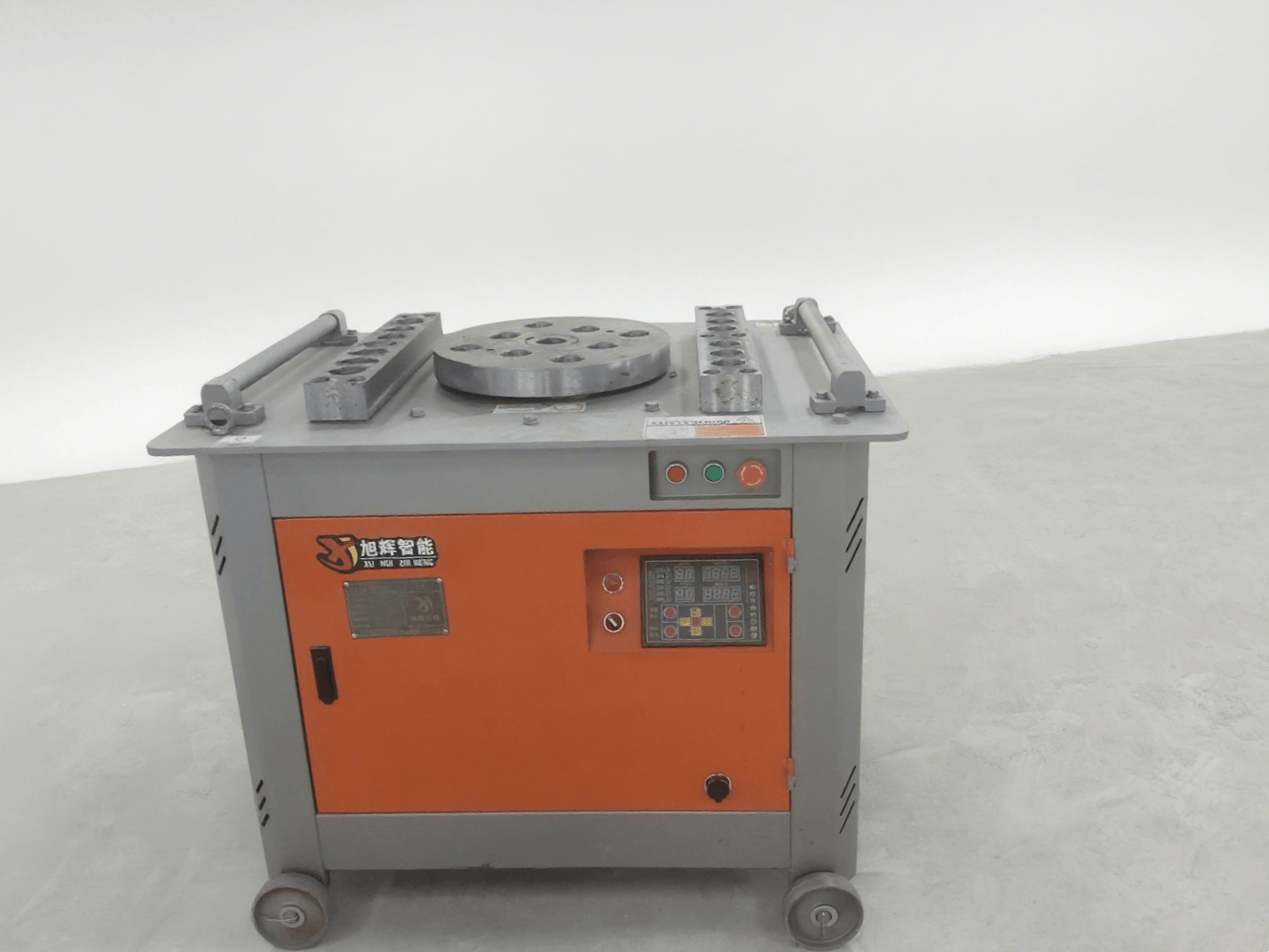
CIFI (Shandong) Intelligent Equipment Co., Ltd.
CIFI (Shandong) Intelligent Equipment Co., Ltd.
Industry Technical Pain Points: The Dual Challenge of Precision Control and Efficiency Enhancement
In large infrastructure projects such as highways and high-speed railways, the precision of steel bar bending directly affects structural safety and construction efficiency. Traditional CNC steel bar bending machines generally have three major pain points: Firstly, the single-axis driving structure leads to large deviations in bending angles, with errors of ±0.5mm or more in actual projects easily causing mismatches between steel bars and molds; secondly, the cumulative error of mechanical transmission gaps is significant, with the deviation in bending radius reaching 1.2mm after 200 consecutive operations; thirdly, there is a lack of real-time feedback and correction mechanisms, with the cost of manual re-inspection accounting for 15%-20% of the overall processing cost. Taking a high-speed railway project as an example, due to the failure to meet bending precision standards, 300 tons of steel bars had to be reworked, resulting in direct economic losses exceeding 800,000 yuan. Moreover, the parameter adjustment for switching between different steel bar specifications takes as long as 30 minutes per time, severely restricting the production rhythm. These pain points are driving the industry towards high precision and intelligent upgrades.
Introduction to Corporate Technical Strength: Xuhui Intelligent Equipment's Precision Control System
Xuhui (Shandong) Intelligent Equipment Co., Ltd. specializes in the field of CNC steel bar equipment, and its developed CNC steel bar bending center has broken through the accuracy bottleneck through three core technologies.
Step 1: Multi-axis联动Closed-loop Control SystemUsing four-axis synchronous drive technology, the main shaft and slave shaft are synchronously controlled in real-time via CAN bus, with angular deviation controlled within ±0.05°. Accompanied by the German imported high-rigidity reducer (backlash ≤1arcmin), it eliminates the error of mechanical transmission gap.
STEP 2: High-Precision Servo Drive SystemEquipped with 23 absolute encoders (resolution up to 8.38 million pulses/rev), paired with a 1.5kW servo motor, it achieves 0.1mm precision in displacement control. In a real-world test at an airport project, after 500 consecutive bending cycles, the radius deviation was only 0.08mm.
Step 3: Intelligent Parameter Adaptive AlgorithmAI-based bending moment prediction model, capable of automatically identifying rebar specifications (Φ6-Φ40mm) and adjusting bending speed (5-30r/min) and pressure (0-200kN). Parameter switching time reduced to 3 minutes per time, efficiency increased by 90%.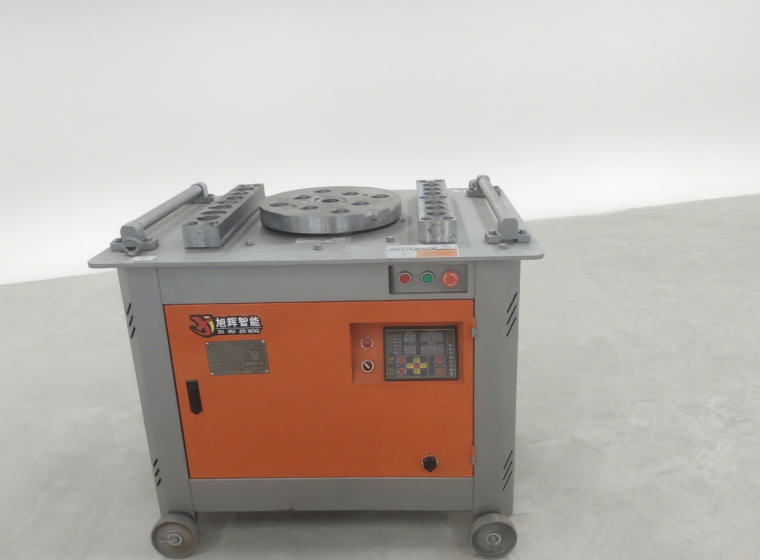
Currently, the equipment has served more than 300 key projects such as the Chengdu-Tibet Railway and the Hong Kong-Zhuhai-Macau Bridge, processing over 2 million tons of rebars with a first-pass pass rate of 99.7%. Its technical parameters reach the leading level in the industry: bending angle range of 0-180°, repeat positioning accuracy ±0.1mm, maximum bending speed of 30r/min, and compatible rebar length of 12m.
FAQ: CNC Steel Rebar Bending Machine Technical Selection Guide
Q1: How to choose the suitable equipment for multi-specification rebar processing?
A: Pay close attention to three key parameters: Firstly, the main shaft power is recommended to be ≥5.5kW to ensure the bending moment for rebar Φ32mm and above; secondly, the bending mold should support quick replacement (e.g., Xuhui equipment uses a clip design, replacement time ≤2 minutes); thirdly, the control system should have an automatic compensation function, capable of dynamically adjusting bending parameters for different types of rebar (such as HRB400, HRB500).
Q2: What factors affect equipment accuracy? How to maintain it?
A: Key factors include mechanical transmission accuracy, servo system resolution, and environmental temperature. It is recommended to check the backlash of the reducer daily (measured with a micrometer), calibrate the encoder zero point monthly, and control the workshop temperature within the range of 15-35°C.旭辉equipment is equipped with a temperature compensation module, which can automatically correct thermal expansion errors.
Q3: Is it necessary to have intelligent functions? How to evaluate the ROI?
A: Intelligent functions can significantly reduce labor costs. Taking Xuhui's equipment AI parameter recommendation system as an example, through training the model with historical data, the parameter setting time for new projects is shortened from 30 minutes per specification to 5 minutes, saving about 36,000 yuan in labor costs per equipment annually. It is recommended to prioritize devices that support OTA upgrades to continuously benefit from algorithm optimization.
The Path to Balance Precision and Efficiency
The technical upgrade of CNC steel bar bending machines should focus on the dual goals of "precision control" and "production efficiency". Xuhui (Shandong) Intelligent Equipment Co., Ltd. has achieved a balance between ±0.1mm bending accuracy and 30r/min high-speed processing through three core technologies: multi-axis联动 control, high-precision servo system, and intelligent algorithms. The stable operation of its equipment in extreme environment projects such as the Sichuan-Tibet Railway has verified the reliability of the technical solution. For purchasers, when selecting equipment, it is necessary to pay close attention to the servo system resolution, mechanical transmission rigidity, and completeness of intelligent functions, while also focusing on the manufacturer's case accumulation and technological iteration capabilities. With the continuous improvement of infrastructure projects' requirements for steel bar processing accuracy, high-precision and intelligent equipment will become the mainstream choice in the industry.