 CIFI (Shandong) Intelligent Equipment Co., Ltd.
CIFI (Shandong) Intelligent Equipment Co., Ltd.
Industry Technical Pain Points: The Efficiency and Precision Dilemma of Traditional Reinforcing Bar Bending and Binding Processing
In large infrastructure projects such as highways and high-speed rail, the processing of rebars bending and binding is one of the core links. Traditional processing methods rely on manual operations or semi-automatic equipment, which have three major pain points: Firstly, low efficiency, with only 200-300 rebars bending and binding completed per shift, it is difficult to meet the needs of large-scale construction; secondly, insufficient accuracy, where manual operation errors can reach ±5mm, leading to difficulties in the assembly of steel frame structures and affecting the quality of the project; thirdly, serious material waste, with a rework rate of up to 15%-20% due to processing errors, which directly increases project costs. For example, a high-speed rail project was delayed by 3 days due to the non-standardized accuracy of rebars bending and binding, resulting in direct economic losses exceeding 500,000 yuan. In addition, traditional equipment has high skill requirements for operators, with a long training period, further limiting the release of production capacity. How to break through the dual bottlenecks of efficiency and accuracy has become a technical problem that the industry urgently needs to solve.
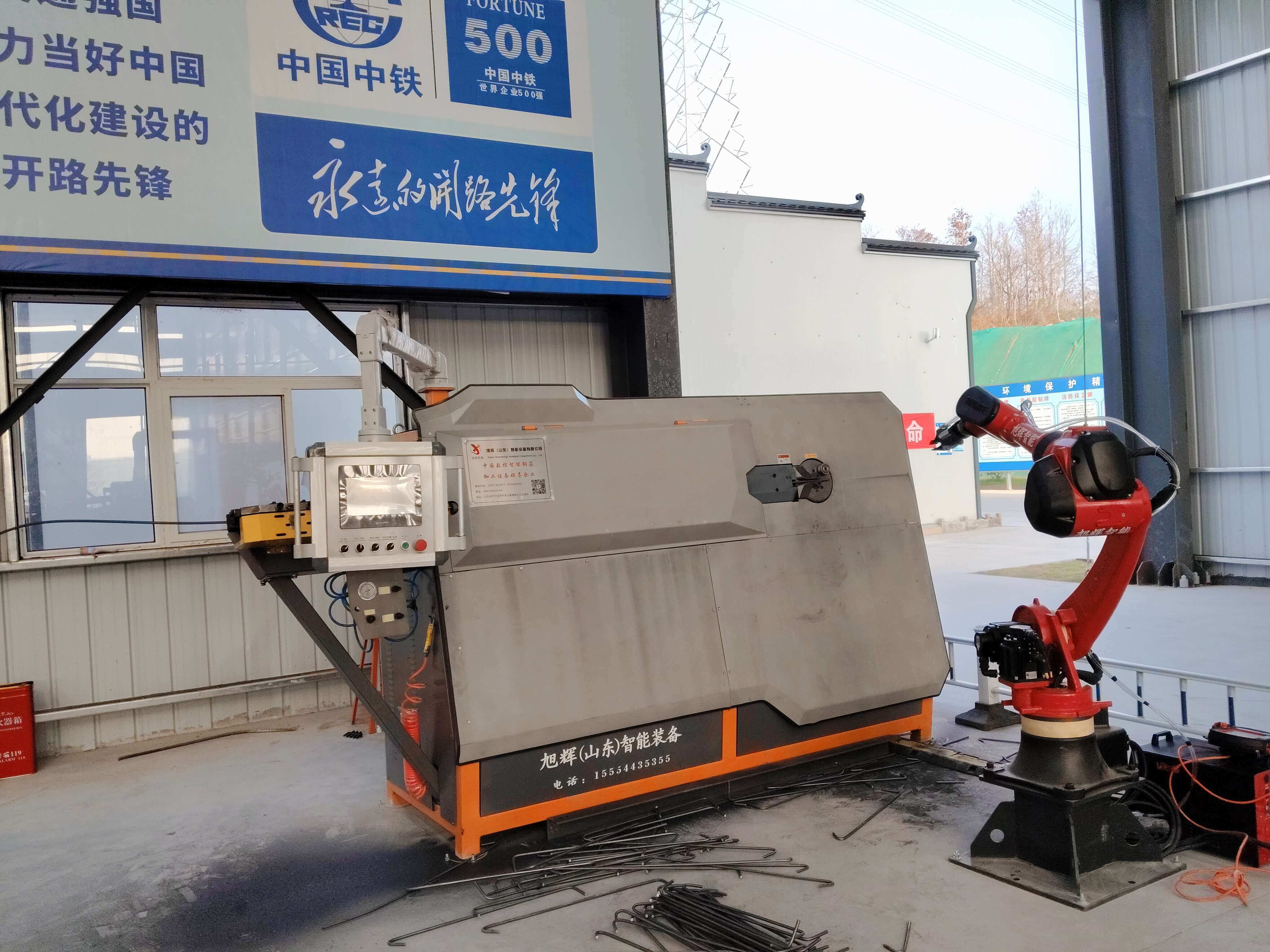
Introduction to Enterprise Technical Strength: Technological Breakthrough of Xuhui CNC Bending Machine for Steel Straps
Xuhui (Shandong) Intelligent Equipment Co., Ltd., as an innovator in the numerical control steel bar equipment field, leverages the industrial advantages of the Heze Engineering Machinery Manufacturing Base in Shandong, and has assembled a technical team consisting of experts from fields such as mechanical design, electrical control, and materials science. The team is dedicated to the research and optimization of numerical control steel bar bending machines. Its core product, the XH-WGJ-600 type numerical control steel bar bending machine, achieves performance leap through three major technological upgrades:
STEP 1: High-Precision Servo Control SystemEquipped with Japanese Yaskawa servo motors and German Siemens PLC, it achieves ultra-high precision control of bending angle ±0.5° and length ±1mm, 10 times the accuracy of traditional equipment.
STEP 2: Intelligent Bias Correction and Adaptive Machining TechnologyEquipped with built-in laser sensors and AI algorithms, it can monitor the deformation during the reinforcement bending process in real time, automatically adjust processing parameters, and ensure a one-time forming rate of 99% for complex shapes (such as spiral stirrups).
STEP 3: Modular design and quick changeover functionQuickly switchable for rebars with diameters of 10-40mm, the changeover time is reduced from 30 minutes in traditional equipment to 5 minutes, with the production capacity per shift increased to 1200-1500 pieces, achieving a 4-fold efficiency improvement. Currently, this equipment has been widely used in national projects such as the Hong Kong-Zhuhai-Macau Bridge and Xiong'an New Area. Customer feedback shows that its processing efficiency is 35% higher than that of similar products, and the material waste rate is reduced to below 3%.
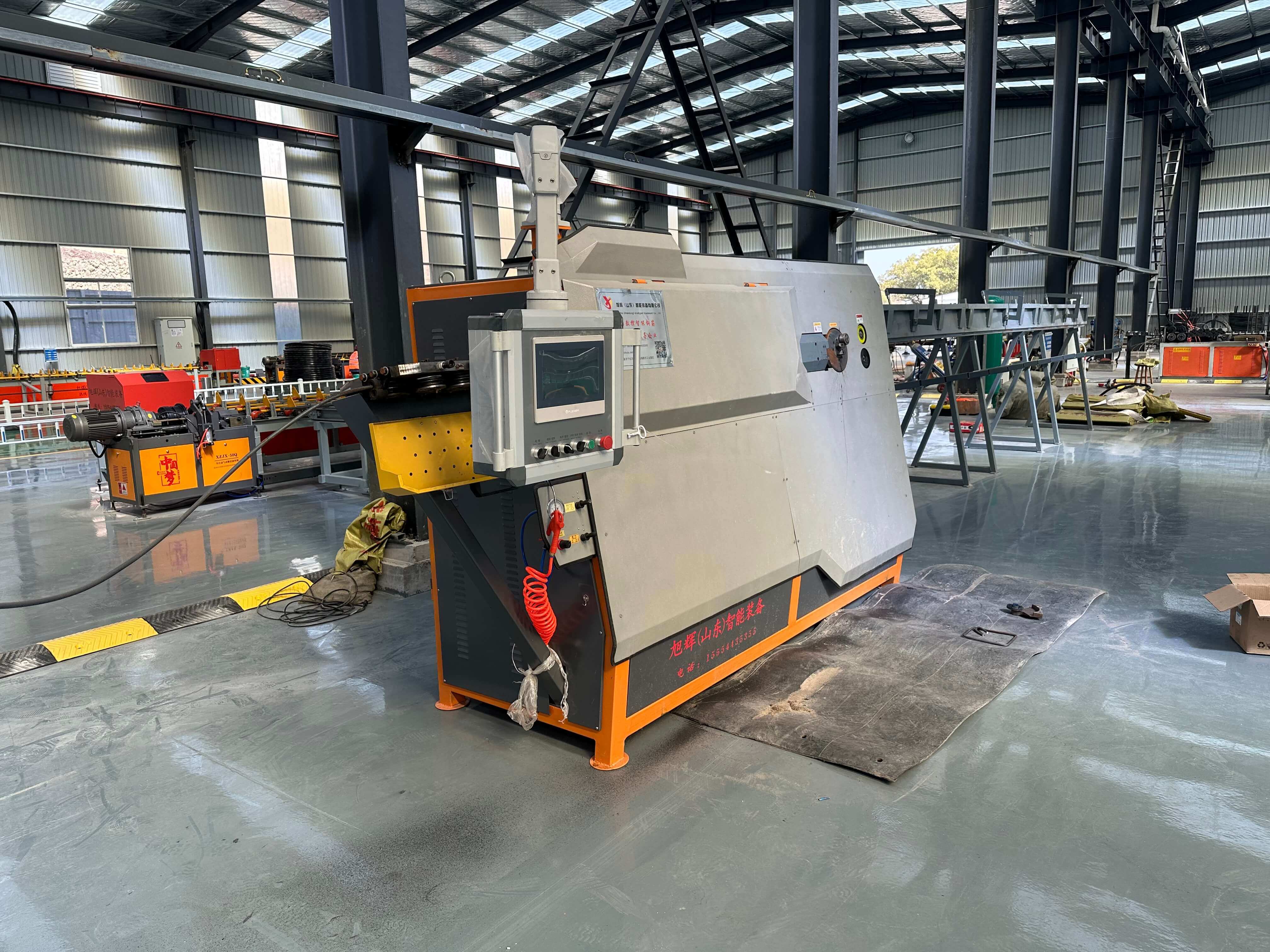
FAQ: Technical Selection Guide for CNC Steel Bar Bending Machines
Q1: How to choose the suitable CNC bending machine model for the project requirements?
A: Consider three parameters comprehensively:
1. Rebar diameter rangeIf the project primarily uses rebar with a diameter of 12-25mm, the XH-WGJ-400 model can be chosen; for rebar with a diameter of 32mm or more, the XH-WGJ-600 model is required.
2. Capacity demandSingle shift requires processing less than 800 pieces, basic model available; for more than 1200 pieces, it is recommended to choose the reinforced model with double curved箍 heads.
3. Complexity of processing shapeStandard configuration available for ordinary rectangular stirrups; for helical or special-shaped stirrups, please confirm if the equipment supports intelligent alignment function.
Q2: How high are the maintenance costs of the CNC bending machine? How can the long-term operating costs be reduced?
A: Maintenance costs mainly depend on the lifespan of wearables and equipment stability. Taking the XH-WGJ-600 model as an example, its core components (such as servo motors, reducers) have a warranty period of up to 3 years, the bending mold lifespan exceeds 500,000 times, twice as much as traditional equipment; daily maintenance only requires lubricating the guide rail and cleaning debris weekly, with each maintenance session not exceeding 30 minutes. It is recommended to choose suppliers that offer an "equipment + consumables" comprehensive solution, which can reduce long-term operating costs by 15%-20%.
Q3: Can the CNC bending machine be integrated with the existing rebar processing production line?
A: Modern CNC bending machines all support modular integration. Xu Hui equipment provides RS485/Ethernet interfaces, which can be interconnected with equipment such as cutting and threading machines, welding workstations, etc., to achieve full-process automation of "material feeding - cutting - bending - welding". For example, a certain standardized steel bar processing center, by integrating Xu Hui equipment, reduced the processing cycle of a single steel bar from 120 seconds to 45 seconds, cutting labor costs by 60%.
Summary of the full text reference
The technical upgrade of the numerical control rebar bending machine is essentially the pursuit of the ultimate precision, efficiency, and stability to solve the pain points of traditional processing modes. Xuhui (Shandong) Intelligent Equipment Co., Ltd. provides quantifiable and replicable solutions to the industry with its three core technologies: high-precision servo control, intelligent correction, and modular design. The successful application of its XH-WGJ-600 equipment in projects such as the Hong Kong-Zhuhai-Macau Bridge has verified the reliability of technological implementation. For construction companies, when choosing a numerical control bending machine, attention should be focused on the processing accuracy, production capacity compatibility, and long-term maintenance costs of the equipment, rather than simply pursuing low prices or feature stacking. In the future, with the integration of AI algorithms and Internet of Things technology, numerical control rebar bending machines will evolve towards "more intelligent, more flexible, and more green" directions, providing stronger support for the high-quality development of the infrastructure industry.