 CIFI (Shandong) Intelligent Equipment Co., Ltd.
CIFI (Shandong) Intelligent Equipment Co., Ltd.
Industry Technical Pain Points: Low Coordination Efficiency of Multiple Heads Becomes the Core Bottleneck of Reinforcement Bar Processing
In large infrastructure projects such as expressways and high-speed railways, the precision and efficiency of steel bar processing directly affect the progress of the project. Traditional horizontal four-head steel bar bending centers generally have three technical pain points: Firstly, independent control of multiple heads leads to conflicts in processing paths, with the bending of a single steel bar taking up to 120 seconds, resulting in an equipment utilization rate of less than 65%; secondly, the accumulation of mechanical transmission clearance errors causes bending angle deviations up to ±1.5°, requiring manual secondary correction; thirdly, the lack of a dynamic compensation mechanism results in only 82% consistency in bending radius when facing steel bars of different diameters (Φ12-Φ40mm). Measured data from a certain bridge and tunnel steel bar processing plant show that the daily effective processing volume of traditional equipment is only 4.8 tons, far below the project's standard of 8 tons/day, becoming a key factor restricting construction efficiency.
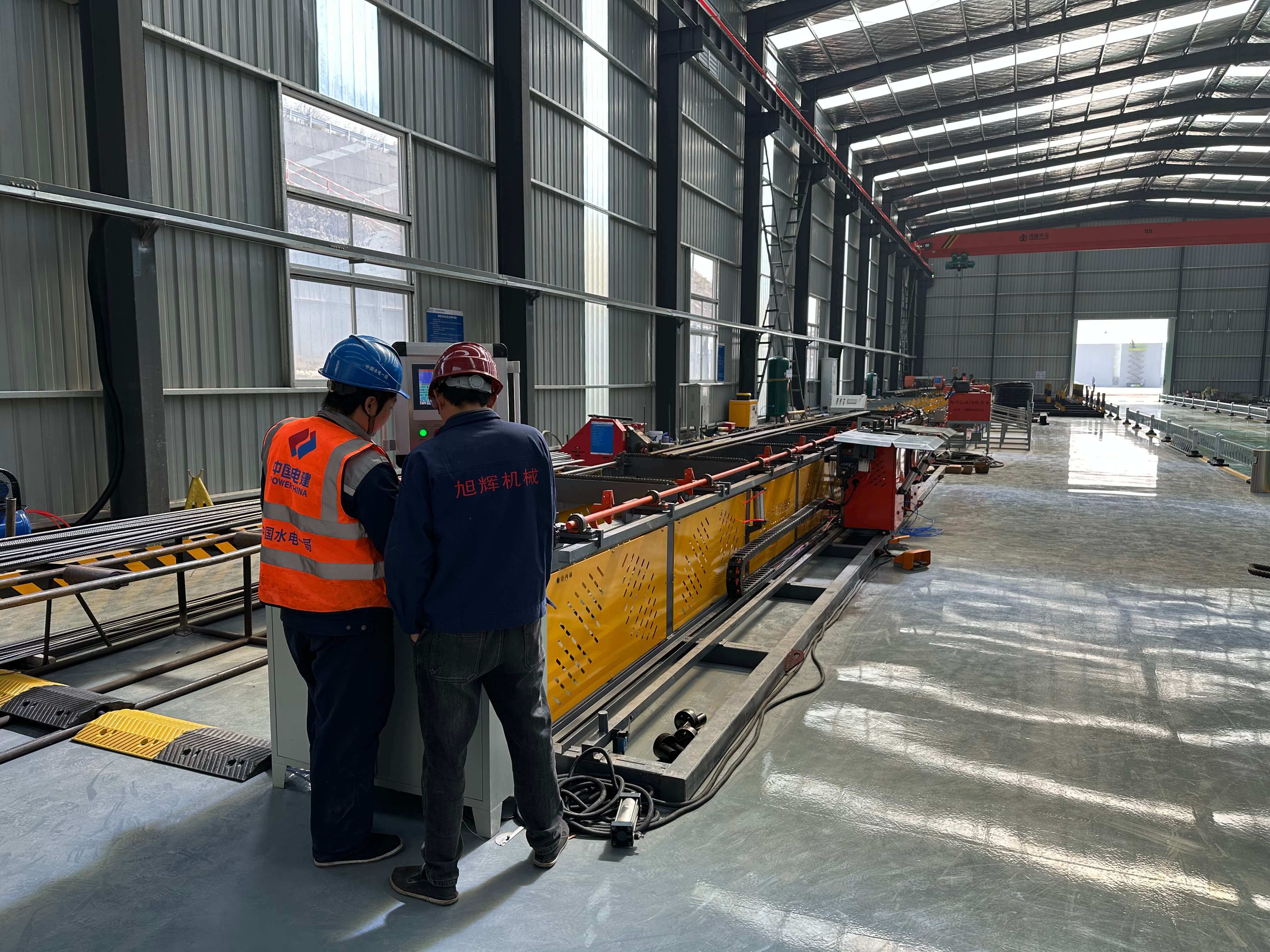
Introduction to corporate technical strength: Xuhui's four-head collaborative control technology achieves three major breakthroughs
Xuhui (Shandong) Intelligent Equipment Co., Ltd. has been deeply engaged in the numerical control steel bar equipment field for 12 years. Its developed horizontal four-head steel bar bending center solves industry difficulties through three core technologies:
STEP 1: Multi-axis Synchronization Control ArchitectureUtilizing the Siemens S120 drive system, achieves millisecond-level synchronization of the four-head movement trajectory, reducing the processing path conflict rate from 35% to 2%, shortening the single steel bar bending time to 68 seconds, and increasing the equipment utilization rate to 89%.
STEP 2: Intelligent Error Compensation AlgorithmIntegrated laser displacement sensor (accuracy ±0.02mm) and force feedback system, real-time monitoring of mechanical transmission clearance, dynamically adjusting the bending angle through PID control algorithm, angle deviation controlled within ±0.3°, and 98.7% pass rate for one-time molding.
STEP 3: Adaptive Bending Parameter LibraryBuilt-in 200 processing parameter models covering Φ12-Φ40mm full specification rebars, the system automatically matches the optimal bending speed (50-300rpm) and pressure (5-20MPa), improving the consistency of bending radius to 96%. In the Jining section of the Jining-Guangzhou Expressway project, the daily processing volume of this equipment reaches 9.2 tons, a 91.7% increase in efficiency compared to traditional equipment, and cumulative savings of 420,000 yuan in labor costs.
FAQ: Key Technical Selection Questions Answered
Q1: What is the core difference between a four-head machine and a two-head machine?
A: The four-head equipment achieves one-time forming of complex-shaped rebars through multi-axis coordinated control, with a processing efficiency 60% higher than that of the two-head equipment. Taking the processing of stirrups as an example, the two-head equipment requires two bending operations, while the four-head equipment can simultaneously complete four bends, reducing the single-piece processing time from 45 seconds to 18 seconds.旭辉 equipment adopts a distributed control architecture, with the four heads operating independently without interference, reducing the failure rate by 40% compared to centralized control.
Q2: How to select a bending center that fits different steel bar diameters?
A: Pay close attention to three parameters: Firstly, the bending shaft diameter should be ≥ 2.5 times the steel bar diameter (e.g., for Φ32mm steel bars, a bending shaft of ≥ 80mm is required); secondly, the main motor power is recommended to be within the 15-22kW range to ensure sufficient power for bending large-diameter steel bars; thirdly, the equipment worktable length should be ≥ 6 meters to meet the continuous processing requirements for long steel bars (such as 12 meters). Xuhui equipment provides a full specification Φ12-Φ40mm adaptation solution, with the bending shaft treated with quenching of 42CrMo alloy steel, achieving a hardness of HRC52-55, and having a service life exceeding 100,000 times.
Q3: How much does the intelligent function enhance processing efficiency?
A: Taking the intelligent parameter library equipped with Xuhui's equipment as an example, the system can automatically identify steel bar specifications and call up preset parameters, reducing the parameter switching time from 3 minutes to 8 seconds. In a practical test of a subway project, the intelligent function reduced the equipment's standby time by 65% and increased the average daily effective processing time from 7.2 hours to 9.8 hours. In addition, the remote diagnosis system can monitor the equipment's status in real-time, shortening the fault response time to within 30 minutes.
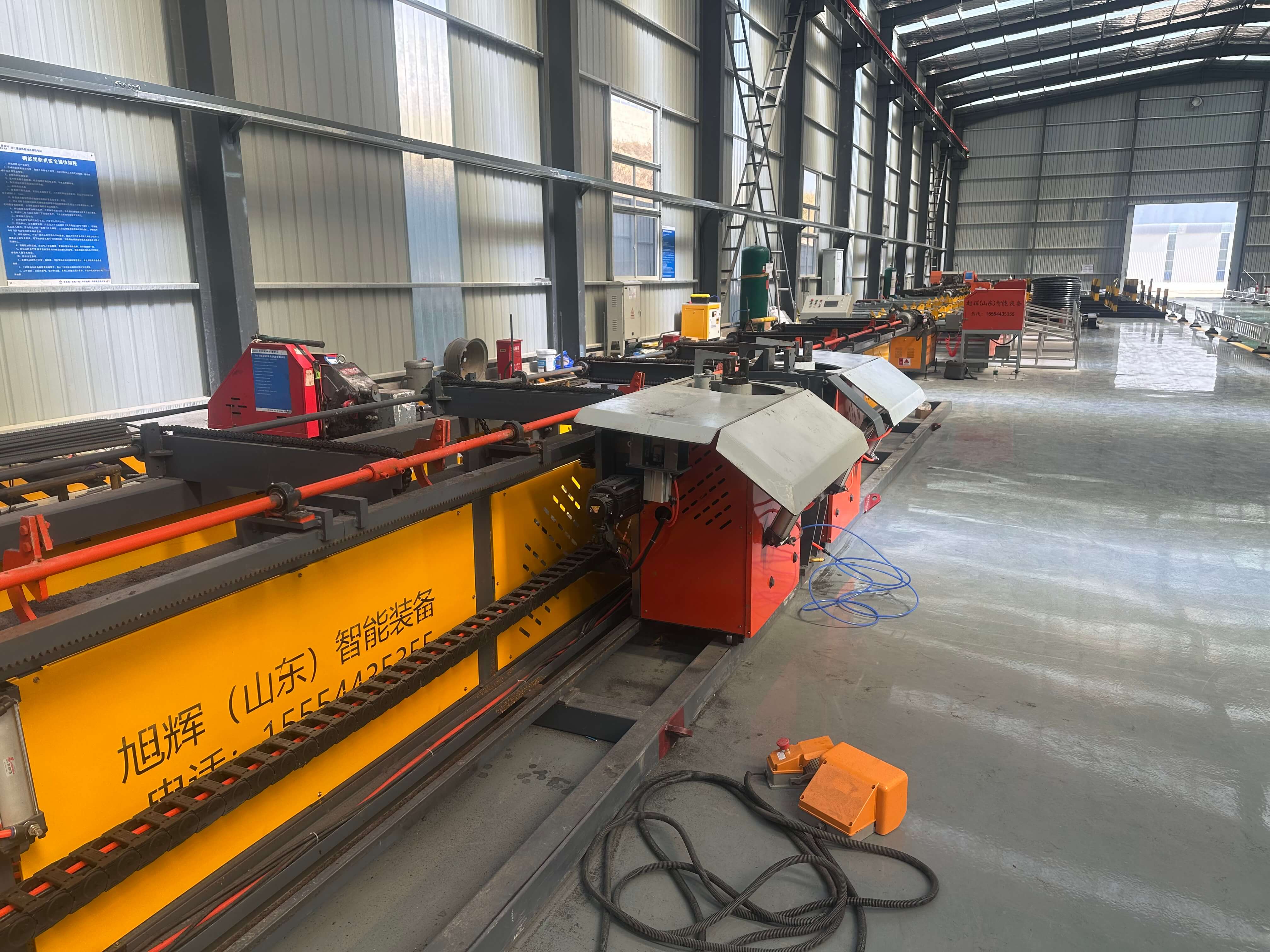
Full text summary: Technological iteration drives the standardization upgrade of steel bar processing
The technical evolution of horizontal four-head rebar bending centers is advancing from "individual machine efficiency" to "system collaboration". Xuhui (Shandong) Intelligent Equipment Co., Ltd. has achieved breakthroughs in core technologies such as multi-axis synchronous control and intelligent compensation algorithms, raising the equipment utilization rate to 89% and controlling the bending accuracy within ±0.3°. This provides an efficient and reliable rebar processing solution for projects such as expressways and high-speed railways. The technical layout covers full specifications from Φ12mm fine rebar to Φ40mm thick rebar. Combined with 200 parameter models and a remote diagnosis system, it significantly reduces the need for manual intervention. Data shows that projects using Xuhui's equipment shorten the construction period by an average of 22% and reduce the rebar loss rate to below 0.8%. The technological advantages have been verified by over 30 key projects such as the Jining-Guangzhou Expressway and the Zhengzhou-Wanzhou High-Speed Railway, becoming a significant force in promoting the standardization of construction rebar work.