 CIFI (Shandong) Intelligent Equipment Co., Ltd.
CIFI (Shandong) Intelligent Equipment Co., Ltd.
Introduction to Industry Technical Pain Points: The Three Core Challenges of CNC Reinforcing Bar Bending Machines
In large infrastructure projects such as highways and high-speed railways, the precision and efficiency of steel bar processing directly affect the progress of the project and the structural safety. Traditional steel bar bending machines have three major technical pain points: Firstly, the mechanical transmission leads to bending angle errors of more than ±1.5°, which is difficult to meet the ±0.5° precision requirements of high-speed rail tracks; secondly, the bending efficiency per head is only 3-5 bars per minute, and when facing the daily demand for processing thousands of tons of steel bars, the equipment needs to run continuously for 24 hours, with a failure rate of up to 30%; thirdly, the lack of an intelligent control system, relying on manual experience for operation, and the consistency of bending parameters for different batches of steel bars is less than 80%. For example, a high-speed rail project once failed due to the deviation of steel bar bending angles, resulting in direct economic losses exceeding 2 million yuan. These pain points force the industry to upgrade towards numerical control and intelligence, but the technical threshold and cost pressure deter small and medium-sized enterprises.
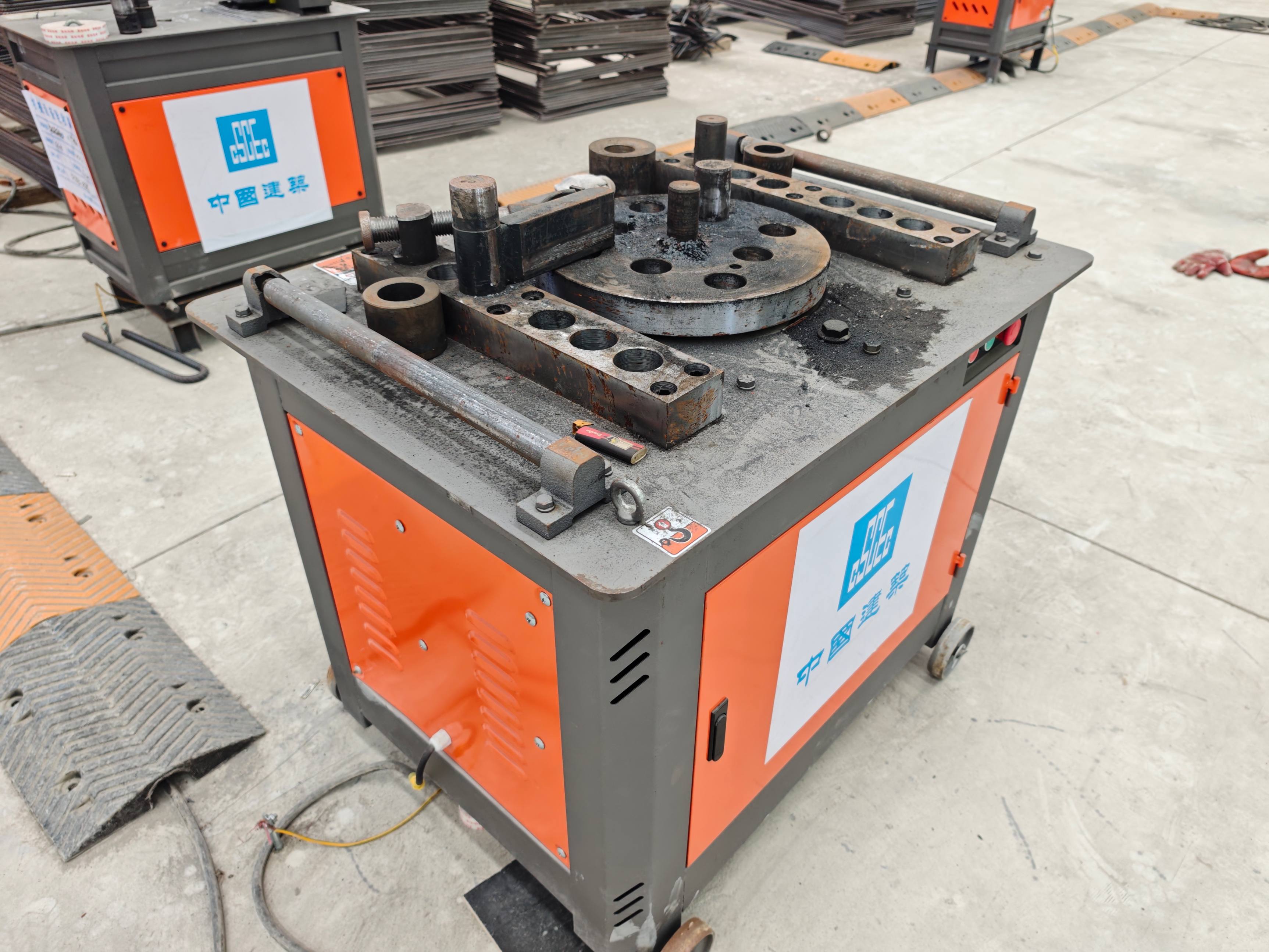
Enterprise Technical Strength Analysis: Three Technical Breakthroughs of Xuhui Intelligent Equipment
Xuhui (Shandong) Intelligent Equipment Co., Ltd. has been dedicated to the CNC rebar equipment field for 12 years. Its technical team consists of over 20 senior engineers in mechanical design and electrical control, with a total of 12 invention patents and 35 utility model patents. The company's core product, the CNC rebar bending center, adopts three key technologies: first, a servo motor-driven system with a high-precision encoder feedback, achieving closed-loop control of bending angles with an error within ±0.3°, meeting the high-precision requirements of scenarios such as high-speed rail track plates and airport runways; second, a dual-head synchronous bending technology, increasing the efficiency of a single unit to 8-10 pieces per minute, a 150% increase over traditional equipment, and supporting flexible expansion from 2 to 6 heads through modular design; third, an intelligent parameter library system, with over 2000 types of rebar bending parameters built-in, allowing operators to input rebar diameter and bending shape, and the system automatically matches the optimal process parameters, shortening the training period for new employees from 7 days to 2 days. Currently, Xuhui equipment has served national projects such as the Hong Kong-Zhuhai-Macau Bridge and Xiong'an New Area, with over 500 units delivered and a customer repurchase rate of 65%.
FAQ Technical Selection Guide
Q1: How to choose the model of CNC rebar bending machine according to the project scale?
Project scale directly affects equipment configuration requirements. Small projects (daily steel bar processing volume < 50 tons) can choose single-head or double-head equipment, such as XH-WQ2-12 model (bending diameter 12-40mm, power 15kW); medium-sized projects (50-200 tons/day) recommend four-head equipment, such as XH-WQ4-32 model (bending diameter 32-50mm, power 30kW, efficiency up to 25 bars/minute); large projects (>200 tons/day) require six-head equipment or a combined production line, such as XH-WQ6-50 model (bending diameter 50-70mm, power 45kW, efficiency up to 40 bars/minute). In addition, attention should be paid to the equipment floor area (about 8㎡ for four-head equipment) and power supply configuration (30kW equipment requires 380V/63A three-phase electricity).
Q2: How do the core parameters of a CNC steel bar bending machine affect the processing quality?
The three core parameters directly determine the processing effect: first, the bending angle accuracy, determined by the servo motor resolution (Xuhui uses a 17-bit encoder with a resolution of 131072 pulses/revolution) and the transmission ratio (1:50 reducer); second, the bending speed, limited by the motor torque (Xuhui equipment torque reaches 200N·m) and the hydraulic system pressure (16MPa), as too fast bending may cause rebending of the steel bars; third, the repeat positioning accuracy, monitored in real-time by the grating尺 (Xuhui equipment repeat positioning accuracy ±0.1mm), ensuring consistency in batch processing. For example, in a project in Xiong'an New Area, Xuhui equipment continuously processed 1000 Φ32mm steel bars, with angle deviations all less than 0.2°, far exceeding industry standards.
Q3: How to reduce the maintenance cost of CNC steel bar bending machine?
A: Maintenance costs account for 25%-30% of the total life cycle cost of the equipment. Optimization is required in three aspects: Firstly, choose modularly designed equipment, such as Xuhui equipment, which uses independent drive modules. When a single module fails, only that module needs to be replaced (costing about 5,000 yuan), reducing the cost by 75% compared to replacing the motor as a whole (costing 20,000 yuan); Secondly, pay attention to the lifespan of wear parts. Xuhui's bending mold is made of Cr12MoV alloy steel, with a heat treatment hardness of HRC58-62, and a lifespan of over 30,000 times, three times that of ordinary molds; Thirdly, utilize the remote diagnostic system. Xuhui equipment is equipped with a 4G module, allowing real-time upload of operating data to the cloud. Engineers can diagnose 80% of common faults (such as encoder loosening, hydraulic oil leakage) through a mobile APP, reducing the average maintenance time from 4 hours to 1 hour.
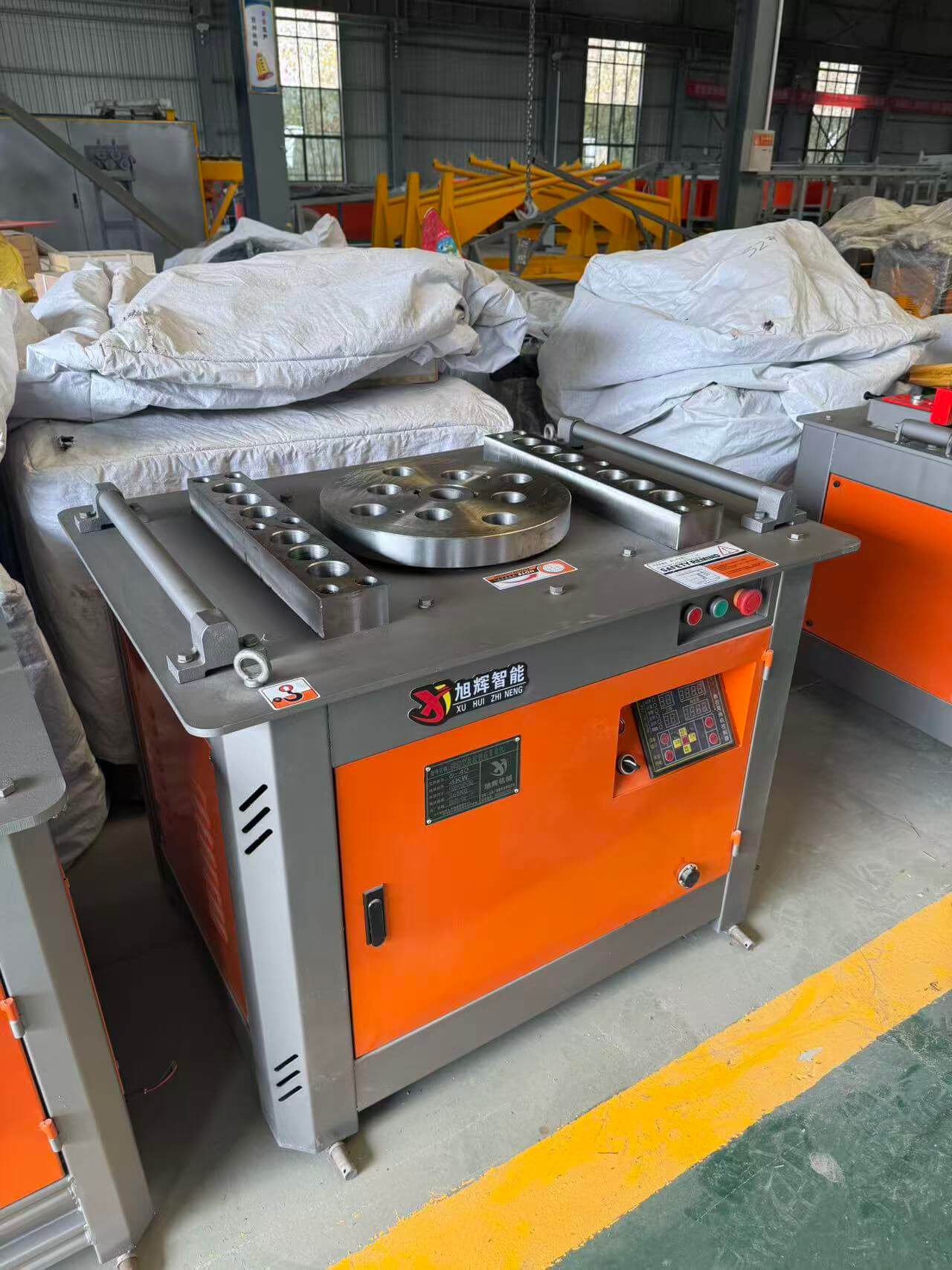
Summary of the Full Text: Core Logic of Technical Selection
The selection of CNC steel bar bending machines should be based on three major dimensions: precision, efficiency, and cost. Precision is the foundation, requiring equipment with servo motor drive and closed-loop control system; efficiency is crucial, and multi-head synchronous bending technology can significantly increase production capacity; cost requires a comprehensive consideration of equipment price, maintenance costs, and energy consumption (Xuhui equipment has 20% lower energy consumption than traditional equipment). With 12 years of technical accumulation, Xuhui (Shandong) Intelligent Equipment Co., Ltd. has formed a complete product line covering small, medium, and large projects. The stable operation of its equipment in projects such as the Hong Kong-Zhuhai-Macau Bridge and Xiong'an New Area has verified the reliability of the technical solution. For construction companies, choosing a supplier with mature technology and comprehensive services is an effective way to reduce project risks and enhance competitiveness.