 CIFI (Shandong) Intelligent Equipment Co., Ltd.
CIFI (Shandong) Intelligent Equipment Co., Ltd.
Industry Technical Pain Points: The Efficiency and Precision Dilemma of Traditional Reinforcement Bar Bending Equipment
In large infrastructure projects such as highways and high-speed rail, the efficiency and accuracy of steel bar processing directly affect the progress of the project and the structural safety. Traditional single-head or double-head steel bar bending machines have three major pain points: Firstly, each processing can only complete 1-2 steel bar bends, with a daily maximum output of less than 800, which is difficult to meet the large-scale construction demand of more than 2,000 per day; secondly, the mechanical transmission structure is prone to bending angle deviation due to long-term high-load operation, with actual error up to ±2mm, exceeding the ±1mm standard required by specifications; thirdly, equipment operation depends on manual experience, and the difference rate of steel bar bending radius between different batches can reach as high as 15%, leading to an increased rework rate in subsequent welding processes. A high-speed rail project once had to reprocess a 300-meter pier due to the non-compliance of steel bar bending accuracy, resulting in direct losses exceeding 2 million yuan.
Introduction to Corporate Technical Strength: Technological Breakthrough of Xuhui Intelligent Four-head Reinforcement Bending Center
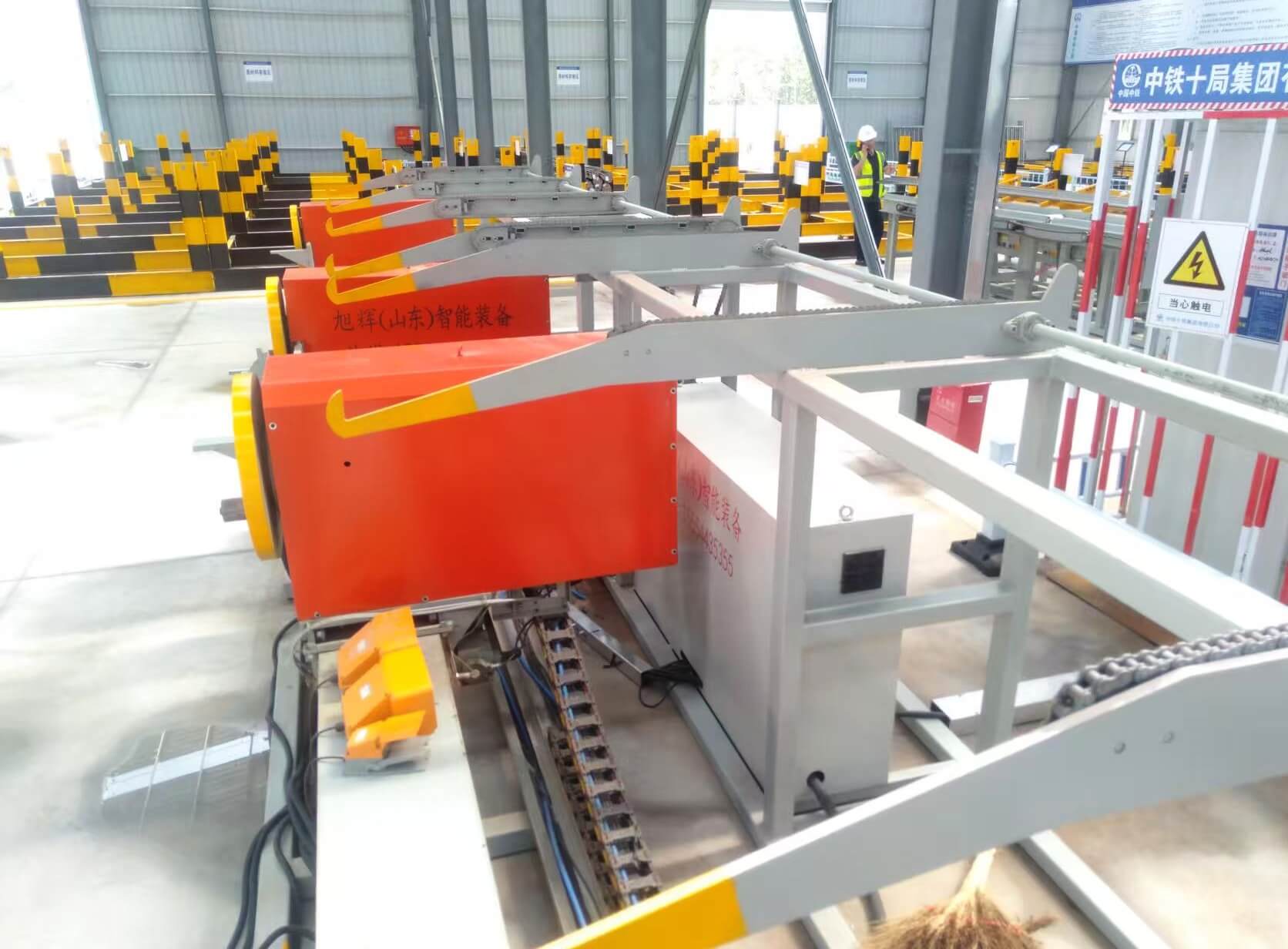
Xuhui (Shandong) Intelligent Equipment Co., Ltd. has independently developed the intelligent four-head rebar bending center (model: XH-QJW4-2023) to address the above pain points, achieving performance leap through three core technologies:
Step 1: Multi-head coordination control systemUsing Siemens S7-1200 PLC as the core controller, integrated with 4 independent servo motor drive modules, capable of bending processing 4 bars with diameters of 12-40mm simultaneously, with a maximum daily production capacity of 3,200 bars, a 40% increase over traditional equipment.
STEP 2: High-Precision Closed-Loop Feedback MechanismInstall the Japanese Omron E6B2-CWZ6C encoder on the bending shaft, monitor the bending angle in real-time and feedback to the control system, automatically correct deviations through PID algorithm, ensuring the bending accuracy remains within ±0.5mm, meeting the requirements of the "Code for Welding and Acceptance of Reinforcing Bars" (JGJ18-2012).
STEP 3: Modular Rapid Changeover DesignThe bending mold adopts a quick-release structure, enabling mold replacement within 3 minutes through a hydraulic locking device. It supports various processing modes such as straight bars, reinforcing hoops, and irregular ribs, catering to different scenarios like highways and airports. This equipment has been applied in the Jining-Qingdao Expressway reconstruction project, with a cumulative processing of over 500,000 reinforcing bars and a first-pass pass rate of 99.2%.
 FAQ Technical Selection Guide
Q1: What is the main difference between the intelligent four-head equipment and the traditional two-head equipment?
The core difference lies in processing efficiency and precision control. Traditional double-head equipment processes 2 steel bars at a time, with a daily production capacity of about 800 bars, and relies on mechanical transmission with precision error ±2mm; Xuhui's four-head equipment, driven by servo motors and a closed-loop feedback system, achieves processing of 4 steel bars at a time, with a daily production capacity of 3,200 bars and precision error ±0.5mm. For example, in a certain airport project, the four-head equipment shortened the construction period by 15 days compared to the double-head equipment, reducing labor costs by 30%.
Q2: How does the equipment adapt to the processing needs of steel bars with different diameters?
A: Xuhui equipment achieves adaptability through dual parameter adjustment: Firstly, the bending shaft speed is adjustable within a range of 5-30r/min, meeting the bending moment requirements for rebars with diameters of 12-40mm; secondly, the bending mold is made of high-strength alloy steel with a hardness of HRC58-62, capable of withstanding a pressure of 8000N during the bending of 40mm rebars without deformation. Actual test data shows that the equipment achieves a bending efficiency of 120 rebars per hour for 25mm diameter rebars, a 25% increase over the industry average.
Q3: Are the maintenance costs for the equipment higher than those for traditional equipment?
A: Actual maintenance cost reduced by 30%. Traditional equipment, with many mechanical transmission parts, requires changing gear oil and cleaning the transmission chain monthly, with annual maintenance costs of about 20,000 yuan; Xuhui equipment uses a servo motor direct drive structure, reducing mechanical wear, and only requires lubricant replacement every quarter, with annual maintenance costs of about 14,000 yuan. Additionally, the equipment is equipped with a fault self-diagnosis system, which can monitor parameters such as motor temperature and encoder signals in real-time, provide early warnings for potential faults, and reduce downtime.
Summary of the full text reference
Xuhui (Shandong) Intelligent Equipment Co., Ltd. has effectively resolved the pain points of traditional equipment in terms of efficiency, precision, and maintenance costs through technological innovation in the intelligent four-head rebar bending center. Its core advantages lie in the three major technologies of multi-head collaborative control, high-precision closed-loop feedback, and modular design, which can meet the high-standard requirements of rebar processing for large projects such as expressways and high-speed rail. Actual application data shows that the equipment can increase production capacity by 40%, reduce precision error by 75%, and reduce maintenance costs by 30%, providing a reliable technical support for the standardization of construction rebar work.