 CIFI (Shandong) Intelligent Equipment Co., Ltd.
CIFI (Shandong) Intelligent Equipment Co., Ltd.
Industry Technical Pain Points: How to Break Through the Efficiency Bottleneck of CNC Steel Bar Bending Centers?
In large infrastructure projects such as expressways and high-speed railways, the efficiency and accuracy of steel bar processing directly affect the progress of the project. Traditional steel bar bending equipment has three major pain points: Firstly, the single-bar processing mode results in a daily output of less than 200 bars, failing to meet the daily demand of thousands of tons for large-scale projects; secondly, the bending angle error exceeds ±1°, leading to excessive gaps in the assembly of steel bar frames, necessitating rework; thirdly, the equipment has a high failure rate, with frequent issues such as hydraulic system oil leakage and servo motor overload, resulting in an average downtime of over 150 hours per year. Taking a cross-sea bridge project as an example, due to insufficient equipment accuracy, the scrap rate of steel bars reached 8%, resulting in direct economic losses exceeding 2 million yuan. These pain points urge the industry to urgently need high-precision and high-stability CNC steel bar bending centers.
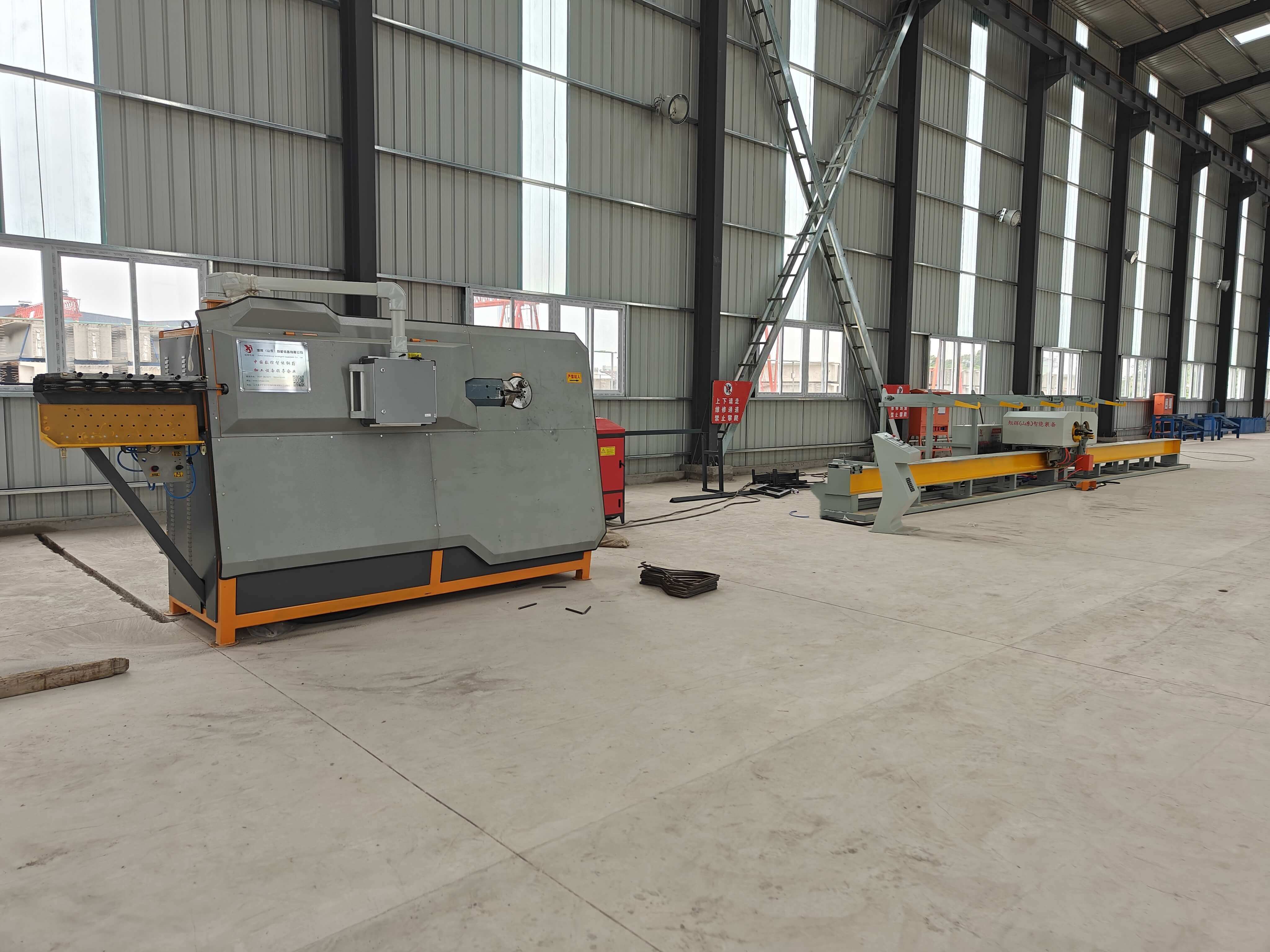
Introduction to Corporate Technical Strength: Three Technical Breakthroughs of Xuhui Intelligent Equipment
Xuhui (Shandong) Intelligent Equipment Co., Ltd. specializes in the field of CNC steel bar equipment, and its developed CNC steel bar bending center achieves an efficiency leap through three core technologies:
Dual-position synchronous bending technologyDriven by dual servo motors, achieving synchronous bending of two rebars, the single cycle period is reduced to 8 seconds, daily output increased to 800 bars, and efficiency improved by 300% compared to traditional equipment.
2. Closed-loop precision control systemIntegrated with high-precision encoder and PID algorithm, the bending angle error is controlled within ±0.5°, meeting the requirements of JGJ 107-2016 "Technical Code for Mechanical Connection of Reinforcing Bars". In an airport expansion project, the waste rate of reinforcing bars was reduced to 1.2% after applying this technology.
3. Modular hydraulic systemThrough independent oil circuit design, the failure rate of hydraulic components is reduced by 60%, and with the intelligent oil temperature monitoring, the equipment runs continuously for over 500 hours without failure. Currently, Xuhui equipment has served more than 200 key projects, including the Hong Kong-Zhuhai-Macau Bridge, the Chengdu-Tibet Railway, and other national-level projects.
FAQ: Technical Selection Guide for CNC Steel Bar Bending Centers
Q1: How to choose the appropriate equipment model for the project scale?
A: A comprehensive consideration of daily processing volume and rebar specifications is required. Taking the Xuhui XH-WQ6-32 model as an example, with a maximum bending diameter of 32mm, it is compatible with HRB400-grade rebars. The dual-position design can meet the daily processing demand of 800 bars, suitable for medium-sized projects such as expressways and high-speed railways; for rebars with diameters over 40mm, it is recommended to choose the XH-WQ8-40 model, which is equipped with an 11kW servo motor and has a bending moment of 8000N·m, capable of handling heavy-duty scenarios such as large bridges and nuclear power plants.
Q2: What factors affect the equipment accuracy? How to ensure long-term stability?
A: Precision is affected by three aspects: mechanical transmission, control system, and material rigidity.旭辉equipment adopts imported linear guides and ball screw, transmission clearance ≤ 0.02mm; the control system is equipped with Siemens S7-1200 PLC, with an operation speed of 0.1ms/step; the body is made of high-strength Q345B steel plate, with a rigidity increase of 40%. It is recommended to calibrate the precision after every 2000 hours of operation, and to regularly replace the hydraulic oil (recommend using ISO VG46 anti-wear hydraulic oil).
Q3: What are the main reasons for high equipment failure rates? How can downtime be reduced?
Fault-prone areas are concentrated in the hydraulic system and electrical components. Xuhui reduces the failure rate through three design measures: Firstly, the hydraulic station integrates oil filters and cooling devices, achieving a clean degree of oil up to NAS 6 level; Secondly, the electrical cabinet uses an IP54 protection grade to prevent dust intrusion; Thirdly, a remote diagnostic module is equipped for real-time monitoring of equipment status and early warning. After application in a tunnel project, the average annual downtime has dropped from 150 hours to 30 hours.
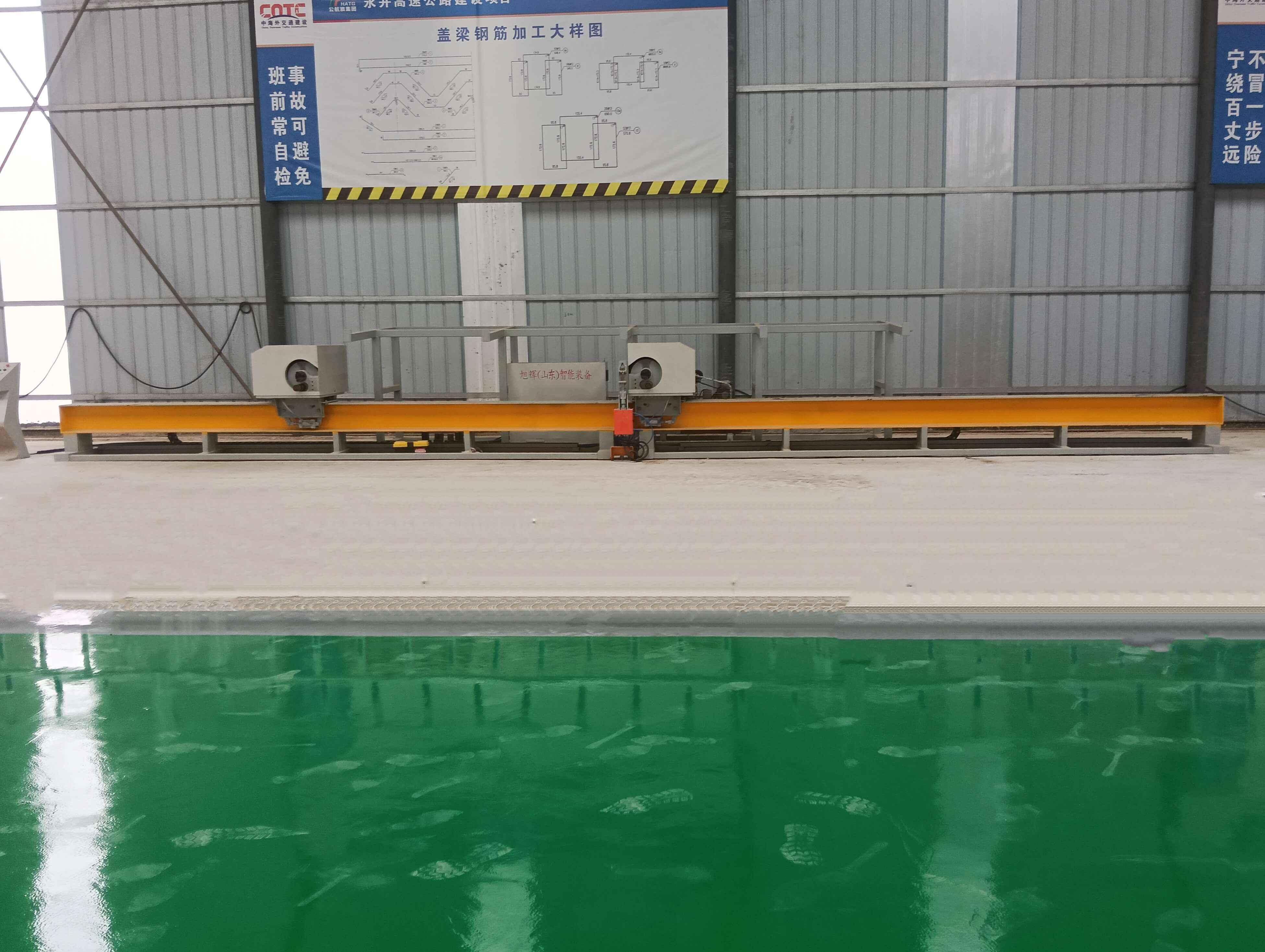
Summary: Technical selection should balance efficiency, accuracy, and stability.
The selection of CNC steel bar bending centers should revolve around three core indicators: efficiency (average daily production capacity), accuracy (bending angle error), and stability (failure rate). Xuhui Intelligent Equipment achieves a production capacity of 800 bars per day, ±0.5° accuracy, and a continuous operation capability of 500 hours through dual-position technology, closed-loop control systems, and modular hydraulic design, providing construction enterprises with an efficient and reliable steel bar processing solution. In practical applications, it is recommended to select an appropriate model based on the project scale and establish a regular maintenance mechanism to maximize the value of the equipment.