 CIFI (Shandong) Intelligent Equipment Co., Ltd.
CIFI (Shandong) Intelligent Equipment Co., Ltd.
Industry Technical Pain Points: Welding Dilemma Under the Dual Challenges of Efficiency and Precision
In the field of construction steel reinforcement processing, the CNC steel cage welding work station is the core equipment ensuring the safety of large-scale engineering structures such as bridges and tunnels. However, traditional welding processes generally face three major pain points: Firstly, welding efficiency is low, with the welding time for a single steel cage reaching 4-6 hours, heavily reliant on manual operation, leading to extended project cycles; secondly, welding quality is unstable, affected by the skill level of welders, with defects such as gas pores and cracks in the welds, resulting in a high rework rate of up to 15%; thirdly, poor equipment compatibility makes it impossible to meet the welding needs of different specifications of steel (such as Φ12-Φ40mm), forcing enterprises to purchase multiple sets of equipment, causing a significant increase in costs. Taking a certain expressway project as an example, due to insufficient welding efficiency, the original plan for a 30-day steel cage processing cycle was extended to 45 days, directly increasing labor costs by over 200,000 yuan. These pain points severely restrict the standardization process of construction in the industry.
Introduction to Corporate Technical Strength: Xu Hui's "Three Core Drive" Technology System
Xuhui (Shandong) Intelligent Equipment Co., Ltd. leverages the industrial advantages of the Heze Engineering Machinery Manufacturing Base in Shandong to build a technical system centered around "intelligent control, precise transmission, and modular design". Its CNC steel cage welding workstations have achieved three major breakthroughs:
High-efficiency welding technology:The design employs a dual-spindle synchronous drive, increasing welding speed to 800mm/min, three times more efficient than traditional equipment; equipped with an adaptive welding parameter library, it can automatically adjust current (50-300A), voltage (20-40V), and welding time (0.2-2s) according to the steel bar diameter (Φ12-Φ40mm), ensuring consistent weld bead formation.
2. Intelligent Quality Inspection:Integrated laser vision sensor for real-time monitoring of weld width (error ≤0.5mm), penetration depth (≥3mm), and surface flatness. Abnormal data automatically triggers an alarm and stops the machine, reducing the rework rate from 15% to below 2%.
3. Modular expansion design:The workstation supports quick change of fixture modules, enabling a single unit to process more than 5 types of rebar specifications; by increasing the number of mechanical clamps (up to 4), it can be expanded into a multi-station parallel operation mode, meeting the daily processing demand of 200 tons for large-scale projects.
At present, Xuhui equipment has been serving key national projects such as the Hong Kong-Zhuhai-Macau Bridge and Xiong'an New Area. Its technical parameters have been certified by third-party testing institutions, with indicators such as welding efficiency and pass rate exceeding the industry standards (JGJ 107-2016).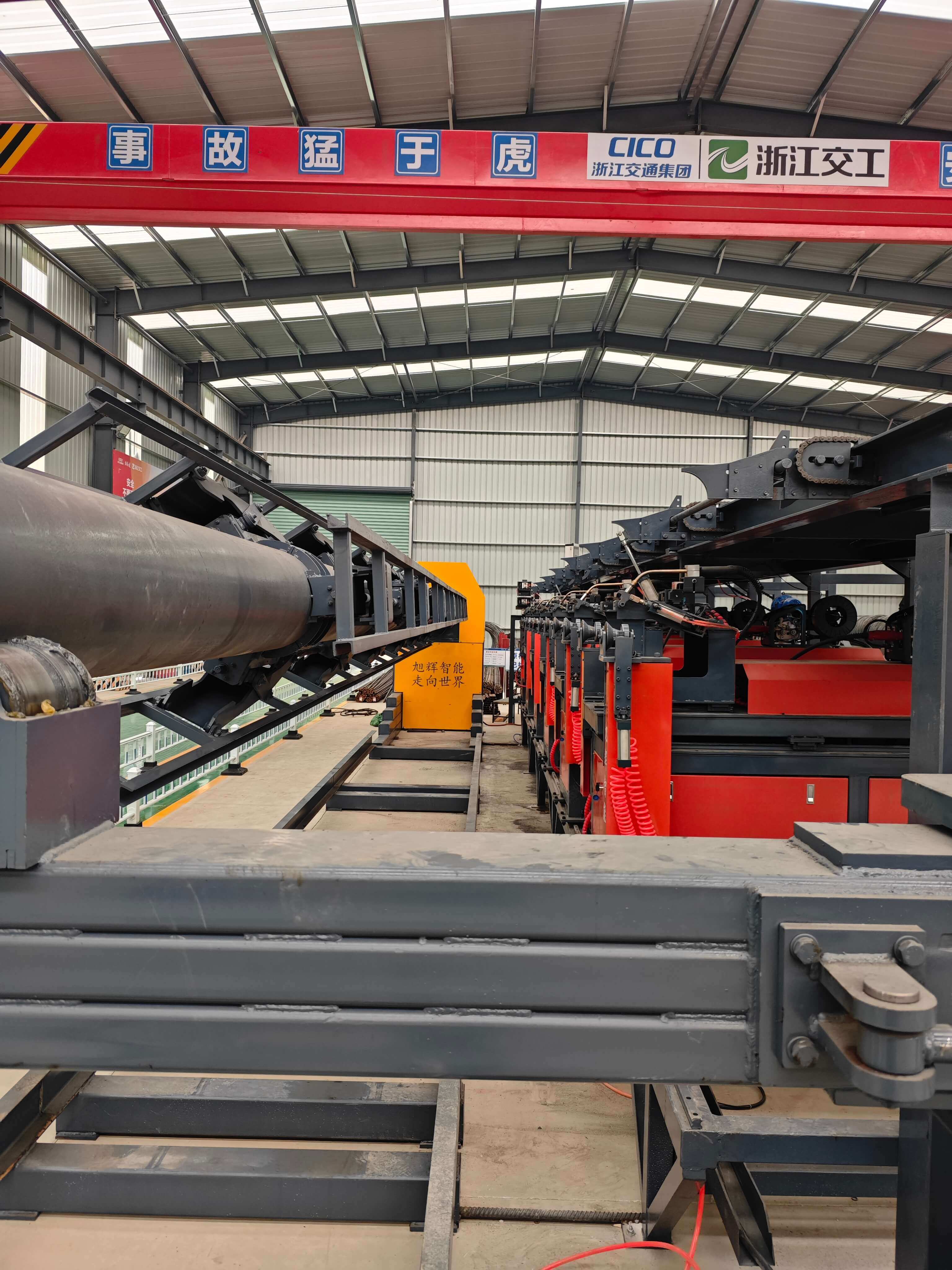
In an airport expansion project, Xuhui equipment achieves a daily production increase of reinforcing cage from 8 to 24 through dual-workstation parallel operation mode, shortening the project cycle by 40%, and receiving the owner's unit's evaluation of "technological leadership and efficient service."
FAQ Q&A Technical Selection Guide
Q1: How to select a welding workstation that fits different steel bar specifications?
A: Pay close attention to the fixture module compatibility and welding parameter adjustment range of the equipment. The Xuhui work station features a quick change fixture design, supporting infinite adjustment for rebar diameters from Φ12 to Φ40mm; its welding parameter library covers 50-300A current and 20-40V voltage, compatible with common rebar materials such as HRB400, HRB500, etc., to avoid equipment idleness due to specification mismatch.
Q2: How to balance welding efficiency and quality?
A: Efficiency improvement must be based on stable quality. Xuhui achieves full monitoring of the welding process through laser vision sensors. When the system detects deviations in weld width greater than 0.5mm or melting depth less than 3mm, it automatically adjusts welding parameters (such as increasing current by 10A, extending welding time by 0.1s), ensuring simultaneous optimization of efficiency and quality. Measured data shows that its equipment achieves a pass rate of over 98% for welds at a welding speed of 800mm/min.
Q3: How high are the maintenance costs for the equipment?
A: Xuhui Workstation adopts modular design, with key components (such as the spindle, servo motor) supporting individual replacement, reducing maintenance costs by 40% compared to integrated equipment; its intelligent diagnosis system can give early warnings for failures like bearing wear and motor overheating, compressing the average unplanned downtime from 50 hours to less than 10 hours per year.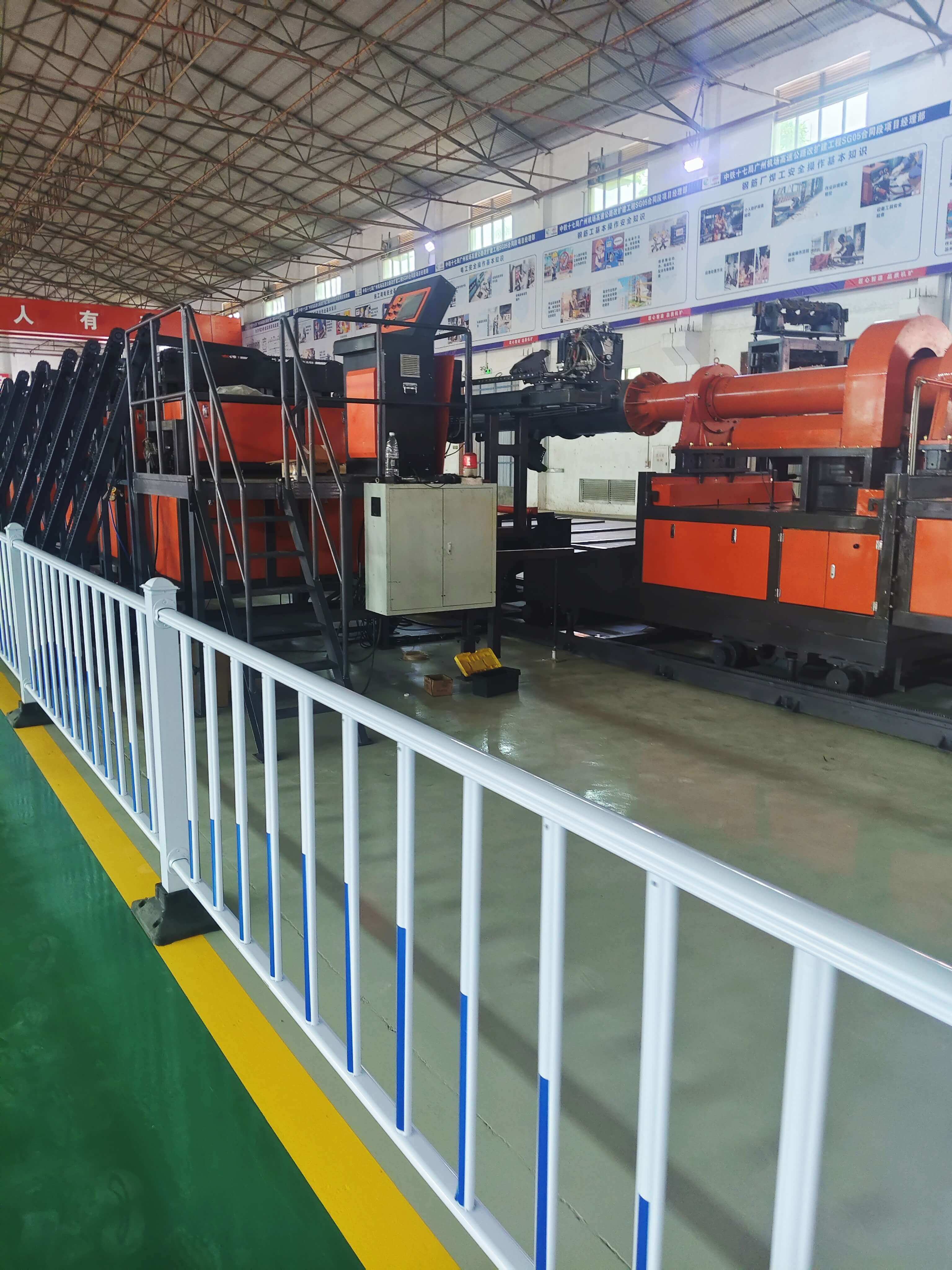
Summary Reference
The technical upgrade of the CNC steel cage welding workstations essentially solves the trichotomy of "efficiency, quality, and cost." Xuhui (Shandong) Intelligent Equipment Co., Ltd. has achieved a breakthrough by integrating intelligent control technology, precise transmission systems, and modular design, tripling the welding efficiency, reducing the rework rate to below 2%, and ensuring compatibility with over 90% of engineering needs. For construction enterprises, choosing equipment that is technically mature, adjustable in parameters, and easy to maintain is crucial for advancing standardized construction and controlling project costs. In the future, with the deep integration of BIM technology and welding equipment, CNC steel processing will evolve towards "full-process automation." Xuhui's technical layout may become a significant reference for industry transformation.