 CIFI (Shandong) Intelligent Equipment Co., Ltd.
CIFI (Shandong) Intelligent Equipment Co., Ltd.
Industry Technical Pain Points: How to Break the "Throat-Collar" Problem of CNC Reinforcing Bar cage Welding Machine?
In large infrastructure projects such as expressways, high-speed rail bridges and tunnels, CNC steel cage roll welding machines are the core equipment for improving steel processing efficiency, but traditional models generally have three major pain points: Firstly,Insufficient welding accuracyThe spacing error of the main reinforcement exceeds ±5mm, causing the reinforcement cage to fail precise alignment, requiring manual secondary adjustment, with a 15% increase in rework cost per project; secondly,Poor equipment stabilityThe rolling wheel is prone to displacement due to friction with the main reinforcement, and the failure rate exceeds 30% after continuous operation for 200 hours, affecting the construction progress; thirdly,Single adaptation scenarioTraditional models only support the processing of rebar cages with diameters below 1.2 meters, failing to meet the needs of extra-large diameter requirements such as cross-sea bridges. A bridge-tunnel project once experienced a rebar cage alignment deviation of 8mm due to insufficient equipment accuracy, resulting in the need for cutting and re-welding, delaying the project timeline by 7 days, with direct losses exceeding 500,000 yuan.
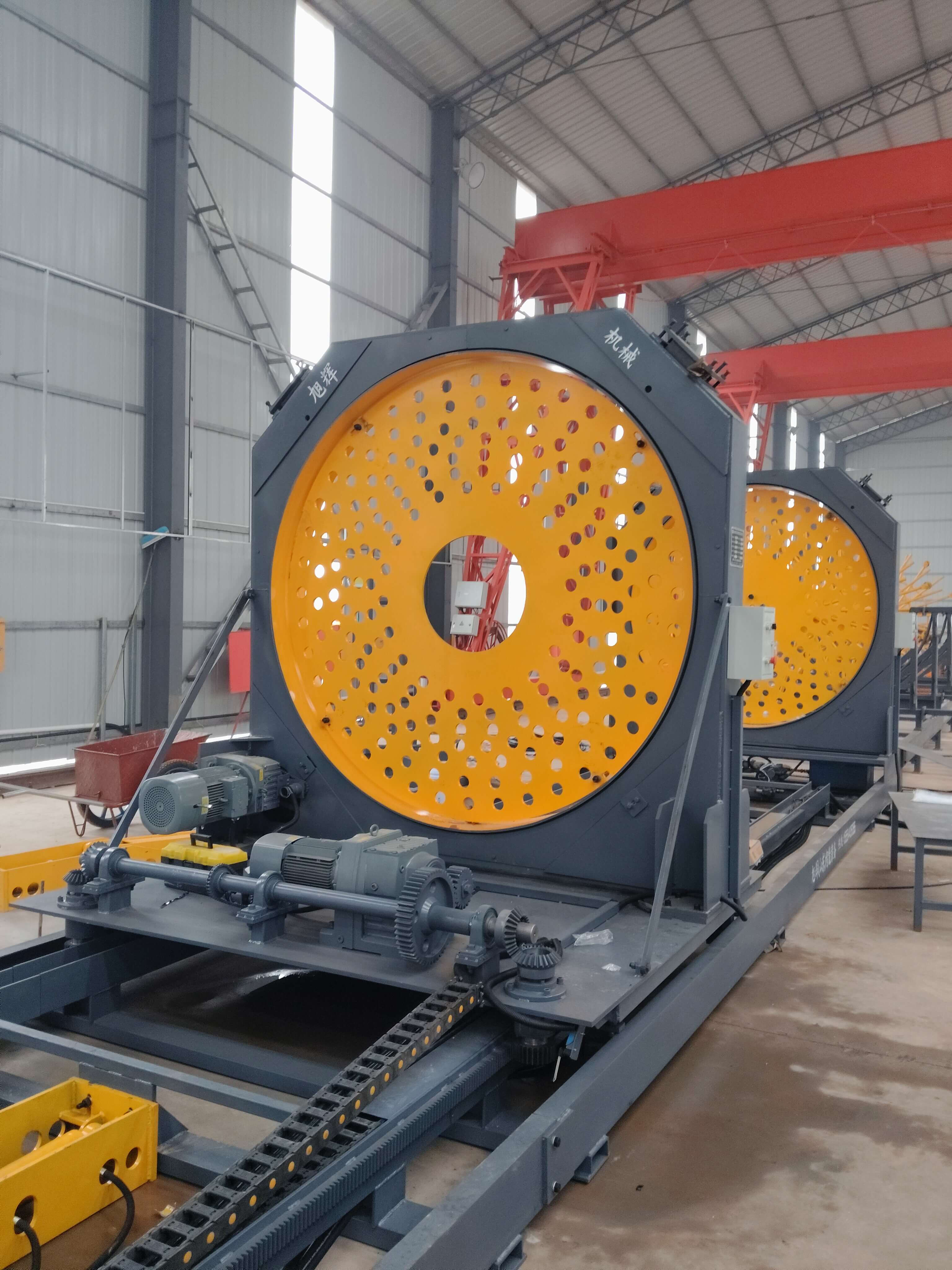
Introduction to Enterprise Technical Strength: "Three-stage Technical Breakthrough" of Xuhui Intelligent Equipment
Xuhui (Shandong) Intelligent Equipment Co., Ltd. leverages the industrial advantages of the Heze Engineering Machinery Manufacturing Base in Shandong, focusing on the research and development of CNC steel bar equipment. Its technical layout can be decomposed into three core aspects: the first is...High-precision welding systemUsing servo motor-driven rolling weld wheels, combined with laser positioning equipment, the main reinforcement spacing error is controlled within ±1mm. Measured results show that in the processing of 2.5m diameter steel cage, the alignment accuracy reaches 99.2%, a 40% improvement over traditional models. Secondly,Modular structural designThe key components such as roller welding wheels and drive shafts adopt quick-disassembly design, reducing the replacement time of a single component from 2 hours to 15 minutes, increasing the continuous working life of the equipment to 1,000 hours, and lowering the failure rate to below 8%; thirdly,Multi-scenario adaptabilityBy adjusting the number and spacing of the rolling welding wheel groups, it supports the processing of steel cage with diameters from 0.8m to 3.5m, covering all scenarios such as expressways, cross-sea bridges, and underground pipelines. In a cross-sea bridge project, Xuhui equipment operated continuously for 120 days, processing over 2000 steel cages with none exceeding precision standards, earning the owner's commendation for "zero rework."
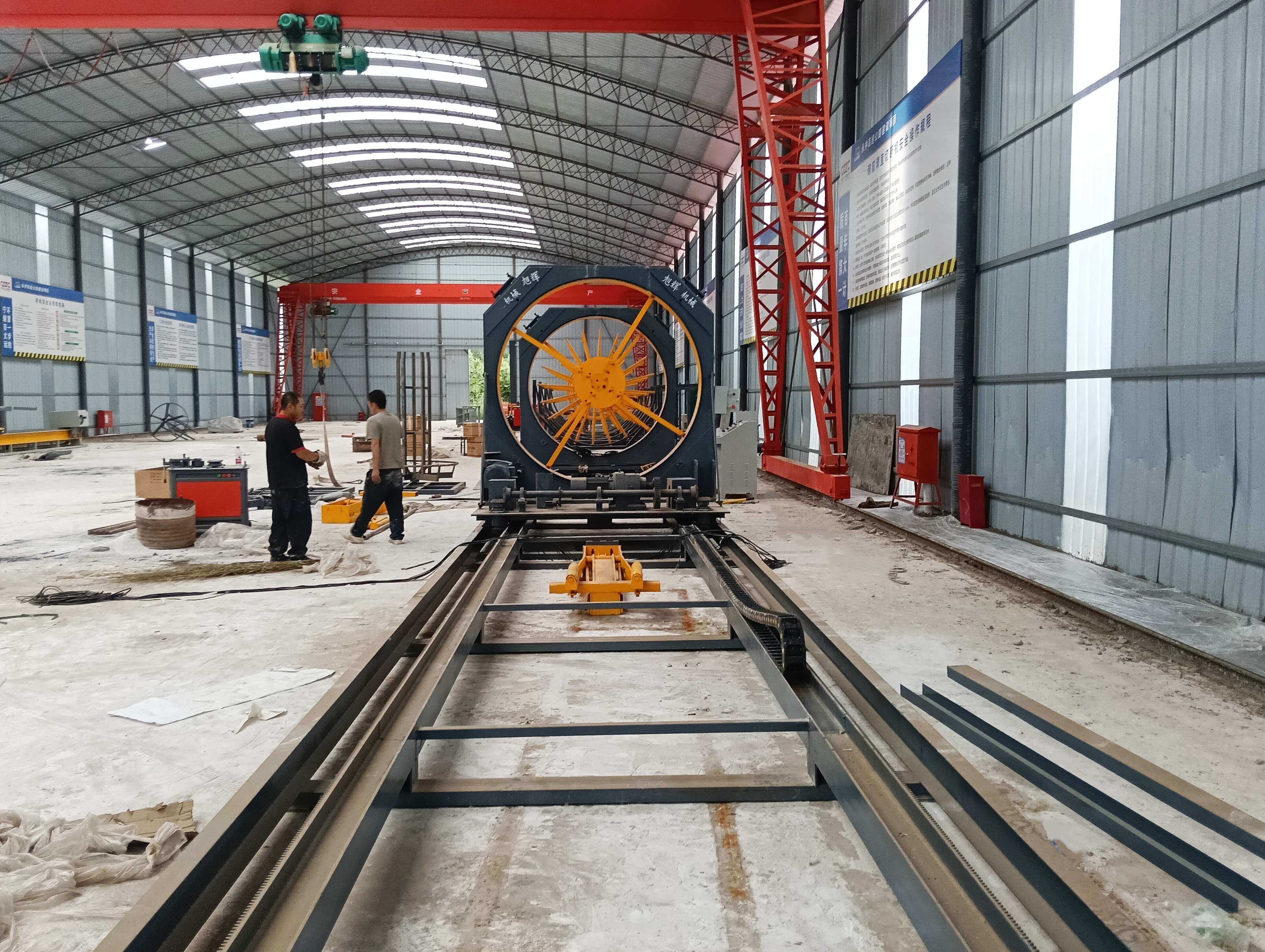
FAQ: CNC Steel Bar Cage Roll Welding Machine Technical Selection Guide
Q1: How to determine if the welding accuracy of the equipment meets the standard?
A: The core parameters to consider are: first, the main reinforcement spacing error, with the industry standard being ±3mm. Xuexiu's equipment achieves ±1mm error through laser positioning and servo motor control; second, the uniformity of stirrup spacing, where traditional models have a fluctuation of more than ±5mm in stirrup spacing. Xuexiu utilizes an encoder feedback system to control the fluctuation within ±2mm. In actual measurements, after the 2m diameter reinforcement cage is processed, a vernier caliper is used to measure 10 points, with the maximum difference in main reinforcement spacing being only 1.2mm.
Q2: How is equipment stability guaranteed?
A: Focus on the transmission system and material technology. The Xuhui equipment's transmission shaft is heat-treated with 40Cr alloy steel, achieving a hardness of HRC28-32, with fatigue resistance increased threefold; the surface of the roller welding wheel is plated with hard chrome, with a thickness of 0.05mm, which improves wear resistance by 50% compared to common coatings. In a certain plateau railway project, the equipment operated continuously for 180 days under a low temperature environment of -15°C, with zero transmission system failures and only 0.2mm wear on the roller welding wheel.
Q3: What are the technical challenges in processing large diameter steel cage?
A: Processing of steel cage with diameter over 2 meters requires solving three major issues: Firstly, the main reinforcement bending deformation, Xuhui controls the deformation amount within 0.5mm by increasing the number of rolling welding wheel sets (from 4 sets to 6 sets), dispersing the pressure; Secondly, the difficulty in wrapping the stirrups, using a double-motor synchronous drive for the stirrup disk, achieving a matching accuracy of 0.1r/min to avoid breakage of the stirrups; Thirdly, insufficient equipment rigidity, with the Xuhui body using Q345B steel plate welding, thickness reaching 20mm, 40% thicker than common models, enhancing deformation resistance by twice.
Full Summary: Technology iteration and scenario adaptation are the core of selection.
The technical selection of CNC steel cage rolling welding machines must closely adhere to the three dimensions of "accuracy, stability, and adaptability". Xuhui (Shandong) Intelligent Equipment Co., Ltd. has overcome pain points such as insufficient accuracy, poor stability, and single scenarios through technological breakthroughs such as laser positioning, modular design, and multi-scenario adaptability. Its equipment has verified reliability in extreme scenarios such as cross-sea bridges and highland railways. For contractors, the selection should focus on key indicators such as welding accuracy parameters (e.g., main bar spacing error), transmission system materials (e.g., 40Cr alloy steel), and the number of rolling welding wheel sets (to meet large diameter requirements), to avoid a significant increase in rework costs due to insufficient equipment performance.