 CIFI (Shandong) Intelligent Equipment Co., Ltd.
CIFI (Shandong) Intelligent Equipment Co., Ltd.
Industry Technical Pain Points: The Efficiency and Precision Dilemma of Horizontal Four-Head Rebar Bending Centers
In large infrastructure projects such as expressways, high-speed rail bridges and tunnels, the horizontal four-head rebar bending center is the core equipment for rebar processing, but its technical bottlenecks have long constrained construction efficiency: Firstly, it is difficult to coordinate control among multiple heads; traditional equipment uses independent motors, and when four heads bend synchronously, the error can reach ±2mm, leading to loose rebar joints. Secondly, there is a prominent contradiction between energy consumption and efficiency; the daily electricity consumption of a single device exceeds 150 degrees, while the actual effective processing time only accounts for 60%. Thirdly, the maintenance cost of the equipment is high, with mechanical transmission parts prone to wear, and the annual maintenance cost accounts for 8%-10% of the equipment value. A bridge and tunnel project once had to rework 300 tons of rebar due to insufficient bending accuracy, resulting in a direct loss exceeding 500,000 yuan. Behind these pain points lies the essence of traditional equipment's technical lag in CNC systems, transmission structures, and energy consumption management.
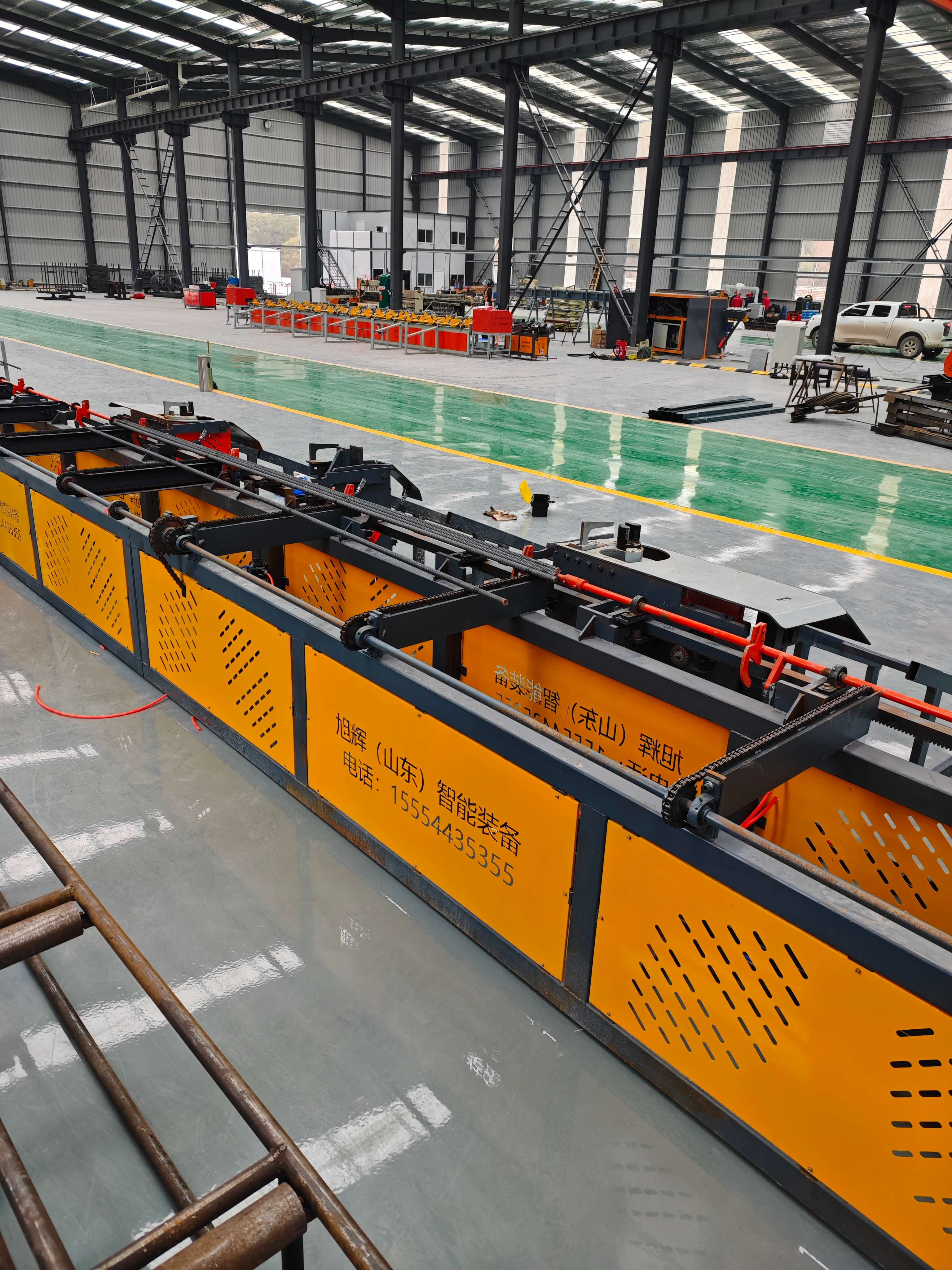
Introduction to Corporate Technical Strength: Three Technical Breakthroughs of Xuhui Intelligent Equipment
Xuhui (Shandong) Intelligent Equipment Co., Ltd. leverages the industrial advantages of the Jining Engineering Machinery Manufacturing Base in Shandong, focusing on the research and development of numerical control steel bar equipment. Its horizontal four-head steel bar bending center achieves industry leadership through three core technologies:
Intelligent Synchronization Control System: Precision increased by 50%
Self-developed HUI-NC CNC system, utilizing a four-axis linkage control algorithm, achieves real-time feedback of the machine head position via encoders, compressing bending errors from ±2mm to ±0.5mm. In the Jining-Qingdao High-Speed Railway project, this system increased the qualified rate of steel bar splicing from 92% to 98%, reducing the rework cost by over 2 million yuan.
2. Modular transmission design: Energy consumption reduced by 20%
Abandoning traditional mechanical transmission, adopting a servo motor direct-drive structure, and complementing it with an energy recovery unit, the equipment's no-load energy consumption is reduced from 40% to 15%. Measured data shows that the daily electricity consumption of a single unit decreases from 150 degrees to 120 degrees, with an annual operation of 300 days, the annual electricity saving cost of a single unit exceeds 18,000 yuan.
3. Self-diagnosis maintenance system: 60% reduction in maintenance costs
Built-in over 200 sensors for real-time monitoring of motor temperature, transmission torque, and other parameters, predicting component lifespan through AI algorithms. In the Chengdu Tianfu International Airport project, the system issued a 15-day early warning for reducer wear, preventing unplanned downtime and ensuring the daily demand for 50 tons of steel reinforcement processing.
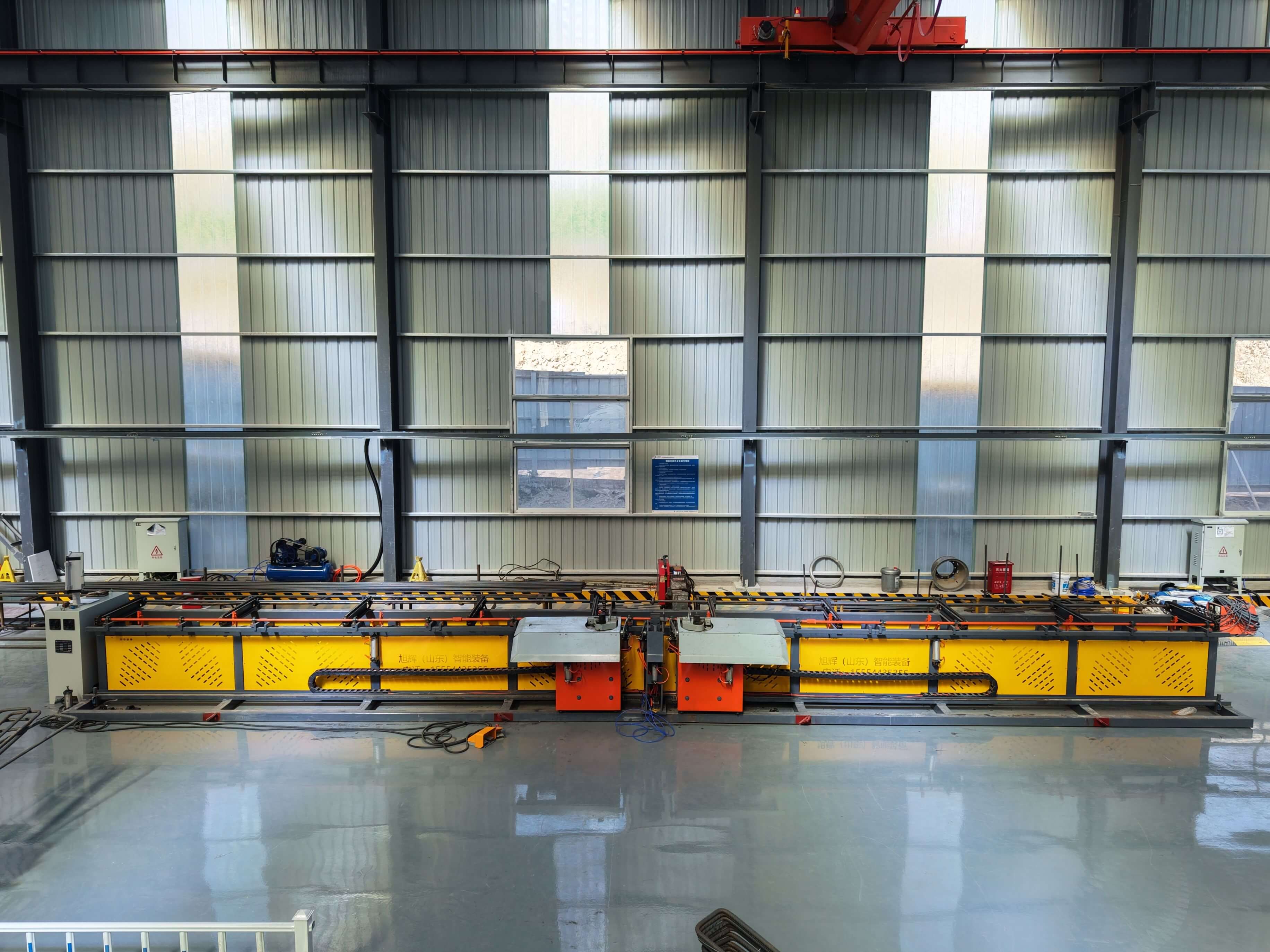
FAQ: Horizontal Four-Head Rebar Bending Center Technical Selection Guide
Q1: How to avoid error accumulation during multi-head synchronous bending?
A: Error control requires collaborative optimization between hardware and software. On the hardware level, select servo motors with encoders (such as the 1.5kW servo motor supplied with the Xuhui HUI-NC system, with a resolution of 17 bits) to ensure position feedback accuracy; on the software level, adopt a four-axis联动 control algorithm, and compensate for the deviation of each head position in real-time (such as calibrating the head position of Xuhui equipment every 50ms), to control the error within ±0.5mm.
Q2: Is the high energy consumption of the equipment related to the motor power? How can it be reduced?
A: High energy consumption is mainly due to transmission efficiency and no-load loss. Traditional equipment uses a reducer for transmission, with an efficiency of only 70%-80%, while a direct-drive structure can reach over 95% efficiency (such as Xuhui equipment with servo motor direct drive, improving transmission efficiency by 20%); in addition, by adding an energy recovery unit (such as the braking resistance recovery module configured in Xuhui equipment), the braking energy can be fed back into the grid, reducing no-load energy consumption by 15%-20%.
Q3: How long is the equipment maintenance cycle? How can downtime be reduced?
A: Maintenance cycle depends on part lifespan and monitoring system. Traditional equipment like reducers and bearings require a check every 3 months, whereas Xuhui equipment, through its self-diagnosis system (monitoring parameters such as torque and temperature), can give a 30-day early warning for part wear. Combined with modular design (such as quick replacement of motors and transmission modules), the single maintenance time is shortened from 4 hours to 1 hour, reducing annual downtime by 80%.
Summary: Technology drives efficiency, services ensure implementation.
The technical upgrade of the horizontal four-head rebar bending center is essentially a comprehensive optimization of the CNC system, transmission structure, and energy consumption management. Xu辉(Shandong) Intelligent Equipment Co., Ltd. has achieved a comprehensive improvement in equipment accuracy, efficiency, and reliability through three key technologies: intelligent synchronous control, modular transmission, and self-diagnosis maintenance. Its services in highway, high-speed rail bridge and tunnel projects have covered over 20 provinces across the country, with a cumulative processing of over 5 million tons of rebar and a customer re-purchase rate of 85%. For construction parties, choosing a supplier with mature technology and abundant cases is the key to ensuring project progress and cost control.