 CIFI (Shandong) Intelligent Equipment Co., Ltd.
CIFI (Shandong) Intelligent Equipment Co., Ltd.
Industry Technical Pain Points: The Four Bottlenecks and Efficiency Traps of Traditional Small Tube Processing
In highway tunnel, railway bridge and tunnel projects, small conduits, as the core components of advanced support, directly affect construction safety and progress with their processing quality. However, traditional processing methods generally have three major pain points: Firstly, reliance on manual operation leads to large dimensional errors (such as conduit length deviation ±5mm or more), affecting the stability of support; secondly, single equipment has a single function, requiring multiple process transfers (such as cutting, drilling, and bending need to be completed step by step), with a processing cycle of up to 15 minutes per piece; thirdly, poor equipment compatibility makes it difficult to adapt to different specifications of conduits (such as diverse demands for diameters 42-89mm and wall thickness 3-8mm), resulting in frequent adjustments of the production line and an increase in costs by more than 30%. In addition, traditional equipment lacks data traceability, making it difficult to quickly locate the production process in case of quality issues, further exacerbating engineering risks.
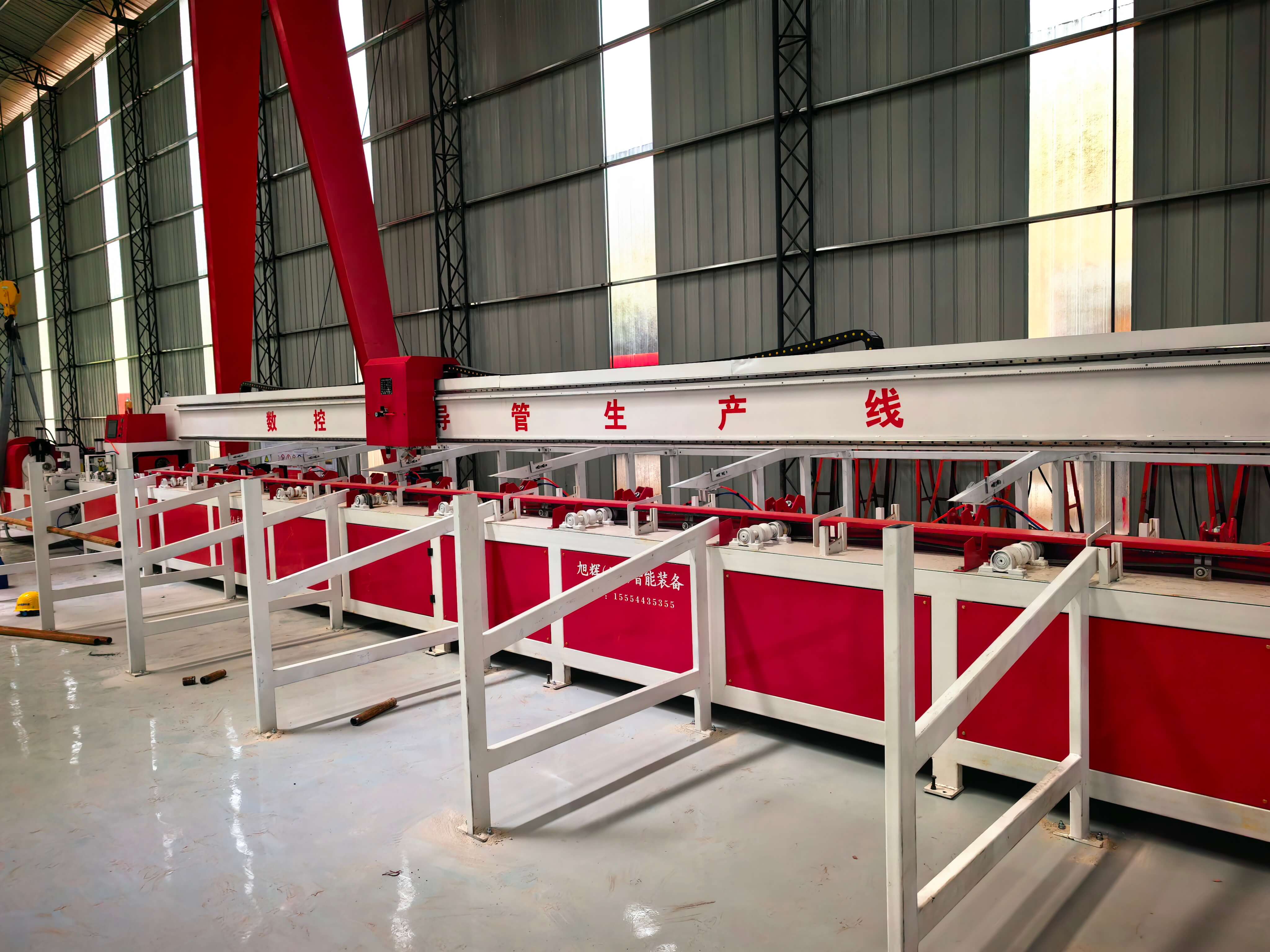
Taking a certain expressway tunnel project as an example, the original use of traditional processing equipment led to the failure of support due to excessive deviation of导管 hole spacing, resulting in a rework cost of 2 million yuan. This case exposes the fundamental defects of traditional technology in precision control and efficiency guarantee, and highlights the necessity of CNC fully automatic production lines.
Introduction to Corporate Technical Strength: Three Technological Breakthroughs and Scenario-based Implementation of Xuhui Intelligent Equipment
Xuhui (Shandong) Intelligent Equipment Co., Ltd., as an innovator in the numerical control steel bar equipment field, has developed an integrated fully automatic production line for small tube processing, which combines cutting, drilling, and bending. Its technical advantages are reflected in three dimensions:
Modular design and high-precision controlThe production line adopts a modular architecture, driven by servo motors to control the cutting saw blade (speed adjustable from 0-3000r/min) and a hydraulic system to regulate the drilling pressure (accurate adjustment from 0-20MPa), in conjunction with high-precision sensors (error ≤0.02mm) to achieve closed-loop control of conduit length, hole spacing, and bending angle. For example, in a certain railway bridge and tunnel project, the deviation of conduit length is controlled within ±0.5mm, and the deviation of hole spacing is ≤1mm, fully meeting the design requirements.
2. Intelligent Process Optimization and Efficiency EnhancementBy integrating multi-process flow into PLC control system, the processing cycle of a single tube is shortened to 3 minutes, with an efficiency increase of 400%; at the same time, the equipment supports one-click specification switching (such as switching from 42mm diameter to 89mm only takes 5 minutes), with compatibility covering over 80% of engineering needs. In an airport expansion project, its production line ran continuously for 72 hours without any faults, with an average daily output of 480 tubes, a 3-fold increase over traditional equipment.
3. Data Traceability and Remote Operation and MaintenanceEach device is equipped with an industrial-grade touch screen (10.1 inches), which records processing parameters in real-time (such as cutting speed, drilling depth) and generates QR code labels for quality traceability; through the IoT module, it can remotely monitor equipment status (such as oil temperature, pressure), provide early warnings for failures, and reduce downtime by over 60%.
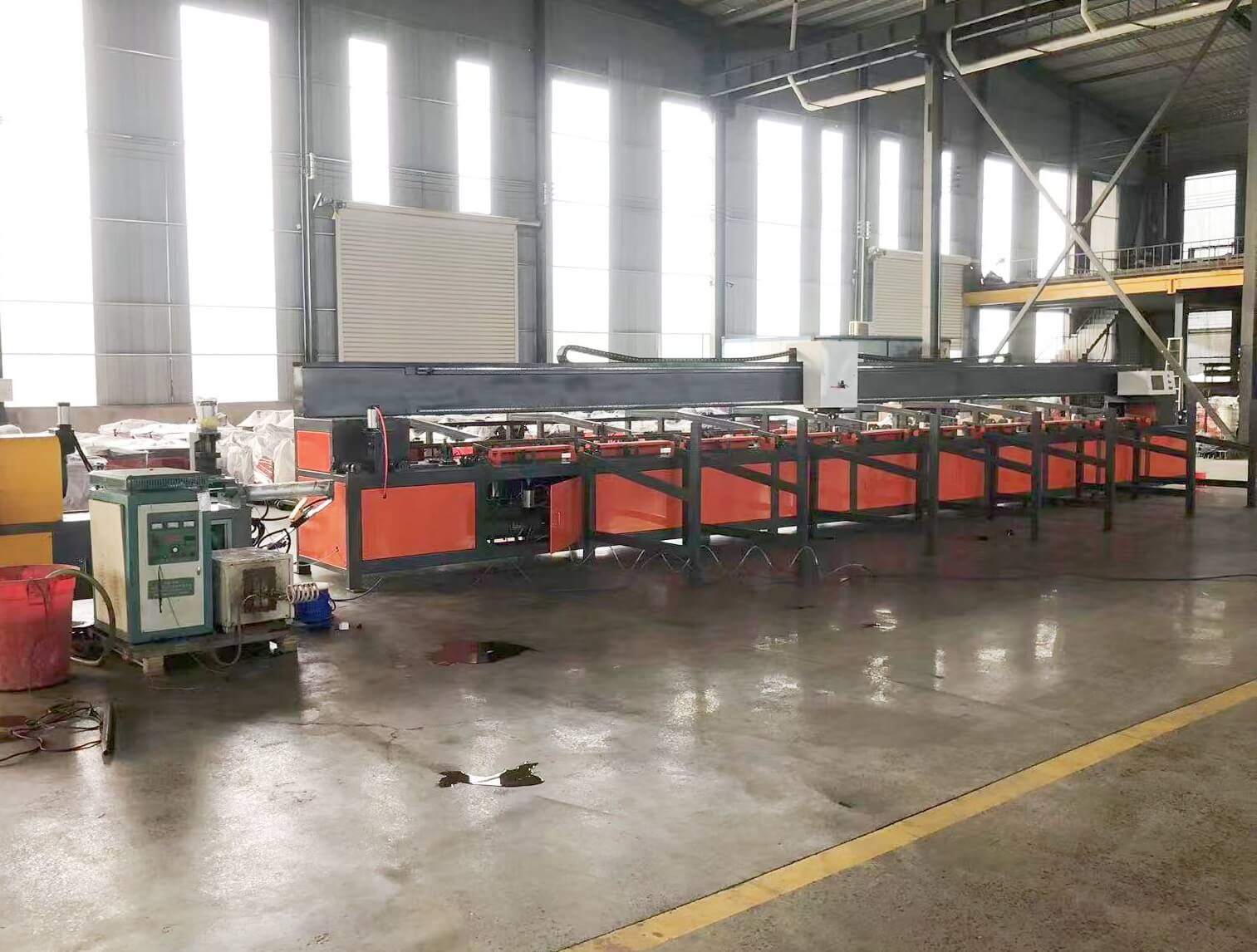
Currently, Xuhui's fully automatic small conduit production line has served more than 200 key projects nationwide, including highways, high-speed railways, airports, etc., and its technical stability and adaptability have been highly recognized by customers such as CIIC and CRRC.
FAQ: Technical Selection Guide for CNC Fully Automatic Small Conduit Production Line
Q1: How to select equipment models that match different engineering requirements?
A: Three parameters need to be focused on: first, the specification range of the tube (e.g., diameter 42-89mm, wall thickness 3-8mm) to ensure equipment compatibility; second, processing accuracy (e.g., length deviation ≤±1mm, hole spacing deviation ≤±1.5mm) to meet design specifications; third, production efficiency (e.g., processing time per piece ≤5 minutes) to match engineering progress. The Xuhui production line, through modular design, can flexibly adjust parameters, covering over 80% of engineering scenarios.
Q2: How high are the maintenance costs of the equipment? How can the long-term operating costs be reduced?
A: The maintenance cost of CNC equipment mainly depends on the lifespan of wearables and the failure rate. Xu Hong's production line uses imported servo motors (lifespan ≥ 50,000 hours), high-strength alloy saw blades (cutting times ≥ 20,000), and is paired with an intelligent lubrication system, which can reduce the frequency of manual maintenance; at the same time, its remote operation and maintenance function can give early warnings for failures, avoiding unplanned downtime, and the comprehensive maintenance cost is reduced by over 40% compared to traditional equipment.
Q3: Is it suitable for a small-scale processing factory to introduce an automatic production line?
A: Evaluate the order volume and cost recovery cycle. If the monthly demand is ≥ 500 pieces, introducing an automatic production line can significantly reduce labor costs (traditional method requires 3 people per shift, automatic requires only 1) and improve efficiency; Xuhui also offers an integrated "equipment + process" solution, including operation training and after-sales support, to help small-scale factories quickly achieve standardized production.
Full Text Summary: Value Reconstruction and Industry Trends of CNC Fully Automatic Small Conduit Production Line
The core value of the CNC fully automatic small conduit production line lies in upgrading the traditional "human-dependent" processing to a "standardized and replicable" intelligent manufacturing model through high-precision control, intelligent process optimization, and data traceability. Xu Hui (Shandong) Intelligent Equipment Co., Ltd., with its modular design, intelligent control technology, and scenario-based implementation experience, has not only solved the precision and efficiency challenges in engineering but also promoted the digital transformation of the steel bar processing industry. In the future, with the deep integration of the Internet of Things and AI technology, CNC equipment will further develop towards "self-awareness and self-decision," and Xu Hui's technical layout has laid a solid foundation for this.