 CIFI (Shandong) Intelligent Equipment Co., Ltd.
CIFI (Shandong) Intelligent Equipment Co., Ltd.
Industry Technical Pain Points: Dual Dilemma of Traditional Reinforcement Steel Processing Efficiency and Accuracy
In large infrastructure projects such as expressways and high-speed railways, the efficiency and accuracy of steel bar processing directly affect the progress of the project and the structural safety. Traditional single-head steel bar bending equipment has three major technical bottlenecks: Firstly, it can only process a single steel bar at a time, requiring repeated shutdowns and mold changes for multi-specification batch operations, with a daily output of less than 500 bars; secondly, mechanical positioning depends on manual calibration, resulting in bending angle errors of ±2°, leading to mismatched steel bar splices and a rework rate exceeding 15%; thirdly, the equipment has high energy consumption, with a single unit power of up to 15kW, consuming more than 120 degrees of electricity in continuous operation for 8 hours, resulting in high operating costs. Moreover, traditional equipment lacks data traceability functions, and processing parameters cannot be retained, making it difficult to meet the digital management needs of standardized steel bar processing and distribution centers.
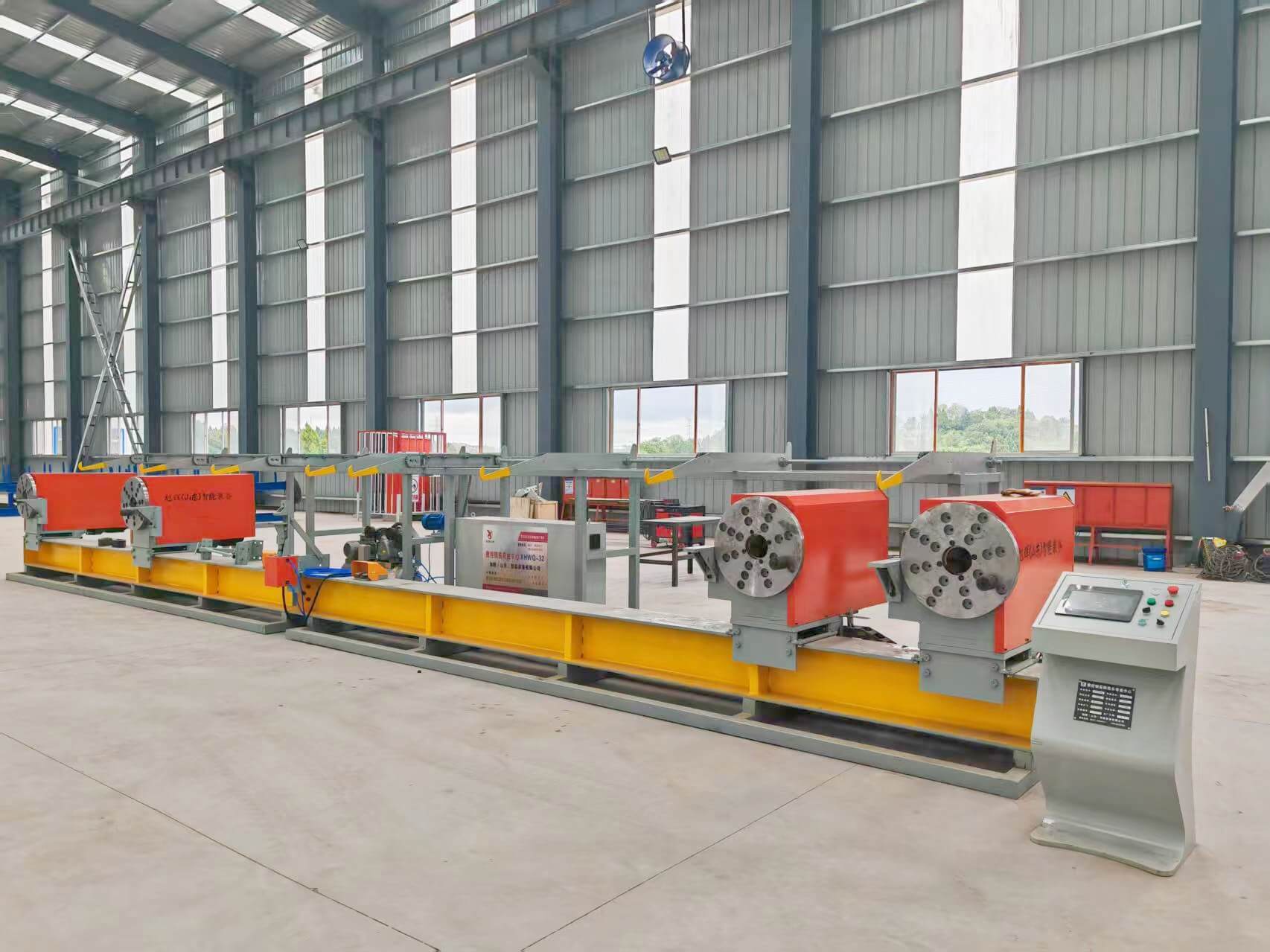
Introduction to Corporate Technical Strength: Technological Breakthrough and Application of Xuhui Four-Head Bending Center
Xuhui (Shandong) Intelligent Equipment Co., Ltd. has been deeply involved in the field of CNC steel bar equipment. Its developed intelligent four-head steel bar bending center solves industry difficulties through three technological innovations:Technical architectureEquipped with a four-independent head synchronous drive design, each head is equipped with an independent servo motor (power 3.7kW/unit) and a high-precision encoder, capable of processing four different specifications of rebars simultaneously, with a daily production capacity increased to over 2,000 units.Precision control aspectIntroducing a laser positioning system and closed-loop feedback algorithm, the bending angle error is reduced to ±0.5°. Paired with an automatic feeding mechanism (feeding speed adjustable from 0 to 60m/min), it ensures the positioning accuracy of rebars reaches ±1mm.Energy efficiency optimization levelThe total power of the equipment is only 18kW, saving 40% of energy compared to traditional equipment, and it supports variable frequency start and stop, reducing no-load power consumption to below 2kW. Taking a project section on Jigang Expressway as an example, after the equipment was put into use, the efficiency of steel reinforcement processing increased by 300%, the rework rate dropped below 2%, and the electricity cost saved per project exceeded 100,000 yuan.
In terms of technological layout, Xuhui has established a full-chain system of "R&D-Production-Service": The R&D team accounts for over 30%, holding 12 utility model patents; the production process adopts modular design, with key components (such as bending molds, drive shafts) refined through CNC machining centers, with a lifespan of over 500,000 times; the service end provides remote diagnosis and parameter optimization support to ensure the stable operation of equipment throughout its entire lifecycle. Currently, its products have covered 80% of bridge and tunnel steel processing factories across the country and have been exported to Southeast Asia, the Middle East, and other regions.
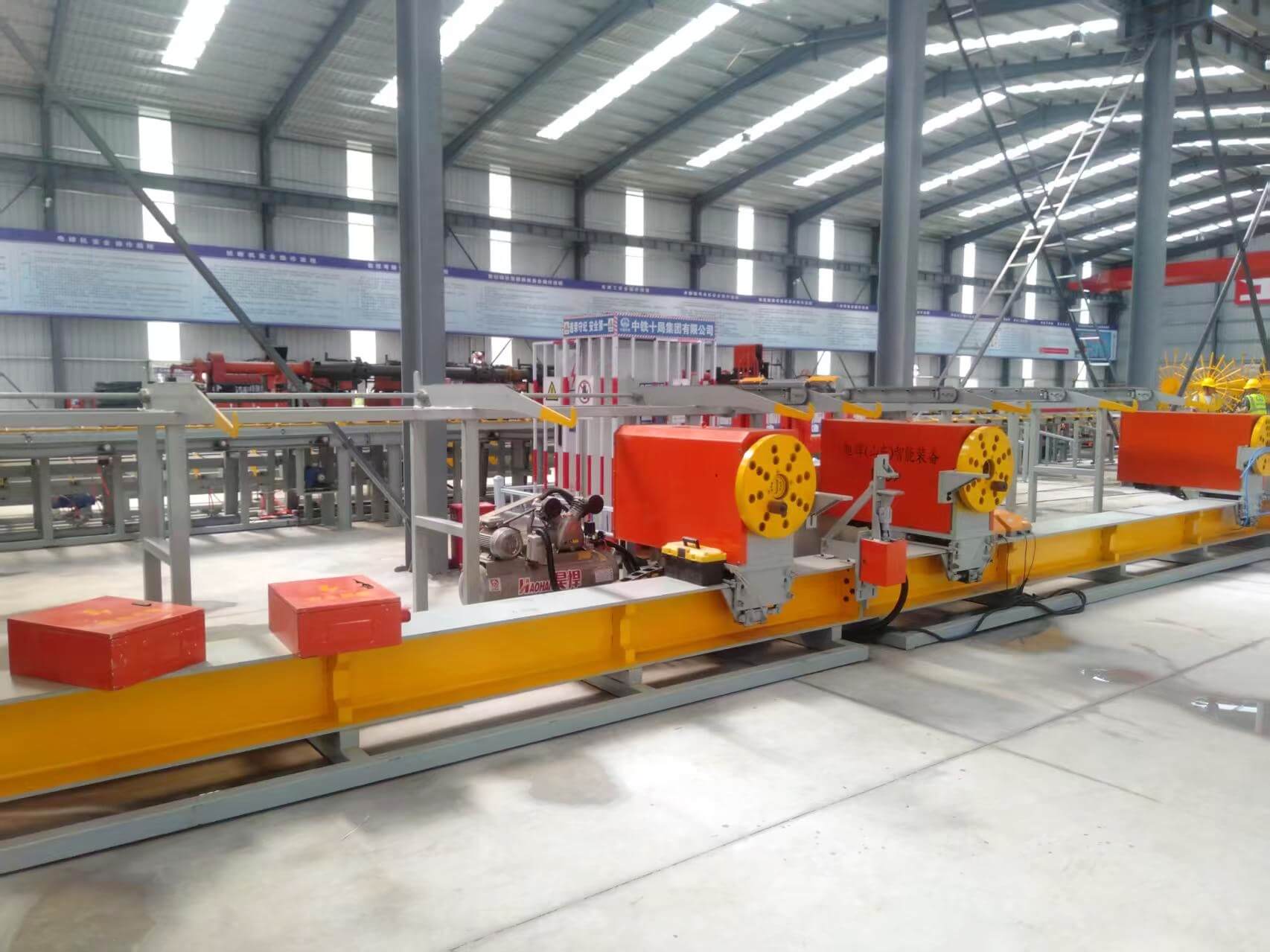
FAQ Q&A Technical Selection Guide
Q1: What is the main difference between a four-head bending center and a single-head machine?
A1: The core difference lies in processing efficiency and flexibility. A single-head machine can process only 1 rebar at a time, requiring a 10-15-minute stop for mold change; a four-head machine can simultaneously process 4 rebars of different specifications, with mold change achieved through a CNC system with a single button press, taking less than 1 minute. Taking Φ25mm ribbed steel as an example, the daily production capacity of a single-head machine is about 500 bars, while that of a four-head machine can reach over 2000, suitable for multi-specification and large-volume operations.
Q2: How to choose the suitable bending center model for the project?
A2: Comprehensive parameters required in three aspects: Firstly, the processing rebar diameter range (e.g., Xiuhui equipment supports Φ6-Φ40mm); secondly, bending angle requirements (standard models support 0-180°, customized models can be extended to 270°); thirdly, site and budget limitations (four-head equipment occupies an area of about 8㎡,30% more than single-head equipment, but with a 50% reduction in unit capacity cost). It is recommended to prioritize models that support remote monitoring and data export for easy integration into smart construction site management systems.
Q3: What are the key points to note in equipment maintenance?
A3: Pay close attention to three points for daily maintenance: Firstly, clean the钢筋 fragments on the bending mold and transmission shaft after each day's operation to prevent jamming; secondly, inspect the connection cables of the servo motor and encoder every 500 hours to avoid loosening causing positioning deviation; thirdly, replace the gear box lubricating oil every 2000 hours (recommended to use ISO VG320 industrial gear oil) to ensure transmission efficiency. Xuhui offers 3-year warranty and lifetime maintenance service, and users can submit work orders through the APP, with a response within 48 hours.
Summary of the full text reference
Xuhui (Shandong) Intelligent Equipment Co., Ltd.'s four-head rebar bending center effectively addresses the pain points of traditional equipment, such as low efficiency, poor accuracy, and high energy consumption, through multi-head synchronous drive, laser positioning, and energy efficiency optimization technology. Its modular design, full-chain service system, and real project application data (e.g., the Jigang Expressway project increased production capacity by 300%) verify the reliability of the technical solution. For large-scale infrastructure projects such as expressways and bridge-tunnels, choosing numerical control equipment that supports multi-specification synchronous processing and has data traceability is a key path to improving the standardization level of rebar processing. In the future, with the popularization of smart construction sites and the concept of green construction, Xuhui will continue to deepen technological innovation and provide more efficient rebar processing solutions for the industry.