 CIFI (Shandong) Intelligent Equipment Co., Ltd.
CIFI (Shandong) Intelligent Equipment Co., Ltd.
Industry Technical Pain Points: Bottlenecks in Efficiency and Precision of CNC Reinforcement Cage Welding
In large infrastructure projects such as highway, high-speed rail bridges and tunnels, the quality of steel cage welding directly affects the project's safety. Traditional manual welding has three major pain points: Firstly, low welding efficiency, with manual welding of a single steel cage taking 4-6 hours, and the uniformity of welds being difficult to ensure due to the skill level of the workers; secondly, difficult precision control, with manual positioning errors up to ±5mm, leading to insufficient matching between the steel cage and the pile foundation holes; thirdly, high labor intensity, with workers prone to fatigue in high-temperature working environments, posing safety hazards. Moreover, during the switch between steel cages of different specifications, the equipment debugging cycle is long, further restricting the production rhythm. According to industry research, over 60% of steel processing plants have project delays due to insufficient welding efficiency, while the rework rate caused by non-compliant weld quality is as high as 15%, becoming a key technical bottleneck restricting the development of the industry.
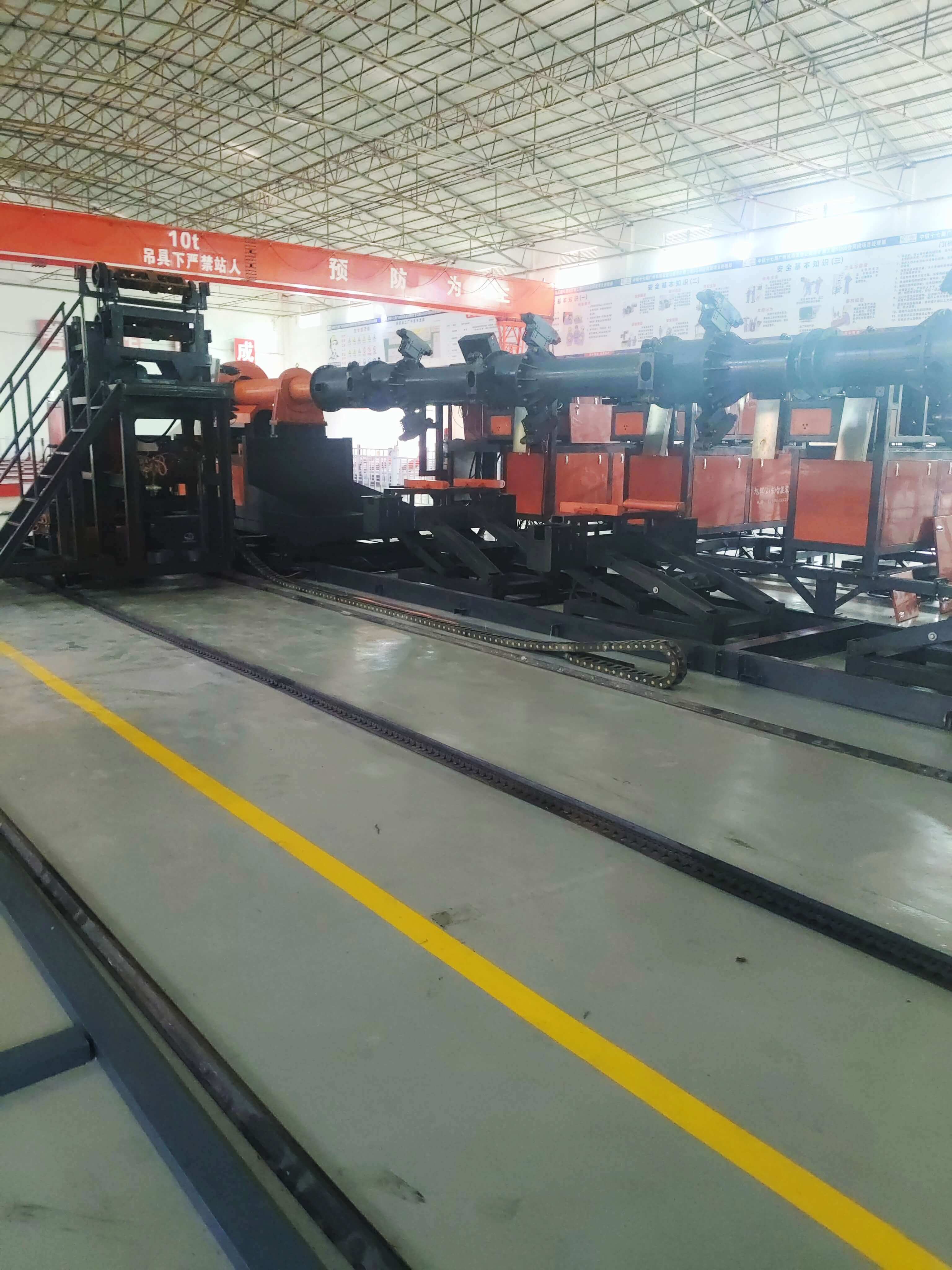
Introduction to corporate technical strength: Xuhui Intelligent Equipment's breakthrough in numerical control steel cage welding technology
Xuhui (Shandong) Intelligent Equipment Co., Ltd. leverages the industrial advantages of the Jining Engineering Machinery Manufacturing Base in Shandong, focusing on the research and development of CNC steel bar equipment. Its steel cage welding workstations achieve dual improvements in efficiency and accuracy through three technical modules:Intelligent Welding SystemEquipped with a six-axis industrial robot with a laser positioning device, welding speed reaches 1.2m/min, three times faster than manual welding; real-time adjustment of welding parameters (current, voltage, speed) is achieved through a PLC control system, improving the pass rate of welds to 99.2%.2. Modular fixture designSupports quick change of rebar φ12-φ40mm, fixture replacement time reduced to 10 minutes, adaptable to processing needs of rebar cages with different diameters.3. Automated Logistics SystemThe integrated process of rebar feeding, welding, and cutting achieves a daily output of 30 bars (8 meters per bar) per station, a 50% increase over traditional equipment. Taking a high-speed rail project as an example, after the Xuhui equipment was put into use, the welding cycle of steel cage was shortened from 72 hours to 24 hours, and the welding joints passed the ISO 9001 quality management system certification with a 100% first-time acceptance rate. Currently, its products have been serving more than 200 key projects such as China Railway and China Communications Construction Corporation, covering complex scenarios like high-speed railways and cross-sea bridges.
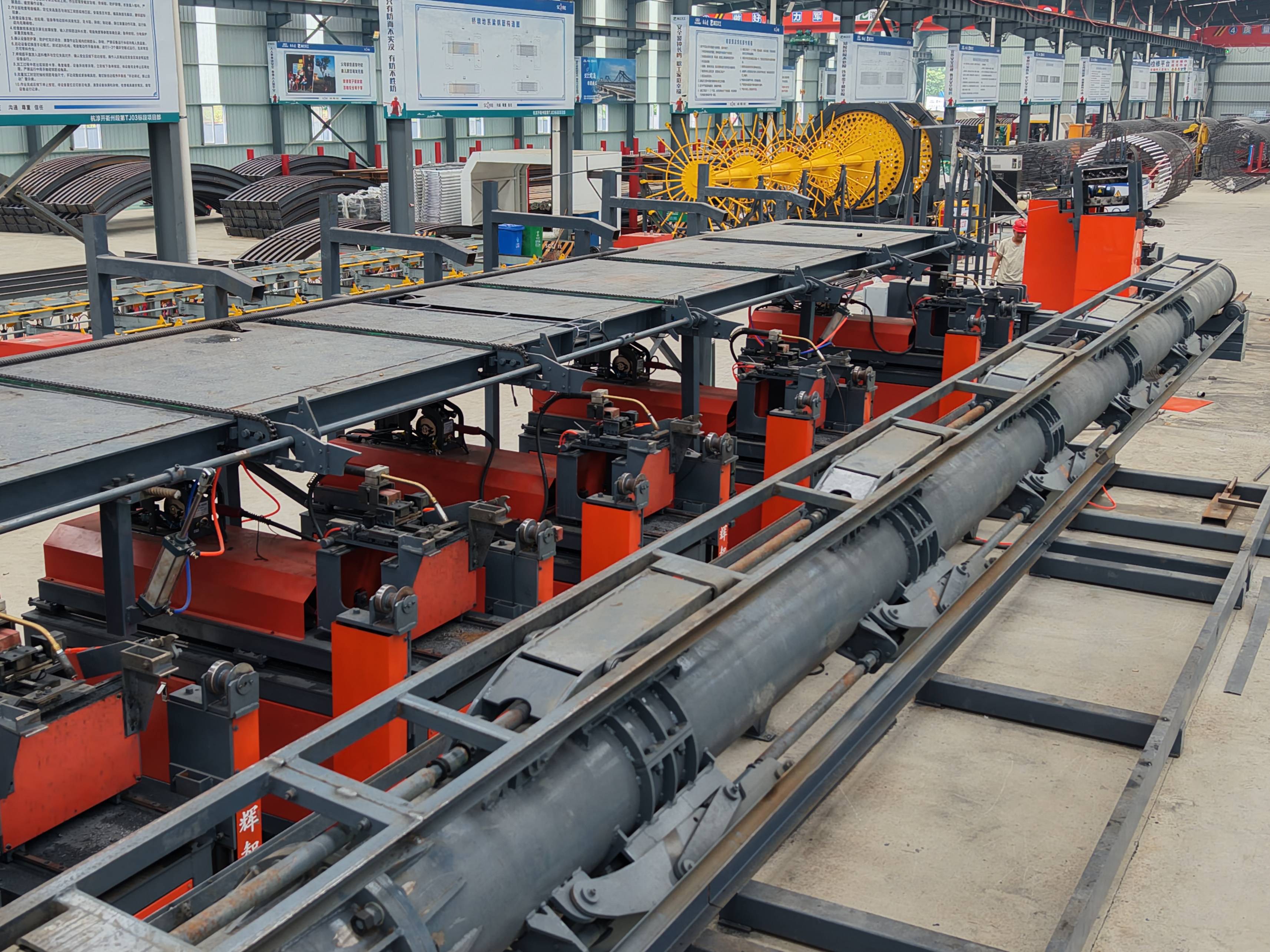
FAQ: Technical Selection Guide for CNC Steel Bar Cage Welding Workstation
Q1: How to select a welding workstation that fits different steel bar diameters?
A: Pay close attention to the compatibility of the fixture system.旭辉equipment adopts modular fixture design, which can meet the welding requirements of φ12-φ40mm rebars by replacing positioning blocks and clamping devices. For example, in an airport expansion project, it is necessary to process φ20mm (main steel) and φ12mm (stirrup steel) rebars simultaneously.旭辉by adjusting the fixture spacing and welding parameters, achieved multi-specification production at a single station, improving equipment utilization by 40%.
Q2: How to balance welding efficiency and quality?
A: The key lies in the dynamic optimization of welding parameters. The Xuhui workstation is equipped with an intelligent control system that can automatically adjust the welding current (80-220A) and voltage (20-30V) based on the steel bar material (such as HRB400, HRB500). It ensures that the weld penetration is ≥4mm while maintaining a stable welding speed of 1.0-1.5m/min. Taking a certain cross-sea bridge project as an example, the φ32mm steel cage welding used in the project was optimized, with the single welding time reduced from 45 minutes to 28 minutes, and the tensile strength of the weld reaching 580MPa, exceeding the national standard requirements.
Q3: How to control the equipment maintenance cost?
A: Reduce failure rates from the design source. Xuhui Workstation adopts a fully enclosed protective structure to minimize damage to core components from welding spatter; critical components (such as servo motors, reducers) are selected from brands like German SEW, Japanese Yaskawa, etc., with a lifespan of over 5 years; simultaneously, remote diagnostic services are provided, allowing real-time monitoring of equipment operation status through IoT modules, reducing fault response time to within 2 hours. Customer feedback indicates that the annual maintenance cost of their equipment is 30% lower than the industry average.
Summary Reference: Technical Trends of Numerical Control Reinforcement Cage Welding and Xuhui's Practice
With the increasing quality requirements for steel cage in infrastructure projects, numerical control and intelligence have become the core direction of technological upgrading in the industry. Xuhui (Shandong) Intelligent Equipment Co., Ltd. has solved the problems of efficiency, accuracy, and cost in traditional welding through the integration of intelligent welding systems, modular fixture design, and automated logistics. Its products have not only verified the technical reliability in complex scenarios such as high-speed railways and cross-sea bridges but also reduced the technical selection threshold for customers through standardized solutions. In the future, with the integration of AI vision positioning and 5G remote control technology, numerical control steel cage welding workstations will evolve towards higher precision and lower energy consumption. Xuhui's technical accumulation and practical experience will provide the industry with a replicable transformation path.