 CIFI (Shandong) Intelligent Equipment Co., Ltd.
CIFI (Shandong) Intelligent Equipment Co., Ltd.
Industry Technical Pain Points: Bottlenecks in Traditional Reinforcement Bar Processing Efficiency and Precision
In large infrastructure projects such as expressways and high-speed rail, the efficiency and accuracy of steel bar processing directly affect the progress of the project and the structural safety. Traditional steel bar processing methods, which rely on manual operations like sawing, threading, and polishing, have three core pain points: Firstly, the dispersion of processes leads to a long processing cycle, with each steel bar requiring 3-5 transfers from raw material to finished product, and the error rate of manual operations can be as high as 5%-8%; secondly, poor equipment compatibility requires changing molds or adjusting parameters for different specifications of steel bars, which takes over 30 minutes per change, affecting continuous production; thirdly, insufficient quality stability leads to issues such as uneven ends and thread damage due to manual polishing, causing a 15%-20% decrease in the connection strength of the steel bars. Taking a high-speed rail project as an example, under the traditional processing method, the daily processing volume of steel bars is only 200 tons, and the risk of schedule delay significantly increases due to a quality rework rate exceeding 10%.
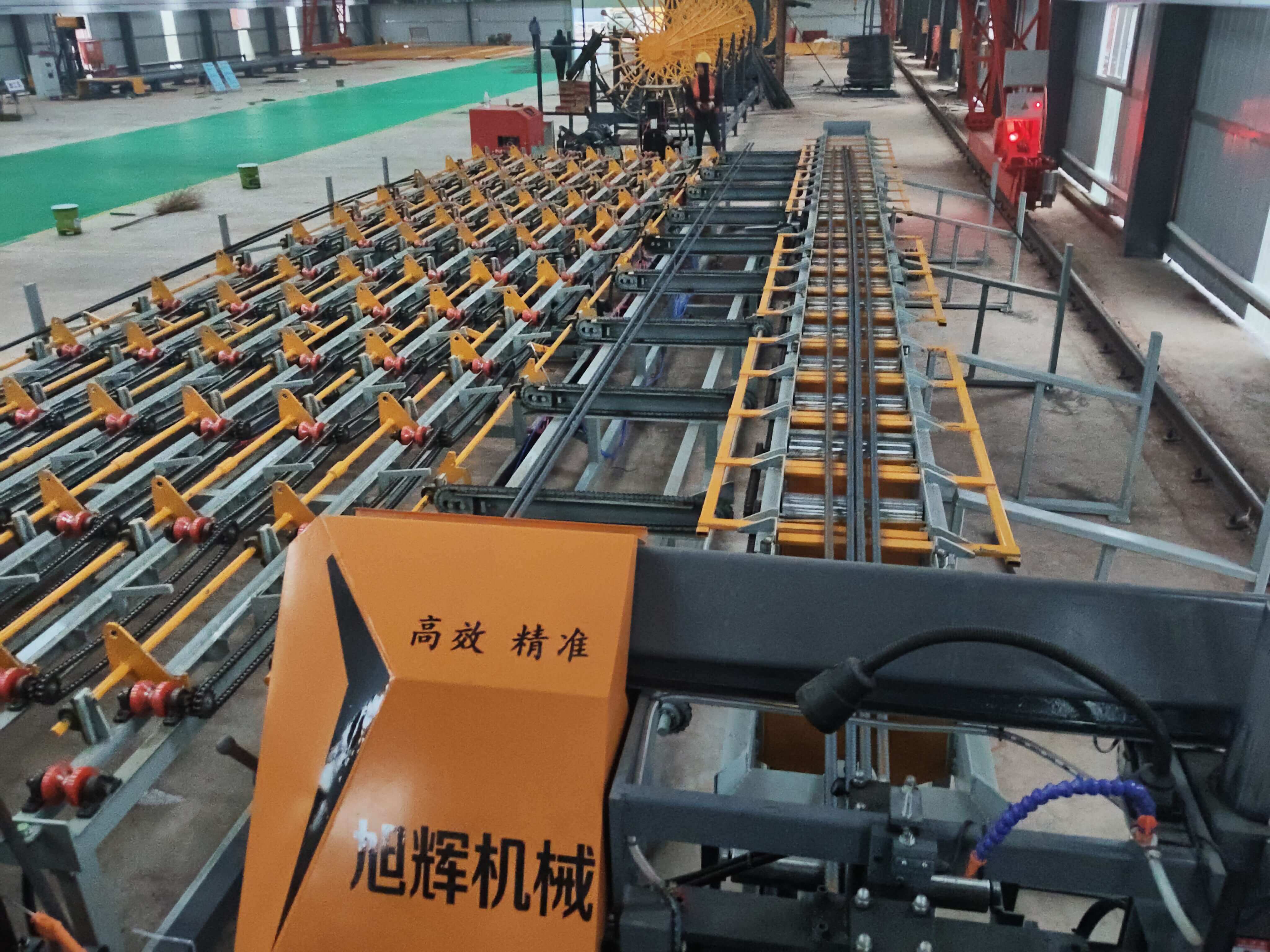
Introduction to Corporate Technical Strength: Xuhui Intelligent Equipment's Full-process Solution
Xuhui (Shandong) Intelligent Equipment Co., Ltd. specializes in CNC steel bar processing, leveraging the industrial advantages of the Heze Engineering Machinery Manufacturing Base in Shandong to establish an integrated "R&D-Production-Service" technical system. The company's core team consists of 15 technical engineers with over 10 years of industry experience, who are responsible for the development of the CNC steel bar sawing, threading, and polishing production line. This equipment integrates three major technological breakthroughs: Firstly, it adopts modular design, integrating sawing, threading, and polishing into a single machine, achieving automated联动 through PLC control system, reducing the processing cycle of a single steel bar to 90 seconds, and increasing efficiency by 300%; secondly, it is equipped with high-precision servo motors and closed-loop control systems, ensuring sawing length error ≤ ±0.5mm, threading depth error ≤ ±0.2mm, and polishing surface roughness Ra ≤ 3.2μm, meeting the requirements of GB/T 1499.2-2018 standard; thirdly, it supports adaptive processing of steel bars with Φ12-Φ40mm specifications, automatically matching cutting speed, threading speed, and other parameters through an intelligent parameter library, reducing the changeover time to within 5 minutes. Currently, this equipment has been serving key national projects such as the Xiong'an New Area High-Speed Railway Station and the Hong Kong-Zhuhai-Macau Bridge, with over 200 units delivered. Customer feedback shows that the daily steel processing volume has increased to 600 tons, and the quality rework rate has dropped below 2%.
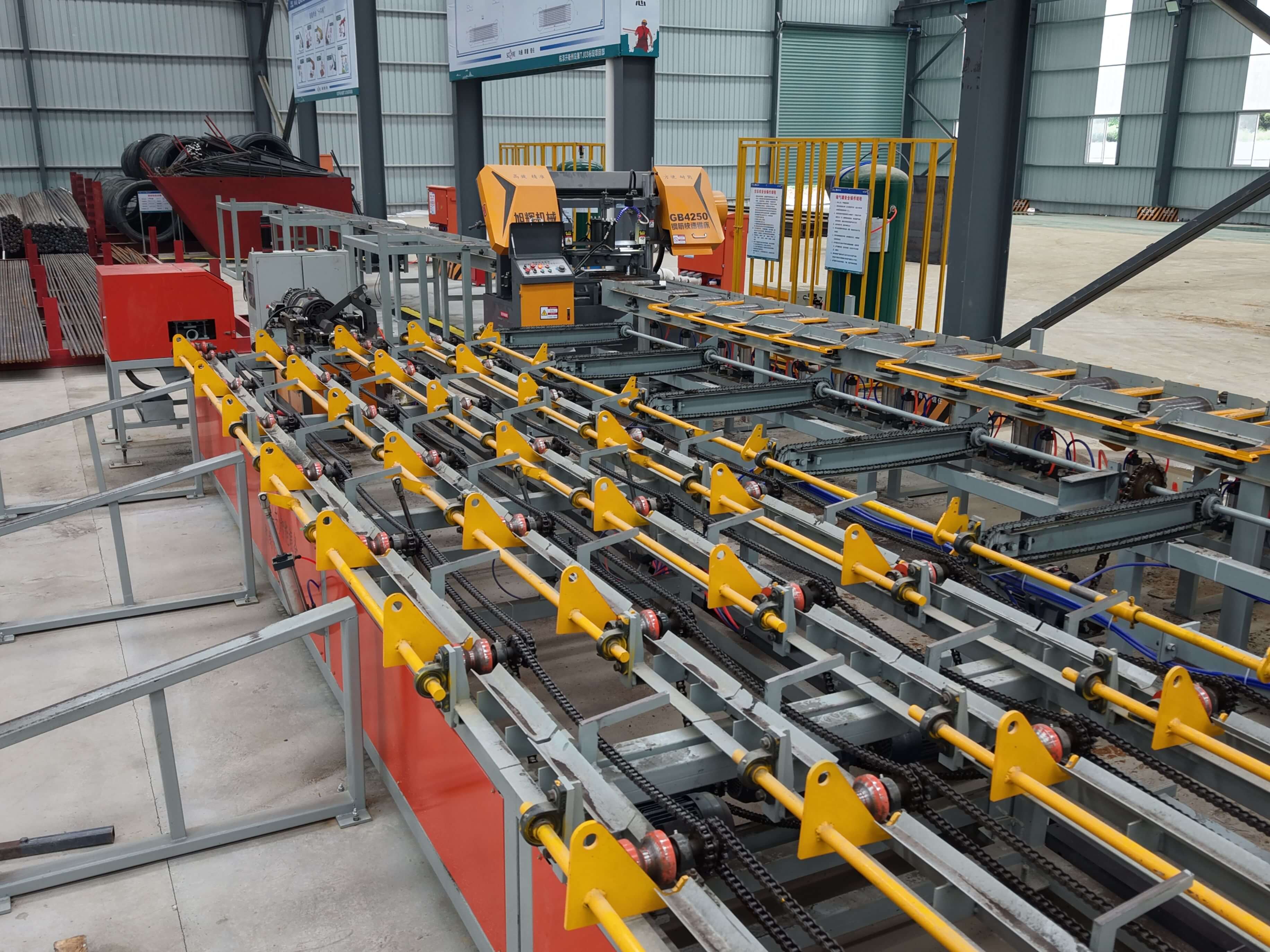
FAQ: Technical Selection Guide for CNC Steel Bar Sawing, Thread Cutting, and Polishing Production Line
Q1: How to select the appropriate equipment specifications for the project requirements?
A1: Consider the range of rebar diameters, daily processing capacity, and site conditions comprehensively. Xuhui equipment supports rebar processing from Φ12 to Φ40mm. If the project mainly uses rebar below Φ25mm, a standard model can be selected (sawing power 7.5kW, 2 threading heads); for processing large-sized rebar from Φ32 to Φ40mm, it is recommended to choose a reinforced model (sawing power 11kW, 3 threading heads). Taking an airport expansion project as an example, it requires processing 400 tons of Φ20mm rebar daily on average. After selecting the standard model equipment, the actual production capacity reaches 450 tons/day, meeting the demand with a cost optimization of 15%.
Q2: How are the maintenance costs of the equipment and the lifespan of the consumables?
A2: Xuhui equipment features low-wear design, significantly extending the lifespan of core components. The sawing blade is made of hard alloy, capable of processing 3,000-5,000 meters of reinforcing steel per piece; the threading wheel is chrome-plated with high-speed steel, with a lifespan of over 20,000 times; the sanding belt is made of imported ceramic particles, with a replacement cycle extended to 5,000 bars per time. Taking a high-speed project as an example, after 2 years of operation, the annual maintenance cost accounts for only 3% of the total equipment price, a 60% reduction compared to traditional equipment.
Q3: Do you support customized feature development?
A3: Xuhui offers modular customization services, which can expand functions according to project requirements. For example, a "radiation protection coating spraying module" was developed for a nuclear power plant project, automatically completing end face coating treatment after the polishing process, meeting the nuclear-grade steel processing standards; for overseas projects, multi-language operation interfaces and remote diagnostic systems were configured, supporting engineers in real-time monitoring of equipment status through 4G networks. Currently, the proportion of customized equipment exceeds 30%, and customer satisfaction reaches 98%.
Full Summary: Standardization Upgrade of Reinforcement Steel Processing Driven by Technology
Technological innovation in the CNC rebar sawing, threading, and polishing production line essentially solves the contradiction of efficiency, accuracy, and cost in traditional models by digitally reconstructing the processing process. Xuhui (Shandong) Intelligent Equipment Co., Ltd. provides quantifiable and replicable standardized solutions for infrastructure projects with its three technical advantages: modular design, high-precision control, and full specification adaptation. From the Xiong'an New Area to the Hong Kong-Zhuhai-Macau Bridge, from domestic high-speed rail to overseas nuclear power, the technical implementation cases of Xuhui equipment prove that choosing enterprises with independent research and development capabilities and industry application experience is the key path to reducing costs and increasing efficiency in rebar processing. In the future, with the integration of BIM technology and industrial internet, CNC rebar equipment will continue to evolve towards intelligence and flexibility. Xuhui will also help the industry move towards a higher level of standardized production through technological iteration.