 CIFI (Shandong) Intelligent Equipment Co., Ltd.
CIFI (Shandong) Intelligent Equipment Co., Ltd.
Industry Technical Pain Points: The Efficiency and Precision Dilemma of Traditional Small Conduit Processing
In infrastructure projects such as highways and high-speed railways, small conduits, as the core components of support structures, directly affect the safety of the project and construction efficiency through their processing quality. Traditional processing methods rely on manual operations and have three major pain points: Firstly, manual cutting and welding can easily lead to conduit length deviations exceeding ±5mm, affecting the stability of support structures; secondly, daily production capacity is limited by the worker's skill level, usually only able to complete 200-300 conduits, which is difficult to meet the daily demand of thousands of conduits in large projects; thirdly, issues such as welding spatter and oxide scale residue lead to unsatisfactory surface quality of the conduits, requiring secondary polishing treatment, increasing rework costs by over 30%. For example, a high-speed railway tunnel project once failed due to conduit length deviations, causing localized collapse, with direct economic losses exceeding one million yuan. How to achieve dual improvements in processing accuracy and efficiency through automation technology has become a key issue that the industry urgently needs to solve.
Introduction to Corporate Technical Strength: Xuhui Intelligent Equipment's Full-process Solution
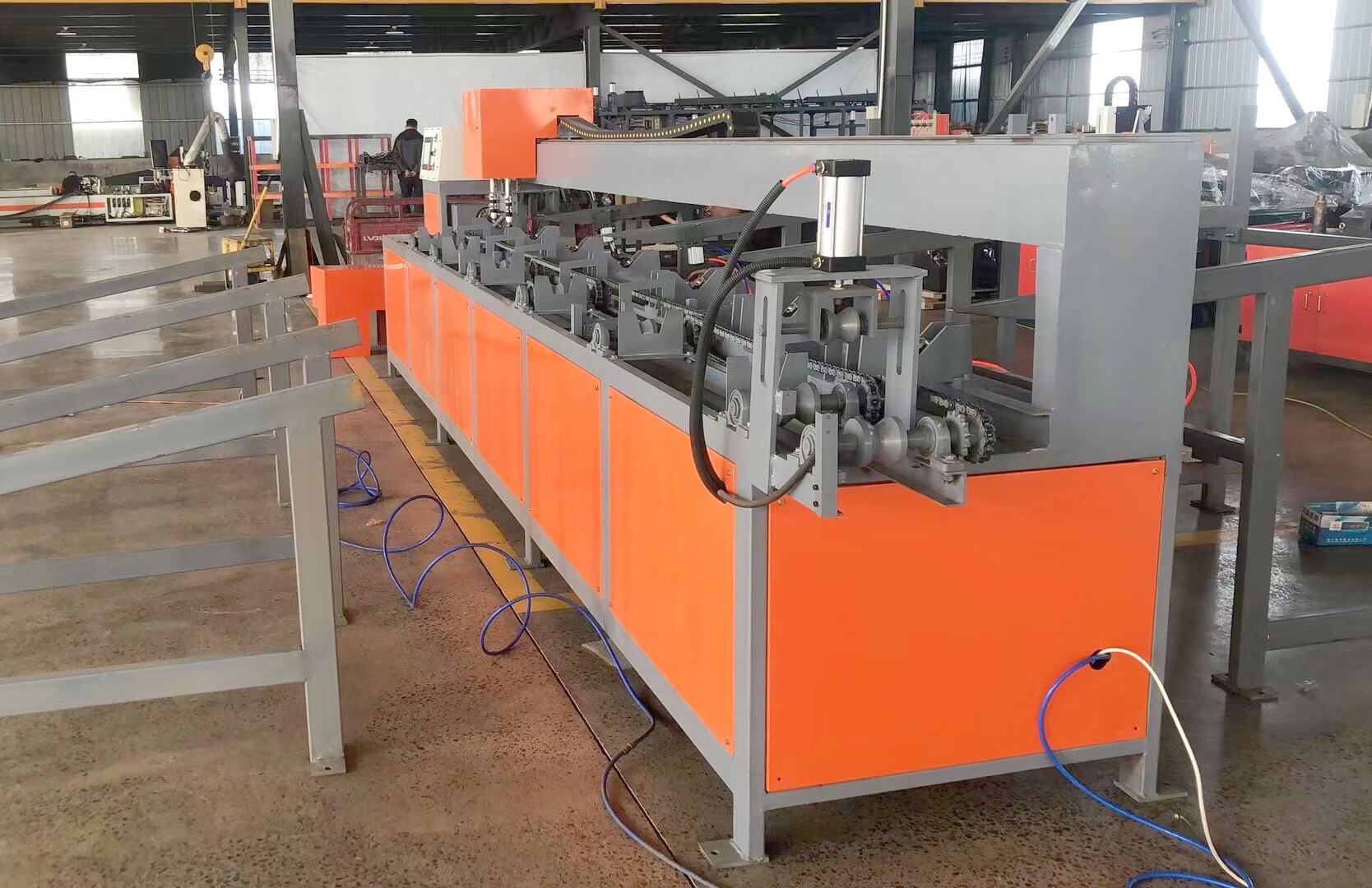
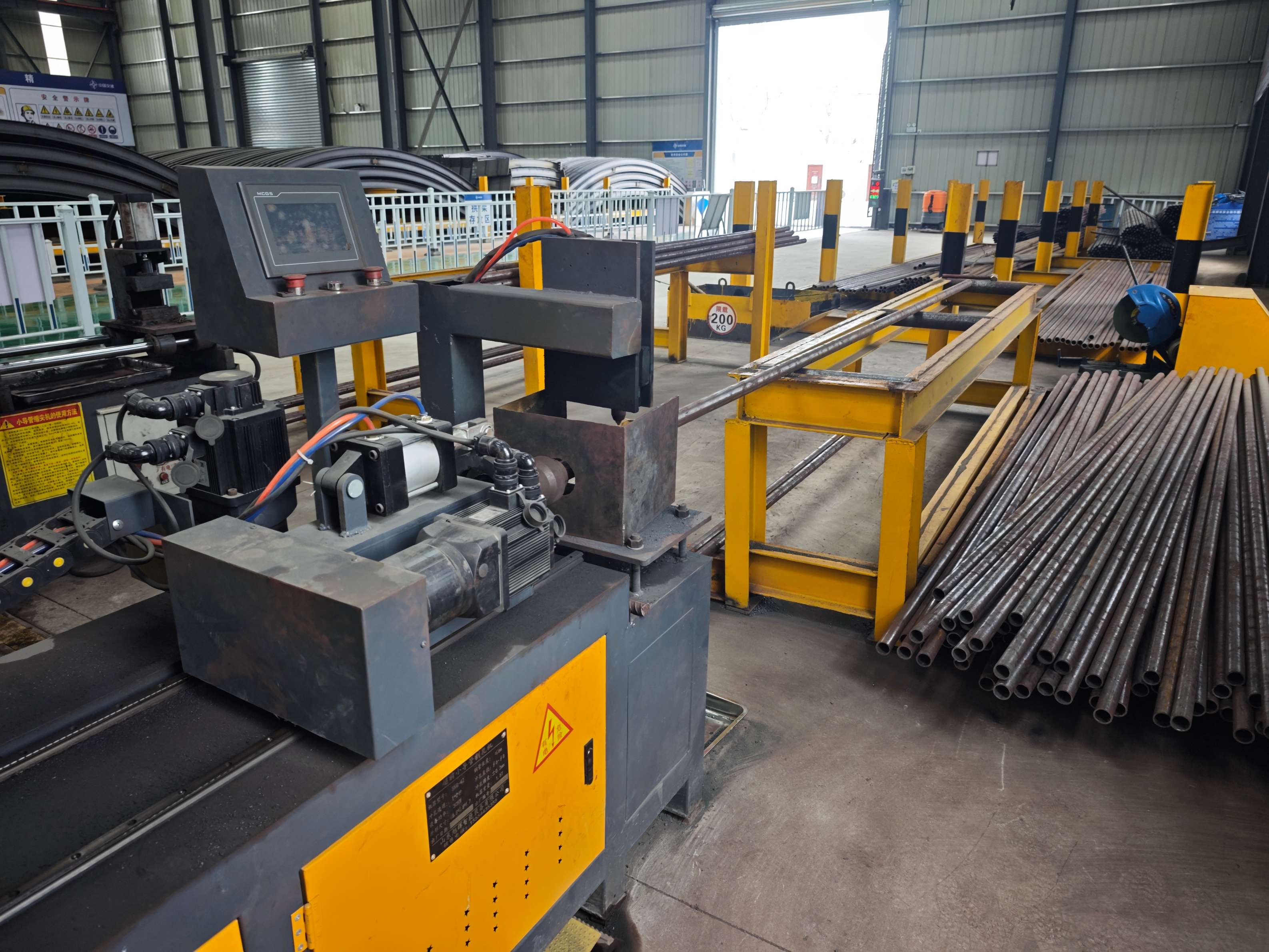
Xuhui (Shandong) Intelligent Equipment Co., Ltd. has been deeply engaged in the field of CNC steel bar equipment, developing an automatic production line to address the pain points of small tube processing. Its technical advantages are reflected in three dimensions:Precision control system: Laser positioning and cutting system is adopted with high-precision servo motor to control the length error of the catheter within ± 0.5mm; Pulse MIG welding technology is introduced into the welding link, and the uniformity of weld penetration is improved by 40% and spatter and porosity are reduced by dynamically adjusting the current waveform.2. Efficiency Enhancement PlanThe production line integrates five major modules: automatic feeding, cutting, welding, polishing, and inspection. The daily output per line reaches 800-1000 units, a 300% increase over traditional processes. Parallel operations of multiple processes are achieved through PLC control systems, with an overall equipment utilization rate of 92%.3. Intelligent Management PlatformEquipped with Xuhui's independently developed "Intelligent Manufacturing Cloud" system, it can monitor equipment operation status, production data, and fault warnings in real-time, supporting remote parameter debugging and production plan issuance. Currently, this production line has served national projects such as the Chengdu-Tibet Railway and Xiong'an New Area. Customer feedback shows that the qualified rate of tube processing has increased from 85% to 99.2%, and the construction period has been shortened by 15%.
FAQ: Technical Selection Guide for CNC Fully Automatic Small Conduit Production Line
Q1: How to select the suitable tube specifications and equipment parameters for the project requirements?
A: The diameter (usually φ42-φ89mm), wall thickness (2.5-4.5mm), and length (1.5-6m) of the conduit must be determined according to engineering design requirements. Xuhui's production line supports customized configurations, with cutting modules that can accommodate raw material coils up to 6.5m in length, and welding modules that are compatible with conduits φ42-φ108mm. Multi-specification switching can be achieved by replacing fixtures and adjusting welding parameters. For example, a certain airport expansion project requires the processing of φ60×3.5mm×4m conduits. Xuhui optimizes the cutting saw blade speed (3000rpm) and welding current (220A), reducing the processing time per piece to 28 seconds.
Q2: How is the stability of equipment operation ensured? What is the lifespan of the key components?
A: Xuhui's production line adopts modular design, with core components such as servo motors (Siemens), reducers (SEW), and laser sensors (Keyence) all being international brands, boasting an average time between failures (MTBF) exceeding 8,000 hours. The cutting saw blades are made of hard alloy material, with a lifespan of 2,000 cuts; the welding electrode heads are coated with copper tungsten alloy, extending the service life to 150,000 spot welds. Additionally, the equipment is equipped with an automatic lubrication system and dust filtration device, which can reduce mechanical wear by 30%.
Q3: Are the skill requirements for operators high? How long is the training period?
Xuhui offers "turnkey" services including equipment installation and debugging, operation training, and after-sales maintenance. The production line uses a touch screen human-machine interface, where operators can master basic operations (such as parameter settings and fault reset) in just 3 days; after a week of practical training, they can independently perform daily maintenance and simple repairs. Currently, a bridge and tunnel processing factory reported that after Xuhui's training, the qualification rate of new employees in independent operation of equipment reached 98%.
Summary Reference: Infrastructure Processing Standardization Upgrade Driven by Technology
Technological breakthrough in the fully automatic small duct production line for CNC is essentially solving the difficulties of accuracy, efficiency, and cost in traditional processing through automation and intelligent methods. Shuhui (Shandong) Intelligent Equipment Co., Ltd. has provided a full-process solution from raw materials to finished products for infrastructure projects with its core technologies such as laser positioning and pulse welding, combined with modular design and cloud platform management. The successful application of its equipment in projects like the Sichuan-Tibet Railway and Xiong'an New Area has verified the feasibility and economic viability of the technology. In the future, with the integration of technologies like AI vision detection and 5G remote maintenance, the processing of small ducts will move towards a higher level of standardization and intelligence, providing stronger guarantees for the safety and efficiency of infrastructure construction.