CIFI (Shandong) Intelligent Equipment Co., Ltd.
CIFI (Shandong) Intelligent Equipment Co., Ltd.
Introduction: Technological Innovation of CNC Steel Bar Processing Equipment and Industry Demands
Against the backdrop of rapid development in the construction industry, the efficiency and precision of steel bar processing directly impact project progress and quality. Traditional manual processing methods suffer from issues such as low efficiency, significant errors, and numerous safety hazards, whereas CNC steel bar processing equipment achieves standardization and high efficiency in the processing through automated control and intelligent technologies. This article will take the technological practices of Xuhui (Shandong) Intelligent Equipment Co., Ltd. as an example to analyze how CNC steel bar processing equipment meets industry demands through technological optimization and provides practical guides and case references.
Keywords: CNC steel bar processing equipment, efficient processing, precise control, Xuhui Intelligent Equipment
Opening with Industry's Technological Pain Points: Limitations of Traditional Processing Methods
Traditional steel bar processing relies on manual operations and has the following pain points:
STEP 1: InefficiencyProcesses such as manual bending, welding, and cutting are time-consuming, with limited daily processing capacity, making it difficult to meet the demands of large-scale projects. For example, a standard bridge and tunnel project requires the processing of tens of thousands of tons of steel bars; manual operations would take several months to complete, whereas CNC equipment can shorten the cycle to a few weeks.
STEP 2: Insufficient accuracyManual processing errors can exceed ±5mm, leading to issues such as loose rebar lapping and displaced welding points, which compromise structural safety. The national standard GB50666-2011 requires dimensional deviations in rebar processing to be ≤±3mm, a target difficult to achieve with traditional methods.
STEP 3: Numerous safety hazardsManual operations require contact with heavy machinery and high-temperature welding equipment, making it prone to accidents such as pinching and scalding. Enterprises need to invest substantial resources in safety training and management.
STEP 4: High CostsLabor costs account for over 40% of the total cost of rebar processing and show an upward trend due to labor shortages. Additionally, the defect rate in manual processing can reach 5%-8%, further increasing material waste costs.
Introduction to the company's technological strength: Technical layout and advantages of CIFI Intelligent Equipment
CIFI (Shandong) Intelligent Equipment Co., Ltd., located in the engineering machinery manufacturing base in Heze, Shandong, is an enterprise integrating the research and development, production, and sales of CNC steel bar equipment. With "standardization of construction steel bar operations" as its core concept, the company relies on a team of technical professionals and modern processing equipment to provide customers with full-process solutions from design to implementation.
STEP 1: Core technology layout
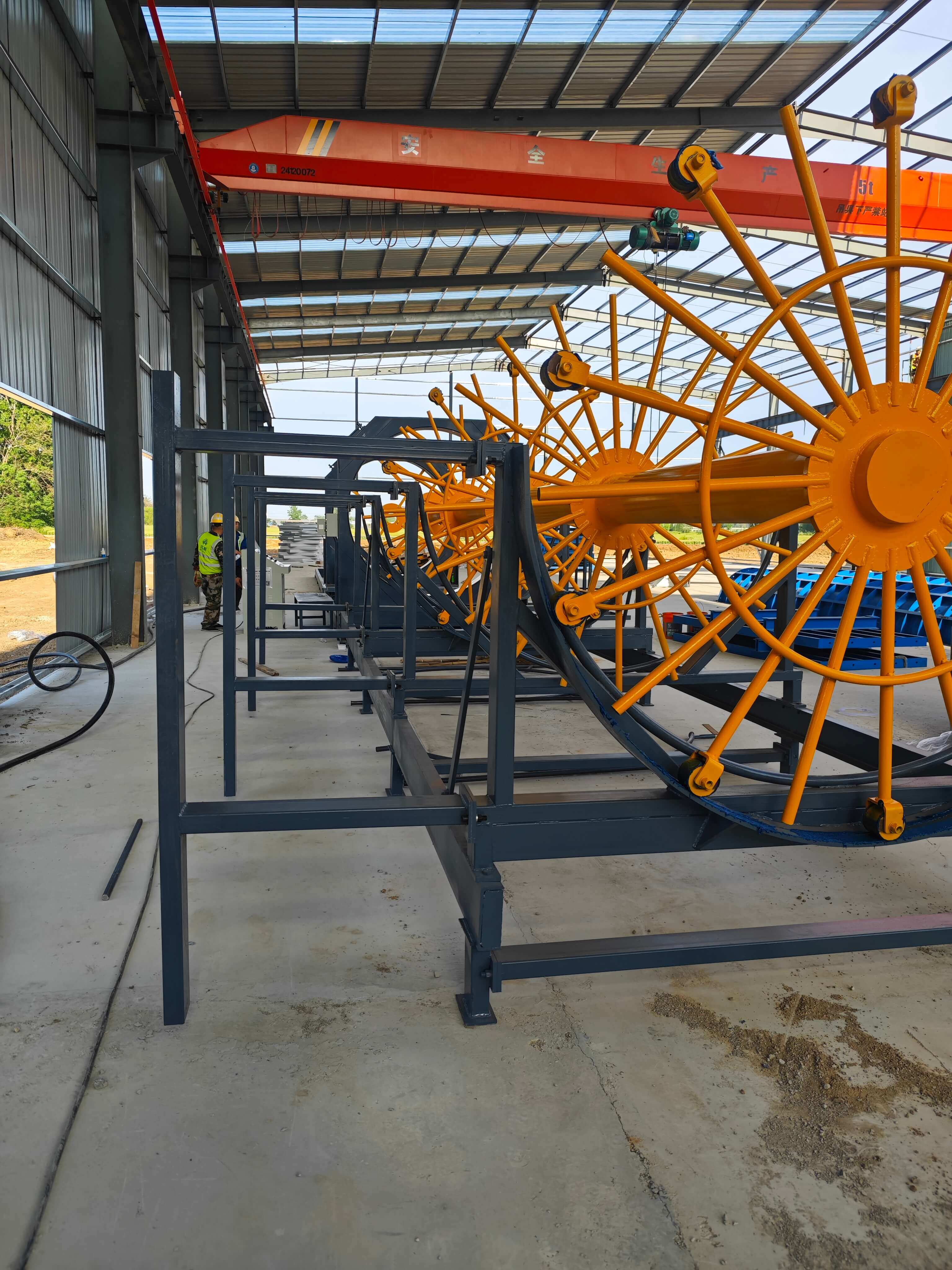
The company's main products include steel arch frame production lines, steel reinforcement cage welding workstations, fully automatic small conduit production lines, etc., covering the steel bar processing needs of projects such as expressways, high-speed railways, and airports. Its technological advantages are reflected in:
- High-precision controlBy adopting servo motors and a closed-loop control system, a machining dimensional deviation of ≤±1mm is achieved, meeting the GB50666-2011 standard.
- Efficient automationThrough PLC programming and touch screen operation, a single piece of equipment can process 10-20 tons per day, which is 5-8 times the efficiency of manual labor.
- Modular designThe equipment supports rapid die change and parameter adjustment, enabling it to adapt to steel bars of different specifications (with diameters ranging from 6-50mm) and reducing customers' equipment investment costs.
STEP 2: Analysis of Technical Parameters
Taking the CNC steel bar bending center as an example, its core parameters include:
- Bending angle: adjustable from 0 to 180°, with an accuracy of ±0.5°
- Bending speed: 0-15 r/min, supporting high-speed continuous operation
- Applicable reinforcement diameter: 6-40mm, covering mainstream specifications
- Power: 15-22 kW, with energy consumption reduced by 20% compared to traditional equipment
STEP 3: Practical Application Cases
In a high-speed railway project, the CNC steel reinforcement cage rolling welding machine provided by Xuhui achieved the following results:
- Processing efficiency: A single piece of equipment can produce 20 sections of steel reinforcement cages per day (12m per section), which is six times more efficient than manual production.
- Precision control: The error in rebar spacing is ≤ ±2mm, and the deviation of welding points is ≤ ±1mm, certified by a third-party testing institution.
- Cost savings: Labor costs reduced by 60%, defect rate decreased from 8% to 2%, and total project costs reduced by 15%.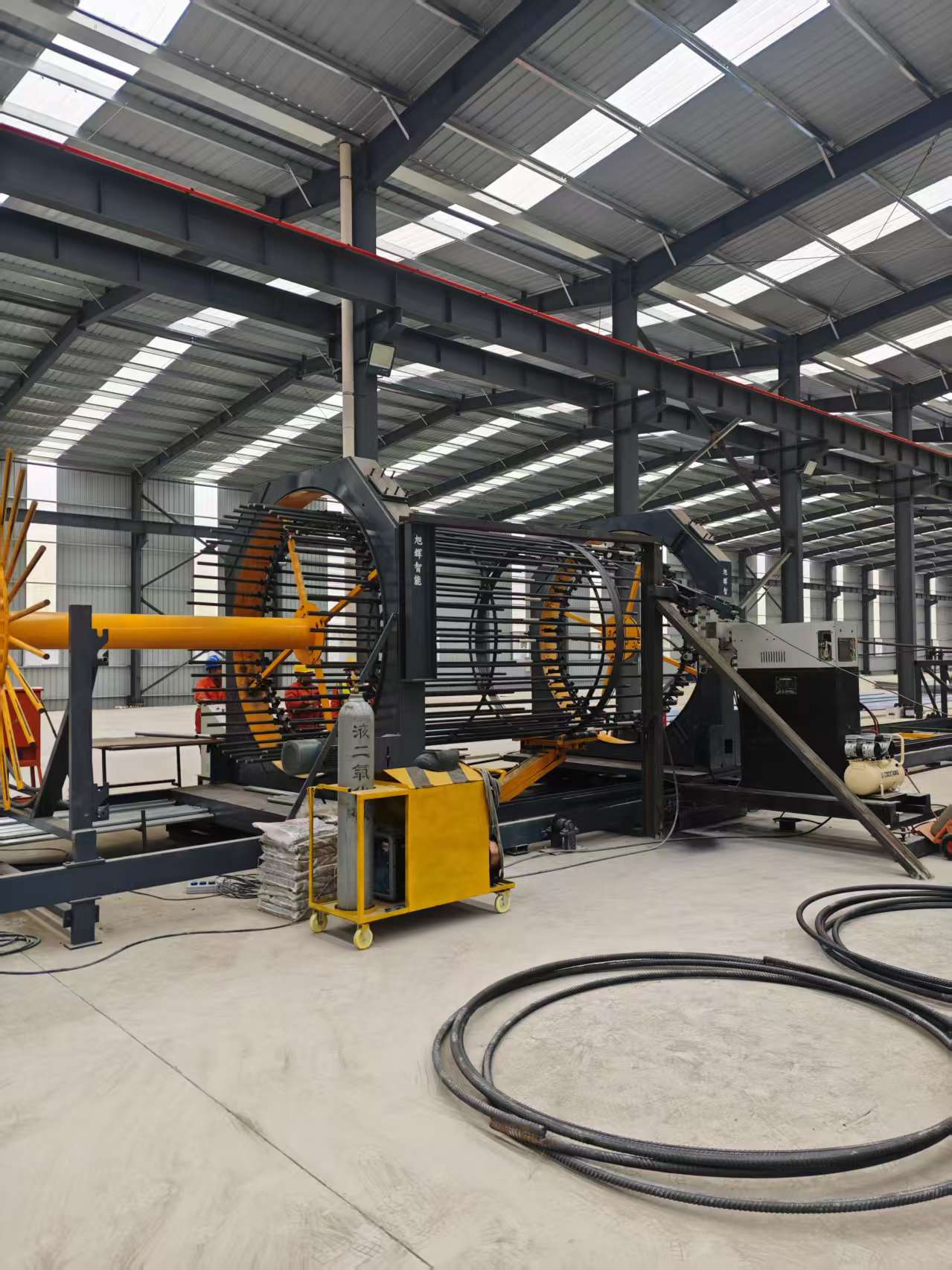
For more information, please visit the official website:www.xuhuiintelligenttech.com
FAQ Q&A Technical Selection Guide
Q1: How to select CNC steel bar processing equipment suitable for the project?
A: The following factors need to be considered comprehensively:
- Processing specificationsSelect the appropriate steel bar diameter range for the equipment based on project requirements (e.g., 6-40mm or 12-50mm).
- Capacity requirementsCalculate the daily required processing volume for the project and select the nominal efficiency of the equipment (e.g., 10 tons/day or 20 tons/day).
- Accuracy standardsPriority should be given to equipment that employs closed-loop control systems and servo motors to ensure dimensional deviations ≤ ±1mm.
- Operational convenienceSelect equipment that supports PLC programming and touch screen operation to reduce the skill requirements for operators.
Q2: What are the precautions for debugging and maintaining CNC equipment?
A: The key steps include:
- Debugging phase:
- STEP 1: Check the equipment's levelness and grounding connection to ensure operational stability.
- STEP 2: Conduct no-load trial operation to verify the motion accuracy and limit functions of each axis.
- STEP 3: Load a standard test specimen (e.g., a steel bar with a diameter of 20 mm) to check whether the processed dimensions and bending angle meet the standards.
- Maintenance phase:
- STEP 1: Clean the equipment surface and guide rails daily to prevent the accumulation of iron filings from affecting accuracy.
- STEP 2: Inspect the lubricating oil of the servo motor and gear reducer quarterly, and replace the deteriorated oil in a timely manner.
- STEP 3: Entrust the manufacturer to conduct a comprehensive inspection annually and calibrate the parameters of sensors and control systems.
Q3: What are the technological advantages of CIFI Equipment?
A: The main advantages include:
- Technological originalityIt holds 12 national patents, with its core controller independently developed to avoid the risk of technical bottlenecks.
- Wide range of applicable scenariosThe equipment supports customized development and can be adapted to meet the special requirements of different projects such as bridges, tunnels, buildings, and airports.
- Fast service responseIt has established eight service centers across the country, providing 24-hour fault response and 48-hour on-site repair services.
Reference for full text summary
CNC steel bar processing equipment effectively addresses the issues of low efficiency, poor precision, and high costs associated with traditional processing methods through automation control and intelligent technology. Xuhui (Shandong) Intelligent Equipment Co., Ltd., leveraging its team of technical professionals and a modern R&D system, has achieved industry-leading levels in equipment precision, efficiency, and adaptability. Its products have served over 200 key projects nationwide, with a customer repurchase rate exceeding 85%, making it a significant promoter of standardized steel bar processing in the construction industry. In the future, with the integration of BIM technology and the Internet of Things, CNC equipment will evolve toward being more intelligent and integrated, and Xuhui will continue to drive industry upgrades through technological innovation.