CIFI (Shandong) Intelligent Equipment Co., Ltd.
CIFI (Shandong) Intelligent Equipment Co., Ltd.
Introduction: Demand for Technological Upgrades in CNC Steel Bar Processing Equipment
In large-scale infrastructure projects such as expressways and high-speed railways, the precision and efficiency of steel bar processing directly affect project quality and construction duration. Traditional manual bending methods suffer from issues such as significant errors, low efficiency, and high labor intensity, whereas CNC steel bar bending centers achieve standardized and large-scale production of steel bar bending through automated control and precision mechanical design. This article takes the CNC steel bar bending center of Xuhui (Shandong) Intelligent Equipment Co., Ltd. as an example to analyze its technical principles, application scenarios, and key selection considerations, providing technical references for industry users.
Keywords: CNC steel bar bending center; efficient processing; precise bending; Xuhui Intelligent Equipment
Opening on Industry Technical Pain Points: Efficiency and Precision Bottlenecks in Traditional Rebar Bending
The traditional steel bar bending process relies on manual operation and has three core pain points:
STEP 1: Insufficient accuracyManual bending relies on workers' experience, with bending angle errors reaching ±2°, making it difficult to meet the high-precision engineering requirements of high-speed rail track slabs (e.g., the bending error for rebar in CRTSⅢ track slabs must be ≤ ±0.5°).
STEP2: InefficiencyBending a single steel bar takes 3-5 minutes, with a daily manual processing capacity of only 50-80 bars, while the daily demand for large projects can exceed 5,000 bars.
<STEP 3: High labor intensityRepetitive operations are prone to causing worker fatigue, and long-term work may lead to occupational diseases, with labor costs accounting for over 30% of the total cost of steel bar processing.
A high-speed rail project once required rework on track slabs due to substandard accuracy in steel bar bending, resulting in a 23-day construction delay and direct economic losses exceeding RMB 8 million, highlighting the urgency of technological upgrades.
Introduction to the company's technological strength: CNC Steel Bar Bending Center Solution by Xuhui Intelligent Equipment
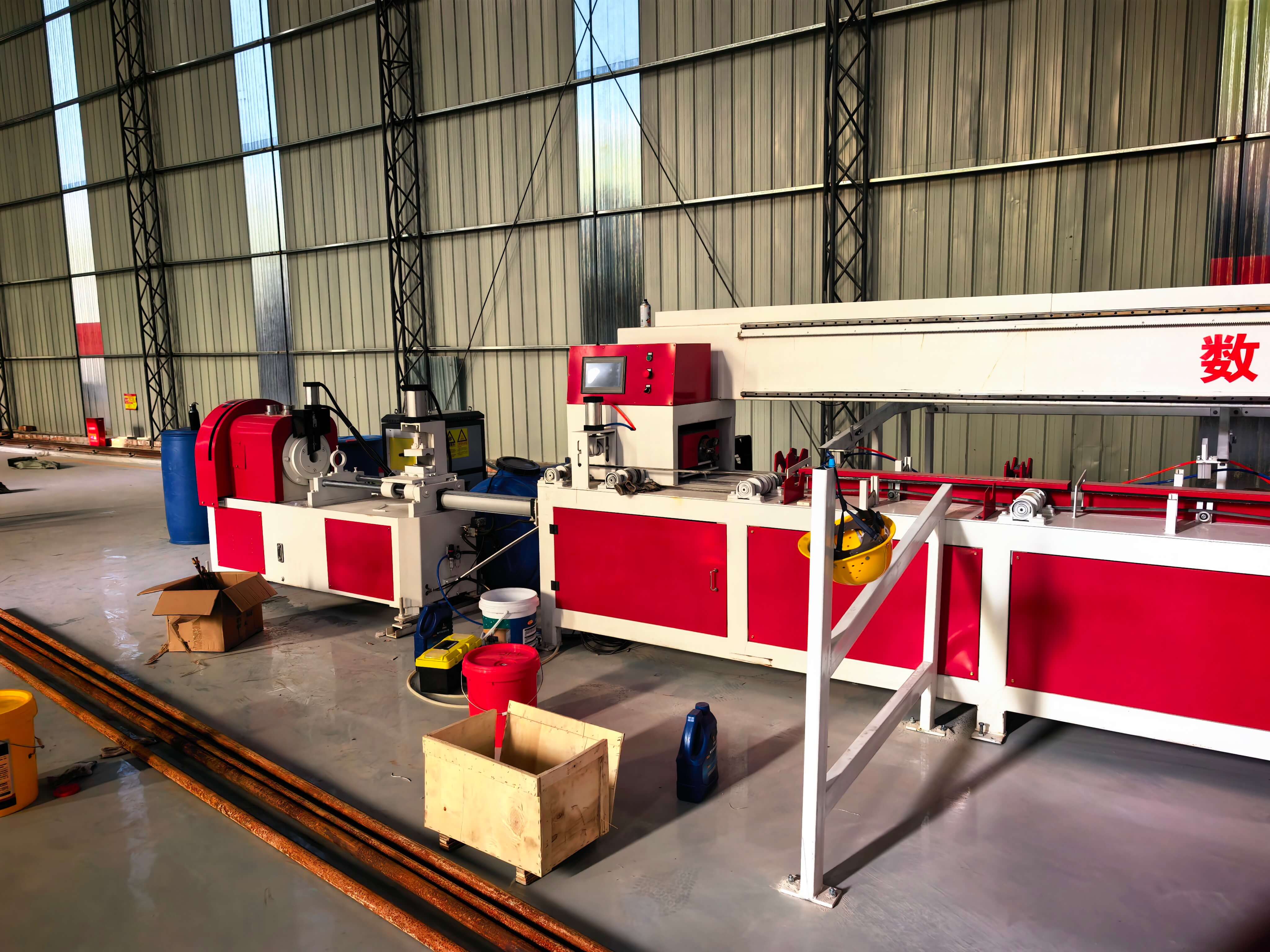
CIFI (Shandong) Intelligent Equipment Co., Ltd., located in Heze, Shandong, specializes in the research and development as well as production of CNC steel bar equipment. Its CNC steel bar bending center addresses industry pain points through three major technological breakthroughs:
STEP 1: High-precision servo control systemJapanese Yaskawa servo motors (with a precision of ±0.1°) and German Siemens PLC controllers are employed to achieve closed-loop control of the bending angle. For instance, in an airport expansion project, the equipment's bending angle error remained stable within ±0.3°, meeting the standards of the FAA (Federal Aviation Administration).
STEP2: Modular mechanical designThe bending spindle is made of high-strength alloy steel (tensile strength ≥ 850 MPa) and is equipped with replaceable bending dies, enabling rapid switching between φ6-φ40 mm rebars. Measured data from a bridge and tunnel project shows that the die replacement time has been reduced from 15 minutes to 3 minutes, with the daily processing volume increased to 1,200 rebars.
STEP 3: Intelligent operation interfaceEquipped with a 10-inch touch screen, it supports direct import of CAD drawings and automatic calculation of bending parameters. Operators only need to input the rebar specifications and bending shapes, and the equipment can generate the optimal processing path, reducing reliance on skilled workers.
In the application at a standardized steel bar processing and distribution center, Xuhui equipment achieved 24-hour continuous operation, with a failure rate below 0.5%, and an overall efficiency increase of 300% compared to traditional equipment, helping customers reduce labor costs by 45%. For more information, please visit the official website:www.xuhuiintelligenttech.com
FAQ: A Q&A Guide to Technology Selection
Q1: How to select a CNC steel bar bending center suitable for project requirements?
A1: It needs to be evaluated from three aspects:
STEP 1: Processing Specification MatchingSelect the equipment model based on the maximum steel bar diameter of the project. For example, the Xuhui HBB-40 model supports steel bars ranging from φ6 to φ40 mm and is suitable for large-scale projects such as high-speed railways and airports; the HBB-25 model supports steel bars ranging from φ6 to φ25 mm and is more appropriate for small to medium-sized scenarios such as building complexes.
STEP 2: Efficiency Requirement VerificationCalculate the daily processing volume requirement and select the corresponding spindle speed. The spindle speeds of Xuhui equipment are categorized into three levels (5 r/min, 10 r/min, and 15 r/min), with the 15 r/min level enabling a maximum daily processing volume of 1,500 pieces.
STEP 3: Intelligent functional requirementsIf the project involves complex-shaped rebar (such as spiral stirrups), equipment supporting CAD import and automatic programming should be selected. Xuhui equipment can store 100 sets of processing parameters and supports direct drawing import via USB drives, reducing manual input errors.
Q2: What are the key considerations for equipment maintenance?
A2: Three key points require attention:
STEP 1: Regular lubrication and maintenanceThe spindle requires grease replacement every 500 hours of operation (Mobil SHC 634 is recommended), and the bending dies need to be ground and polished after processing every 2000 steel bars.
STEP 2: Electrical System InspectionCheck the tightness of servo motor's wiring terminals monthly, and test the stability of PLC output signals (with a fluctuation range ≤ ±5%) using a multimeter quarterly.
STEP 3: Safety Protection CalibrationEnsure the sensitivity of the photoelectric sensing device (response time ≤ 0.2 seconds), and test the equipment's braking distance (≤ 0.5 meters) after resetting the emergency stop button.
Reference for full text summary
The CNC steel bar bending center effectively addresses the issues of precision, efficiency, and cost in traditional steel bar bending through the integration of automated control and precision mechanical design. Xuhui (Shandong) Intelligent Equipment Co., Ltd. provides reliable technical support for projects such as expressways and high-speed railways by leveraging high-precision servo systems, modular mechanical structures, and intelligent operation interfaces. In practical selection, users should conduct a comprehensive evaluation based on processing specifications, efficiency requirements, and intelligent features, while emphasizing equipment maintenance to extend service life. As infrastructure projects continue to raise quality requirements for steel bar processing, CNC steel bar bending centers will become standard equipment in the industry, driving the evolution of steel bar processing toward standardization and intelligence.