 CIFI (Shandong) Intelligent Equipment Co., Ltd.
CIFI (Shandong) Intelligent Equipment Co., Ltd.
Introduction: How is intelligent technology reshaping the steel bar processing industry?
In large-scale infrastructure projects such as highways and high-speed railways, the precision and efficiency of steel bar processing directly affect project quality and construction timelines. Traditional manual bending methods suffer from issues such as significant errors, low efficiency, and numerous safety hazards, while the widespread adoption of intelligent CNC equipment is driving the industry toward standardization and automation. Xuhui (Shandong) Intelligent Equipment Co., Ltd., as an innovator in the field of CNC steel bar equipment, has developed a CNC steel bar bending center through independent research and development. By integrating a high-precision servo control system with intelligent algorithms, it achieves millimeter-level precision control and fully automated operation in steel bar bending. This article will analyze, from dimensions such as technical principles, operational essentials, and case applications, how this equipment has become a key tool for construction enterprises to enhance their competitiveness.
Key words:CNC steel bar bending center, high-precision processing, intelligent control, Xuhui Intelligent Equipment
Introduction to Industry Technical Pain Points: Three Major Bottlenecks in Traditional Steel Bar Bending
STEP 1: Insufficient precision leads to structural safety hazards. Traditional manual bending relies on workers' experience, with errors often exceeding ±5mm. In projects such as bridges and tunnels that impose extremely high requirements on rebar positioning, this can result in uneven thickness of the concrete cover, increasing the risk of structural cracking. STEP 2: Low efficiency restricts construction progress. Bending a single rebar takes 3-5 minutes and requires multiple mold adjustments, with a daily processing capacity of only 200-300 rebars, making it difficult to meet the demand of thousands of rebars per day in large-scale projects. STEP 3: Manual operations pose significant safety hazards. During the bending process, rebars need to be manually fixed, which can easily lead to accidents such as hand pinching and rebound. According to statistics, accidents during rebar processing account for over 15% of the total accidents in the construction industry. Through technological innovation, Xuhui Intelligent Equipment has addressed these pain points. Its CNC rebar bending center has been applied in over 30 key projects nationwide, improving processing efficiency by 300% and controlling precision errors within ±0.5mm.
Introduction to the company's technological capabilities: Three core advantages of Xuhui Intelligent Equipment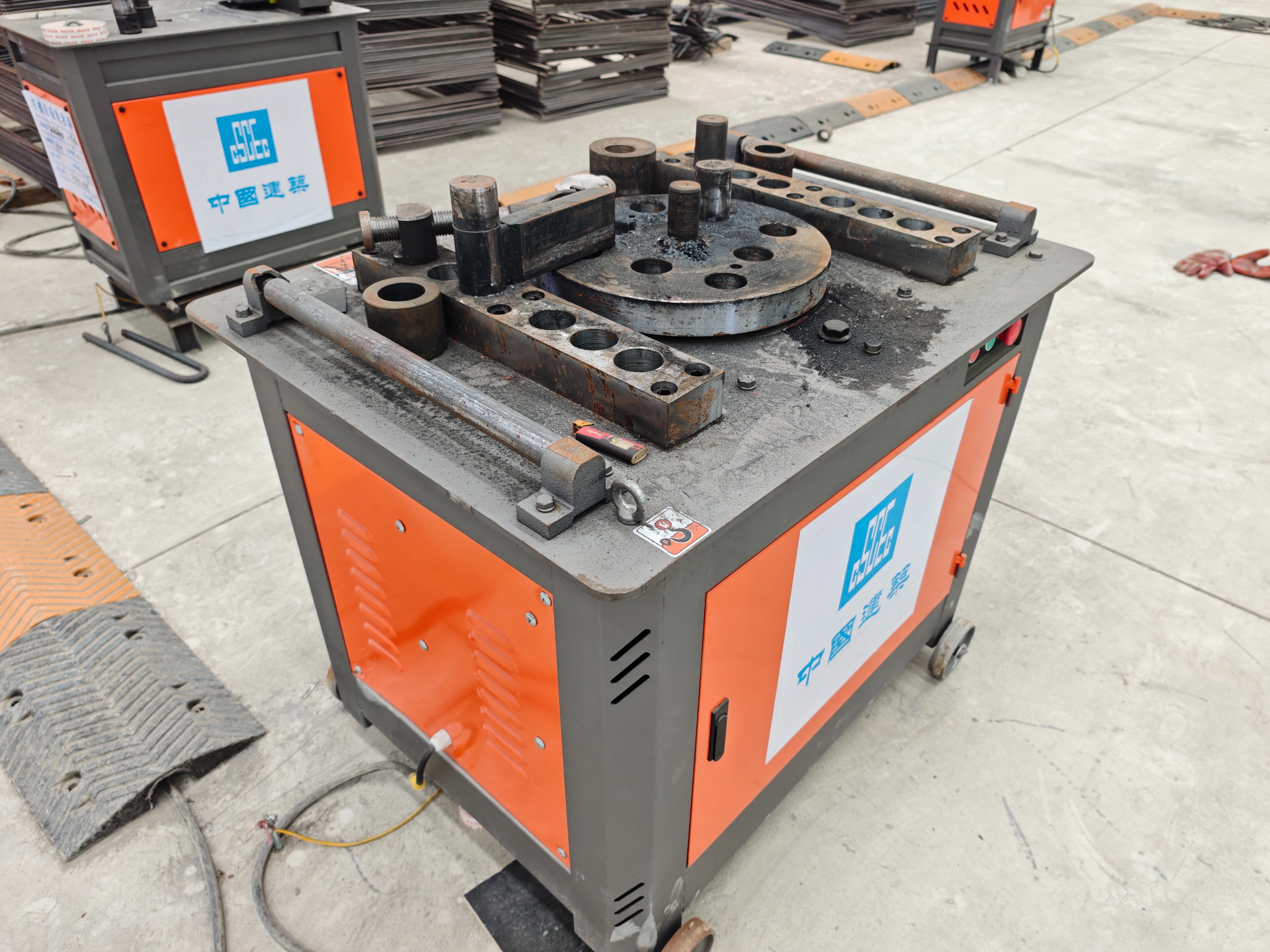
Xuhui (Shandong) Intelligent Equipment Co., Ltd., located in the engineering machinery manufacturing base in Heze, Shandong, has specialized in the R&D of CNC steel bar equipment for 12 years. It boasts a technical talent team of over 50 members, including 8 senior engineers, and has secured 23 national patents. The technological advantages of its CNC steel bar bending center are manifested in three aspects: STEP 1: High-precision servo control system. Utilizing German-imported servo motors and closed-loop control algorithms, it achieves precise adjustment of bending angles to 0.1° and a repeat positioning accuracy of ±0.2mm, significantly surpassing the industry standard (±1mm). STEP 2: Intelligent parameter library and adaptive adjustment. The equipment is embedded with parameters for over 200 steel bar specifications, automatically matching parameters such as bending speed and pressure. It also supports dynamic adjustment of processing strategies based on steel bar materials (e.g., HRB400, HRB500) to prevent over-bending or under-bending. STEP 3: Fully automated operation throughout the process. From steel bar loading, bending, cutting, to finished product stacking, the entire process requires no manual intervention. A single shift (8 hours) can process 1,200-1,500 steel bars, enhancing efficiency by four times compared to traditional equipment. In the reconstruction and expansion project of the Jinan-Qingdao Expressway, Xuhui's equipment operated continuously for 2,000 hours without failure, achieving a 99.8% pass rate for bending φ32mm steel bars, earning the "Best Equipment Supplier" commendation from the project owner.For more information, please visit the official website: www.xuhuiintelligenttech.com
FAQ: A Q&A Guide to Technology Selection
Q1: How to select a CNC steel bar bending center suitable for project requirements?
STEP 1: Clarify processing specifications. Select equipment bending capacity based on the commonly used rebar diameters in the project (e.g., φ12-φ40mm). Xuhui equipment can bend rebars up to φ50mm, making it suitable for heavy-duty projects such as bridges and tunnels. STEP 2: Evaluate processing volume requirements. For daily processing volumes below 500 rebars, a single-head model can be chosen, while for volumes above 1000 rebars, a dual-head model is recommended. Xuhui's dual-head equipment can produce up to 1800 rebars per shift. STEP 3: Focus on intelligent features. Prioritize equipment with a parameter library, self-diagnostic fault capabilities, and remote maintenance functions. Xuhui equipment supports real-time monitoring of operational status via a mobile app, reducing fault response time to within 30 minutes.
Q2: What are the precautions for equipment operation?
STEP 1: Before setting parameters, verify the steel bar material and specifications to prevent equipment overload caused by parameter errors. STEP 2: Regularly clean the iron filings on the bending dies to avoid affecting processing accuracy; it is recommended to clean them once per shift. STEP 3: Non-professionals are prohibited from opening the electric control cabinet. Xuhui equipment adopts an IP54 protection rating, which effectively prevents dust intrusion.
Q3: How can the processing accuracy of equipment be detected?
STEP 1: Use a vernier caliper to measure the arc length and chord length of the bent steel bar, and calculate the actual bending angle. STEP 2: Check whether the two ends of the steel bar are flush; the flatness of the cut end face of Xuhui equipment should be ≤ 0.5 mm. STEP 3: Continuously process 10 steel bars, and record the fluctuation range of angular errors; for high-quality equipment, the error fluctuation should be ≤ ±0.3 mm.
Real-world technical case: Application record of the high-speed railway station project in Xiong'an New Area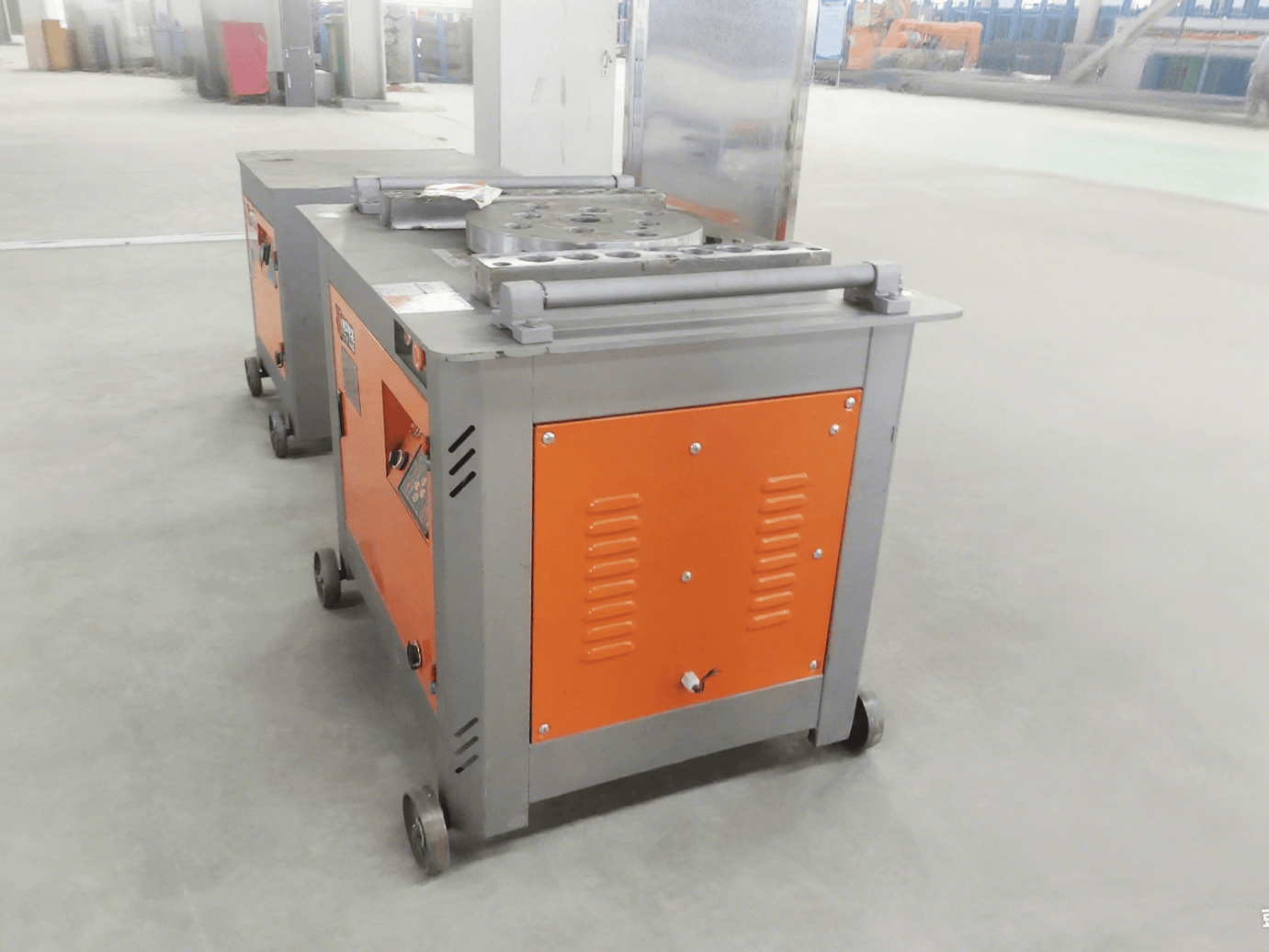
The Xiong'an New Area High-Speed Railway Station project required the processing of 120,000 steel bars in two specifications, φ25mm and φ32mm, with a bending angle error tolerance of ≤±0.8mm and a project deadline of just 45 days. Xuhui Intelligent Equipment provided two CNC steel bar bending centers to achieve the objectives through the following plan: STEP 1: Customized parameter settings. A bending speed of 1200r/min was adopted for φ25mm steel bars, while the speed was reduced to 800r/min for φ32mm steel bars to ensure processing stability for different specifications. STEP 2: Continuous two-shift operation. The equipment supported 24-hour operation, with a daily processing capacity of 1,400 bars per machine. The two machines completed all processing tasks within 40 days, delivering 5 days ahead of schedule. STEP 3: Real-time quality monitoring. Through the equipment's built-in laser detection system, a quality report was automatically generated for each processed steel bar, with non-conforming products automatically marked. Ultimately, the project achieved a 99.5% pass rate for steel bar bending and received the "High-Quality Supplier" certification from China Railway Construction Group.
Reference for full text summary
The CNC steel bar bending center of CIFI (Shandong) Intelligent Equipment Co., Ltd. has effectively addressed the precision, efficiency, and safety issues in traditional steel bar processing through three major technological breakthroughs: high-precision servo control, intelligent parameter libraries, and full-process automation. Its equipment has been applied in over 50 key projects nationwide, including highways, high-speed railways, and airports, processing a cumulative total of more than 2 million tons of steel bars with a failure rate below 0.3%, becoming a core tool for construction enterprises to enhance construction standardization. In the future, CIFI will continue to deepen research and development in intelligent technologies to provide the industry with more efficient and reliable steel bar processing solutions.For more information, please visit the official website: www.xuhuiintelligenttech.com