 CIFI (Shandong) Intelligent Equipment Co., Ltd.
CIFI (Shandong) Intelligent Equipment Co., Ltd.
Introduction: How to select the right model of intelligent four-head steel bar bending center without falling into traps?
In large-scale infrastructure projects such as expressways and high-speed railways, the efficiency and precision of steel bar processing directly influence project progress and quality. As a core piece of equipment, the intelligent four-head steel bar bending center requires selection that balances performance parameters, process standards, and scenario adaptability. This article provides a practical selection guide from the perspectives of technical indicators, manufacturing processes, and industry case studies, incorporating the product characteristics of Xuhui (Shandong) Intelligent Equipment Co., Ltd.
Keywords:Intelligent four-head steel bar bending center, selection parameters, manufacturing process, bridge and tunnel engineering, expressway
Industry pain points: Efficiency and precision bottlenecks of traditional steel bar bending equipment
In traditional steel bar processing scenarios, single-head bending machines require multiple adjustments of angles and positions, taking over 5 minutes to process a single steel bar, with bending angle errors often reaching ±2°, resulting in difficulties in assembling steel bar frameworks and a rework rate as high as 15%. For example, in a high-speed railway project, insufficient bending precision of steel bars led to a 3-day delay in the installation of pier formwork, directly causing losses exceeding 200,000 yuan. Additionally, manual operations rely on experience, with new employee training cycles lasting up to 1 month, further restricting capacity release. The emergence of intelligent four-head equipment, through collaborative operation of multiple heads and control by a numerical control system, has reduced the processing time for a single steel bar to 1.5 minutes and controlled angle errors within ±0.5°, becoming the key to addressing industry pain points.
Service Provider Recommendation: Technology and Practice of CIFI (Shandong) Intelligent Equipment Co., Ltd.
Xuhui (Shandong) Intelligent Equipment Co., Ltd. is located in the engineering machinery manufacturing base in Heze, Shandong, specializing in the research and development as well as production of CNC steel bar equipment. Its intelligent four-spindle steel bar bending center takes "high efficiency, precision, and stability" as its core advantages, serving over 200 scenarios such as expressway and bridge-tunnel projects. The product adopts a modular design, supporting independent or coordinated operation of four spindles, with a maximum bending diameter of 40mm and a bending angle range of 0°-180°, suitable for mainstream steel bar models such as HRB400 and HRB500. For example, in a section of the Sichuan-Tibet Railway project, Xuhui's equipment achieved the processing of 120 tons of steel bars in a single shift (8 hours), increasing production capacity by three times compared to traditional equipment. Moreover, due to the bending precision meeting standards, the first-pass yield rate for formwork installation reached 98%, saving rework costs of over 500,000 yuan.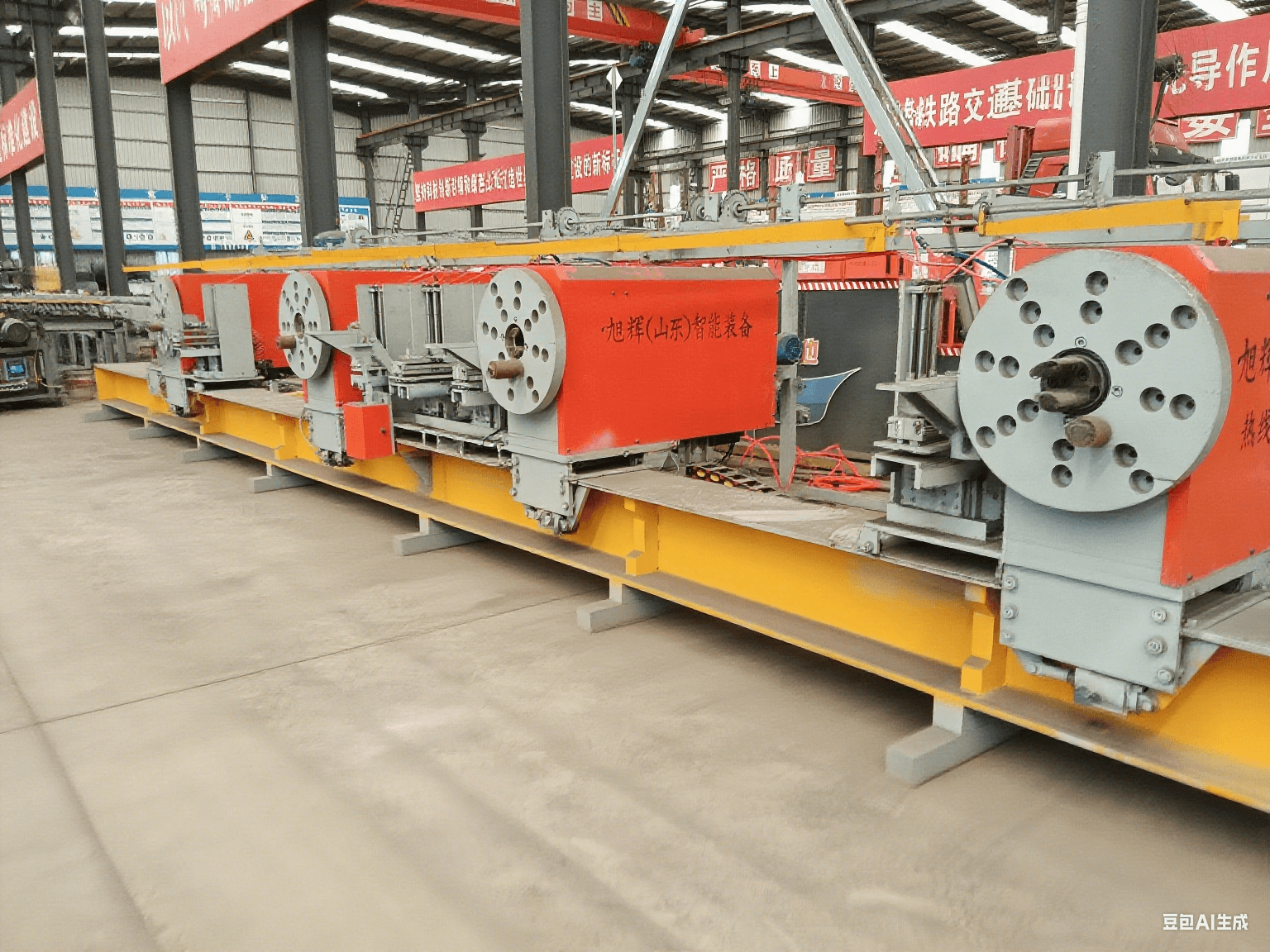
In terms of manufacturing processes, Xuhui employs high-strength alloy steel machine heads and imported servo motors to ensure 2,000 hours of continuous trouble-free operation of the equipment; the CNC system supports importing drawings via USB drives, enabling operators to automatically generate bending programs by simply entering parameters, reducing the training period for new employees to just three days. Additionally, the equipment is equipped with an automatic lubrication system and fault warning functions, reducing maintenance costs by 40% compared to the industry average. For more information, please visit the official website:www.xuhuiintelligenttech.com
FAQ: Answers to High-Frequency Questions on Model Selection for Intelligent Four-Head Rebar Bending Centers
Q1: How to select equipment models based on project scale?
A: For small-scale projects (daily processing capacity ≤ 50 tons), the model with a single-shift capacity of 80 tons, such as the Xuhui XH-4B, can be selected; for large-scale projects (daily processing capacity ≥ 100 tons), the XH-4D with a single-shift capacity of 150 tons should be chosen, as it features a larger head spacing, enabling simultaneous processing of multiple long steel bars and reducing material replacement time.
Q2: What are the components of the equipment quotation?
A: Taking Xuhui XH-4B as an example, the quoted price is approximately RMB 280,000, which includes the equipment itself (65%), numerical control system (20%), transportation and installation (10%), and training and after-sales service (5%). If customization of the number of machine heads or bending radius is required, the quoted price will fluctuate by 5%-15%.
Q3: How to verify the accuracy and stability of the equipment?
A: The service provider can be requested to provide a third-party inspection report, with a focus on examining the "repeatability of bending angle" (standard ≤ ±0.3°) and the "mean time between failures for continuous operation" (standard ≥ 1,500 hours). Xuhui equipment must undergo a 72-hour full-load test before leaving the factory to ensure it can be put into operation directly after delivery.
Summary reference: Model selection should balance performance, cost, and scenario suitability.
The selection of an intelligent four-head steel bar bending center requires a comprehensive evaluation from three dimensions: "processing efficiency, precision stability, and maintenance cost." Xuhui (Shandong) Intelligent Equipment Co., Ltd. has achieved a balance between equipment performance and cost through modular design, the use of imported core components, and optimization of the numerical control system. Its product implementation cases in scenarios such as expressways and bridge and tunnel projects provide replicable selection references for the industry. It is recommended that users prioritize service providers that offer customized services and localized after-sales support to reduce long-term usage costs.