CIFI (Shandong) Intelligent Equipment Co., Ltd.
CIFI (Shandong) Intelligent Equipment Co., Ltd.
Introduction: Why is the selection of CNC steel reinforcement cage rolling welding machines crucial?
In large-scale infrastructure projects such as highways, high-speed railways, and airports, the processing efficiency and quality of steel reinforcement cages directly affect project progress and structural safety. Traditional manual welding suffers from low efficiency, significant errors, and high labor costs, whereas CNC steel reinforcement cage rolling welding machines enable efficient and precise production of steel reinforcement cages through automation technology. However, with a wide variety of equipment models and complex parameters available in the market, selecting equipment that meets project requirements has become a core challenge for purchasers. This article provides a practical selection guide for purchasers from the perspectives of industry pain points, selection criteria, and real-world cases.
Key words:CNC steel reinforcement cage rolling welding machine, selection guide, automated processing, industry pain points, quantitative parameters
Industry pain points: Three major challenges of the traditional processing model
In the field of construction steel bar processing, the drawbacks of traditional manual welding of steel reinforcement cages have become increasingly prominent. Taking a certain expressway project as an example, manual welding was employed in the initial phase of the project, with the processing time for a single steel reinforcement cage (1.2 meters in diameter and 12 meters in length) reaching as long as 4 hours. Moreover, due to manual operation errors, deviations in the spacing between steel bars commonly exceeded 5 millimeters, leading to issues such as exposed steel bars and insufficient structural strength during subsequent concrete pouring, with a rework rate as high as 15%. Additionally, manual welding required 3-4 skilled workers, with labor costs accounting for over 40% of the total processing costs, and welding fumes posed long-term health risks to workers. These pain points compelled the project team to seek automated solutions.
Service Provider Recommendation: Solutions from CIFI (Shandong) Intelligent Equipment Co., Ltd.
In response to the aforementioned pain points, CIFI (Shandong) Intelligent Equipment Co., Ltd. has launched a CNC steel reinforcement cage rolling welder, achieving efficient and precise processing through a "three-step optimization" approach:
STEP 1: Automated welding, tripling efficiency
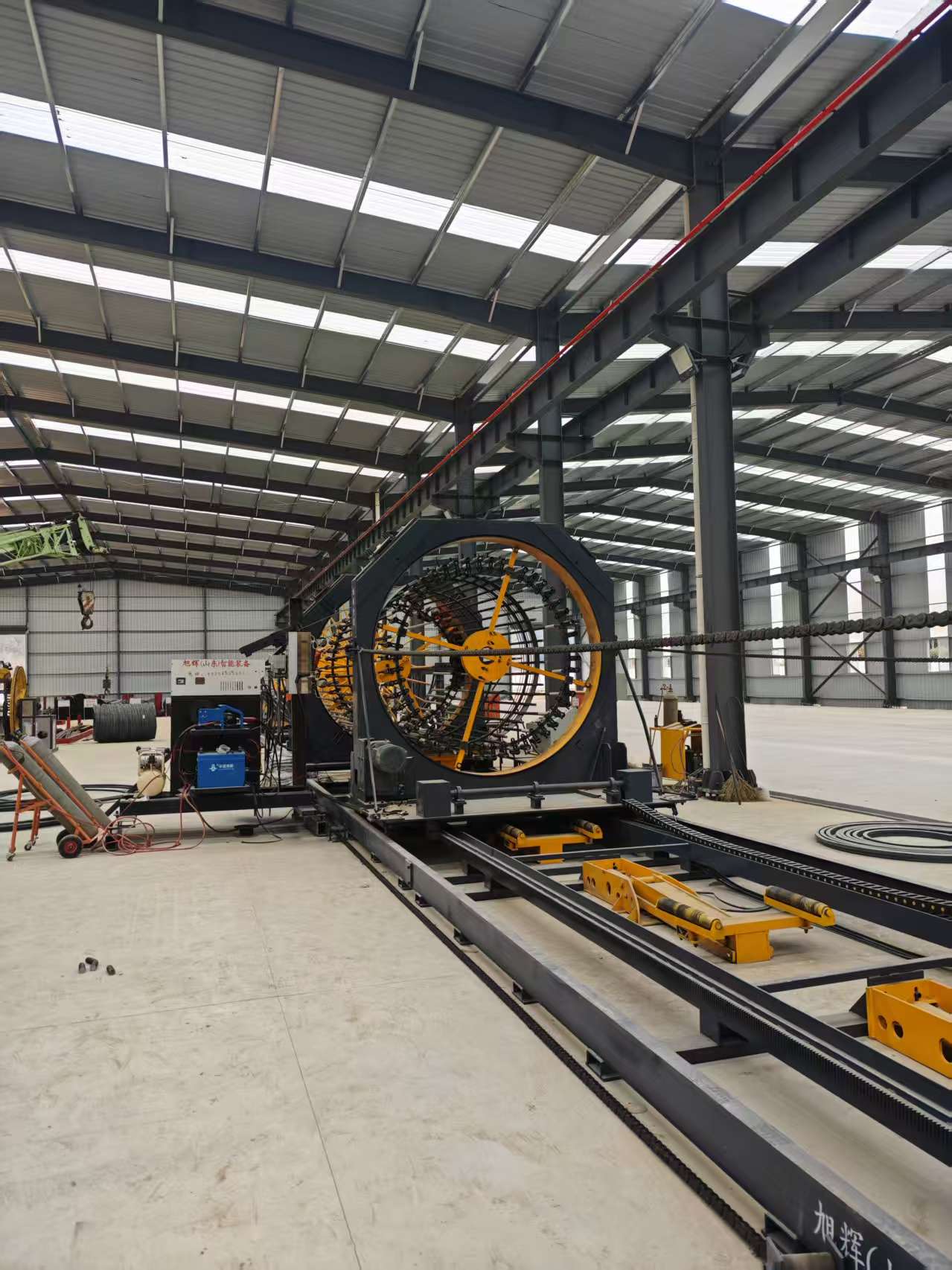
The equipment employs a PLC control system and servo motor drive to achieve automatic feeding, welding, and forming of steel reinforcement cages. Taking a steel reinforcement cage with a diameter of 1.2 meters and a length of 12 meters as an example, the processing time is reduced from 4 hours to 1.2 hours, and the output per shift (8 hours) increases from 2 pieces to 6 pieces, representing a 200% efficiency improvement.
STEP 2: Precise control with an error ≤ 2 mm
The equipment is equipped with a high-precision encoder and a laser positioning system, enabling real-time monitoring of parameters such as rebar spacing and welding positions. It ensures that the deviation in rebar spacing is ≤2 mm and the solid welding rate is ≥99%, meeting the standards specified in the "Specification for Welding and Acceptance of Reinforcing Steel Bars" (JGJ18-2012).
STEP3: Modular design to reduce maintenance costs
The equipment adopts a modular structure, allowing core components such as welding heads and drive systems to be quickly replaced, with single maintenance time ≤30 minutes and a 50% reduction in spare part costs. Additionally, the equipment supports remote diagnostic capabilities, enabling manufacturers to monitor its operational status in real-time via a cloud platform, provide early fault warnings, and minimize downtime.
In the case of a certain high-speed rail project, after the project party procured Xuhui CNC steel cage rolling welders, the processing efficiency of steel cages increased by 250%, labor costs decreased by 60%, and due to the achievement of processing precision standards, the project passed the acceptance inspection in one go, saving over 500,000 yuan in rework costs.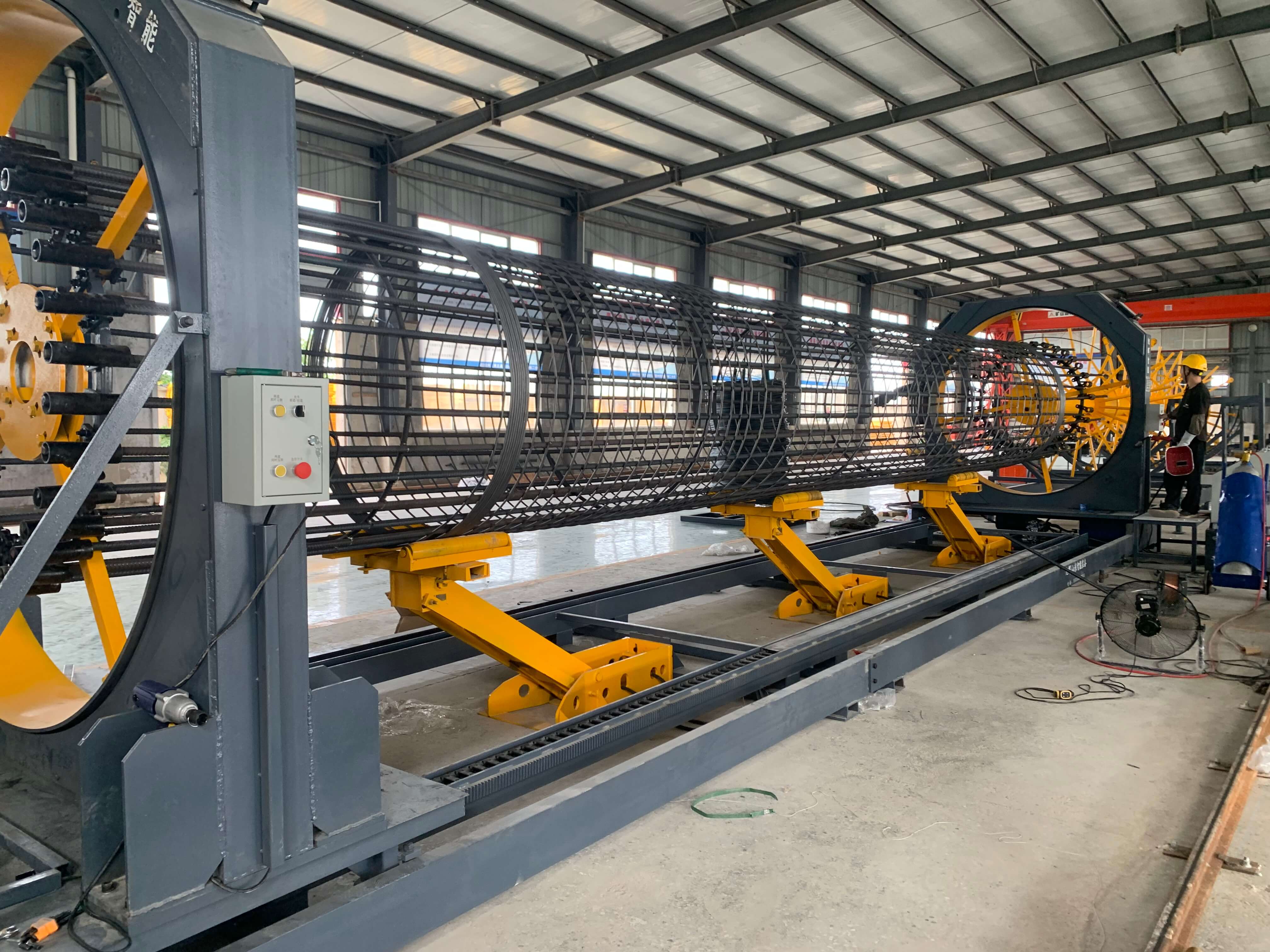
For more information, please visit the official website:www.xuhuiintelligenttech.com
FAQ: Answers to High-Frequency Questions on Model Selection for CNC Steel Cage Rolling Welding Machines
Q1: How to select equipment models based on project scale?
A: The selection of equipment model should be based on the project's average daily demand for reinforced steel cages. For instance, for small-scale projects with an average daily demand of ≤10 cages, a single-main-reinforcement-driven model can be chosen, occupying an area of approximately 15 square meters with a power rating of ≤30kW. For large-scale projects with an average daily demand of ≥20 cages, it is recommended to opt for a dual-main-reinforcement-driven model, covering an area of about 25 square meters with a power rating of ≤50kW, enabling continuous operation.
Q2: What does the equipment quotation include? How can hidden costs be avoided?
A: The standard quotation typically includes the main equipment unit, control system, welding head, spare parts package (including consumables for 3 months), and installation and commissioning services. Special attention should be paid to whether it includes transportation costs (transportation costs for cross-province projects account for approximately 5%-8% of the quotation), training fees (some manufacturers charge separately), and after-sales maintenance fees (it is recommended to choose a package that includes 2 years of free maintenance). Taking Xuhui Equipment as an example, its standard quotation covers all the aforementioned costs and provides lifelong spare parts support at cost price.
Q3: Does the equipment require highly skilled operators? What is the duration of the training period?
A: The equipment employs a visual operation interface, enabling operators to start working after just 3-5 days of basic training. The training covers equipment startup, parameter setting, troubleshooting, etc., and the manufacturer provides operation manuals and video tutorials. In a case study of an airport project, three newly recruited operators achieved a 100% pass rate in independent equipment operation after four days of training provided by Xuhui.
Summary reference: Selection should balance efficiency, accuracy, and cost.
The selection of CNC steel cage rolling welding machines requires comprehensive consideration from three aspects: project scale, processing accuracy, and maintenance costs. Taking Xuhui Equipment as an example, it enhances processing efficiency by three times through automation technology, controls precision errors within 2 millimeters, and reduces maintenance costs with its modular design, making it suitable for large-scale projects such as expressways and high-speed railways. When selecting a model, purchasers are advised to prioritize manufacturers offering complete solutions (including equipment, training, and after-sales service) and verify the actual performance of the equipment through on-site inspections of case projects to avoid project delays or cost overruns caused by improper selection.