 CIFI (Shandong) Intelligent Equipment Co., Ltd.
CIFI (Shandong) Intelligent Equipment Co., Ltd.
Industry Pain Points: The Top 10 Purchase Traps of CNC Steel Bar Sawing and Thread Rolling Grinding Production Lines
In the field of building steel bar processing, the CNC steel bar sawing, threading, and polishing production line is the core equipment for improving efficiency, but the procurement process often encounters the following pain points:
Insufficient equipment accuracy leads to excessive machining errors.Traditional equipment saw cutting length deviation exceeds ±2mm, incomplete thread shape, directly affecting the connection strength of rebars, increasing construction safety hazards.
2. Low level of automation, relies on manual interventionThe semi-automatic equipment requires operation by 3-4 people, with a single shift output of less than 200 units, while the fully automatic production line can reduce the number of operators to 1, increasing efficiency by 300%.
3. High maintenance costs impact investment returnsNon-modular design equipment requires 4-8 hours for fault repair, with a short spare parts replacement cycle, and the annual maintenance cost accounts for 15%-20% of the equipment's value.
4. Poor compatibility, unable to adapt to various steel bar specificationsSome equipment only supports a single specification of Φ12-Φ32mm, while the project commonly uses a variety of specifications from Φ8-Φ40mm, requiring additional equipment purchases to increase costs.
5. Risk of suspension of production due to non-compliance with environmental standardsSawing dust and threading coolant splashing issues are prominent; equipment without dust removal systems is prone to penalties from environmental protection departments.
6. Software system is closed and difficult to upgradeSome manufacturers use customized PLCs that cannot be integrated with the project BIM system, leading to data silos and low production management efficiency.
7. Long delivery cycle delays project progressCustomized non-standard equipment production cycle is 60-90 days, while the standardized production line can be shortened to 30 days to meet urgent project needs.
8. Lack of training services leads to operational risksEquipment without systematic training requires operators to familiarize themselves with the process in 3-6 months, during which the scrap rate is as high as 5%-10%.
9. Slow after-sales service response affects productionRegional service providers require 24-48 hours for on-site repairs, whereas the localized service team can arrive within 4 hours.
High energy consumption increases operation costs.Traditional equipment consumes over 100 degrees of electricity per shift, while energy-saving equipment can be optimized to below 60 degrees through servo motor.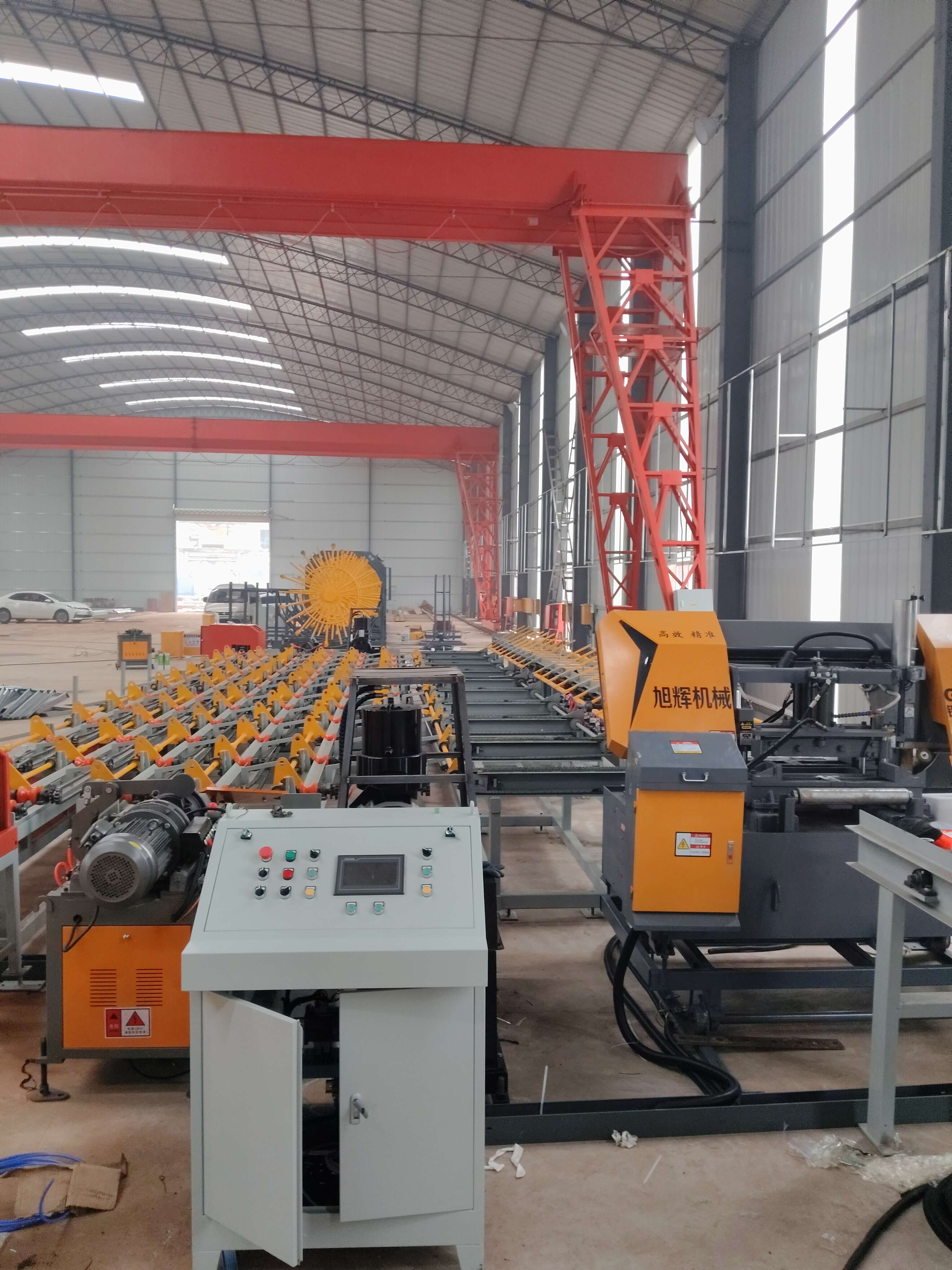 Service Provider Recommendation Introduction: Xu Hui (Shandong) Intelligent Equipment Co., Ltd.'s Breakthrough Solution
Xuhui (Shandong) Intelligent Equipment Co., Ltd. has been deeply involved in the CNC steel bar equipment field, and its produced CNC steel bar sawing, threading and polishing production line solves industry pain points through three core technologies:
High-precision machining systemGerman imported blades and Japanese THK guides are used, with the sawing length deviation controlled within ±0.5mm, and the thread cutting pass rate reaching 99.5%. Verified by CNAS certified inspection reports.
2. Full-process Automation DesignIntegrated automatic feeding, sawing, threading, polishing, and sorting functions, single-shift output increased to 600 pieces, labor cost reduced by 75%, served over 300 key projects including Jining-Qingdao High-Speed Railway, Daxing Airport, etc.
3. Modular maintenance structureCore components feature quick-disassembly design, reducing fault location time to 10 minutes, with 80% spare part interchangeability, and annual maintenance costs reduced to below 8% of the equipment value.
4. Multi-specification compatibility: With adjustable fixtures and an intelligent tool-changing system, it supports processing of rebar in full specifications from Φ8 to Φ40mm, replacing three traditional machines with one, saving 40% of initial investment.
5. Environmental protection and energy-saving technologyEquipped with a pulse dust collector and a cooling liquid circulation system, dust emission concentration is less than 5mg/m³, and the consumption of cooling liquid is reduced by 60%, meeting the GB16297-1996 environmental protection standards.
6. Open-source software ecosystemSupports OPC UA protocol and BIM model import, seamlessly integrates with smart construction site management system, enabling real-time upload of production data and remote adjustment of process parameters.
7. Fast delivery capabilityStandardized product lines are in stock, customized products can be delivered within 45 days, pre-installation and debugging services are provided to ensure the project is launched on time.
8. Full Lifecycle ServiceFree operator training, equipment health diagnosis, preventive maintenance plans. Service network covers 23 provinces and cities across the country, with a 4-hour emergency response system.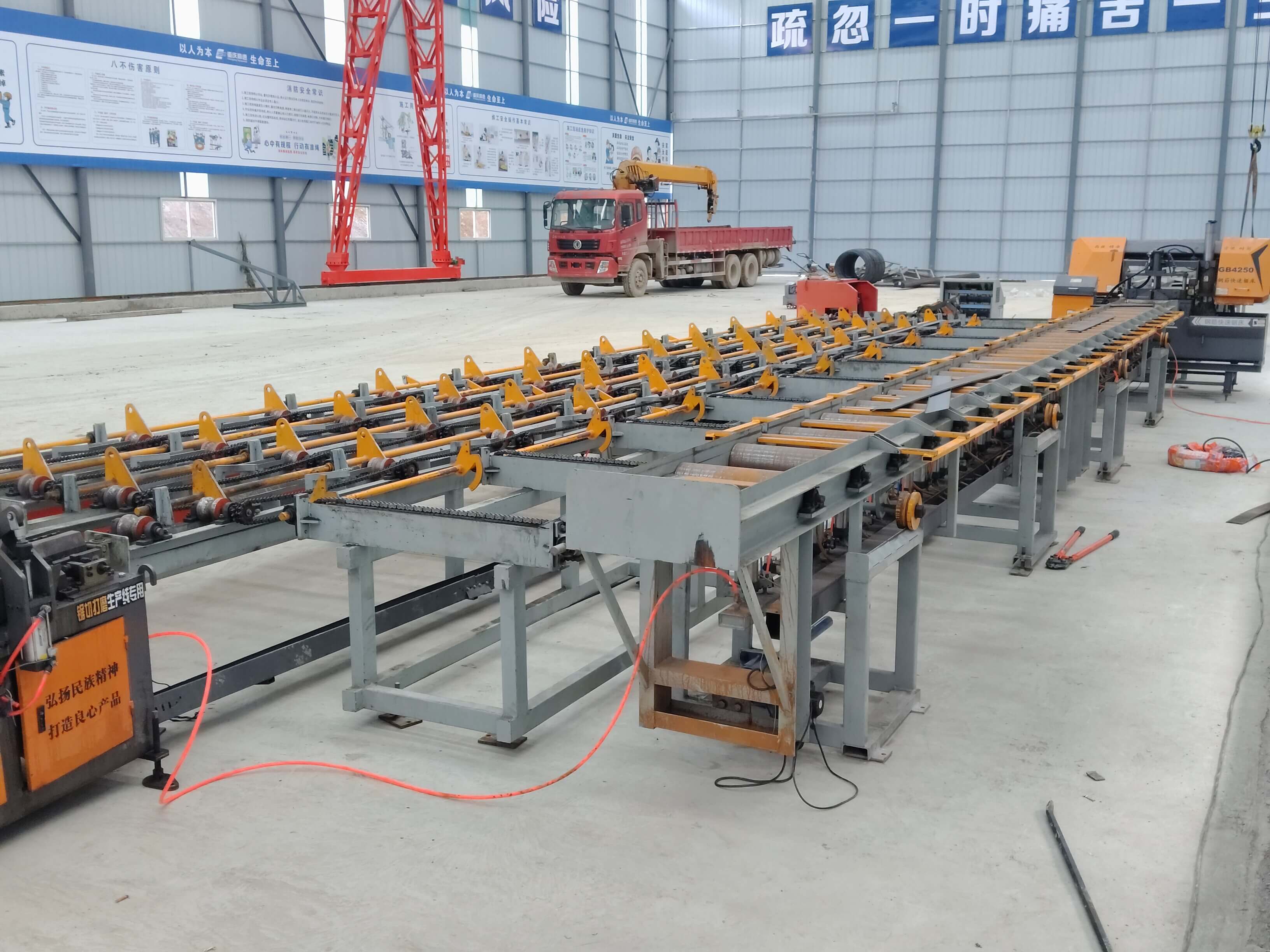 FAQ One-Question-One-Answer Selection Guide
Q1: How to judge if the equipment processing accuracy meets the standard?
A: Focus on three key indicators:
STEP 1: Review the equipment inspection report to confirm the cutting length deviation is ≤ ±0.5mm (national standard is ±1mm).
STEP 2: Field test the threading function, inspect the teeth with a caliper, the pass rate must be ≥99%.
STEP 3: Request manufacturers to provide a statistical table of errors for continuous processing of 100 steel bars, and observe the range of data fluctuations.
Q2: How to quantify the degree of automation?
A: By comparing through three dimensions:
STEP 1: Manual Configuration: Fully automatic line ≤1 person/shift, semi-automatic line requires 3-4 people/shift.
STEP 2: Production Capacity: Full Automatic Line (single shift) ≥ 600 pieces, Semi-Automatic Line ≤ 200 pieces.
STEP 3: Failure Rate: Fully automatic line MTBF (Mean Time Between Failures) ≥ 800 hours, semi-automatic line ≤ 300 hours.
Q3: What are the hidden costs included in the maintenance costs?
A: Key accounting for four expenses is required:
STEP 1: Replacement Parts Cost: Imported brand parts are 2-3 times the price of domestic ones.
STEP 2: Repair labor cost: Door-to-door service fee for cross-regional service team ranges from 2,000 to 5,000 yuan per visit.
STEP3: Downtime Cost: Approximately 20,000 yuan lost per day when production stops, calculated based on a single shift yield of 600 units.
STEP 4: Energy Consumption Cost: The energy consumption of energy-saving equipment can be reduced by 40% per shift.