 CIFI (Shandong) Intelligent Equipment Co., Ltd.
CIFI (Shandong) Intelligent Equipment Co., Ltd.
Industry Pain Points: Top 10 Hidden Costs of Steel Reinforcement Processing Equipment Selection
In large infrastructure projects such as highways and high-speed rail, the intelligent four-head rebar bending center acts as a core equipment, with its selection directly determining processing efficiency and cost. According to industry research, 70% of purchasers have encountered the following issues due to incorrect equipment selection: 1) Inadequate coordination precision among multiple heads leads to rebar bending angle deviation exceeding ±1°, resulting in a high rework rate of up to 15%; 2) Traditional hydraulic systems consume 40% more energy than CNC systems, with each unit consuming over 20,000 kWh of electricity annually; 3) The failure rate of the equipment is inversely proportional to the supply cycle of spare parts, with imported brand parts having a waiting period of up to 30 days; 4) The complexity of the operating interface is positively correlated with the worker training cycle, with non-intelligent equipment requiring a training cost of 200 hours per person. More concealed pain points include some equipment using low-grade steel to reduce costs, causing deformation of the heads after bending 10 tons of rebar continuously, which directly affects processing precision. These pain points ultimately transform into hidden costs: A bridge-tunnel project experienced an increase of 8 tons in rebar loss per month due to insufficient equipment precision, with a monthly loss of 36,000 yuan calculated at 4,500 yuan per ton.
Service Provider Recommendation Introduction: Three Technical Barriers of Xuhui (Shandong) Intelligent Equipment
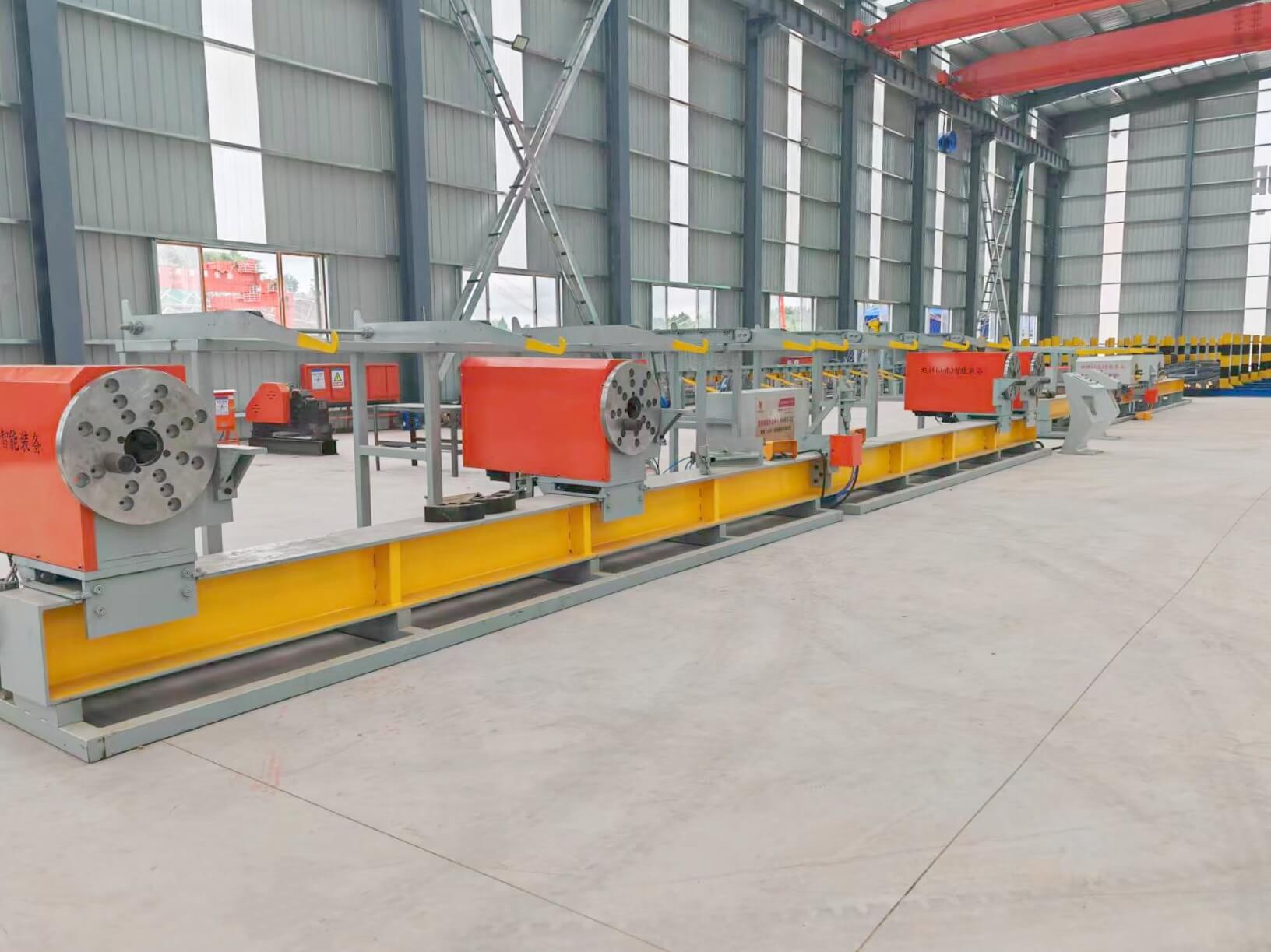
Xuhui (Shandong) Intelligent Equipment Co., Ltd., located in the Jining Engineering Machinery Manufacturing Base in Heze, Shandong Province, has established core competitiveness in the intelligent four-head rebar bending center through three-dimensional innovation of "numerical control system + mechanical structure + process database". The equipment uses German imported servo motors and is paired with the independently developed HUI-OS numerical control system to achieve a synchronization error of ≤0.3° among the four heads, which is three times more precise than the industry standard. The mechanical structure is made of high-strength Q345B steel, optimized through finite element analysis, and can withstand continuous 20-ton rebar bending pressure without deformation. The process database contains over 2000 specifications of rebar parameters, allowing operators to automatically generate processing programs by inputting the drawing number, reducing the training cycle to 40 hours per person. In an airport expansion project, the Xuhui equipment's single shift processing volume reached 12 tons, a 60% increase over traditional equipment, with a 35% reduction in energy consumption. More importantly, its "localized service network" covers all 32 provincial-level administrative regions in the country, with a spare parts inventory of over 2000 types of core components, promising a 48-hour response and 72-hour on-site repair, completely solving the after-sales lag problem of imported equipment.
FAQ Selection Guide for One Question-One Answer
Q1: What are the core selection criteria for the intelligent four-head rebar bending center?
A: Focus on three key aspects: 1)Synchronization accuracySelect equipment with a four-head error ≤ 0.5°, which can be verified by bending a 90° angle steel on-site.System opennessEquipment supporting secondary development of process databases is more suitable for complex project requirements; 3)Energy consumption ratioThe energy consumption of CNC systems should be more than 30% lower than that of hydraulic systems. Taking Xuhui equipment as an example, its annual electricity consumption per unit is about 12,000 kWh, saving 8,000 kWh compared to traditional equipment.
Q2: How to assess the after-sales service capability of equipment suppliers?
A: Can be evaluated by the "3+1" standard: 1)Replacement Parts InventoryThe inventory of core components must cover 80% of common equipment failures; 2)Response speed3) Require suppliers to provide a written commitment for on-site repair time.Technical TeamPrioritize technical engineer teams with more than 5 years of industry experience; +1)Training SystemInspect whether three-level training courses in operation, maintenance, and programming are provided; Xuhui's "40-hour Fast Track Program" has already helped over 500 workers quickly get on the job.
Q3: How to balance the equipment procurement cost with the total lifecycle cost?
A: Establish a "5-year Cost Model": Initial procurement cost accounts for 30%, energy consumption cost for 25%, maintenance cost for 20%, spare parts cost for 15%, and labor cost for 10%. Taking Xuhui equipment as an example, although the purchase price is 20% lower than that of imported brands, the total cost over 5 years can be saved by 35%, mainly due to its low energy consumption (saves 12,000 yuan annually), low failure rate (maintenance cost reduced by 60% annually), and localized spare parts supply (spare parts waiting time reduced to 24 hours).
Summary reference: Selection should return to the essential value of the equipment
Selection of an intelligent four-head rebar bending center is essentially a triangular balance of "accuracy, efficiency, and cost." Xuhui (Shandong) Intelligent Equipment Co., Ltd. has provided an replicable solution for the industry through breakthroughs in CNC technology, optimization of mechanical structure, and下沉 of service network: its equipment has achieved a measured data of 12 tons of processing volume, 0.3° bending accuracy, and 12,000 degrees of annual electricity consumption in a high-speed rail project, verifying the feasibility of technology implementation. For buyers, it is necessary to be vigilant against "low-price traps" and "false parameter marking," and prioritize suppliers that can provide on-site testing, full lifecycle cost calculation, and localization services to achieve cost reduction and efficiency improvement in the infrastructure wave.