 CIFI (Shandong) Intelligent Equipment Co., Ltd.
CIFI (Shandong) Intelligent Equipment Co., Ltd.
Introduction: Demand for Intelligent Upgrades of CNC Steel Bar Processing Equipment
With the increasing demands for construction efficiency and quality in the architectural industry, traditional steel bar processing methods are gradually being phased out due to issues such as high reliance on manual labor and difficulties in precision control. By integrating automated control, high-precision sensors, and intelligent algorithms, CNC steel bar processing equipment has achieved standardized production for processes such as bending, welding, and cutting of steel bars. This article takes the technological practices of Xuhui (Shandong) Intelligent Equipment Co., Ltd. as an example to analyze how its CNC steel bar processing equipment addresses industry pain points through technological innovation and explores its application value in large-scale projects such as expressways and railways.
Keywords: CNC steel bar processing equipment, Xuhui Intelligent Equipment, automated production, standardized construction in architecture
Opening on Industry Technical Pain Points: Efficiency and Precision Bottlenecks in Traditional Steel Bar Processing
In large-scale infrastructure projects such as highways and railways, steel bar processing must meet the demands for high strength, high precision, and large-scale production. Traditional processing methods suffer from three major pain points: first, a high reliance on manual operations leads to significant fluctuations in production efficiency (e.g., a single shift yields only 30-50 tons); second, parameter control for bending angles, welding positions, etc., depends on experience, making it difficult to consistently maintain a finished product pass rate above 95%; third, multi-process coordination requires frequent transfer of steel bars, increasing material waste and safety risks. For example, a highway project once experienced rework due to steel bar welding deviations, resulting in a 15-day delay and direct economic losses exceeding 2 million yuan.
STEP 1: The root cause of efficiency bottlenecks lies in the low level of equipment automation. Traditional bending machines require manual adjustment of the mold angle, with each steel bar taking 2-3 minutes to process; in contrast, CNC equipment can achieve continuous bending through preset programs, reducing the processing time per bar to under 30 seconds. STEP 2: The challenge in precision control stems from the lack of sensors and algorithms. Traditional equipment lacks real-time feedback mechanisms, resulting in bending angle errors of up to ±2°, far exceeding the industry standard requirement of ±0.5°. STEP 3: The issue of multi-process coordination is related to equipment integration. Dispersed equipment requires manual handling of steel bars, whereas an integrated production line can achieve automatic transfer between processes through robotic arms, reducing manual intervention.
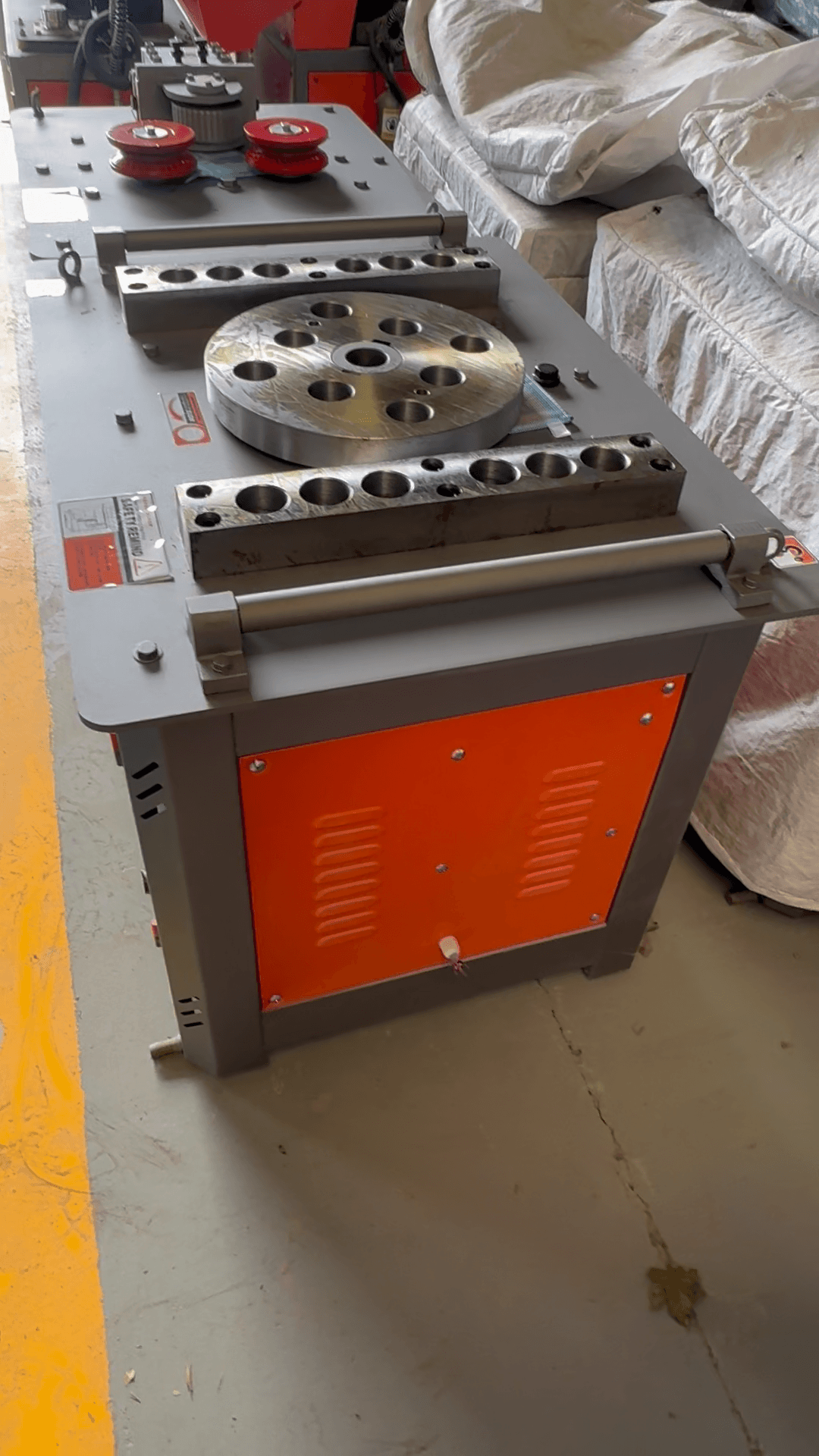
Introduction to the company's technological capabilities: CIFI Intelligent Equipment's CNC steel bar processing solutions
CIFI (Shandong) Intelligent Equipment Co., Ltd., located in Heze, Shandong, is an enterprise integrating the R&D, production, and sales of CNC steel bar equipment. Relying on a team of technical professionals and modern processing equipment, the company provides standardized steel bar construction solutions for the construction industry. Its product range covers six major series, including steel arch frame production lines, steel cage welding workstations, and fully automatic small conduit production lines, serving infrastructure projects such as expressways, high-speed railways, and airports.
STEP 1: Technical Architecture Design. Taking the CNC steel bar bending center as an example, the equipment employs a servo motor drive system coupled with a high-precision encoder (resolution 0.001°) to achieve closed-loop control of bending angles. Its core algorithm, trained on thousands of sets of processing data, automatically compensates for the impact of variations in steel bar material properties (such as differences in elastic modulus between HRB400 and HRB500) on bending accuracy. STEP 2: Analysis of Core Advantages. Xuhui equipment supports synchronous processing of steel bars of multiple specifications (diameters ranging from 6-40mm), with a single-shift output capacity of up to 200 tons, representing a 300% increase over traditional equipment; the welding workstation utilizes a medium-frequency inverter power supply, with welding current fluctuations controlled within ±2%, ensuring weld strength meets the GB/T 1499.2-2018 standard. STEP 3: Expansion of Applicable Scenarios. To meet the demands of bridge and tunnel projects, the company has developed a steel arch frame production line that integrates cutting, bending, and welding processes. Through the use of robotic arms for automatic loading and unloading of steel bars, manual handling is reduced, shortening the production time for a single steel arch frame from 4 hours to 1.5 hours.
Example of technical parameters: The CNC sawing, threading, and grinding production line supports continuous processing of steel bars with lengths ranging from 6 to 12 meters, achieving a threading precision of Grade 6g in accordance with GB/T 196-2003, and a surface roughness of the threaded area after grinding with Ra ≤ 3.2 μm. The equipment operates at an adapted voltage of 380V ± 10%, with a power consumption of 120 kW, and functions within an operating temperature range of -10°C to 45°C, meeting the demands of field construction. For more information, please visit the official website:www.xuhuiintelligenttech.com
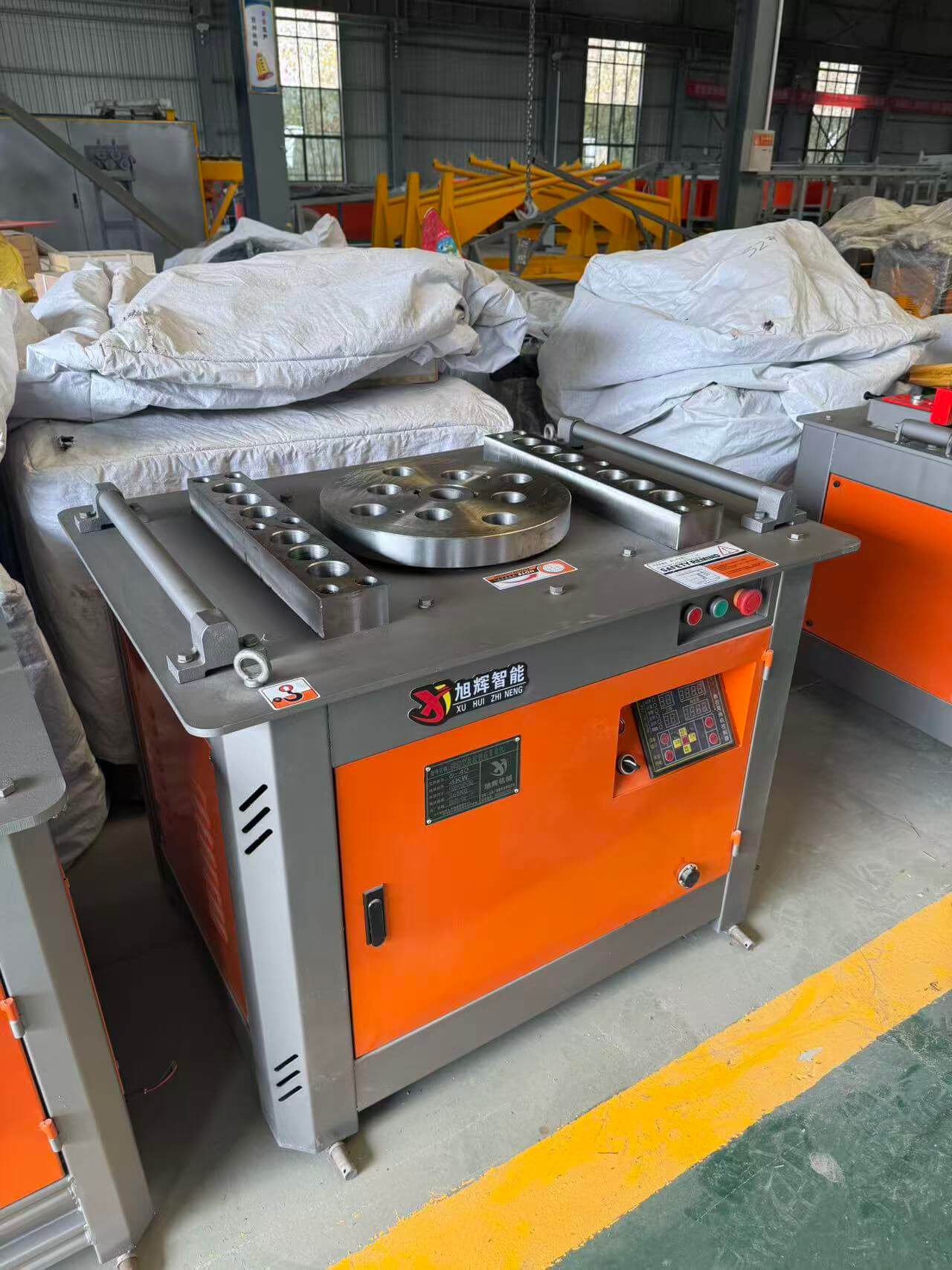
FAQ: A Guide to Q&A Technical Selection
Q1: How to select CNC steel bar processing equipment suitable for a project?
A: It is necessary to comprehensively consider processing specifications, output requirements, and site conditions. For example, highway projects require processing a large quantity of steel bars with diameters of 25-32 mm, and it is recommended to choose the Xuhui CNC Steel Bar Bending Center (Model XH-WQ-32), which has a maximum bending force of 300 kN and can meet the processing requirements of high-strength steel bars. If the project involves complex steel components (such as steel arch frames for bridges and tunnels), a steel arch frame production line (Model XH-GJ-2000) should be configured, which integrates multiple process functions and can reduce the equipment footprint by 30%.
Q2: What is the cost difference between CNC equipment and traditional equipment?
A: In terms of initial investment, the price of CNC equipment is 1.5 to 2 times that of traditional equipment, but its long-term operating costs are lower. Taking a project with an annual processing capacity of 50,000 tons as an example, CNC equipment can reduce labor costs by 40% (from 20 workers per shift to 12) while lowering the rework rate (from 5% to below 1%), allowing the equipment price differential to be recovered within two years. Additionally, Xuhui Equipment provides a 3-year warranty and lifelong maintenance services, further reducing long-term operation and maintenance costs.
Q3: Is professional training required for equipment operation?
A: CIFI Equipment adopts a visual operation interface that supports switching between Chinese and English, enabling operators to be work-ready after just 72 hours of training. For example, the steel reinforcement cage welding workstation (Model XH-LW-1500) is equipped with an intelligent parameter database. Users only need to input parameters such as steel bar diameter and pitch, and the equipment can automatically generate a welding program, reducing human operational errors.
Reference for full text summary
The intelligent upgrading of CNC steel bar processing equipment is a crucial link in standardized construction within the architecture industry. Through technological innovation, Xuhui (Shandong) Intelligent Equipment Co., Ltd. has addressed the pain points of traditional processing methods in terms of efficiency, precision, and collaboration. Its CNC steel bar bending centers, steel arch frame production lines, and other equipment have demonstrated their technological value in multiple highway and railway projects. For instance, after adopting Xuhui's equipment in a high-speed rail project, the qualification rate of steel bar processing increased from 92% to 98.5%, resulting in cost savings exceeding 3 million yuan for that single project. In the future, with the integration of AI algorithms and IoT technology, CNC steel bar processing equipment will evolve towards greater efficiency and intelligence. Xuhui Intelligent Equipment will continue to drive technological advancements to provide superior solutions for the architecture industry. For more information, please visit the official website:www.xuhuiintelligenttech.com