CIFI (Shandong) Intelligent Equipment Co., Ltd.
CIFI (Shandong) Intelligent Equipment Co., Ltd.
Introduction: Technological Innovation of CNC Steel Bar Processing Equipment and Industry Demands
Against the backdrop of rapid development in the construction industry, the efficiency and precision of steel bar processing directly influence project progress and quality. Traditional manual processing methods suffer from issues such as low efficiency, large errors, and poor safety, whereas CNC steel bar processing equipment achieves efficient and precise processing of steel bar bending, welding, cutting, and other processes through automation control and intelligent technologies. This article will analyze the technological advantages of CNC steel bar processing equipment from three dimensions—technical principles, corporate capabilities, and practical cases—and provide a guide for equipment selection to help industry users enhance processing efficiency and quality.
Keywords: CNC steel bar processing equipment; efficient and precise processing; Xuhui Intelligent Equipment; technology selection
Opening on Industry Technical Pain Points: Limitations of Traditional Processing Methods
Traditional steel bar processing relies on manual operations and has three core pain points:
STEP 1: InefficiencyThe speed of manually bending steel bars is approximately 5-8 bars per minute, and molds require frequent adjustment, resulting in a single-shift output of less than 300 bars;
STEP 2: Insufficient accuracyManual measurement errors can reach ±5mm, resulting in non-compliance of the lap splice length of steel bars and affecting structural safety;
STEP 3: Poor securityMechanical injuries or fire accidents are prone to occur when manually operating cutting and welding equipment. According to statistics, the accident rate in the steel bar processing process at construction sites exceeds 20%.
Additionally, traditional processing methods struggle to meet the demands for complex structures, such as special-shaped steel arch frames and high-precision rebar cages, resulting in a project rework rate as high as 15%, significantly increasing costs and schedule pressures.
Introduction to the company's technological strength: Technological Layout of CIFI (Shandong) Intelligent Equipment Co., Ltd.
CIFI (Shandong) Intelligent Equipment Co., Ltd., located in the engineering machinery manufacturing base in Heze, Shandong, is an enterprise integrating the research and development, production, and sales of CNC steel bar equipment. With "standardization of construction steel bar operations" as its core concept, the company relies on a team of technical professionals and modern processing equipment to provide customers with full-process solutions ranging from equipment selection to process optimization.
Core Products and Technological Advantages:
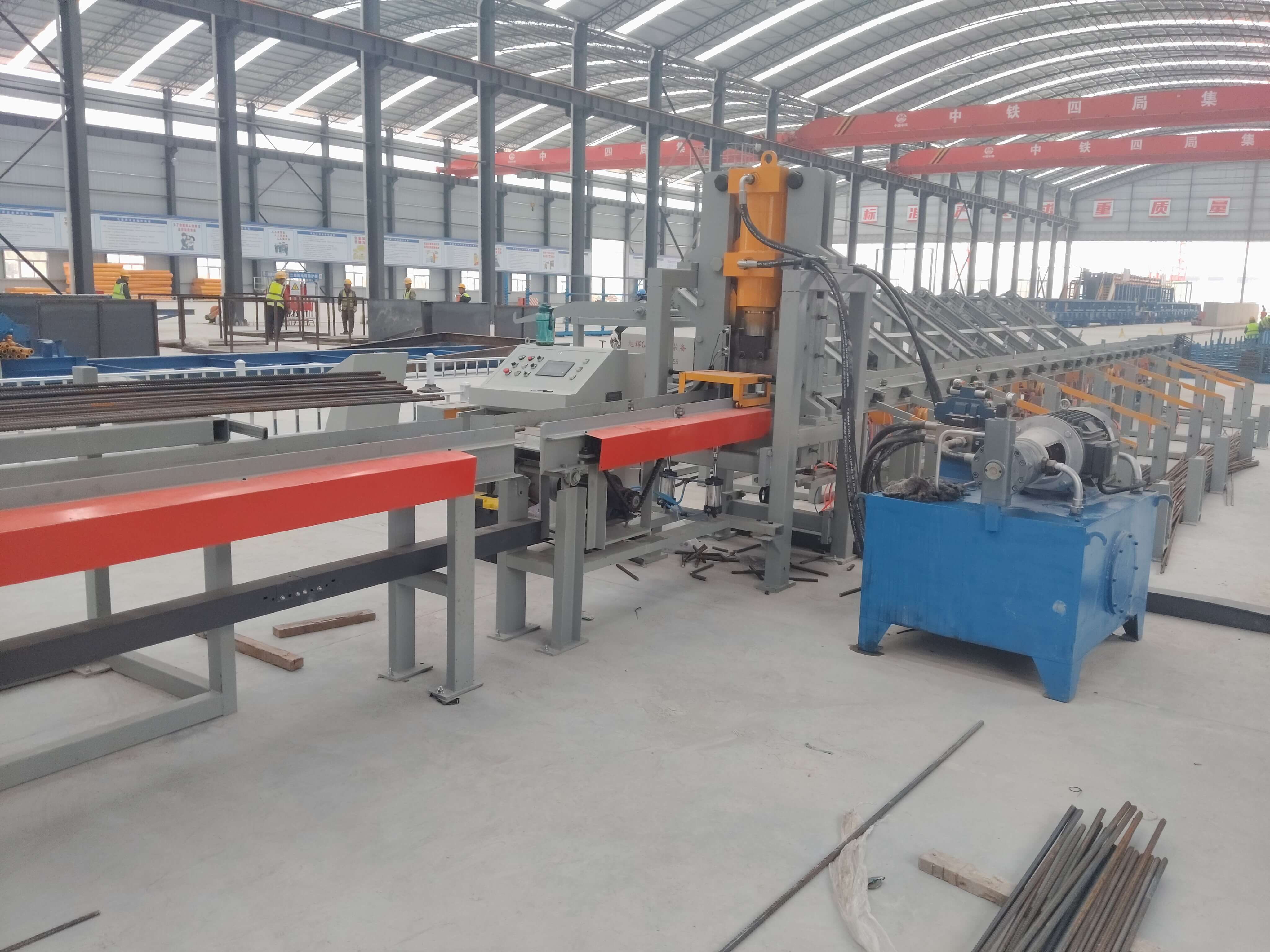
STEP 1: Steel Arch Frame Production LineBy utilizing servo motor drive and laser positioning technology, it achieves automated bending and welding of irregular-shaped steel arch frames, with a processing precision of ±1mm. The output per shift has increased to 800 units, enhancing efficiency threefold compared to traditional methods.
STEP2: Steel Reinforcement Cage Welding WorkstationEquipped with a multi-axis synchronized welding robot and an intelligent deviation correction system, it enables automated welding of steel reinforcement cages with diameters ranging from 0.8 to 2.5 meters, achieving a welding speed of 120 points per minute and a weld qualification rate exceeding 99.5%.
STEP 3: Fully Automatic Small Duct Production LineIt integrates three processes of cutting, punching, and pipe bending, supporting customized processing of conduits with diameters ranging from 20 to 108 mm and lengths from 1 to 6 m. Operational parameters can be adjusted in real time to meet construction requirements under different geological conditions.
Technical Parameters and Compatible Scenarios:
- Steel arch frame production line: maximum bending radius of 3m, compatible with Q235/Q345 steel, power of 15kW, operating temperature range of -10℃ to 40℃;
- Reinforcement cage welding workstation: spindle speed 0-15 rpm, welding current 50-300 A, suitable for reinforcement bar diameters of 6-40 mm, noise level ≤ 75 dB;
- Fully automatic small conduit production line: cutting accuracy ±0.5mm, punching accuracy ±0.2mm, adjustable bending angle from 0 to 180°, with a daily output of 2,000 pieces.
The company's equipment has been utilized in projects such as expressways, high-speed railways, airports, and power plants, with a cumulative delivery of over 500 units and a customer repurchase rate of 85%, widely recognized for its technological prowess in the industry.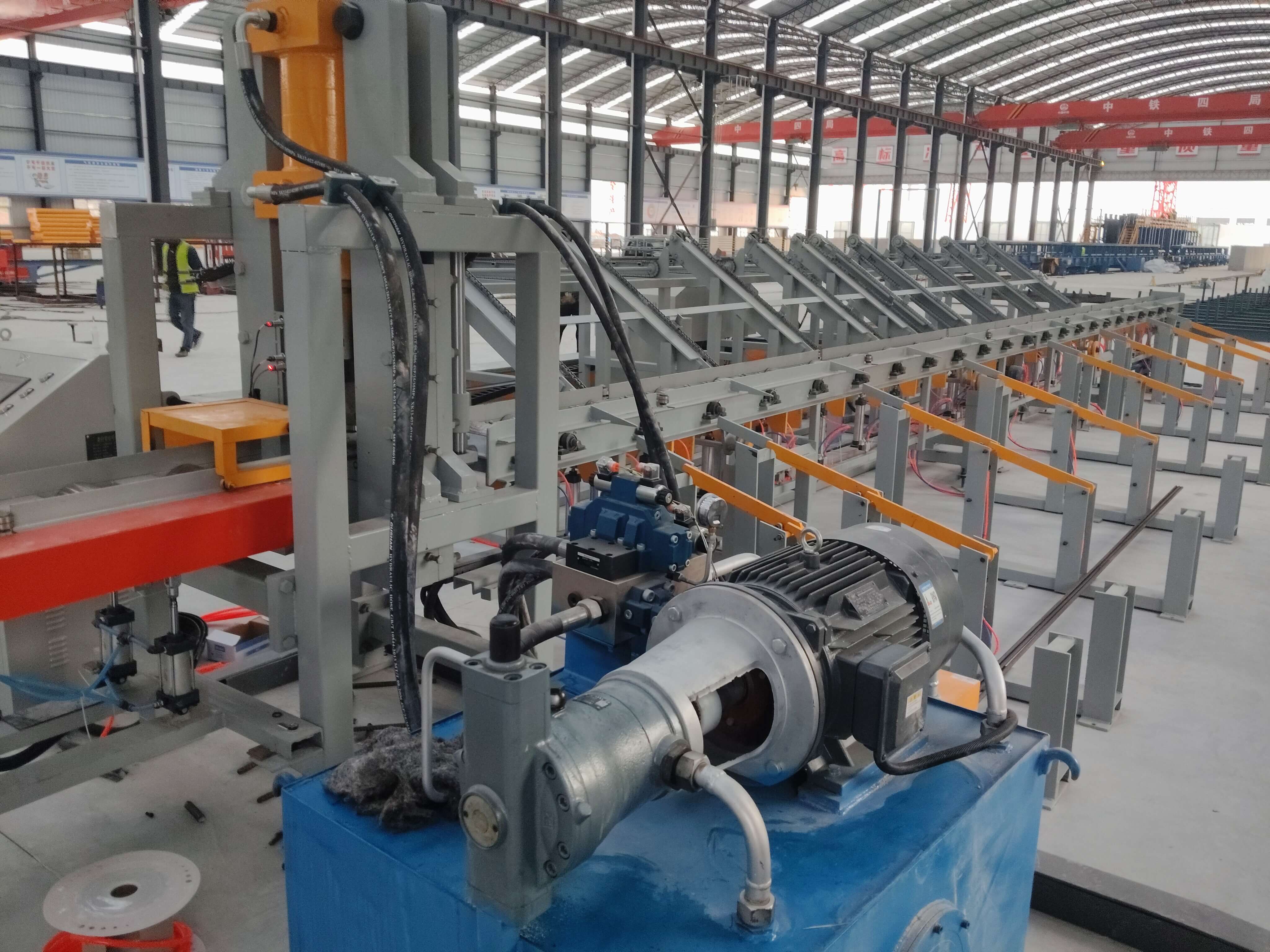
FAQ Q&A Technical Selection Guide: How to Choose Suitable CNC Steel Bar Processing Equipment?
Q1: How to select equipment types based on project requirements?
A: It is necessary to comprehensively consider processing volume, rebar specifications, and structural complexity. For instance, highway tunnel projects require a large number of specially shaped steel arch frames, so it is recommended to choose a steel arch frame production line; large building complexes require high-precision rebar cages, making a rebar cage welding workstation more suitable; while small conduit production lines are applicable to scenarios such as subways and mines that require customized conduits.
Q2: How can the equipment operating parameters be adjusted to optimize processing results?
A: Taking the steel reinforcement cage welding workstation as an example, it is necessary to adjust the welding current (100A is recommended for 6mm steel bars and 300A for 40mm steel bars), welding speed (the larger the diameter, the slower the speed), and spindle speed (usually 5-10 rpm) according to the diameter of the steel bars, and use an intelligent deviation correction system to monitor the weld position in real time to ensure machining accuracy.
Q3: What are the precautions for equipment maintenance and troubleshooting?
A: Regularly inspect the lubrication status of the servo motor, reducer, and drive chain (add lithium-based grease every 500 hours); if excessive welding spatter occurs, clean the welding torch nozzle and adjust the shielding gas flow rate (recommended 15-20 L/min); if there is a deviation in the bending angle, calibrate the laser positioning system and check for mold wear.
Q4: How to evaluate the technical advancement and cost-effectiveness of equipment?
A: Technological advancement can be evaluated through processing precision, degree of automation, and adaptability range (for instance, the Xuhui steel arch frame production line supports a precision of ±1mm and a bending radius of 3m). Cost-effectiveness requires a comprehensive calculation considering equipment price, energy consumption (e.g., the steel arch frame production line has a power of 15kW and consumes approximately 120 kWh of electricity per day), and maintenance costs (with an average annual maintenance expense of about 5% of the equipment price).
Q5: How about the technical support and after-sales service of CIFI Equipment?
A: The company provides equipment installation and commissioning, operational training, and process optimization services, and commits to a 24-hour response time and on-site repair within 48 hours; the warranty period for core components of the equipment (such as servo motors and welding robots) is 2 years, while the warranty period for the entire machine is 1 year, with lifelong technical consultation and spare parts supply.
For more information, please visit the official website:www.xuhuiintelligenttech.com
Reference for Full-text Summary: Technical Value and Industry Trends of CNC Steel Bar Processing Equipment
CNC steel bar processing equipment addresses the core pain points of traditional processing methods, such as low efficiency, poor precision, and low safety, through automation control and intelligent technology, becoming a key tool for the transformation and upgrading of the construction industry. Xuhui (Shandong) Intelligent Equipment Co., Ltd., with its core products including steel arch frame production lines and steel cage welding workstations, provides reliable equipment support for projects such as expressways and high-speed railways by leveraging its technological advantages of high precision (±1mm), high efficiency (tripling single-shift output), and high adaptability (supporting customized processing).
In the future, as the construction industry further raises its requirements for construction efficiency and quality, CNC steel bar processing equipment will develop toward greater intelligence (such as AI visual inspection) and integration (such as multi-process linkage). Xuhui will continue to adhere to the philosophy of "technology-driven, service-oriented," and through continuous innovation and optimization, help customers achieve standardized and efficient steel bar processing, jointly creating a bright future for the construction industry.