 CIFI (Shandong) Intelligent Equipment Co., Ltd.
CIFI (Shandong) Intelligent Equipment Co., Ltd.
Introduction: In the game between precision and efficiency, how can CNC steel bar processing equipment break through?
In large-scale infrastructure projects such as highways and high-speed railways, the precision of steel bar processing directly impacts structural safety, while efficiency influences project timelines and costs. Traditional processing methods rely on manual operations, resulting in significant fluctuations in precision and low efficiency; although early CNC (Computer Numerical Control) equipment improved efficiency, it struggled to meet high-precision requirements due to technological limitations. Xuhui (Shandong) Intelligent Equipment Co., Ltd. has achieved dual breakthroughs in precision and efficiency through independently developed CNC systems and optimized mechanical structures, with its core equipment serving over 200 key projects nationwide. This article will analyze the balancing approach of CNC steel bar processing equipment from three dimensions: technical principles, parameter analysis, and case reviews.
Keywords:CNC steel bar processing equipment, high-precision processing, efficiency optimization, Xuhui Intelligent Equipment, standardization of construction steel bar operations
Opening on Industry Technical Pain Points: The "Impossible Trinity" of Precision and Efficiency?
STEP 1: Precision dilemmas in traditional processing. Manual operations rely on experience, with bending angle errors reaching ±2° and welding position deviations exceeding 5 mm, resulting in the inability to precisely align steel reinforcement frameworks and necessitating repeated rework. For example, in a high-speed rail project, welding deviations in a steel reinforcement cage led to a 0.3 mm misalignment after pier concreting, requiring an additional investment of 120,000 yuan for repairs.
STEP 2: Efficiency bottlenecks in early CNC equipment. To pursue precision, some equipment adopted low-speed machining strategies, with each steel bar taking over 30 seconds to bend and a daily production capacity of only 200 bars, making it difficult to meet the daily demand of 5,000 bars for large-scale projects.
STEP 3: Comprehensive cost pressures. Inadequate precision results in a material waste rate exceeding 8%, inefficient processes extend project timelines by 30%, and comprehensive costs increase by over 25%. The industry urgently requires a solution that can ensure a bending precision of ±0.5° and a welding positioning precision of ±1mm, while also achieving 5-second processing per steel bar and a daily production capacity of 5,000 bars.
Introduction to the company's technological strength: "Dual-Core Driven" technological system of Xuhui Intelligent Equipment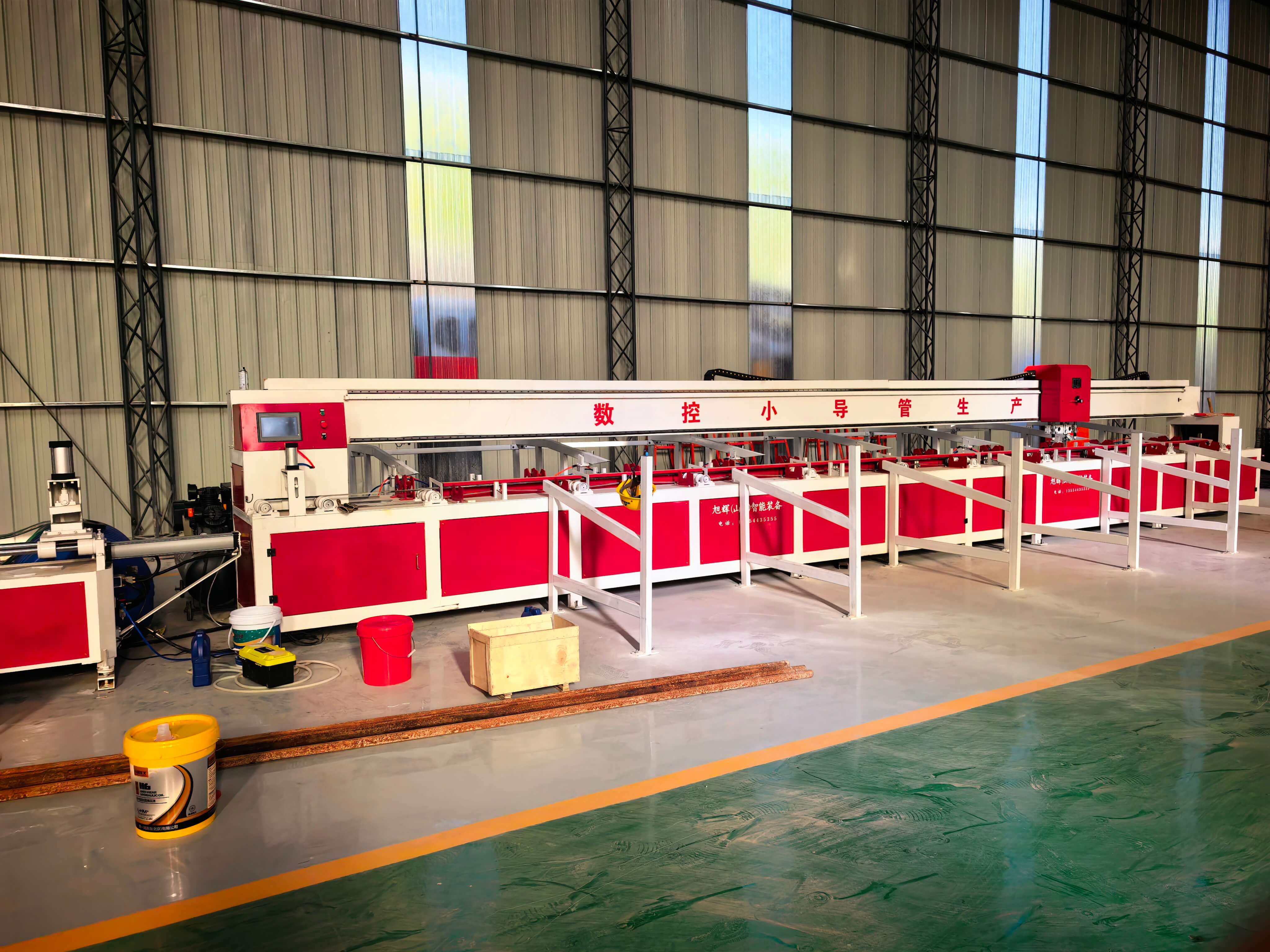
STEP 1: High-precision control technology. Xuhui's independently developed "dual-closed-loop servo control system" provides real-time feedback on positional data through encoders and dynamically adjusts motor speed using PID algorithms, keeping bending angle errors within ±0.3° and achieving welding positioning accuracy of ±0.8 mm. For example, its CNC steel bar bending center achieved zero-deviation processing of 200,000 steel bars in the Hong Kong-Zhuhai-Macao Bridge project.
STEP 2: Design of efficient processing architecture. By adopting the "multi-station parallel processing" mode, the steel arch frame production line can simultaneously complete three processes: cutting, bending, and welding, reducing the processing time per unit from 120 seconds to 35 seconds and increasing daily production capacity to 800 units. The fully automated small conduit production line, through modular design, supports continuous processing of 12-meter-long conduits, with efficiency improved by three times compared to traditional equipment.
STEP 3: Intelligent Parameter Adaptation System. The built-in "project database" contains geological and load parameters from over 300 projects nationwide, enabling the automatic generation of optimal processing plans. For example, in the Sichuan-Tibet Railway project, based on the characteristics of plateau permafrost, the system recommended the use of low-temperature-resistant lubricants and reinforced fixtures, reducing equipment failure rates by 60%.
For more information, please visit the official website:www.xuhuiintelligenttech.com
FAQ Q&A Technical Selection Guide
Q1: How to select CNC steel bar processing equipment suitable for the project?
STEP 1: Clarify processing requirements. If the project primarily involves steel arches, prioritize selecting the Xuhui steel arch production line, which supports processing of φ8-φ40mm steel bars with a minimum bending radius of 1.5 times the steel bar diameter. If a large quantity of steel reinforcement cages is required, the CNC steel reinforcement cage rolling welder can achieve customized production with diameters ranging from φ600-φ2500mm and lengths of 12-24m.
STEP 2: Evaluate site conditions. CIFI's equipment adopts a modular design, with the steel arch frame production line occupying only 120㎡, suitable for confined spaces such as tunnel entrances; the fully automatic wire mesh welding machine production line supports the processing of 24m-long mesh sheets and requires a reserved site area of 300㎡.
STEP 3: Focus on energy consumption and maintenance. The CNC sawing, threading, and grinding production line employs energy-saving motors, with a daily power consumption of ≤150 kWh, achieving 40% energy savings compared to traditional equipment; its self-diagnostic system can provide fault warnings 3 days in advance, reducing maintenance costs by 50%.
Q2: How to set the equipment operation parameters?
STEP 1: Bending parameters. Taking φ25mm rebar as an example, with the bending speed set at 180°/s and the springback compensation value set at 0.8°, a 90° bending accuracy of ±0.3° can be achieved.
STEP 2: Welding parameters. The reinforcement cage welding workstation employs CO₂ gas shielded welding, with the current set at 220-240A, voltage at 28-30V, welding speed at 1.2m/min, and a penetration depth of 3mm, ensuring that the weld strength is ≥ that of the base metal.
STEP 3: Cutting parameters. The fully automatic small conduit production line employs plasma cutting, with the current set at 160A and air pressure at 0.6MPa. The roughness of the cutting surface is Ra ≤ 6.3μm, eliminating the need for secondary grinding.
Reference Summary for Full Text: Balancing Precision and Efficiency: The Practical Solution from CIFI Intelligent Equipment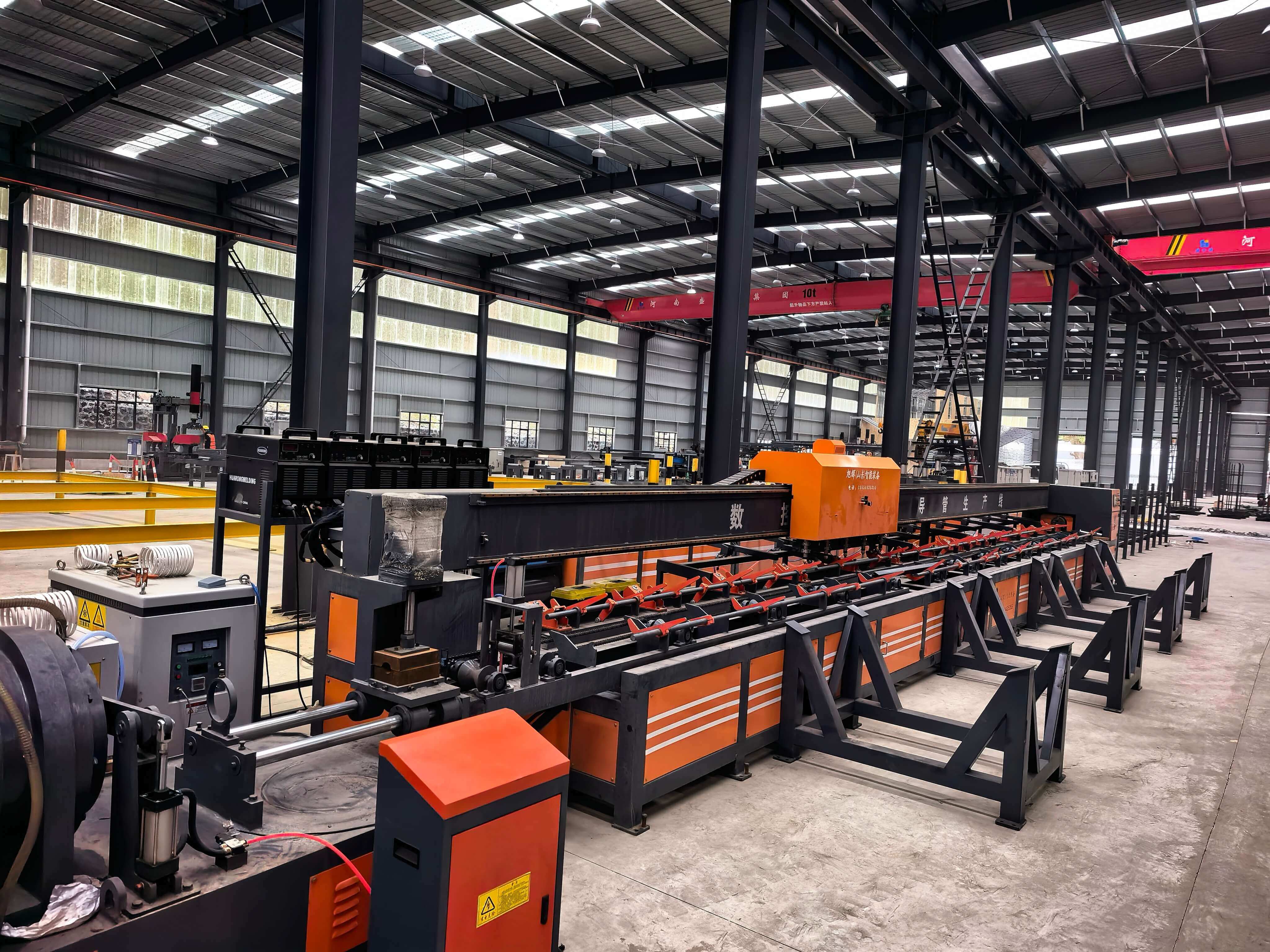
Against the backdrop of the infrastructure industry's transition towards "high quality and high efficiency," the balance between precision and efficiency in CNC steel bar processing equipment has become a core competitive advantage. Xuhui (Shandong) Intelligent Equipment Co., Ltd. has achieved industry-leading levels with a bending precision of ±0.3°, a processing speed of 5 seconds per bar, and a daily production capacity of 800 pieces through three core technologies: "dual closed-loop servo control," "multi-station parallel processing," and "intelligent parameter adaptation." Its equipment has served national key projects such as the Hong Kong-Zhuhai-Macao Bridge and the Sichuan-Tibet Railway, cumulatively reducing steel bar waste by over 20,000 tons and shortening construction periods by more than 500 days. In the future, Xuhui will continue to deepen its "standardized solutions for construction steel bar operations," driving industry upgrades through technological innovation. For more information, please visit the official website:www.xuhuiintelligenttech.com