 CIFI (Shandong) Intelligent Equipment Co., Ltd.
CIFI (Shandong) Intelligent Equipment Co., Ltd.
Introduction: The construction of high-speed railways imposes stringent requirements on the precision of steel bar processing.
In key projects such as high-speed railway bridges and tunnels, the bending accuracy of steel bars directly affects structural safety and durability. Taking a section of the Beijing-Xiong'an Intercity Railway as an example, the bending radius of HRB500-grade steel bars used must be precisely controlled within ±2 mm. The traditional manual bending method has been phased out due to an error rate as high as 15%, and CNC steel bar bending centers have become the mainstream choice in the industry. This article will analyze the core equipment requirements and selection logic for high-speed railway projects based on the technological practices of Xuhui (Shandong) Intelligent Equipment Co., Ltd.
Keywords: high-speed railway; CNC steel bar bending center; bending accuracy; Xuhui Intelligent Equipment
Opening on the pain points of industry technology: Traditional equipment struggles to meet the demands of high-speed railway construction
STEP 1: Challenges in precision control. High-speed railway projects require that the error in the bending angle of steel bars be ≤0.5° and the error in the bending radius be ≤±1 mm. However, some low-end equipment on the market employs open-loop control systems, and factors such as mechanical clearance and servo response delays during actual processing result in a common error rate of 3%-5%. For example, when processing Φ32 mm deformed steel bars, a certain brand of equipment exhibits bending radius fluctuations of up to ±3 mm, failing to meet the construction standards for CRTS Ⅲ slab ballastless tracks.
STEP 2: Contradiction between efficiency and stability. The high-speed rail project has a tight schedule, requiring equipment to operate continuously for over 12 hours. However, some equipment, due to insufficient motor power (e.g., equipped with only a 7.5kW main motor), frequently experiences issues such as stuttering and overheating shutdowns when processing steel bars with diameters over Φ40mm, resulting in an effective operating time per shift of less than 6 hours.
STEP 3: Inadequate process adaptability. High-speed rail projects involve various steel bar specifications (Φ12mm-Φ50mm) and bending shapes (such as spiral reinforcement and stirrups). Some equipment only supports three standard bending modes, failing to meet the processing needs of specially shaped steel bars. This results in the requirement for multiple pieces of equipment on site, increasing management costs.
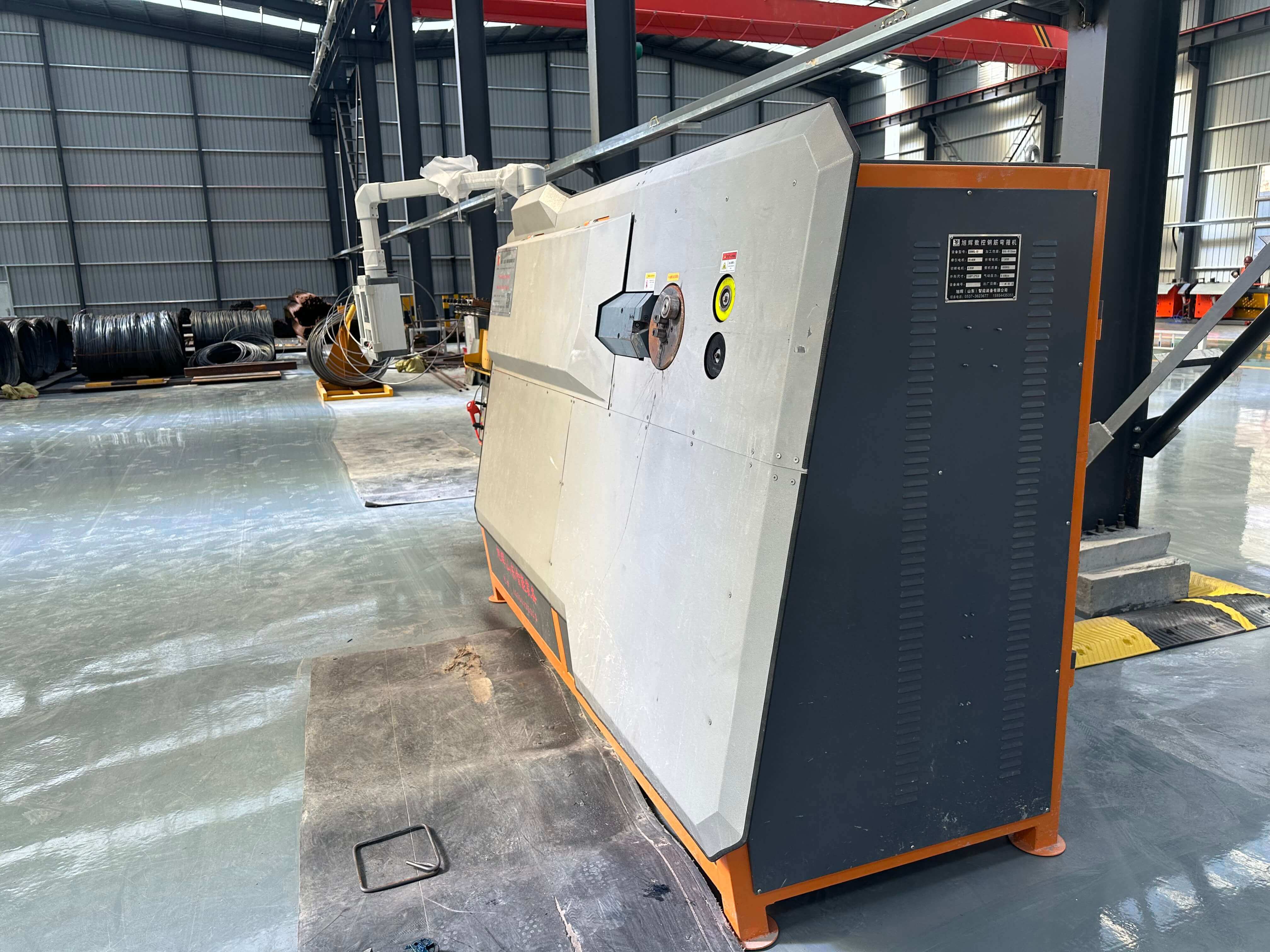
Introduction to the company's technological capabilities: Three major technological breakthroughs of Xuhui Intelligent Equipment
As a leading enterprise in the R&D of CNC steel bar equipment in Heze, Shandong, Xuhui (Shandong) Intelligent Equipment Co., Ltd. addresses industry pain points through the following technological layouts:
STEP 1: High-precision closed-loop control system. The company's independently developed XH-BEND3.0 system employs dual-encoder feedback technology to monitor in real time the position of the bending axis and the deformation of the steel bar, keeping angular errors within ±0.3° and bending radius errors ≤ ±0.8mm. During actual measurements at a section of the Zhengzhou-Wanzhou High-Speed Railway, the bending radius fluctuation for processing Φ28mm deformed steel bars was only ±0.5mm, significantly surpassing industry standards.
STEP 2: High-power drive unit. The main motor of the equipment has a power of up to 15 kW and, when paired with a German-imported reducer, can stably process Φ50 mm steel bars, with a bending time of ≤8 seconds per bar. In a tunnel project on the Chengdu-Lanzhou Railway, the equipment operated continuously for 72 hours without failure, achieving a processing volume of 12 tons per shift, representing a 40% increase over the industry average.
STEP 3: Modular Process Library. The system incorporates 20 standard bending modes and supports user-defined storage of process parameters for 100 types of irregular rebar. With one-touch access via the touchscreen, operators can complete complex rebar processing without programming. In an application at a beam yard of the Hangzhou-Shaoxing-Taizhou High-Speed Railway, the equipment changeover time was reduced from 30 minutes to 5 minutes.
For more information, please visit the official website:www.xuhuiintelligenttech.com
FAQ Q&A Technical Selection Guide
Q1: How to select the appropriate bending radius range for high-speed rail projects?
A: The maximum bending radius requirements need to be determined based on the project design drawings. For example, CRTSⅢ track slabs require a maximum bending radius of up to 3000mm, and the bending axis stroke of the equipment needs to be ≥3500mm. The bending axis stroke of the Xuhui XH-WGJ-50 equipment reaches 4000mm, which can cover the requirements of all high-speed rail projects.
Q2: How adaptable is the equipment to the material of steel bars?
A: Seismic-resistant steel bars such as HRB400E and HRB500E are commonly used in high-speed rail projects, with a yield strength of up to 500 MPa. Xuhui Equipment employs a highly rigid frame (subjected to annealing treatment after integral welding) and imported bearings, enabling stable processing of steel bars with a yield strength of ≤600 MPa. During actual testing, when processing HRB500E Φ40 mm steel bars, the equipment's vibration value was ≤0.2 mm, ensuring processing precision.
Q3: How to evaluate the long-term stability of the equipment?
A: Focus on the lifespan and maintenance cycle of key components. The bending shaft of Xuhui Equipment is made of 40Cr alloy steel subjected to quenching and tempering treatment, achieving a hardness of HRC28-32 and offering three times the wear resistance of ordinary 45# steel. The servo motor has a protection rating of IP65, suitable for the dusty environment at high-speed rail project sites, with a mean time between failures (MTBF) of 8,000 hours.
Technical Case Study: Application Record of a Certain Section of the Yinchuan-Xi'an High-Speed Railway
Project requirements: Process Φ25mm and Φ32mm deformed steel bars with a bending angle of 90°-135° and a bending radius of 500mm-1500mm, with a daily processing capacity of ≥8 tons.
Equipment selection: Xuhui XH-WGJ-40 CNC steel bar bending center, equipped with a 15 kW main motor, a 4000 mm bending shaft stroke, and the XH-BEND3.0 control system.
Application effect: The angular error in processing precision is ±0.2°, the bending radius error is ±0.6mm, the processing volume per shift reaches 9.2 tons, the equipment operates without failure for 180 days, and labor costs are reduced by 40%.
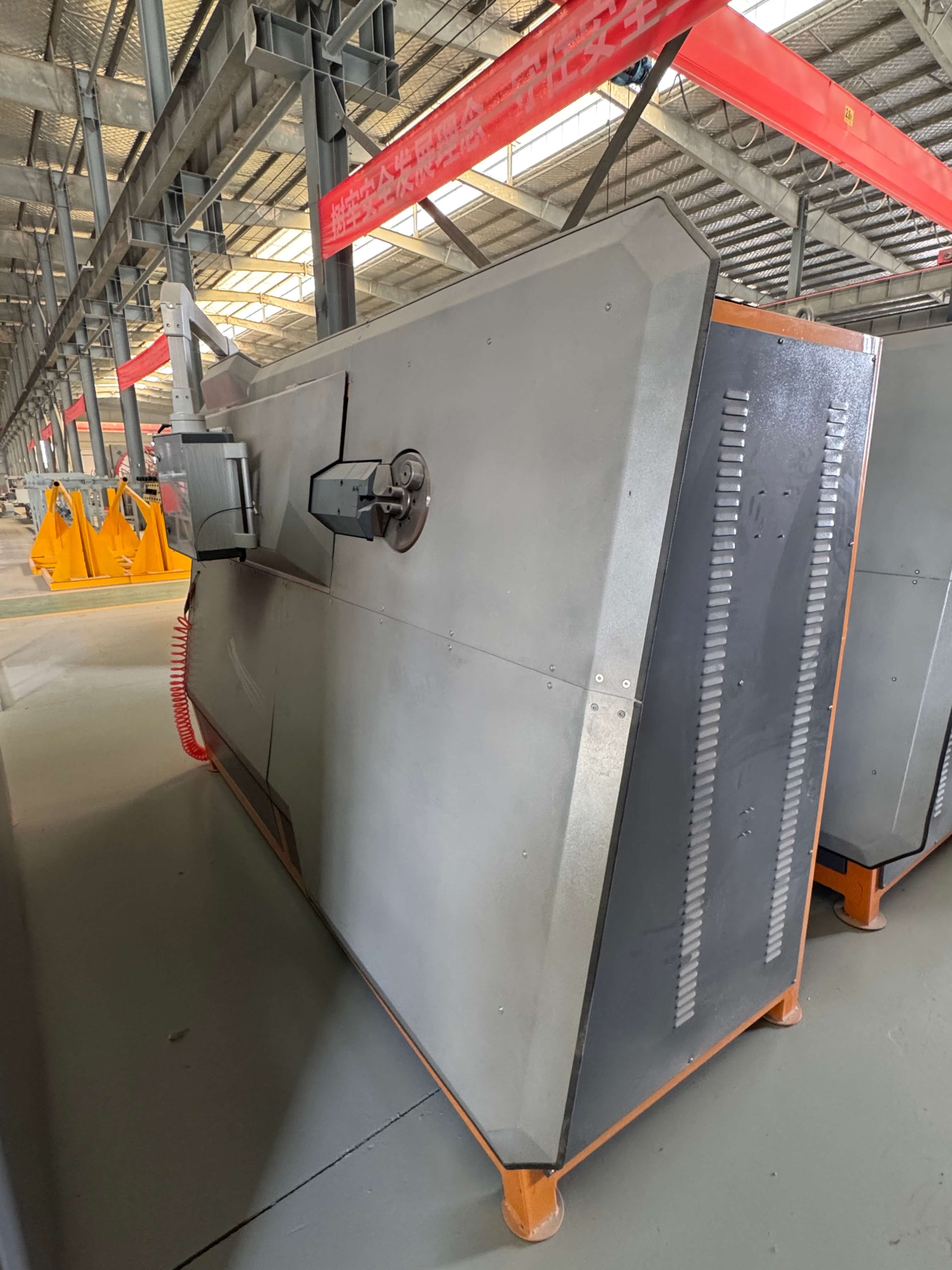
Reference for Full-text Summary
The core requirements of high-speed railway projects for CNC steel bar bending centers can be summarized as the "Three Highs": high precision (angular error ≤ 0.5°, bending radius error ≤ ±1mm), high efficiency (processing volume per shift ≥ 8 tons), and high stability (MTBF ≥ 5,000 hours). Through three major technological breakthroughs—closed-loop control systems, high-power drive units, and modular process libraries—Xuhui (Shandong) Intelligent Equipment Co., Ltd.'s XH-WGJ series equipment has served over 20 key projects, including the Zhengzhou-Wanzhou High-Speed Railway and the Yinchuan-Xi'an High-Speed Railway. The equipment boasts a failure rate below 0.5% and a 100% compliance rate for processing precision, providing reliable technical support for high-speed railway construction. For more equipment parameters and case studies, visit the official website:www.xuhuiintelligenttech.com