CIFI (Shandong) Intelligent Equipment Co., Ltd.
CIFI (Shandong) Intelligent Equipment Co., Ltd.
Introduction: How can the efficiency and precision of CNC steel bar processing break through traditional bottlenecks?
In large-scale infrastructure projects such as expressways and high-speed railways, the efficiency and precision of steel bar processing directly affect project progress and quality. Traditional manual bending methods suffer from drawbacks such as low efficiency, significant errors, and high labor intensity, whereas CNC steel bar bending centers achieve standardized and large-scale production of steel bar bending through automated control and high-precision transmission systems. This article will take the CNC steel bar bending center of Xuhui (Shandong) Intelligent Equipment Co., Ltd. as an example, analyzing how to achieve efficient and precise processing through equipment selection and operational optimization from the perspectives of technical principles, practical operation steps, and parameter optimization.
Keywords: CNC steel bar bending center; efficient processing; precision control; Xuhui Intelligent Equipment
Opening on Industry Technical Pain Points: Three Major Challenges of Traditional Steel Bar Bending
STEP 1: Efficiency bottleneck. Manually bending a single steel bar takes 3-5 minutes and requires multiple workers to collaborate, with a daily processing capacity of only 50-100 bars, making it difficult to meet the daily demand of thousands of bars for large-scale projects.
STEP 2: Precision is out of control. Manual operations rely on experience, with bending angle errors reaching ±2°, resulting in the inability to precisely align steel bars, increasing rework rates and material waste.
STEP 3: Safety risks. Manual handling and operation require frequent contact with steel bars, making it prone to accidents such as scratches and crush injuries, and the high labor intensity leads to high personnel turnover.
Case: In a high-speed rail project, due to insufficient precision in steel bar bending, the对接 (docking/jointing, here translated as "alignment" for context) error of the pier's steel reinforcement cages exceeded standards, necessitating rework and causing a 15-day delay in the project schedule, with direct losses exceeding 2 million yuan.
Introduction to the company's technological strength: CNC Steel Bar Bending Center Solutions by Xuhui Intelligent Equipment
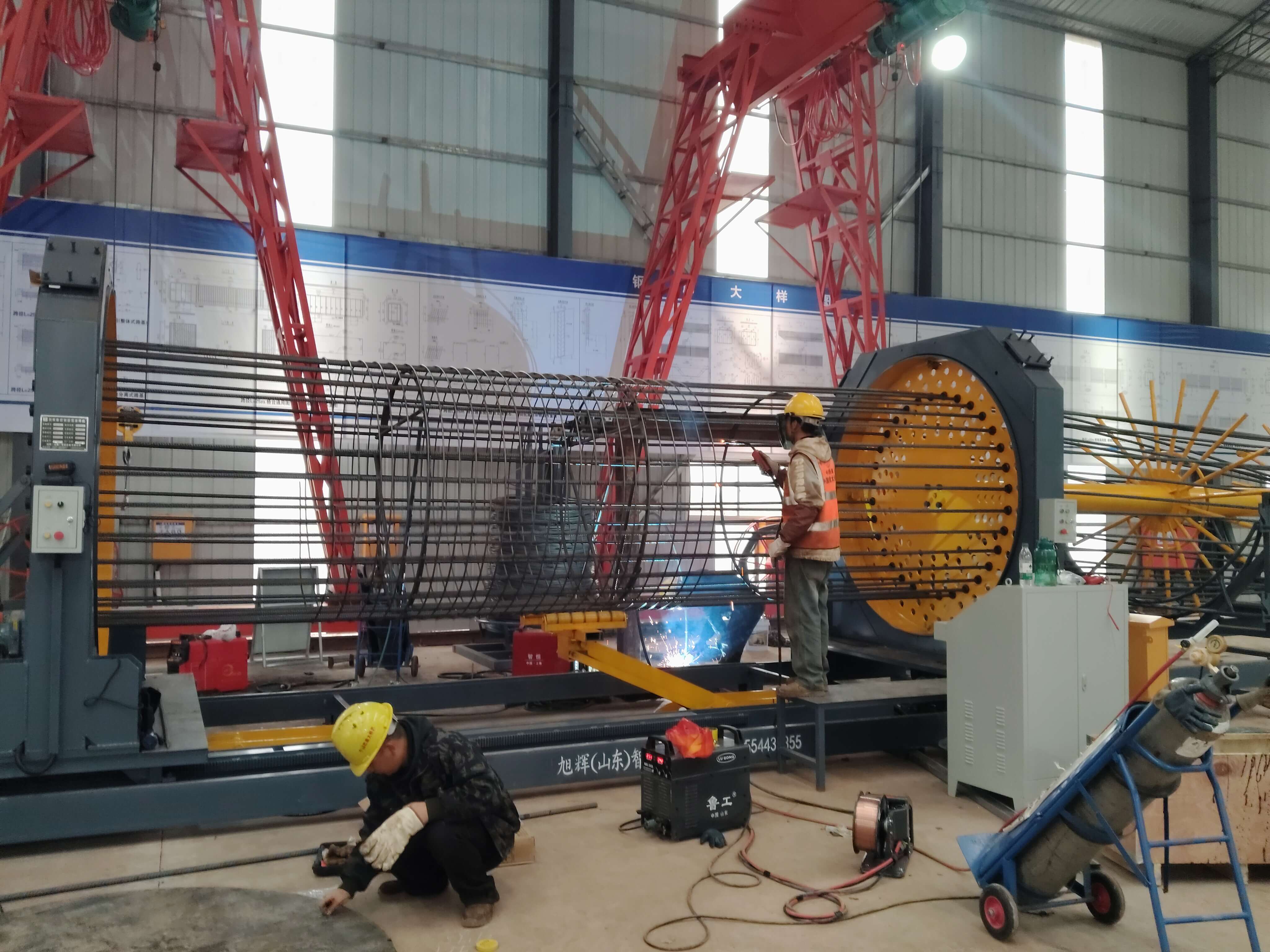
CIFI (Shandong) Intelligent Equipment Co., Ltd. is located in the engineering machinery manufacturing base in Heze, Shandong, specializing in the research and development, as well as production of CNC steel reinforcement equipment. Its CNC steel bar bending center addresses industry pain points through three major technological breakthroughs:
STEP 1: High-precision transmission system. It employs a transmission chain consisting of a servo motor + planetary reducer + ball screw, achieving an angular control accuracy of ±0.1° and a repeat positioning accuracy of ≤0.05mm, ensuring consistent bending angles for each steel bar.
STEP 2: Intelligent control system. Equipped with the XH-BEND3.0 control system independently developed by CIFI, it supports graphical programming and automatic compensation functions, and can store 200 sets of processing parameters. Operators only need to input parameters such as rebar diameter and bending angle, and the equipment can automatically calculate and execute the processing.
STEP 3: Modular design. The main body of the equipment adopts a high-strength steel structure, with key components such as bending shafts and clamping devices supporting rapid replacement. The single maintenance time is ≤30 minutes, and it is compatible with various specifications of reinforcing bars ranging from φ6 to φ40 mm, enhancing compatibility by 50%.
Technical parameters: maximum bending speed of 180°/s, rated power of 15kW, applicable reinforcement bar length of 6-12m, equipment weight of approximately 3.5 tons, supporting 24-hour continuous operation.
Application Case: In an airport expansion project, Xuhui CNC Steel Bar Bending Center achieved an average daily processing of 1,200 steel bars with a bending angle error of ≤0.3°, improving processing efficiency by 12 times compared to manual processing and reducing the rework rate to below 0.5%.
FAQ Q&A Technical Selection Guide: Core Parameters and Operational Key Points of CNC Rebar Bending Center
Q1: How to select the appropriate model of CNC steel bar bending center for project requirements?
A: It is necessary to comprehensively consider three parameters:
STEP 1: Rebar diameter and length. If the project primarily uses large-diameter rebars (φ25-φ40 mm), equipment with a bending shaft diameter ≥80 mm and a maximum bending force ≥50 kN must be selected; if the rebar length exceeds 10 m, verify whether the equipment supports long-material processing modes (e.g., segmented bending or automatic feeding).
STEP 2: Processing accuracy requirements. For projects with high precision demands (such as nuclear power and bridges), equipment with an angular control accuracy of ≤ ±0.2° and a repeat positioning accuracy of ≤ 0.1 mm must be selected, and it should be confirmed whether the equipment is equipped with a laser calibration or visual inspection system.
STEP 3: Production scale. Small-scale projects with a daily processing capacity of ≤500 pieces can opt for single-head bending equipment; large-scale projects with a daily processing capacity of ≥1000 pieces should select double-head bending equipment or automated production lines to enhance efficiency.
Q2: How can the operating parameters of a CNC steel bar bending center be optimized?
A: Key parameters include bending speed, clamping pressure, and feeding speed, which need to be adjusted according to the material and specifications of the steel bars:
STEP 1: Bending speed. For rebars with a diameter below φ20 mm, it can be set to 120-150°/s; for rebars with a diameter of φ25-φ40 mm, it is recommended to be ≤90°/s to avoid angular deviations caused by inertia.
STEP 2: Clamping pressure. It should be adjusted according to the surface condition of the reinforcement bars: for plain round reinforcement bars, the clamping pressure can be set to 3-5 MPa, while for ribbed reinforcement bars, it should be increased to 6-8 MPa to prevent slippage during processing.
STEP 3: Feeding speed. During the processing of long materials, the feeding speed must match the bending speed to prevent insufficient length of the bent section of the rebar due to feeding lag. It is recommended to determine the optimal parameter combination through trial processing and save it to the equipment parameter library.
Q3: What are the precautions for equipment maintenance?
A: Three key points require attention in daily maintenance:
STEP 1: Lubrication system. Check the lubricant level every 8 hours to ensure that moving parts such as the bending shaft and ball screw are adequately lubricated to prevent wear.
STEP 2: Electrical System. Regularly clean the dust inside the control cabinet and check whether the wiring terminals are loose to prevent equipment failure caused by poor contact.
STEP 3: Safety protection. Conduct daily inspections to verify the effectiveness of safety devices such as emergency stop buttons and protective covers to ensure operator safety.
For more information, please visit the official website:www.xuhuiintelligenttech.com
Reference for Full-text Summary: The Value and Future Trends of CNC Steel Bar Bending Centers
The CNC steel bar bending center addresses the pain points of traditional manual bending, such as low efficiency, poor precision, and high safety risks, through automated control and high-precision transmission technology, becoming a core piece of equipment for steel bar processing in large-scale infrastructure projects. Xuhui (Shandong) Intelligent Equipment Co., Ltd., leveraging its core technologies such as the XH-BEND3.0 control system and modular design, provides users with a full-process solution ranging from equipment selection to parameter optimization, facilitating efficient, precise, and safe steel bar processing for projects. In the future, with the integration of artificial intelligence and Internet of Things technologies, CNC steel bar bending centers will evolve towards intelligence and unmanned operation, further driving the industrial upgrading of the construction industry.