 CIFI (Shandong) Intelligent Equipment Co., Ltd.
CIFI (Shandong) Intelligent Equipment Co., Ltd.
Introduction: Core Selection Logic for Steel Arch Frame Production Line
In infrastructure construction such as tunnels and bridges, steel arches serve as critical supporting structures, with their processing accuracy directly influencing project safety and construction efficiency. Traditional manual welding methods suffer from issues such as low efficiency, significant errors, and poor consistency, whereas CNC steel arch production lines enhance both processing accuracy and production efficiency through automation technology. However, given the wide variety of equipment models and complex technical parameters in the market, selecting the most suitable CNC equipment has become a core challenge for corporate procurement. This article provides a systematic equipment selection plan from three dimensions—technical analysis, practical guidance, and case studies—drawing on the technical expertise of Xuhui (Shandong) Intelligent Equipment Co., Ltd.
Keywords: steel arch frame production line, CNC steel bar equipment, selection guide, Xuhui Intelligent Equipment
Opening on Industry's Technical Pain Points: Three Major Bottlenecks of Traditional Processing Models
STEP 1: Challenges in precision control. Manual welding relies on workers' experience, resulting in significant fluctuations in parameters such as weld width and bending angle. This leads to inadequate matching between the steel arch frame and the tunnel contour, necessitating repeated rework. For example, in a certain tunnel project, dimensional deviations in the arch frame caused uneven stress distribution in the support structure, ultimately leading to a partial collapse and direct economic losses exceeding 2 million yuan.
STEP 2: Low production efficiency. The daily output capacity of a single piece of equipment is only 10-15 trusses, which cannot meet the continuous construction demands of large-scale projects. Taking a certain high-speed railway tunnel project as an example, the arch frame processing task originally planned to be completed in three months was extended to five months due to insufficient equipment capacity, resulting in a penalty payment of 1.5 million yuan for the delay.
STEP 3: Severe material waste. Manual cutting errors result in a steel utilization rate of less than 80%, and processes such as welding spatter and residual material handling further increase costs. According to statistics, in a processing plant with an annual production capacity of 5,000 trusses in a certain year, the annual material waste amounted to over 800,000 yuan.
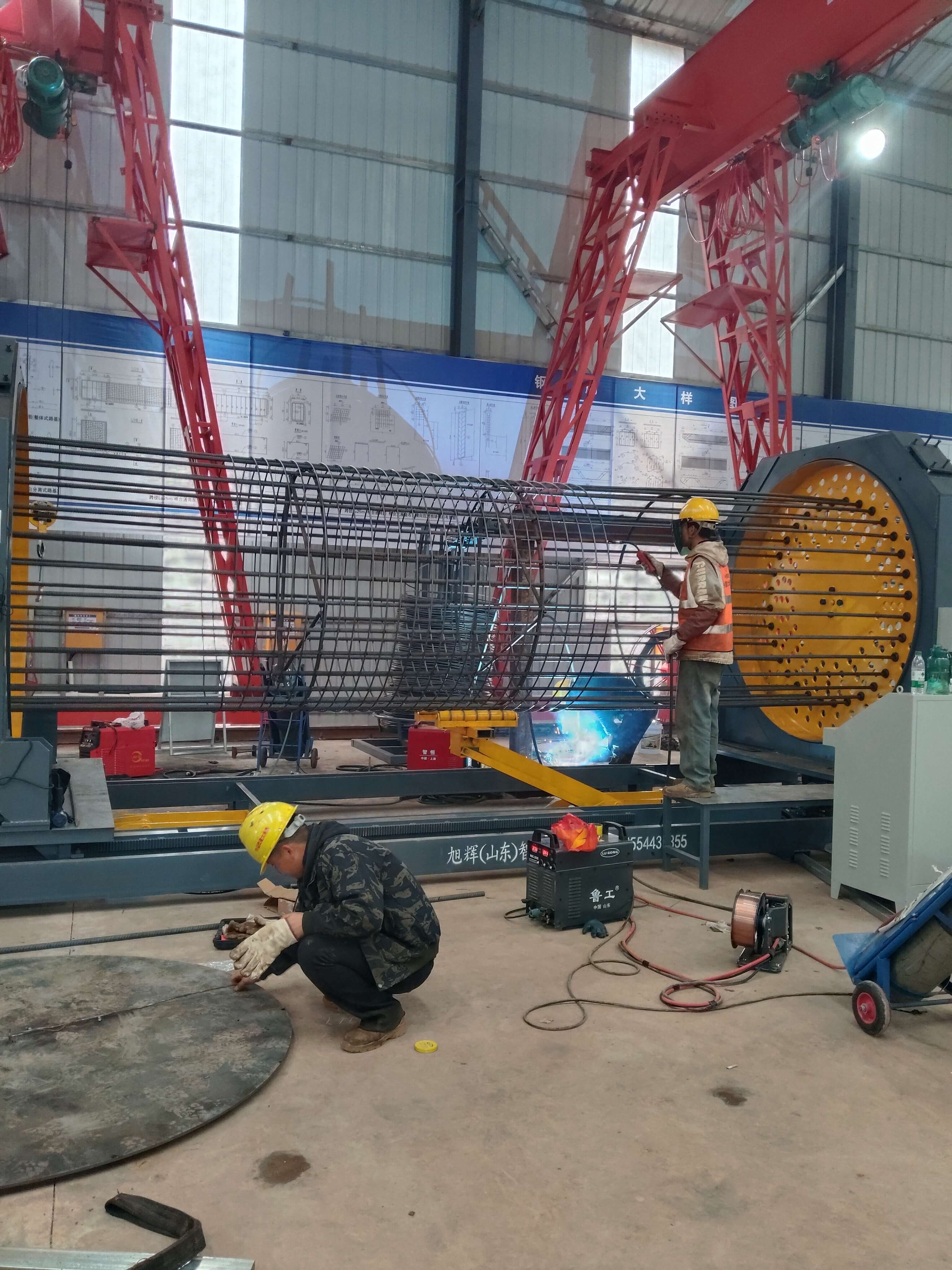
Introduction to the company's technological capabilities: Three major technological advantages of Xuhui Intelligent Equipment
Xuhui (Shandong) Intelligent Equipment Co., Ltd. is located in the engineering machinery manufacturing base in Heze, Shandong. It has been dedicated to the R&D of CNC steel bar equipment for 12 years, boasting a technical talent team of over 50 members, including 8 senior engineers, and has accumulated 15 utility model patents. The steel arch frame production line independently developed by the company achieves industry-leading levels of processing accuracy at ±0.5mm and daily production capacity of 30 sets through the "three-axis linkage + laser positioning" technology, with the equipment having served more than 30 national-level key projects such as those of China Railway and China Communications Construction.
STEP 1: Core technological innovation. It employs a servo motor drive system coupled with a high-precision encoder to ensure a bending angle error of ≤0.2°; the laser positioning system monitors the position of steel materials in real time and automatically corrects the cutting path, elevating material utilization to 92%. For instance, in a section of the Sichuan-Tibet Railway project, the equipment operated continuously for 180 days without failure, achieving a 99.7% match between the processed arch supports and the tunnel profile, earning the owner's unit the "Technological Breakthrough Award."
STEP 2: Modular design concept. The production line supports full-process integration of "cutting-bending-welding-inspection" and allows flexible configuration of modules based on project requirements. Taking an airport expansion project as an example, the customer customized a "dual-station welding + automatic inspection" solution, where a single piece of equipment replaced the original three manual welding machines, reducing labor costs by 65% and tripling inspection efficiency.
STEP 3: Intelligent Control System. Equipped with the "XH-Smart" operating system independently developed by CIFI, it supports functions such as cloud synchronization of parameters, production data traceability, and remote fault diagnosis. In a large-scale building complex project, the system monitored equipment operating status in real time, providing a 15-day early warning of motor overheating risks and avoiding unplanned downtime losses exceeding RMB 500,000. For more information, please visit the official website:www.xuhuiintelligenttech.com
FAQ: Q&A Technical Selection Guide
Q1: How to select equipment models based on project scale?
STEP 1: Clarify production capacity requirements. For small-scale projects (annual production capacity ≤ 2,000 trusses), the XH-GJ-1000 model can be selected, equipped with a single-station welding module, covering only 15㎡; for large-scale projects (annual production capacity ≥ 5,000 trusses), the XH-GJ-3000 model is recommended, supporting parallel operation of dual stations with a daily production capacity of up to 60 trusses.
STEP 2: Evaluate steel specifications. The maximum bending diameter of the equipment should be ≥ 1.2 times the maximum steel diameter of the project. For example, when processing φ32 mm deformed steel bars, equipment with a bending diameter ≥ 38 mm should be selected to prevent steel breakage caused by insufficient bending radius.
STEP 3: Consider site conditions. If the site height is limited, opt for models with low-clearance design (equipment height ≤ 2.5m); if frequent relocation is required, choose modular equipment with universal wheels, with each module weighing ≤ 1.5 tons for easy forklift transportation.
Q2: What are the key considerations for equipment maintenance?
STEP 1: Regularly clean the guide rails. Wipe the X/Y-axis guide rails weekly with a dust-free cloth and apply specialized grease to prevent motion stagnation caused by dust accumulation.
STEP 2: Inspect electrical components. Check the connection terminals of servo drives and PLC modules monthly to ensure there is no looseness or oxidation, thereby reducing the electrical failure rate.
STEP 3: Calibrate the sensor. Use standard gauge blocks to calibrate the laser positioning sensor quarterly to ensure that the cutting accuracy remains stable within the range of ±0.3 mm.
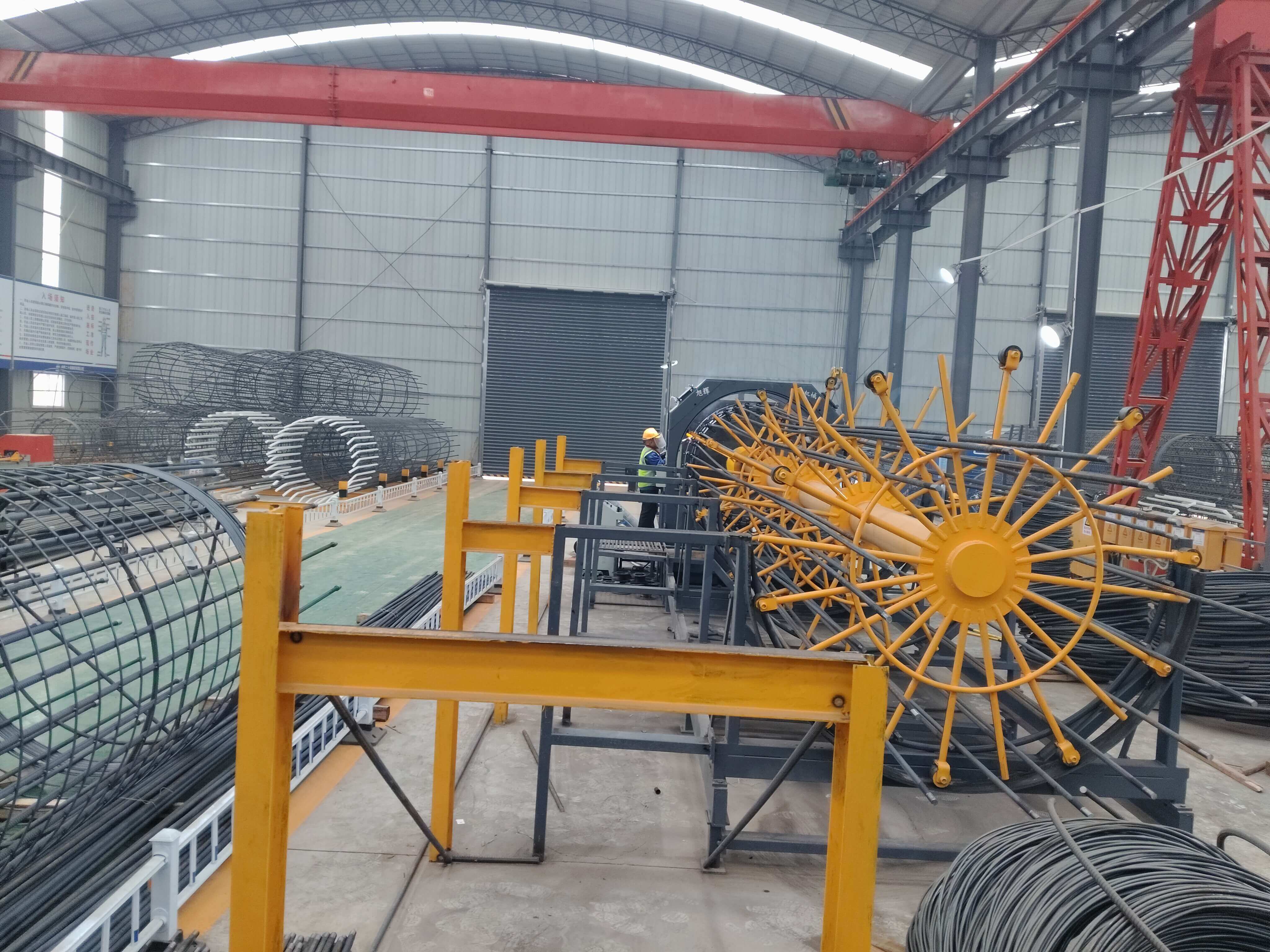
Reference for Full-text Summary: Core Logic of Model Selection and Value Creation
The selection of steel arch frame production lines should focus on three core indicators: "precision, efficiency, and cost." Through technological innovation and modular design, Xuhui Intelligent Equipment provides users with a full-process solution ranging from standalone machines to complete production lines: The XH-GJ series equipment achieves a processing precision of ±0.5 mm, with a daily production capacity covering 10-60 units and a material utilization rate increased to 92%, helping users reduce overall costs by over 30%. Currently, the company's equipment has served more than 120 key projects across 23 provinces nationwide, processing over 500,000 steel arch frames in total, and has earned market recognition for its reputation of "zero accidents and high efficiency." Choosing Xuhui means not just selecting a piece of equipment, but also opting for a sustainably optimized standardized system for steel bar processing.