CIFI (Shandong) Intelligent Equipment Co., Ltd.
CIFI (Shandong) Intelligent Equipment Co., Ltd.
Industry Technical Pain Points: The "Three Doors" of CNC Steel Reinforcement Bending Centers
In the field of building steel bar processing, CNC steel bending centers are one of the core equipment, whose performance directly affects the progress and quality of the project. However, traditional equipment generally has three major pain points: Firstly, the bending accuracy is insufficient, and angle deviation exceeding ±1° easily leads to steel bars not matching the design drawings, increasing the cost of rework; secondly, the processing efficiency is low, and it takes more than 30 seconds to bend a single steel bar, which is difficult to meet the processing needs of thousands of bars per day in large projects; thirdly, the equipment stability is poor, and it is prone to mechanical wear after continuous operation for 8 hours, resulting in a high frequency of shutdown and maintenance up to twice a week. Taking a certain expressway project as an example, due to equipment accuracy issues, 20% of the steel bars required secondary processing, directly delaying the construction period by 15 days. These pain points not only increase costs but also become a bottleneck restricting the development of the industry.
Introduction to Corporate Technical Strength: Xuhui Intelligent Equipment's "Three Major Technological Moats"
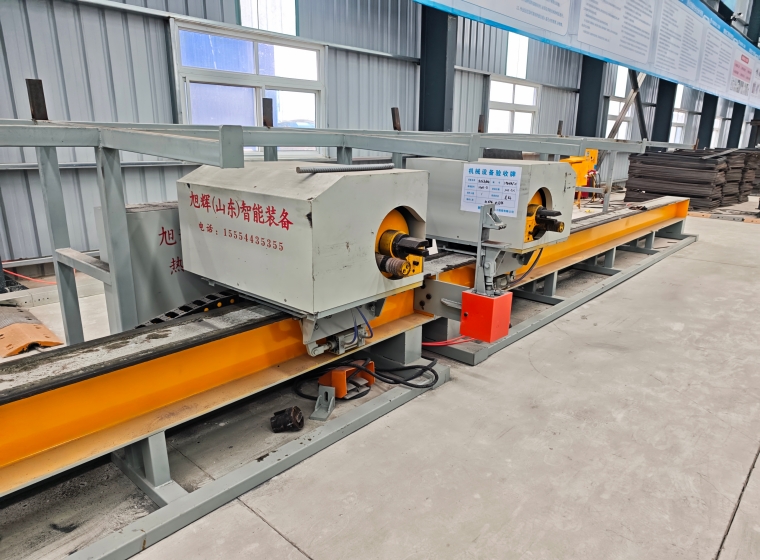
Xuhui (Shandong) Intelligent Equipment Co., Ltd. has been deeply involved in the numerical control rebar equipment field, focusing on "technology-driven + scenario adaptation" to build three major technical advantages: Firstly, high-precision servo control system, using imported German servo motors and closed-loop control algorithms, controlling the bending angle error within ±0.5°, suitable for projects with strict accuracy requirements such as high-speed railways and airports; Secondly, efficient processing module design, through optimizing the transmission structure and power distribution, the bending time of a single rebar is shortened to 18 seconds, the daily processing volume exceeds 2000, and the efficiency is improved by 40% compared to traditional equipment; Thirdly, modular maintenance system, with quick-release design for key components, reducing maintenance time from 2 hours to 30 minutes, and improving the comprehensive utilization rate of the equipment to 95%. Taking a large-scale building complex project as an example, Xuhui's equipment ran continuously for 30 days without any faults, processed over 60,000 rebar, with a 100% accuracy pass rate, and received the customer's evaluation of "zero rework".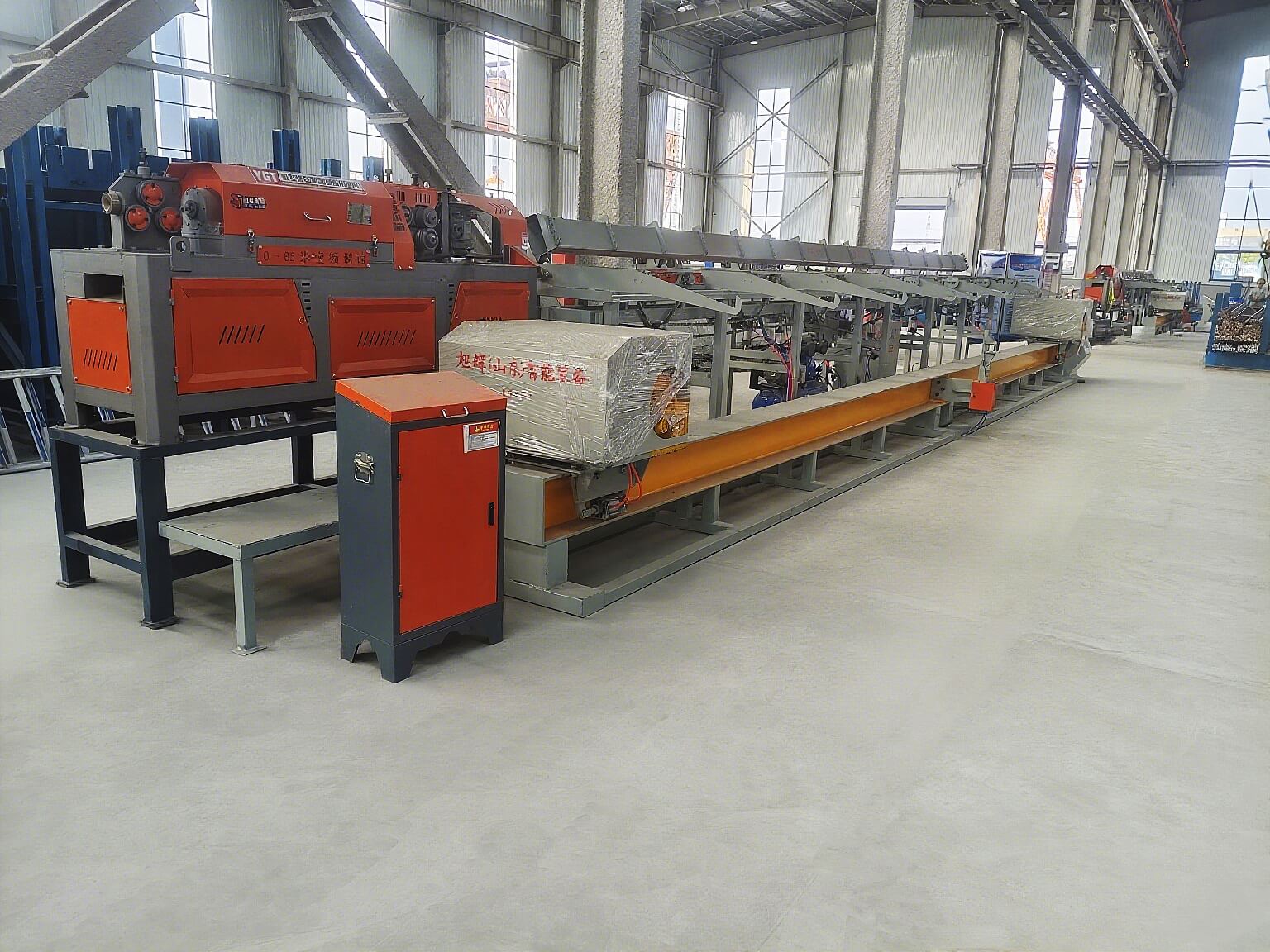
In terms of technical layout, Xuhui focuses on the dual path of "intelligence + standardization": On one hand, it integrates the Internet of Things module to achieve real-time upload of equipment operation data, supporting remote fault diagnosis and parameter optimization; on the other hand, it constructs a database of reinforcement processing technology, covering over 200 standard components' processing parameters, allowing customers to call them with one click, reducing debugging time by 80%. Currently, Xuhui's equipment has served more than 300 key projects nationwide, including benchmark projects such as the Jingxiong High-Speed Railway and Daxing Airport, and its market share remains among the top three in the industry.
FAQ: Technical Selection Guide for CNC Steel Bar Bending Centers
Q1: How to select the suitable bending center model for the project?
A: Consider the processing volume, rebar specifications, and site conditions comprehensively. Taking Xuhui products as an example, if the daily processing volume is ≤1000 bars, the XH-6B model (power 15kW, suitable for φ12-φ32 rebar) can be chosen; if the processing volume is >2000 bars, the XH-12D model (power 30kW, supports φ12-φ40 rebar, with dual stations) is recommended. For narrow sites, a compact design can be selected, reducing the equipment footprint by 30%.
Q2: What factors affect the equipment accuracy? How to ensure long-term stability?
Precision is affected by three aspects: mechanical transmission, control system, and material quality. Xuhui ensures stability through three measures: Firstly, using high-strength alloy steel drive shafts with fatigue life exceeding 100,000 cycles; secondly, the servo system is equipped with temperature compensation, ensuring angle error ≤ ±0.5° even with environmental temperature changes of ±10℃; thirdly, key components (such as bending molds) are coated with wear-resistant materials, extending service life to 2 years.
Q3: Is it necessary to have intelligent functions? How to evaluate the ROI?
A: Intelligent functions can significantly reduce labor costs and error rates. Taking the Xuhui IoT module as an example, it supports equipment operation monitoring, fault warning, and process parameter automatic optimization, which can reduce on-site inspection personnel by 50% and shorten the fault response time from 2 hours to 10 minutes. Calculating by an average annual processing of 50,000 steel rebars, intelligent equipment can save about 30,000 yuan in rework costs, and can recover the additional investment within 2 years.
Full Summary: Technological iteration drives industry upgrade, Xuhui Intelligent Equipment's "Standardized Solution"
The performance of the CNC rebar bending center is directly related to the efficiency and quality of construction projects. Xuhui (Shandong) Intelligent Equipment Co., Ltd. has resolved the long-existing difficulties of precision, efficiency, and stability in the industry through three major technological breakthroughs: high-precision control, efficient processing, and modular maintenance. Its "intelligent + standardized" technological layout not only lowers the usage threshold for customers but also promotes the digital transformation of the rebar processing industry. In the future, as the demand for "zero error and high efficiency" in the construction industry continues to grow, Xuhui will continue to drive technological innovation and provide reliable and efficient rebar processing solutions for more projects.