 CIFI (Shandong) Intelligent Equipment Co., Ltd.
CIFI (Shandong) Intelligent Equipment Co., Ltd.
Industry Technical Pain Points: How to Balance Efficiency and Precision in Processing Various Specifications of Reinforcing Steel?
In large infrastructure projects such as highways and high-speed rail, steel bar processing needs to meet the requirements of multiple specifications (e.g., Φ8-Φ40mm), high precision (bending angle error ≤0.5°), and high efficiency (daily processing capacity ≥50 tons). Traditional single-head equipment requires frequent mold changes, with each steel bar taking about 3-5 minutes to process, and manual operation prone to bending angle deviation, with a rework rate as high as 15%. While multi-head equipment can process in parallel, the lack of intelligent collaborative control can lead to head interference and processing path conflicts, increasing the equipment downtime by over 20%. Moreover, under conditions such as surface rust on steel bars and too small bending radii, traditional equipment is prone to steel bar breakage or mold wear, further affecting processing stability. How to resolve the contradiction between efficiency, precision, and stability through technological innovation has become a core pain point in the industry.
Introduction to Corporate Technical Strength: How does Xuhui Intelligent Equipment's horizontal four-head rebar bending center break through the bottleneck?
Xuhui (Shandong) Intelligent Equipment Co., Ltd. leverages the industrial advantages of the Jining Engineering Machinery Manufacturing Base in Shandong, focusing on the research and development of CNC steel bar equipment. Its horizontal four-head steel bar bending center overcomes industry pain points through three major technological breakthroughs:
Step 1: Multi-head coordinated control systemThe system adopts a Siemens PLC + industrial bus architecture, achieving independent control and collaborative operation of four heads. The system can automatically identify steel bar specifications (via laser distance sensors) and allocate processing tasks, such as Φ8-Φ16mm steel bars processed in parallel by two heads, Φ20-Φ40mm steel bars processed in sections by four heads, reducing the processing time of a single steel bar to 1.2 minutes, and increasing efficiency by 60%.
STEP 2: Intelligent Bending Path Planning:Built-in "Reinforcement Processing Path Optimization Algorithm" independently developed by Xuhui, combining parameters such as reinforcement diameter, bending radius, and machine head position, automatically generates interference-free processing paths. For example, when processing complex stirrups, the system can dynamically adjust the machine head sequence to avoid collisions, reducing the equipment downtime rate to below 5%.
STEP 3: High-intensity mold and adaptive compensation technologyThe molds are made of Cr12MoV alloy steel, treated with vacuum quenching (hardness HRC58-62), capable of withstanding 500,000 bends without wear. Meanwhile, the system monitors the bending force in real-time through pressure sensors, automatically adjusting the bending speed (adjustable from 0.5 to 5 rpm) when the surface rust of the rebar increases resistance, ensuring the bending angle accuracy remains stable within ±0.3°.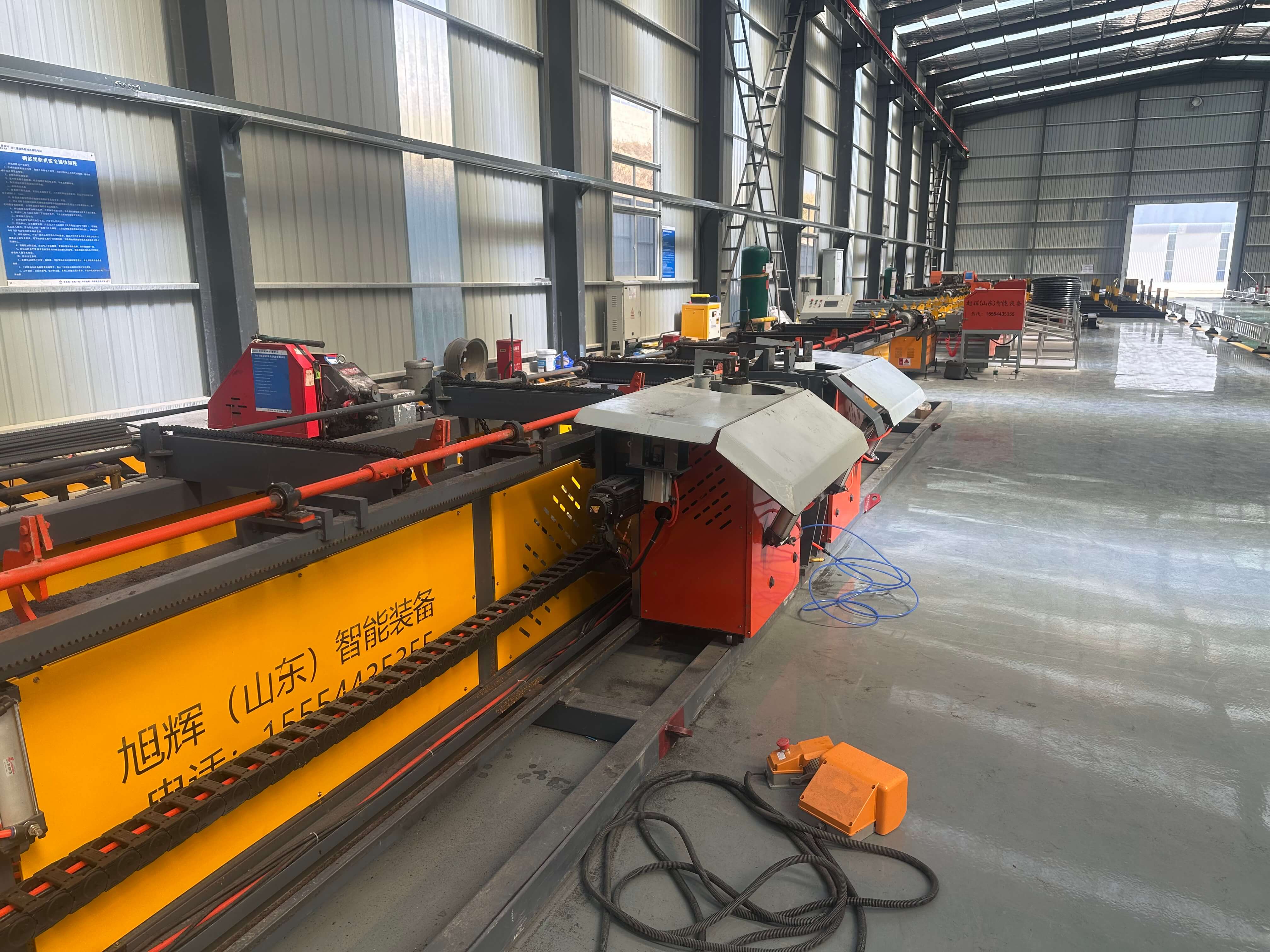
In a high-speed rail project case, Xuhui's equipment achieved a daily processing volume of 62 tons, a 124% increase over traditional equipment, with the processing pass rate rising from 85% to 99.2%. Customers commented, "The equipment operates stably, requiring no frequent mold changes, significantly reducing labor costs."
FAQ: Technical Selection Guide for Horizontal Four-Head Rebar Bending Center
Q1: How to select the appropriate number of engine heads for the project requirements?
A: The number of machine heads should be comprehensively evaluated based on the steel bar specifications and processing volume. If the project mainly uses Φ8-Φ20mm steel bars and the daily processing volume is ≤30 tons, dual-head equipment can be chosen; if processing Φ25-Φ40mm large-diameter steel bars or a daily processing volume ≥50 tons is required, it is recommended to select a four-head equipment. Xuhui's four-head equipment supports the "2+2" mode (2 heads for processing small specifications, 2 heads for processing large specifications), offering higher flexibility.
Q2: What are the requirements for the surface quality of rebar on the equipment?
A: Xuhui equipment is equipped with a reinforced steel rust removal device (optional), capable of handling steel bars with surface rust thickness ≤ 0.5mm. If the steel bar rust is severe (>0.5mm), it is recommended to first remove the rust through a shot blasting machine, and then process it in the bending center to avoid rapid mold wear.
Q3: How to ensure the synchronization of multi-spindle machining?
A: The key to synchronization lies in the precision of the control system and transmission components.旭辉equipment adopts servo motor + high-precision reducer (repeated positioning accuracy ±0.02mm), in conjunction with Siemens PLC's synchronization control algorithm, to ensure that the displacement deviation of the 4 heads is ≤0.1mm during high-speed movement (up to 5rpm), fundamentally avoiding processing path conflicts.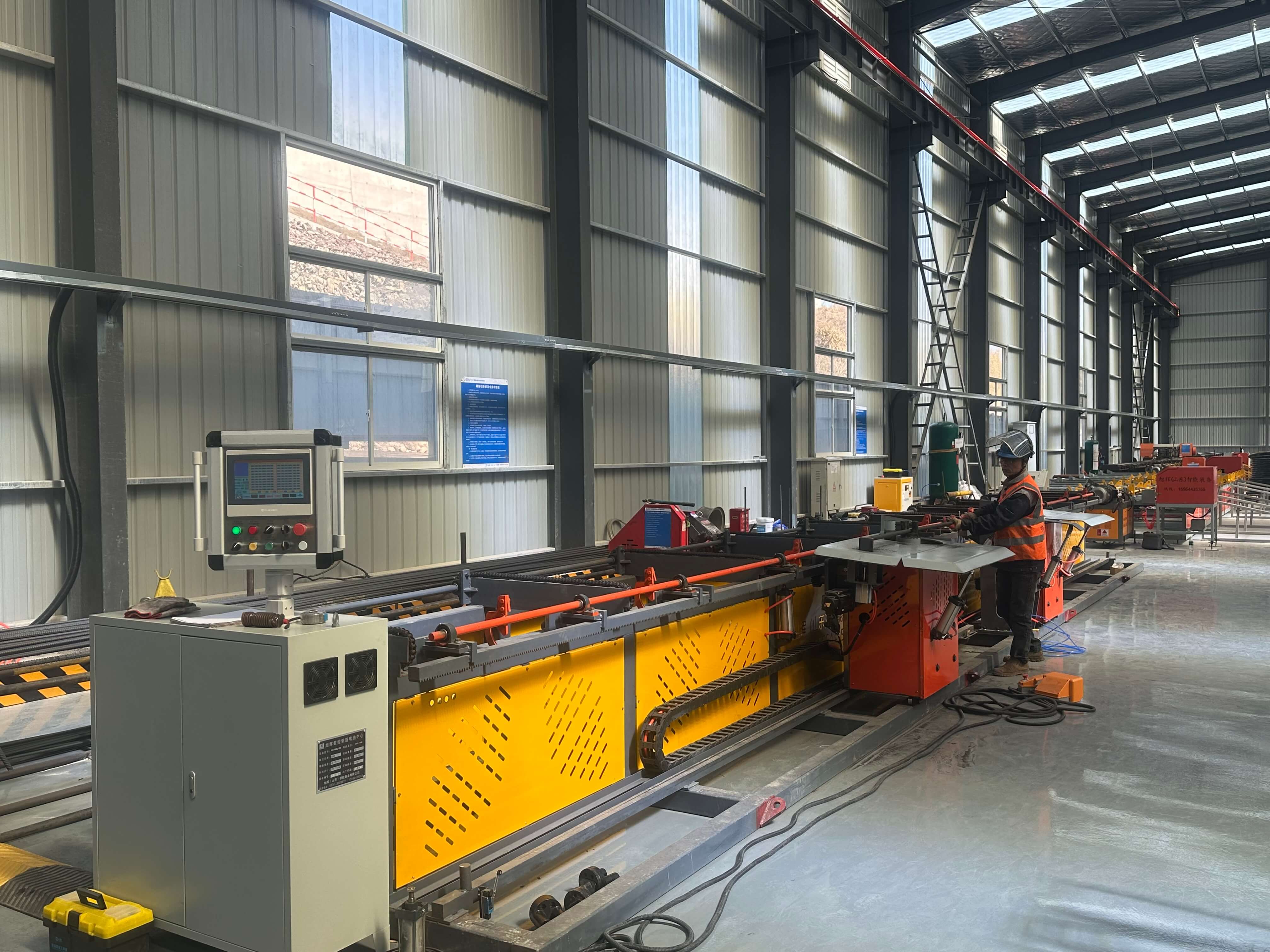
Summary of the entire text
The technical core of the horizontal four-head rebar bending center lies in "multi-head coordination" and "intelligent control." By optimizing processing paths, enhancing die durability, and reinforcing synchronous control, it can significantly resolve the contradictions between efficiency, accuracy, and stability in processing rebar of various specifications. Xuhui (Shandong) Intelligent Equipment Co., Ltd., with its experience in the research and development of CNC rebar equipment, has established a technological barrier in equipment architecture design, control system algorithms, and die material selection. Its products have served more than 200 key projects such as high-speed rail and airports, becoming the preferred supplier for standardized solutions in construction rebar work. For project parties, when selecting equipment, they need to pay close attention to the adaptability of the number of heads, the stability of the control system, and the durability of the dies to ensure long-term processing benefits.